Before You Begin
Purpose
This tutorial shows you how to deploy a composite application as a SOA archive (SAR) file to Oracle SOA Cloud Service by using the Oracle Fusion Middleware Control Console.
Time to Complete
45 minutes
Background
Oracle SOA Cloud Service provides a complete set of service infrastructure components for designing, managing, and deploying composite and service bus applications to the cloud.
You can save time, money, and work more efficiently by using the wide variety of features in Oracle SOA Cloud Service to:
- Design SOA composite applications.
- Create test environments for all your applications.
- Monitor and manage your application environment.
Using this tutorial, you can learn how to deploy a SOA application to Oracle SOA Cloud Service. Because this cloud service uses the same Oracle SOA software that you use for your on-premises applications, you can use the same tools in the cloud.
What Do You Need?
- A subscription or trial subscription to Oracle SOA Cloud Service
- Oracle SOA Quick Start for Developers
- Valid credentials for Oracle Enterprise Manager Fusion Middleware Control Console
- Basic knowledge of Oracle SOA Suite
Downloading a SOA Sample Application
-
Open a terminal window. Create the mywork directory by executing the following command:
mkdir mywork -
Download the helloWorld.zip file, which contains the SOA sample application, and unzip the file.
Deploying and Testing a Composite Application in Oracle SOA Cloud Service
Deploying a SAR File to Oracle SOA Cloud Service
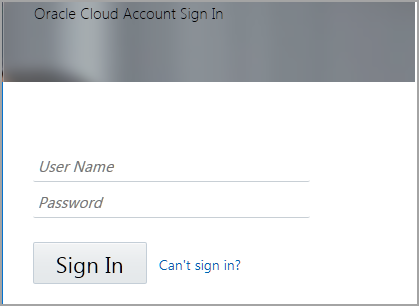
- Sign in to your Oracle Cloud Account.
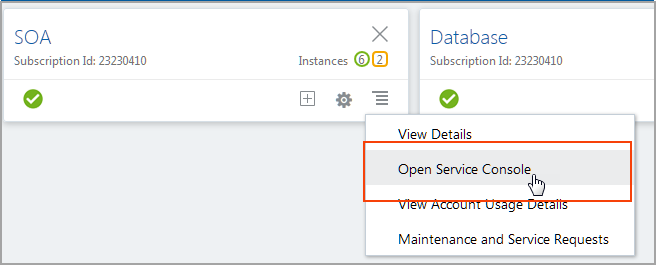
Description of this image - From your My Services Dashboard, expand the Action Menu for the SOA instance and click Open Service Console.
Description of this image -
Expand the Menu
 of the SOA Cloud
Service
instance that you want
to use and click Open Fusion
Middleware Control Console.
of the SOA Cloud
Service
instance that you want
to use and click Open Fusion
Middleware Control Console. 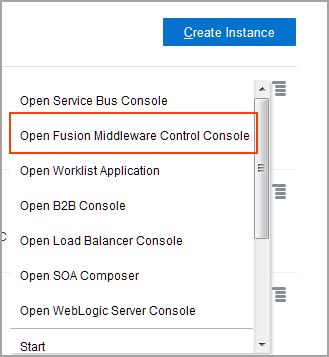
Description of this image -
Enter the user name and password that you set when you created your instance.
-
In the Target Navigation pane, expand SOA, right-click soa-infra, and click SOA Deployment > Deploy.
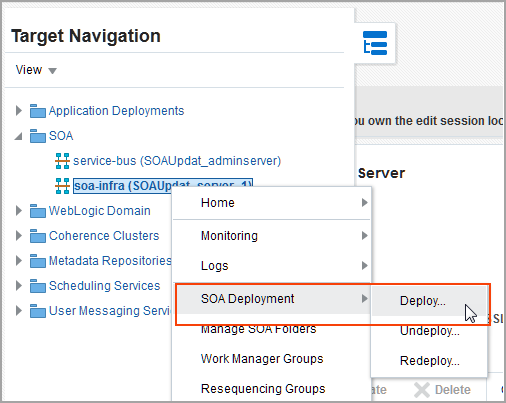
Description of this image The Deploy SOA Composite page appears.
-
In the Deploy SOA Composite page, click Browse.
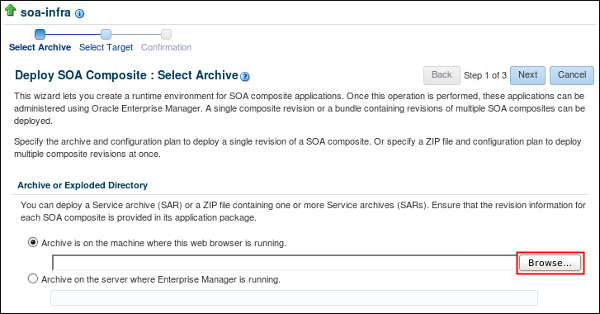
Description of this image -
In the File Upload dialog, go to mywork/SOACSdemo/SayHello/deploy, click the sca_SayHello_rev1.0.jar file, and click Open.
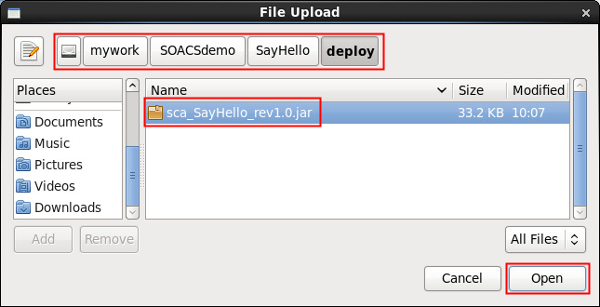
Description of this image -
In the Select Archive page, click Next.
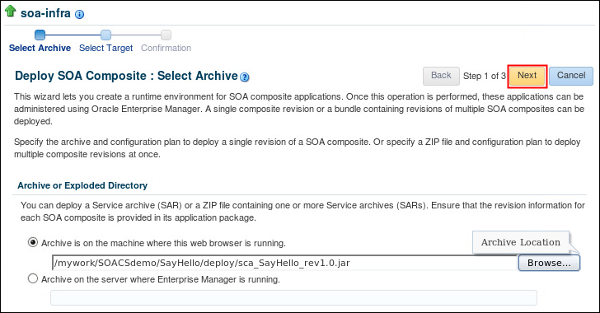
Description of this image -
In the Select Target page, select the default SOA partition, and click Next.
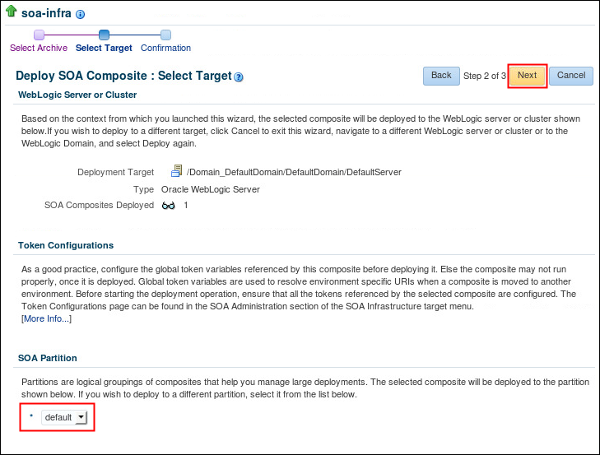
Description of this image -
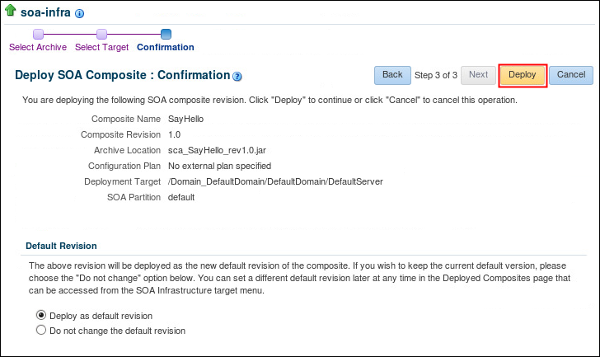
In the Confirmation page, click Deploy.
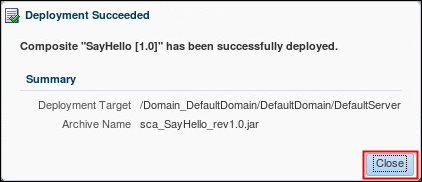
Description of this image The summary page appears. Click Close.
Description of this image
Testing an Application in Oracle SOA Cloud Service
-
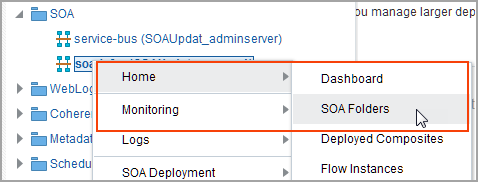
Open the Fusion Middleware Control. In the Target Navigation pane, expand SOA, right-click soa-infra, and click Home, SOA Folders.
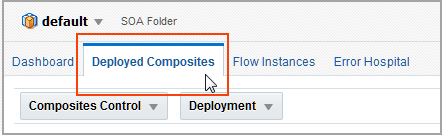
Description of this image - Click the Deployed Composites tab, and click sca_SayHello_rev1.0.jar.
Description of this image - Click Test.
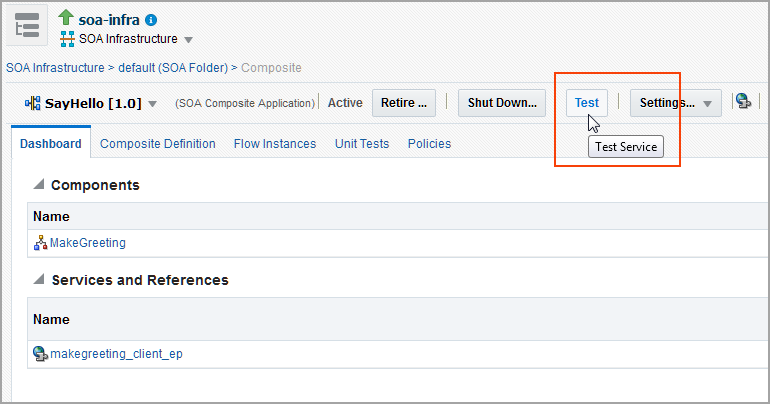
Description of this image -
On the Test Web Service page, click the Request tab, expand payload, enter Cloud World in the text field, and then click Test Web Service.
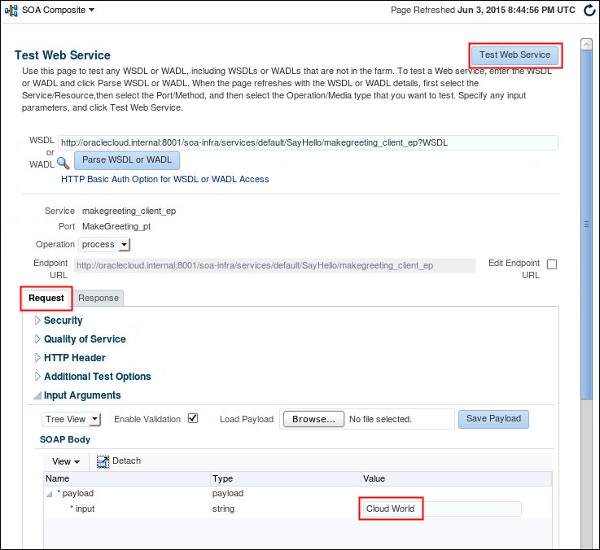
Description of this image -
Click the Response tab, and verify that the response displays the words you entered.
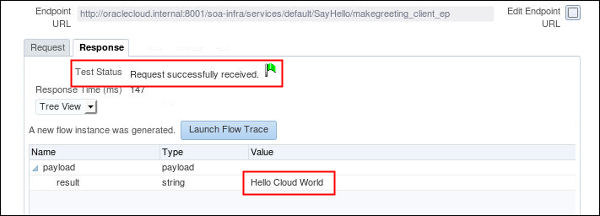
Description of this image
Monitoring a Composite Application in Oracle SOA Cloud Service
-
In the Target Navigation pane from your Oracle SOA Cloud Service, expand SOA > soa-infra. Right-click soa-infra and select Home > Flow Instances.
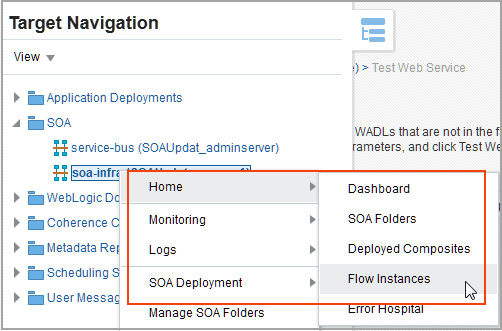
Description of this image -
On the Flow Instances tab, click Recent Instances.
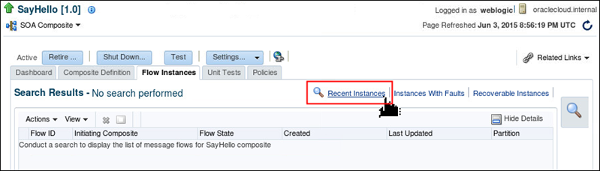
Description of this image -
On the Search Results table, click the number under the Flow ID column.
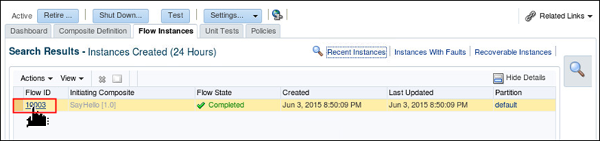
Description of this image The Flow Trace page appears.
-
On the Flow Trace page, click MakeGreeting.
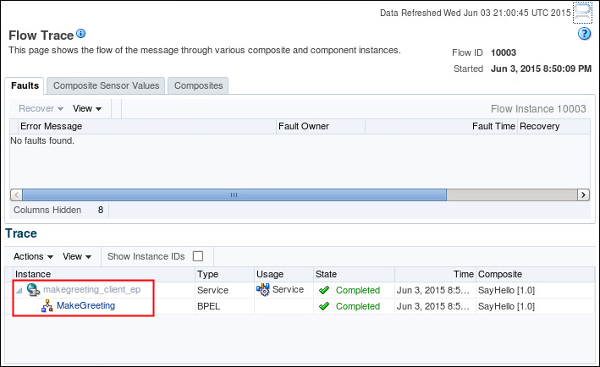
Description of this image -
On the Instance of MakeGreeting page, under replyOutput, click View Payload.
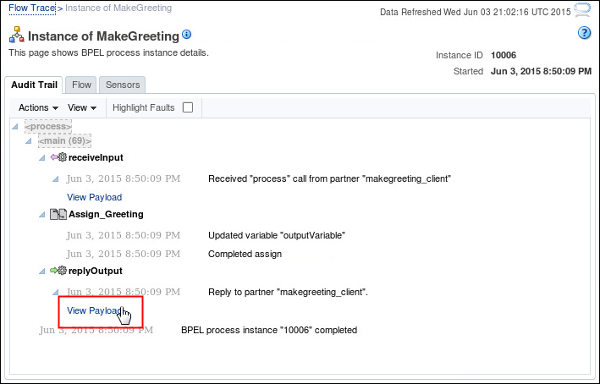
Description of this image The Payload for Activity: replyOutput dialog appears.
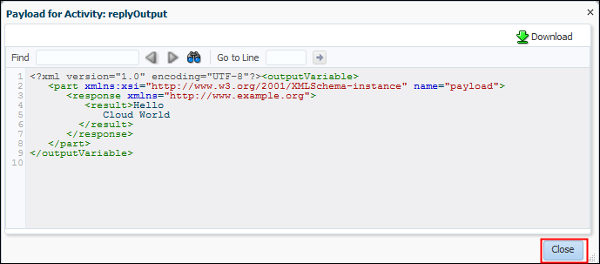
Description of this image Confirm that the payload message contains the same result displayed in this dialog when you test your application.
Want to Learn More?
- Performing a Quick Start Installation of Oracle SOA Suite 12c
- Creating a SOA Composite Application with Oracle JDeveloper 12c
- For information about Oracle Cloud services, go to cloud.oracle.com.
Credits
-
Lead Curriculum Developer: Armando Hernandez
-
Other Contributors: Ron Pinkerton, Mary Peek