Installing and Configuring Oracle® Hyperion Financial Close Management 11.1.2.2.000 in a Single Node Environment
Purpose
This tutorial covers installation and configuration of Financial Close Management 11.1.2.2.000 in a single node environment.
Time to Complete
Approximately 8 hours
Overview
In this tutorial, you install and configure the components required for Financial Close Management 11.1.2.2.000 in a single node environment.
Prerequisites
Before starting this tutorial, you should:
. |
Ensure that the IPv6 Network is properly working if this feature in enabled on your machines – see Appendix D: IPv6 Network |
|---|---|
. |
Have access (with sysdba privileges) to an Oracle 11g ( 11.1.0.7 or higher) or MS SQL Server 2005/2008 database. |
. |
Have access (with administrative rights) to an external authentication provider, such as Oracle Internet Directory, Microsoft Active Directory, or SunOne. |
. |
Have access to the installation files for the following software: |
Installation Types
You can install Financial Close Management in either a single-node or a multi-node configuration. In a single-node configuration, the EPM components and SOA Suite run on the same machine. In a multi-node configuration, the Financial Close Management server and the SOA Suite run on different machines.
This tutorial is an example of an installation for a single node configuration. For more Information on single node configurations, see the Oracle Hyperion Enterprise Performance Management Installation and Configuration Guide.
Installation and Configuration Sequence
WebLogic is required as the Web application server for both the Enterprise Performance Management (EPM) components and Service Oriented Architecture (SOA) Suite. Your installation and configuration sequence may vary based on whether or not you have an existing WebLogic installation.
Sequence One
If you do not have an existing WebLogic installation, you should install the EPM components first, because that installs WebLogic automatically if it is not already present. Use the following installation and configuration sequence:
Use the following installation and configuration sequence:
- Install EPM (Foundation Services, Financial Close Management, and FDM required).
- Run the Repository Creation Utility.
- Install SOA Suite.
- Configure SOA Suite.
- Configure Financial Close Management and FDM.
- Perform post-installation manual configuration tasks
- Install ODI
- Configure ODI
- Configure Oracle Security Policy for ERPI
Sequence Two
If you have an existing WebLogic installation, you use the following installation and configuration sequence:
- Run the Repository Creation Utility.
- Install SOA Suite.
- Configure SOA Suite.
- Install EPM components (Foundation Services, Financial Close Management, and FDM required).
- Configure Financial Close Management and FDM.
- Perform post-installation manual configuration tasks
- Install ODI
- Configure ODI
- Configure Oracle Security Policy for ERPI
In this tutorial, we are going to follow installation and configuration sequence one.
Installing EPM Components
To install the EPM components, you run the Oracle Hyperion Enterprise Performance Management System Installer. Foundation Services and Financial Close Management are required components. If it is not already present, WebLogic is installed as part of the Foundation Services installation. You configure EPM components after you install and configure SOA Suite.
. |
Navigate to the installation folder for the Hyperion software and run installtool.cmd. Note: Througout this tutorial, for Linux versions of command, consult Appendix D: Linux Commands.
|
|---|---|
. |
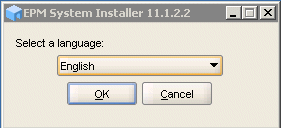
Select a language, and click OK.
|
. |
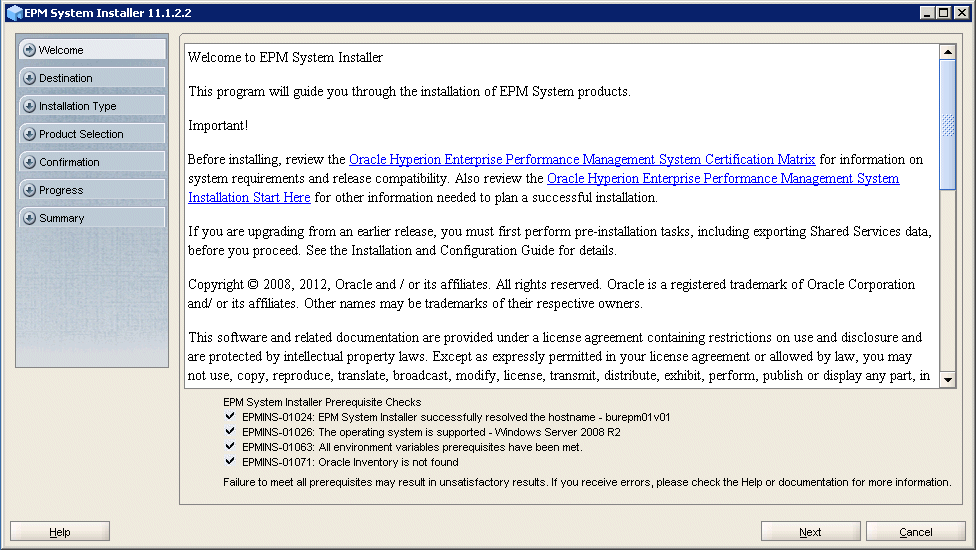
On the Welcome screen, click Next.
|
. |
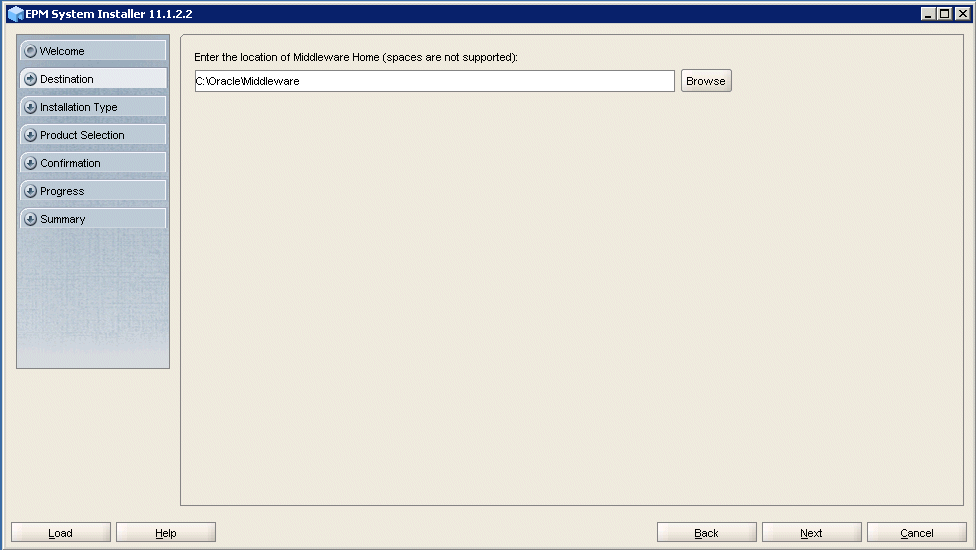
On the Destination screen, select the location for the Middleware Home directory, and click Next.
|
. |
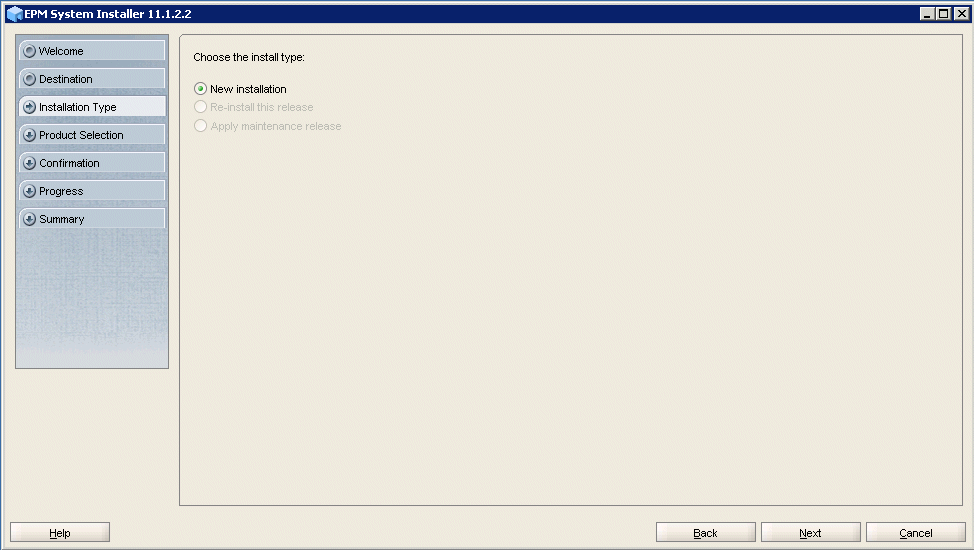
On the Installation Type screen, select New installation, and click Next.
|
. |
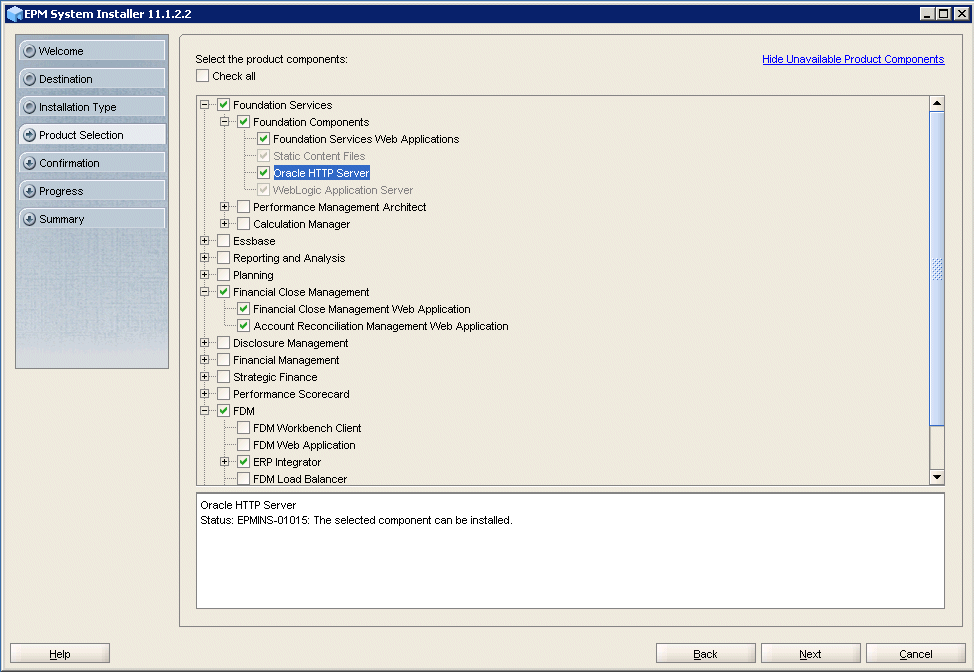
On the Product Selection screen: a. Deselect Check All. b. Under Foundation Services select Foundation Components c. Under Financial Close Management, select the components you want to install
(Financial Close Management Web Application, d. Under FDM select ERP Integrator e. Click Next.
|
. |
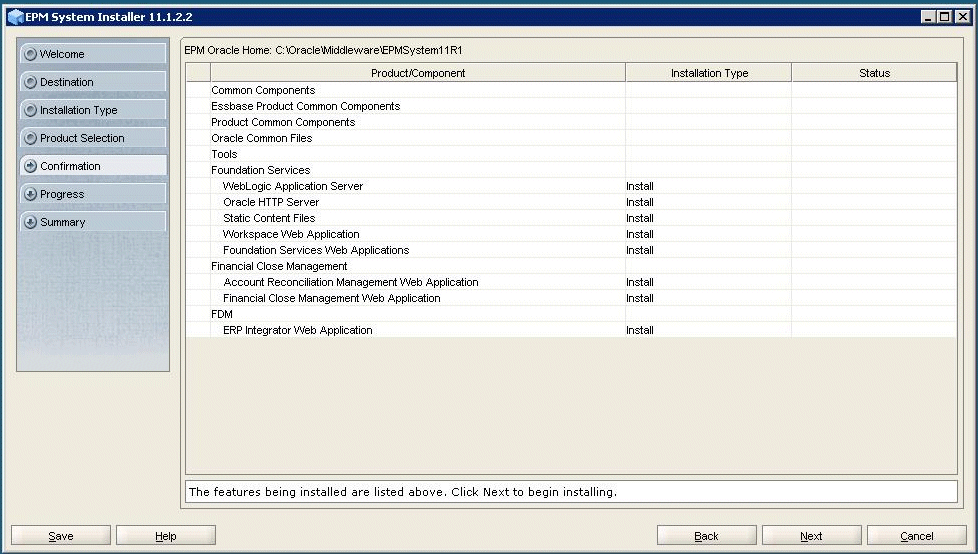
On the Confirmation screen, click Next.
|
. |
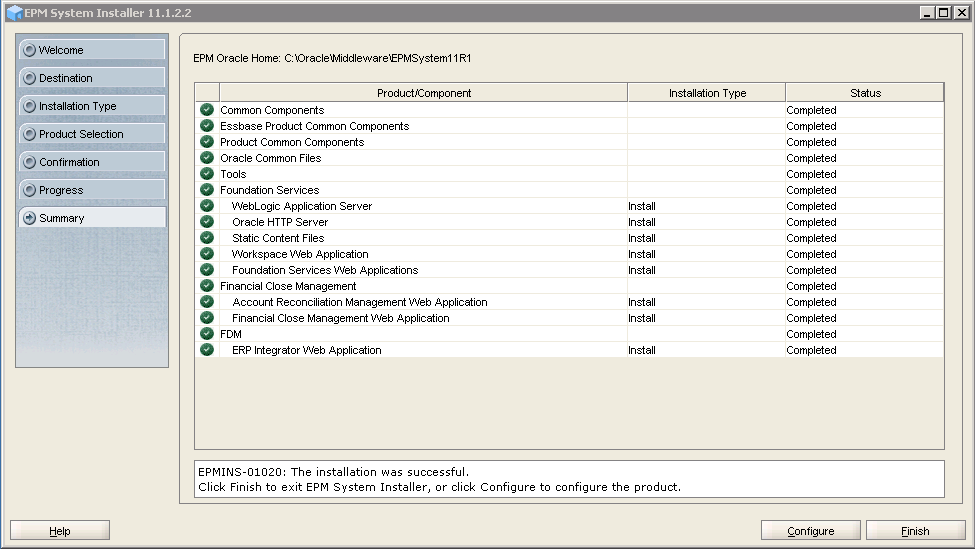
On the Summary screen, click Finish.
|
Creating the Database User
Follow the instructions provided in the appendices for creating the database users for your database:
- For Oracle, follow the instructions in Appendix A: Creating an Oracle Database Users.
- For MS SQL Server, follow the instructions in Appendix B: Configuring Microsoft SQL Server.
Installing and Configuring SOA Suite
The following topics describe how to install and configure SOA Suite.
Running the Repository Creation Utility
. |
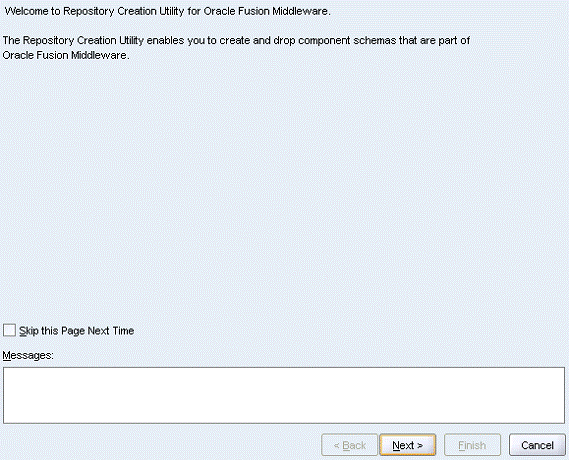
In the folder to which you unzipped the utility, navigate to the rcuHome\bin folder and Run rcu.bat.
|
|---|---|
. |
On the Welcome screen, click Next
|
. |
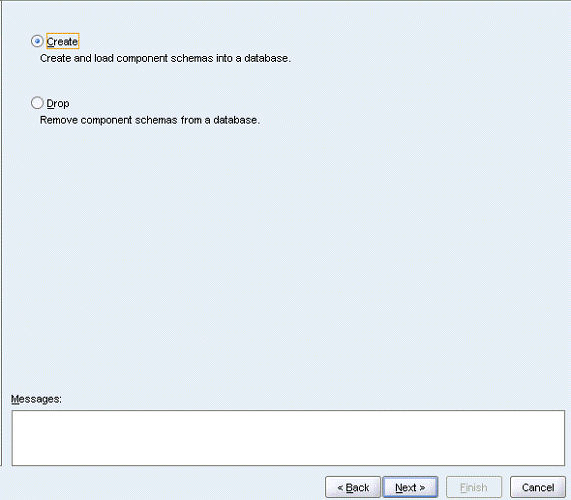
On the Create Repository screen, select Create, and then click Next.
|
. |
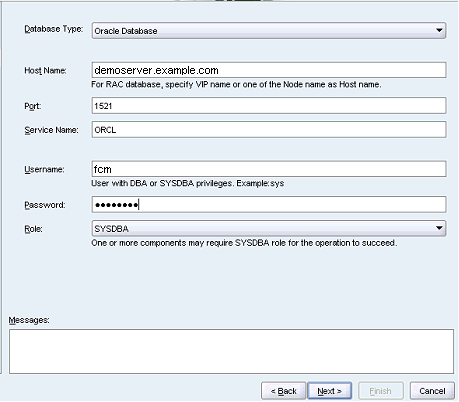
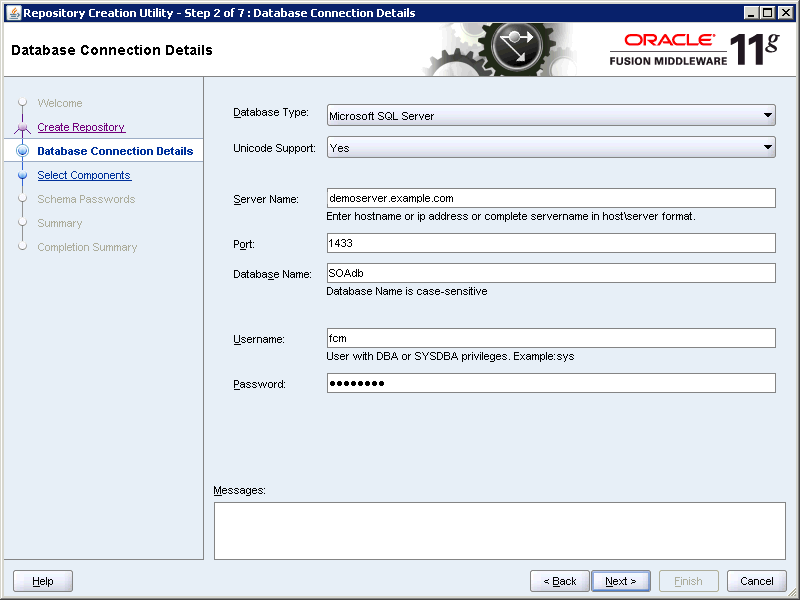
On the Database Connection Details screen, enter the database connection details, you wish to configure SOA. Example for Oracle database:
Example for MS SQL database:
|
. |
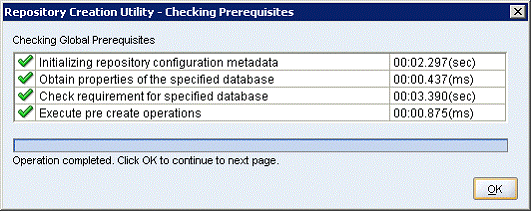
At the prerequisites confirmation prompt, click OK. If a warning prompt regarding the character set is displayed, click Ignore.
|
. |
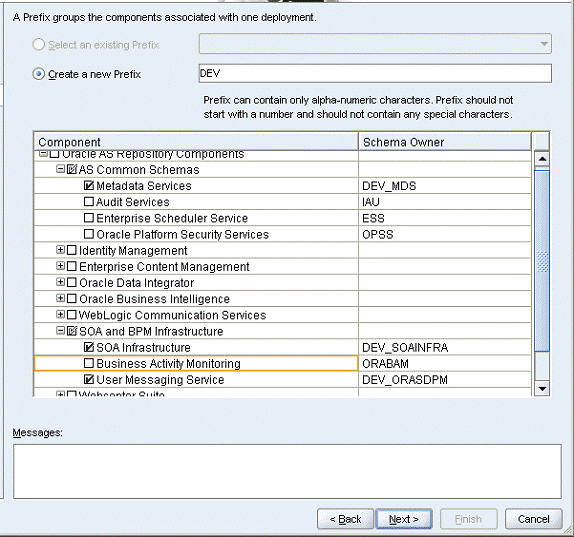
On the Select Components screen, in the Create a new prefix text box, enter a prefix for the schema tables.
|
. |
In the Component list, under SOA and BPMA Infrastructure, select SOA Infrastructure, and click Next.. You will see that, User Messaging Service under SOA and BPM Infrastructure and Metadata Services under AS Common Schemas get selected automatically when you selected SOA Infrastructure.
|
. |
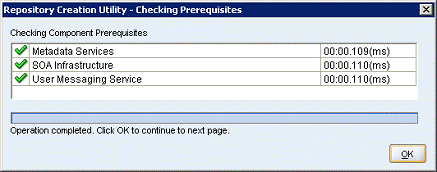
At the prerequisites confirmation prompt, click OK.
|
. |
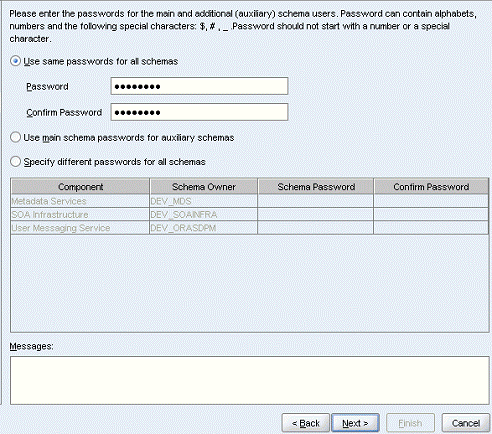
On the Schema Passwords screen, select Use the same password for all schemas, enter a password, and click Next.
|
. |
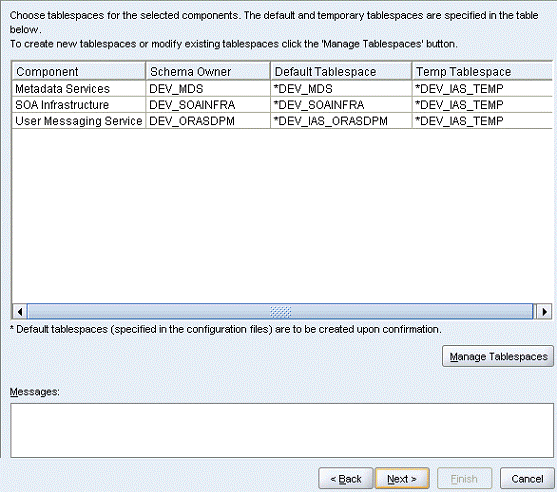
On the Map Tablespace screen, leave the default tablespace names and click Next. Note: The example below is for Oracle.
|
. |
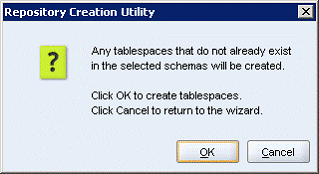
At the confirmation prompt, click OK. Note: The example below is Oracle.
|
. |
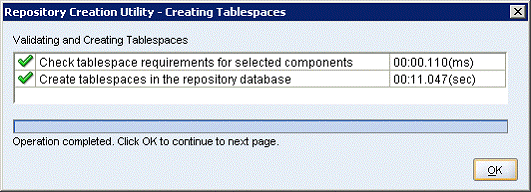
At the completion prompt, click OK. Note: The example below is Oracle.
|
. |
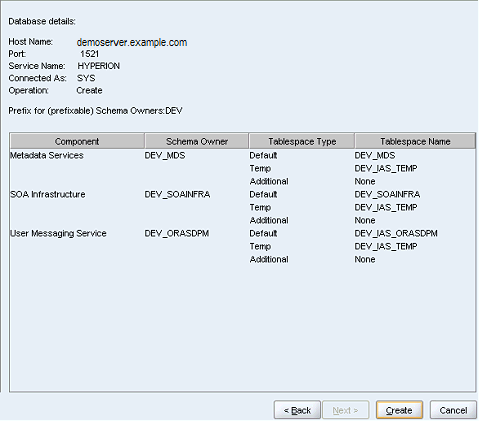
On the Summary screen, click Create. This may take a while.
|
. |
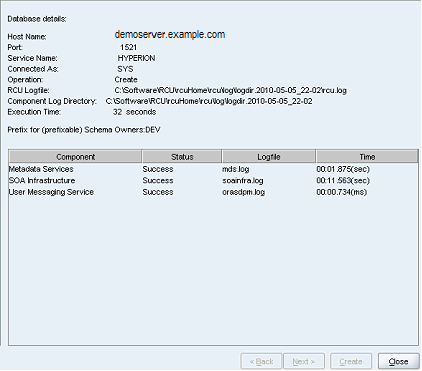
On the Completion Summary screen, click Close.
|
Installing SOA Suite
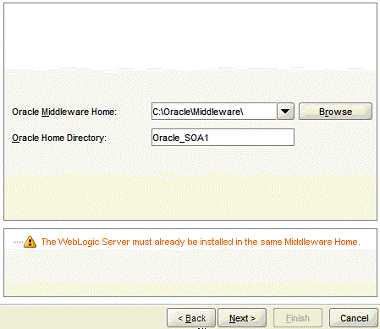
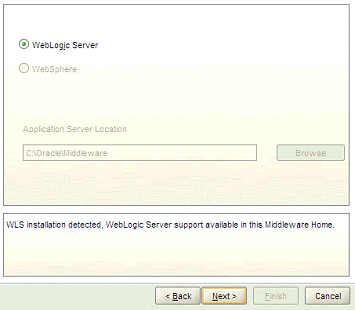
When you install SOA Suite, select the same Middleware Home directory that you specified for installing EPM Components. The Middleware Home directory contains the WebLogic installation, which is required for installing SOA Suite.
. |
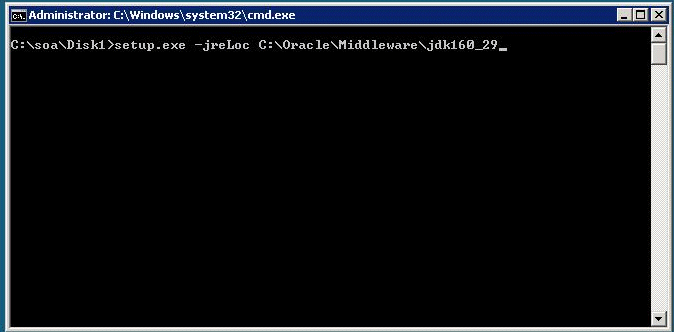
Open Command prompt and Navigate to the Disk1 folder under SOA Suite installation directory and provide following command.
|
|---|---|
. |
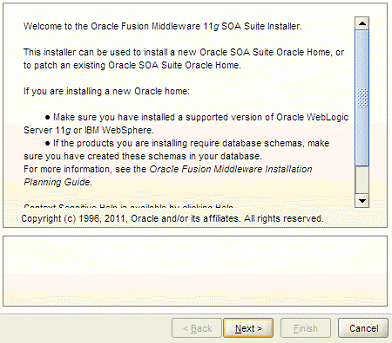
On the Welcome screen, click Next.
|
. |
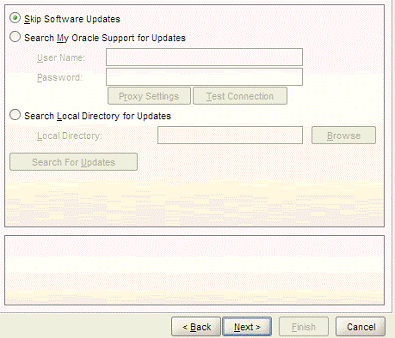
Select Skip Software Updates and click Next.
|
. |
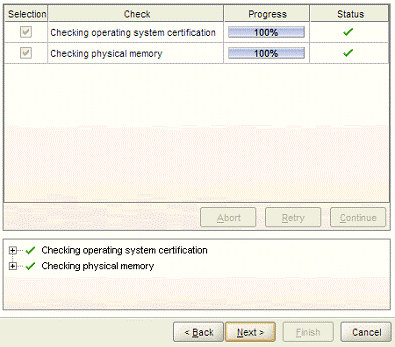
On the Prerequisites screen, click Next.
|
. |
On the Specify Installation Location screen, verify that the Middleware Home directory is the directory that you selected when you installed the EPM Components, and click Next. Be sure to modify the default Middleware Home location if needed.
|
. |
On the Application Server screen, verify that the WebLogic Server is selected, and click Next.
|
. |
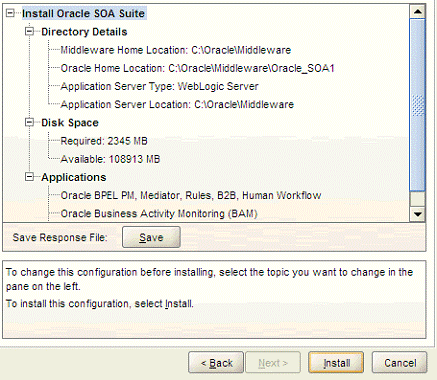
On the Installation Summary screen, click Install.
|
. |
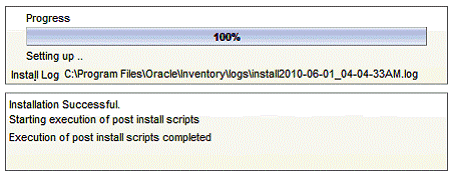
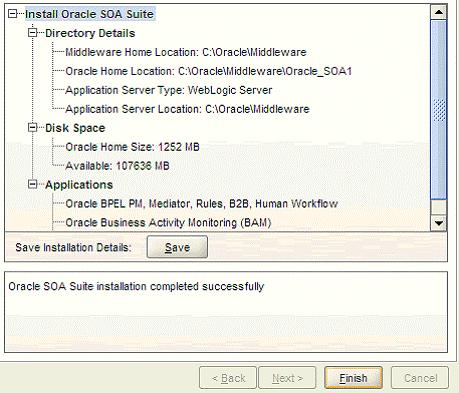
On the Installation Progress screen, when the Installation Successful message is displayed, click Next.
|
. |
On the Installation Complete screen, click Finish.
|
Configuring SOA Suite
After installing SOA Suite and running the Repository Creation Utility, you configure SOA Suite and create a WebLogic domain. You later extend this WebLogic domain for Financial Close Management.
. |
Select Start, then Programs, then Oracle SOA 11g - Home1, and then Configure Application Server. Note: You can also start configuration using the config.cmd. For example; C:\Oracle\Middleware\Oracle_SOA1\common\bin\config.cmd).
|
|---|---|
. |
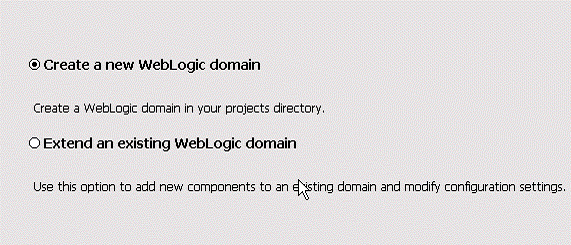
Select Create a new WebLogic domain, and click Next.
|
. |
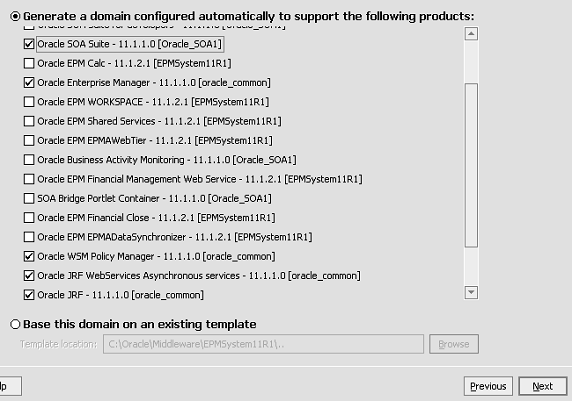
On the Select Domain Source screen, select Generate a domain configured automatically to support the following products, then select Oracle SOA Suite, Oracle Enterprise Manager, Oracle WSM Policy Manager, Oracle JRF Webservices Asynchronous Services and Oracle JRF, and click Next.
|
. |
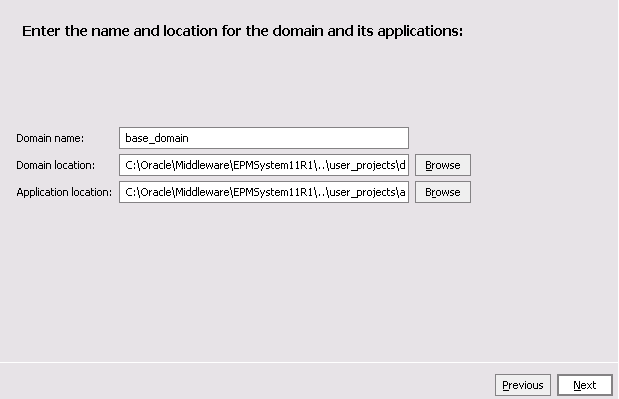
On the Specify Domain Name and Location screen, enter a domain name, accept the default locations, and click Next. You must use the same domain name when you configure the EPM components. In this example, the domain name is base_domain.
|
. |
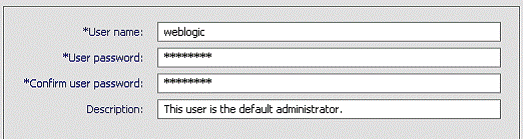
On the Configure User Name and Password screen, enter a user name and password for the WebLogic domain administrator, You use this domain administrator name and password for the EPM components as well. In this example,
|
. |
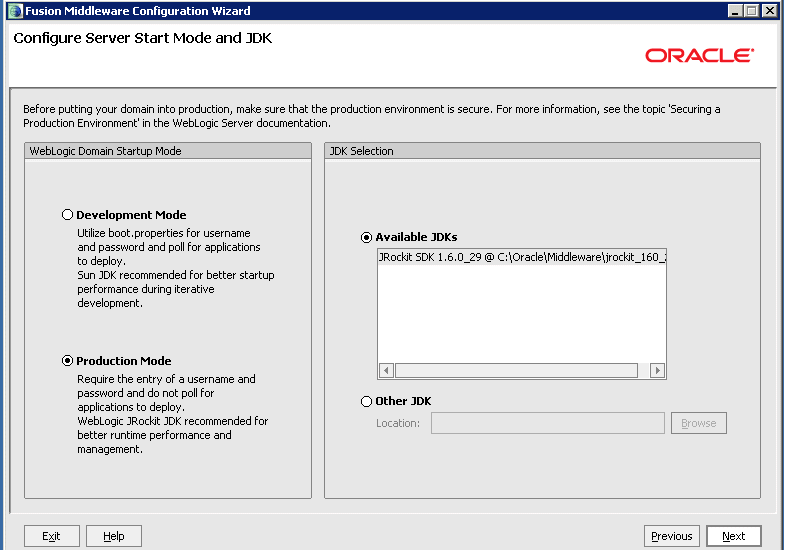
On the WebLogic Domain Startup Mode screen, change the mode to
|
. |
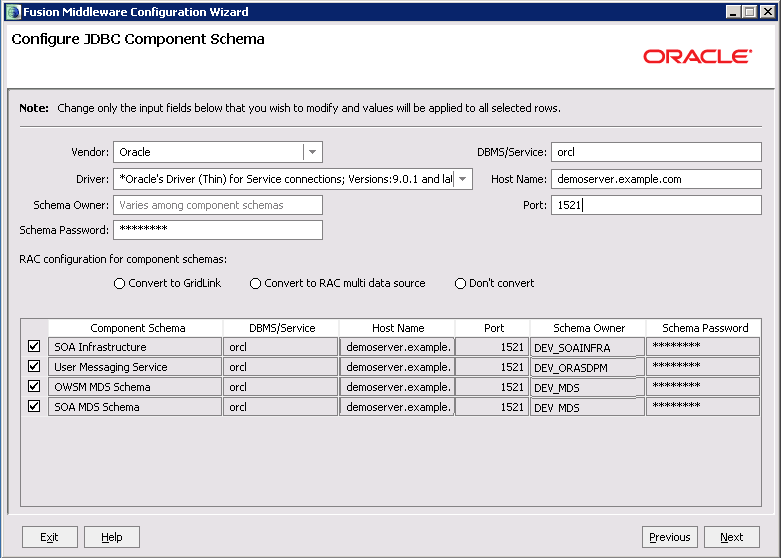
On the Configure JDBC Component Schema screen, select each component schema and provide the database connection information, Example for Oracle database:
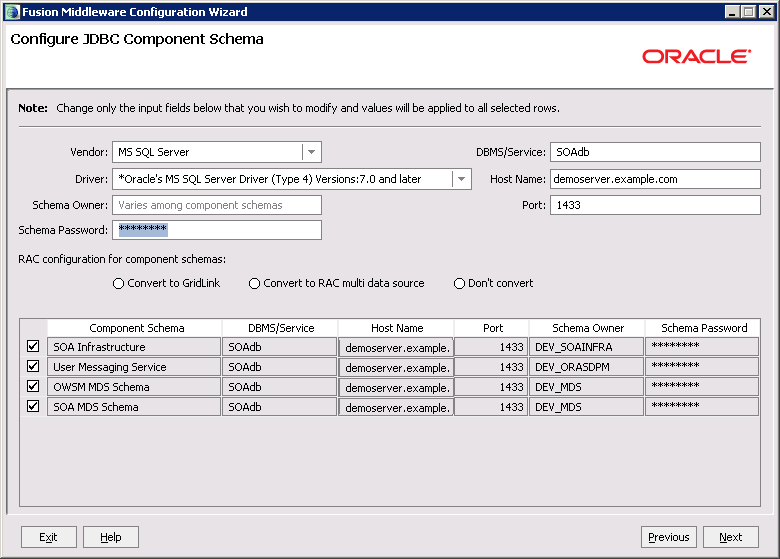
Example for MS SQl Server database:
|
. |
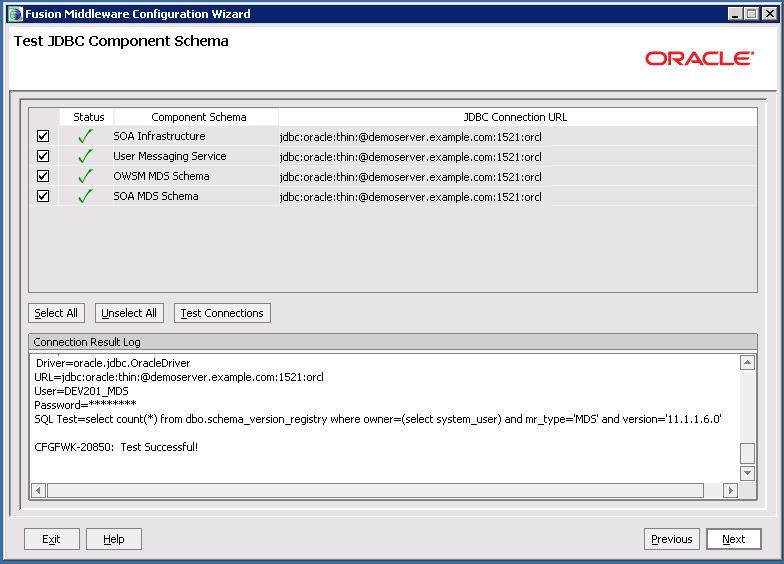
On the Test Component Schemas screen, verify that the connections to your data sources are successful, and click Next.
|
. |
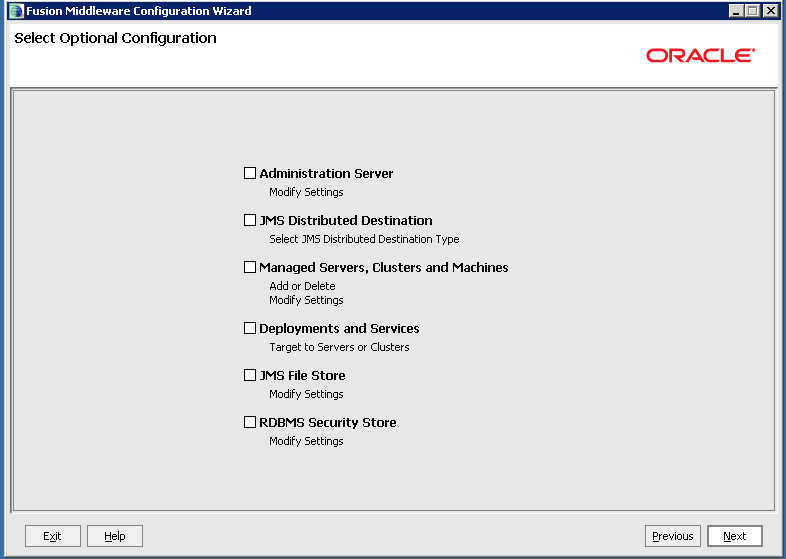
On the Select Optional Configuration screen, leave the default settings and click Next.
|
. |
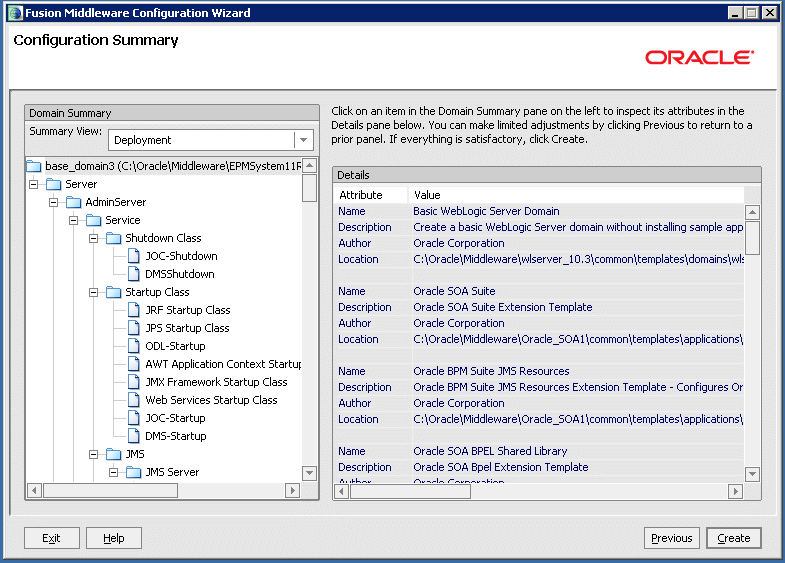
On the Configuration Summary screen, click Create.
|
. |
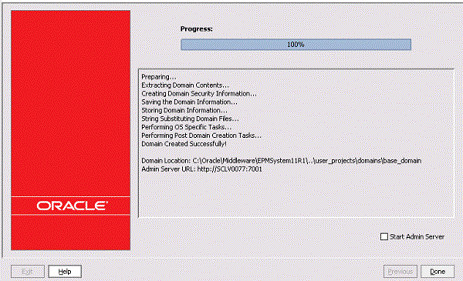
On the Creating Domain screen, when the process is complete, click Done.
|
Configuring EPM Components
The database schemas for the EPM components are created during the configuration process. During the configuration process you must provide valid Oracle/ MS SQL Server database user names and passwords under which to create the schemas.
Configuring Foundation Services, Financial Close Management and FDM
. |
From the Windows Start menu, select Programs, then Oracle EPM System, Note:You can also start the configuration utility using configtool.bat. For example, C:\Oracle\Middleware\EPMSystem11R1\common\config\11.1.2.0\configtool.bat).
|
|---|---|
. |
Accept the defaults and click Next.
|
. |
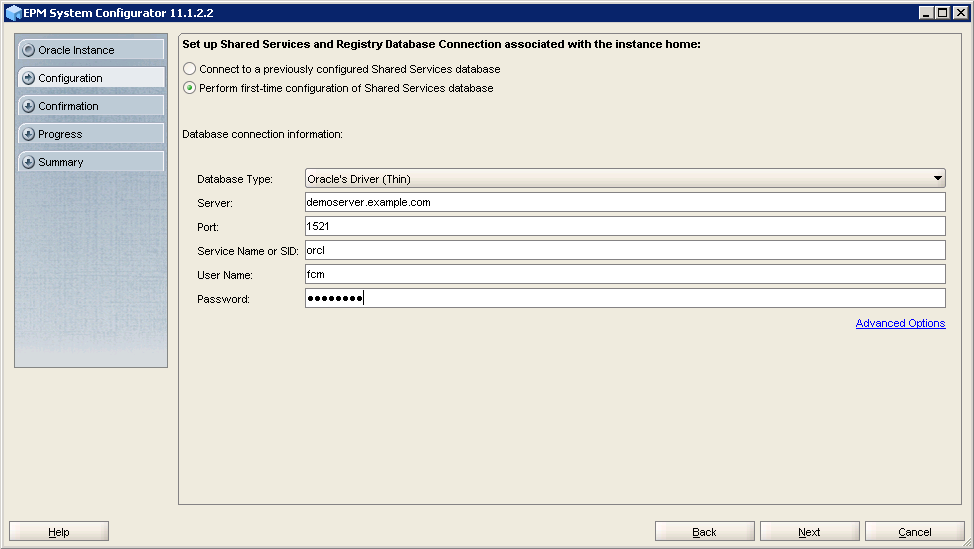
Select Perform first -time configuration of Shared Services database, enter the database connection Example for Oracle database (in this example the user name is fcm):
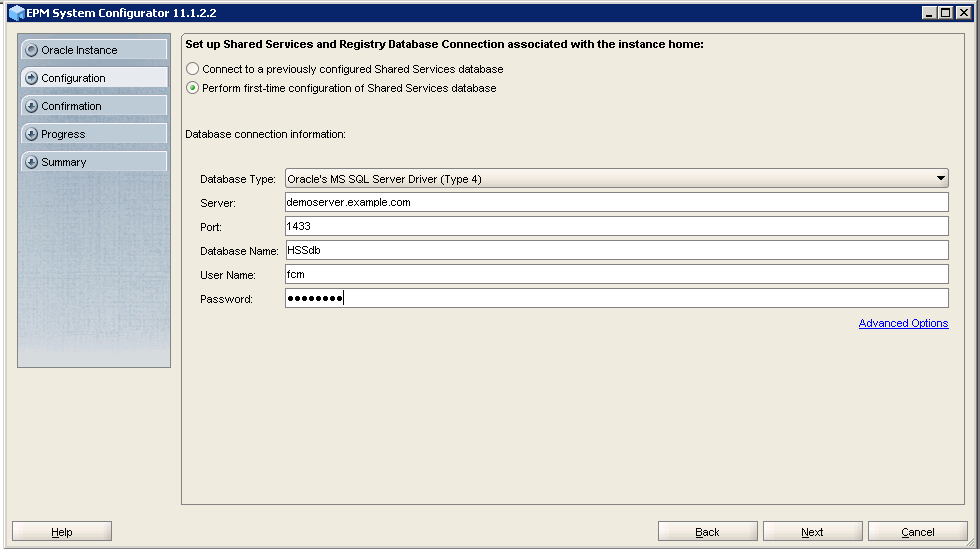
Example for MS SQl Server database (in this example, the user name is fcm and the database name is HSSdb):
|
. |
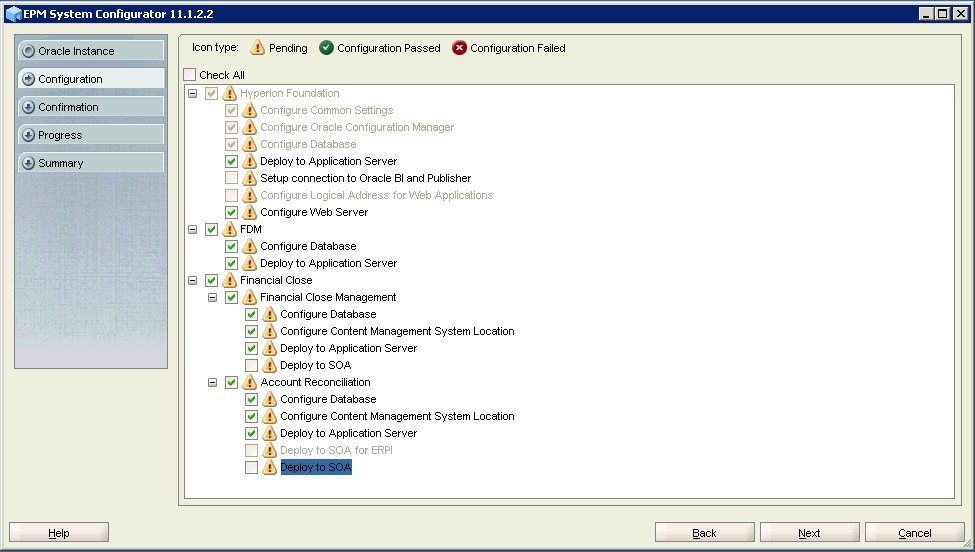
Accept the default options under Hyperion Foundation. For the products under Financial Close,
and for FDM, select Deploy to application server
|
. |
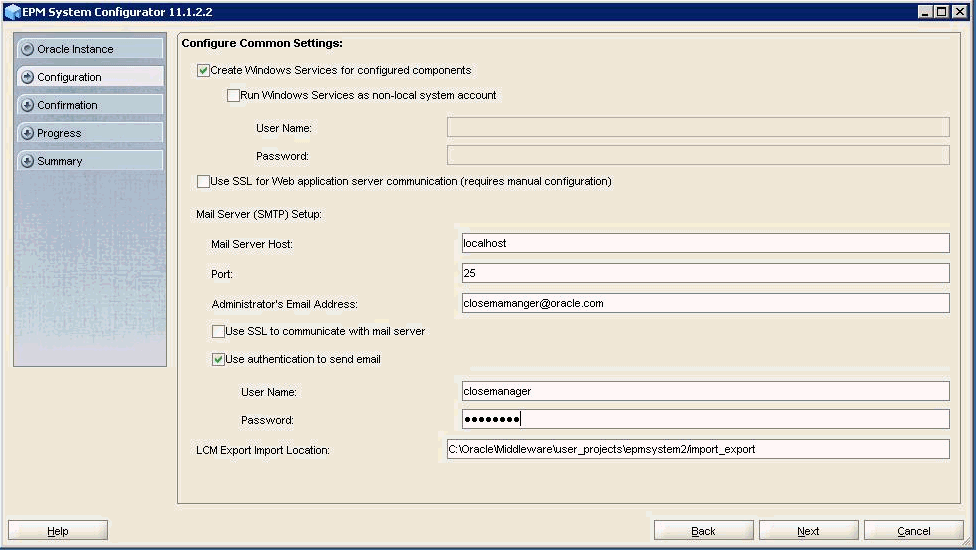
Select Create Windows Services for configured components, Enter Email Configuration details
|
. |
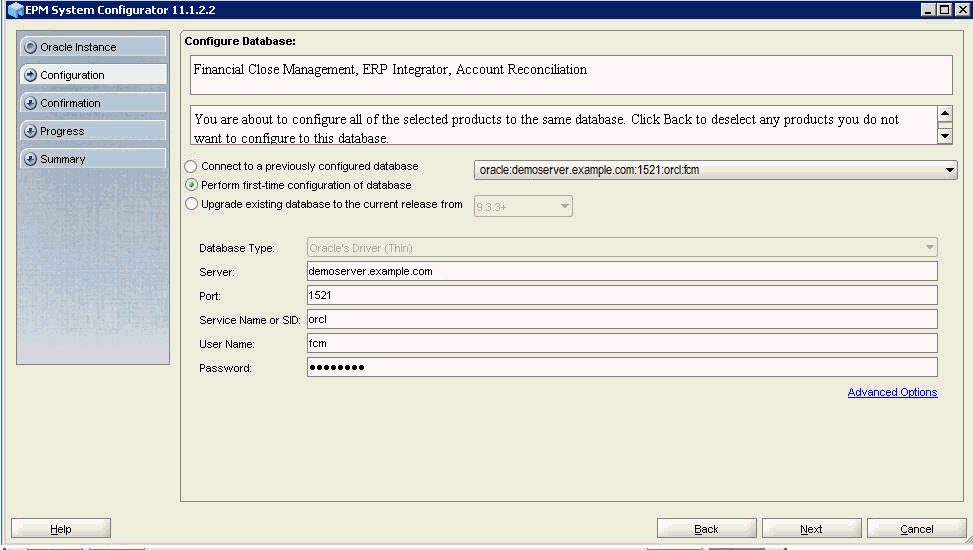
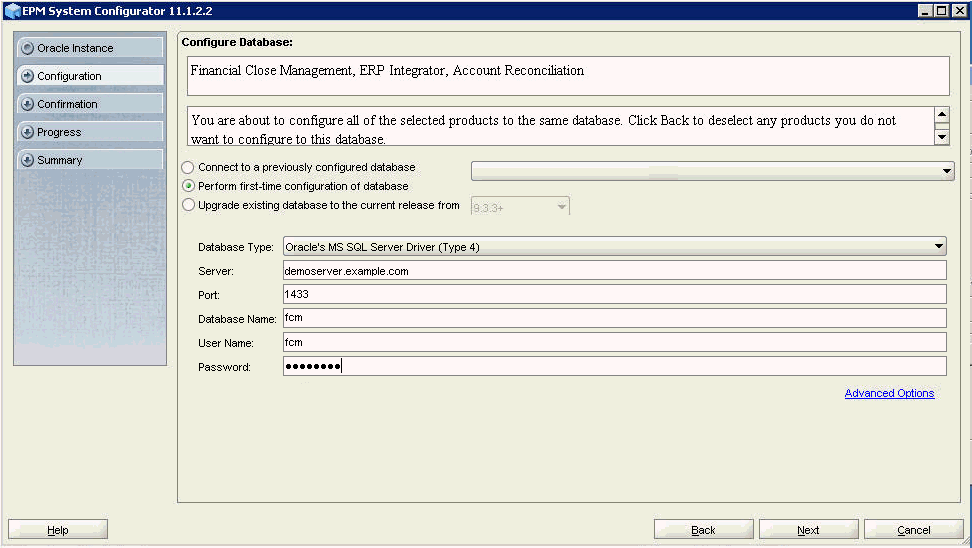
Select Perform first-time configuration of database, enter the connection details for the Example for Oracle Database (In this example, the user name is fcm):
Example for MS SQL Server Database (in this example, the user name is fcm and the database name is HSSdb):
|
. |
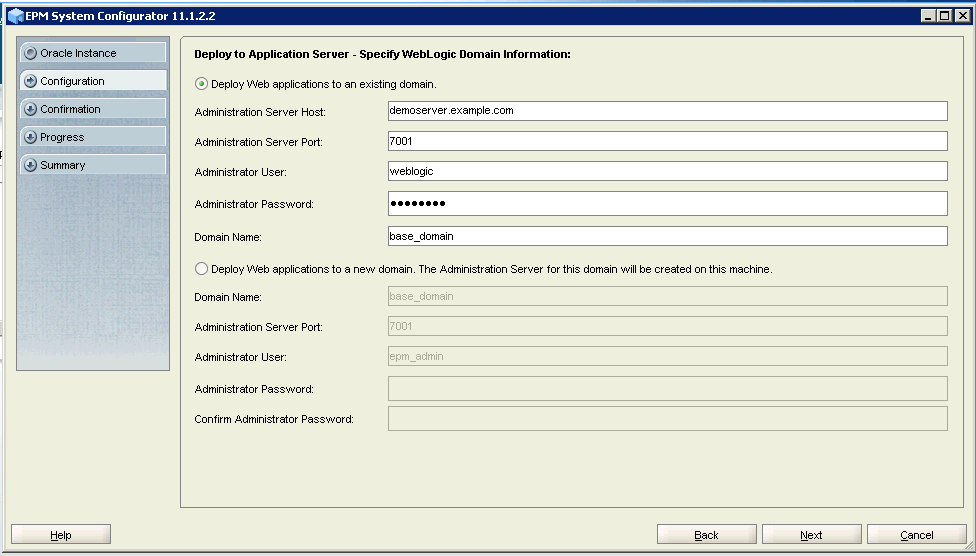
Select Deploy web applications to an existing domain, enter the information for the
|
. |
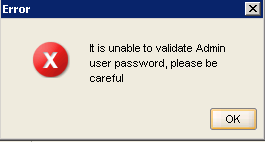
At the prompt regarding password validation, click OK.
|
. |
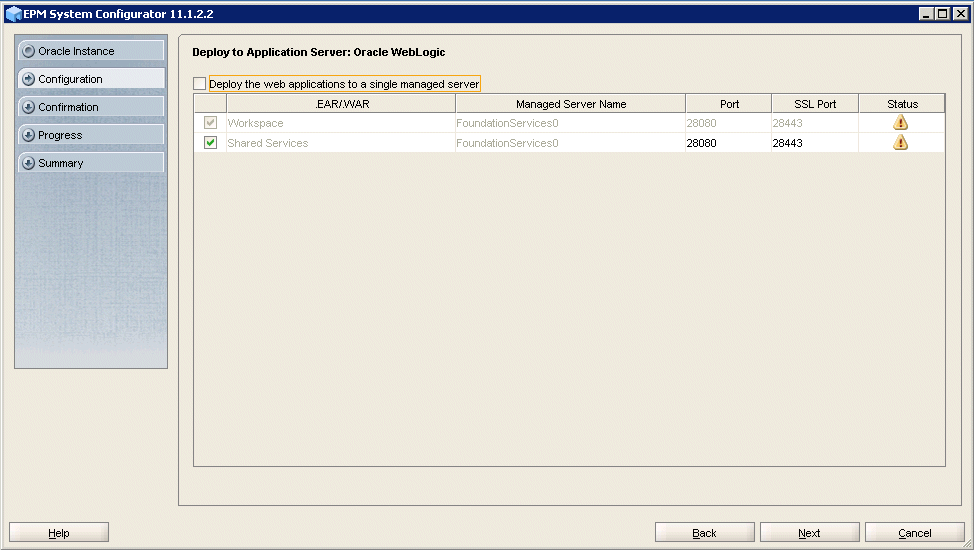
Uncheck Deploy the web application to a single managed Server and accept the
|
. |
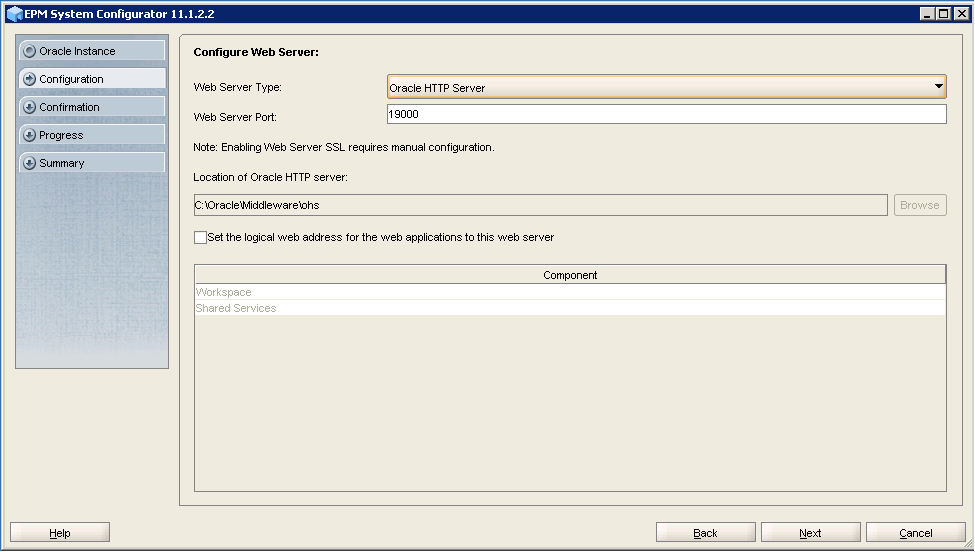
In the Web Server Type list, select Oracle HTTP Server, and click Next.
|
. |
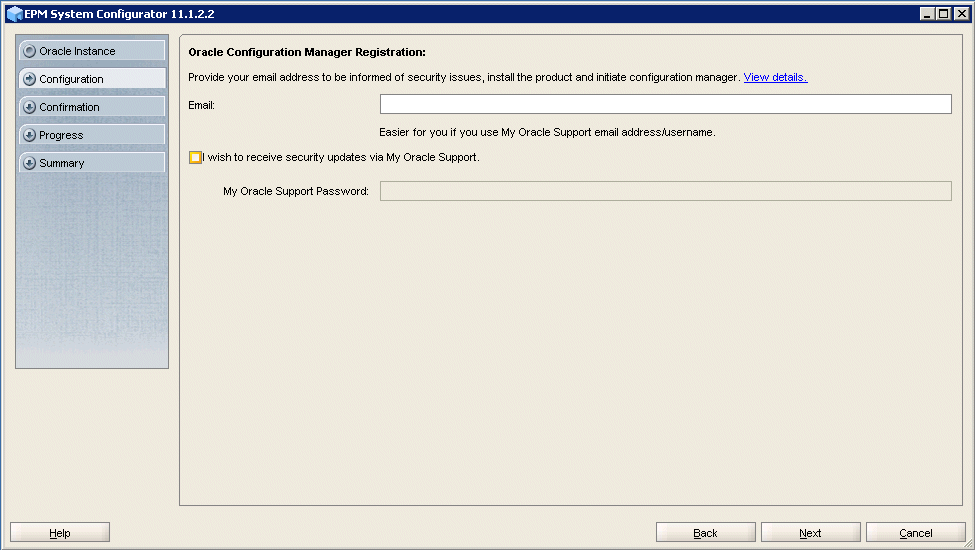
Provide the necessary information if you want to be informed of security updates by email,
|
. |
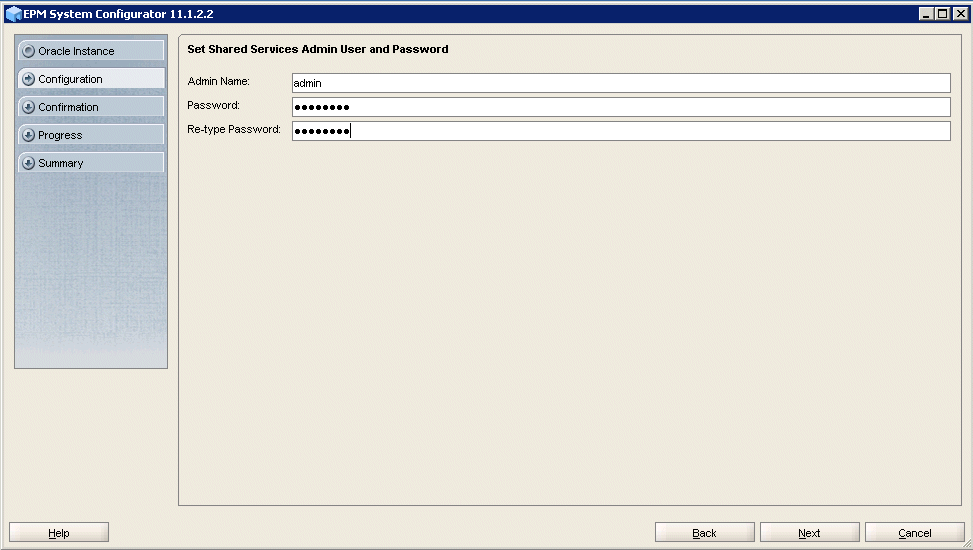
Enter the Shared Services administrator user name and password, and click Next.
|
. |
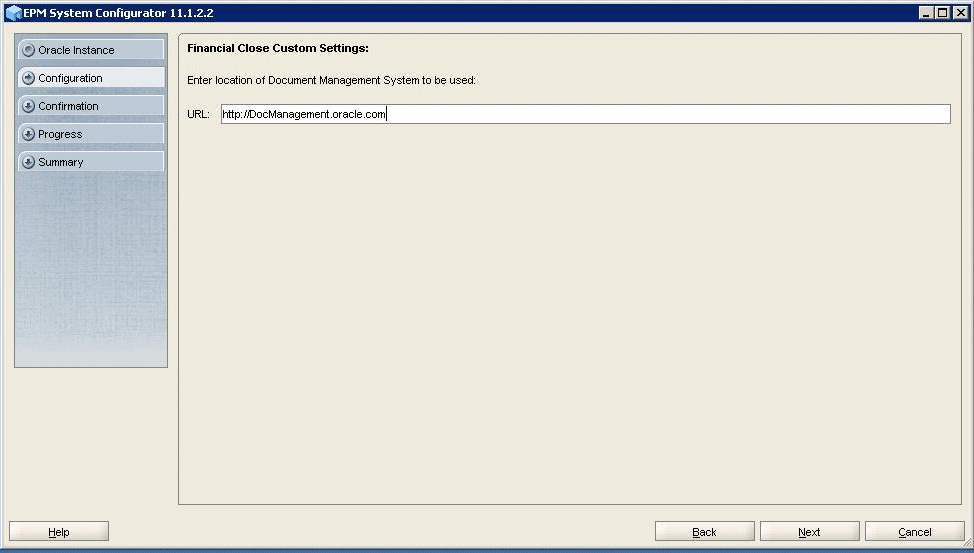
If you want to integrate Oracle Enterprise Content Management with your Financial Close Management
|
. |
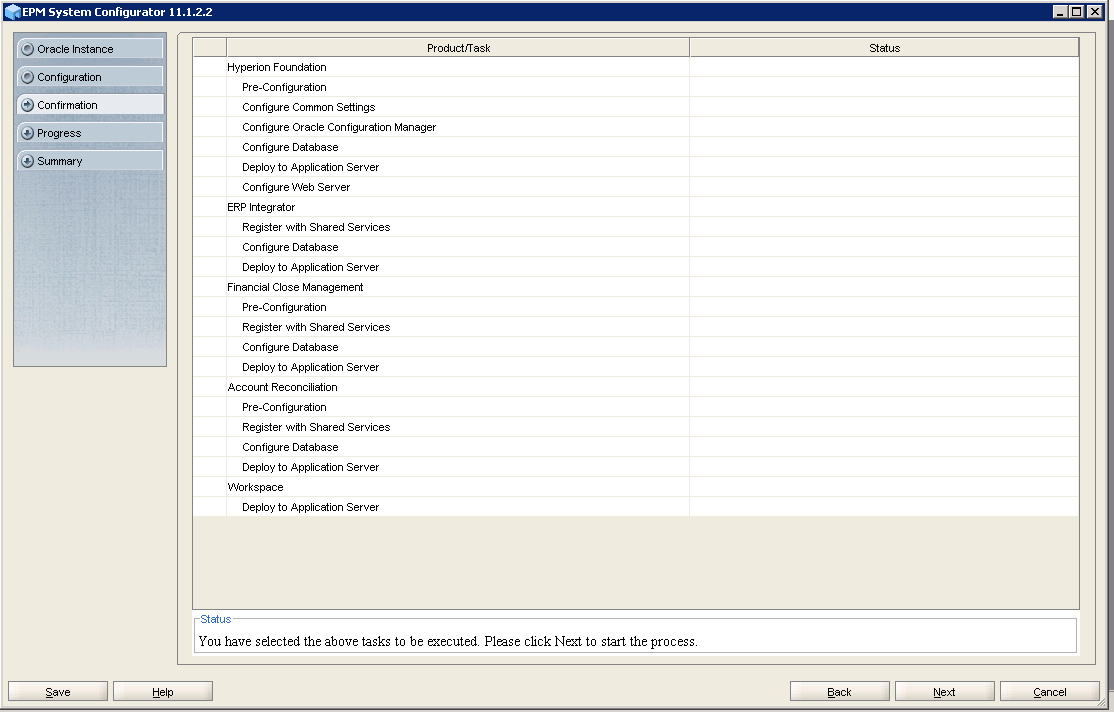
Review your selections, and click Next to launch the configuration.
|
. |
When the configuration is complete, click Finish.
|
Deploying to SOA
After configuring EPM products, you need to run the EPM System Configurator again to deploy to SOA.
. |
Ensure that both Admin and SOA server are running before running
|
|---|---|
. |
From the Windows Start menu, select Programs, then Oracle EPM System, Note: You can also start it with configtool.bat. For example; C:\Oracle\Middleware\EPMSystem11R1\common\config\11.1.2.0\configtool.bat).
|
. |
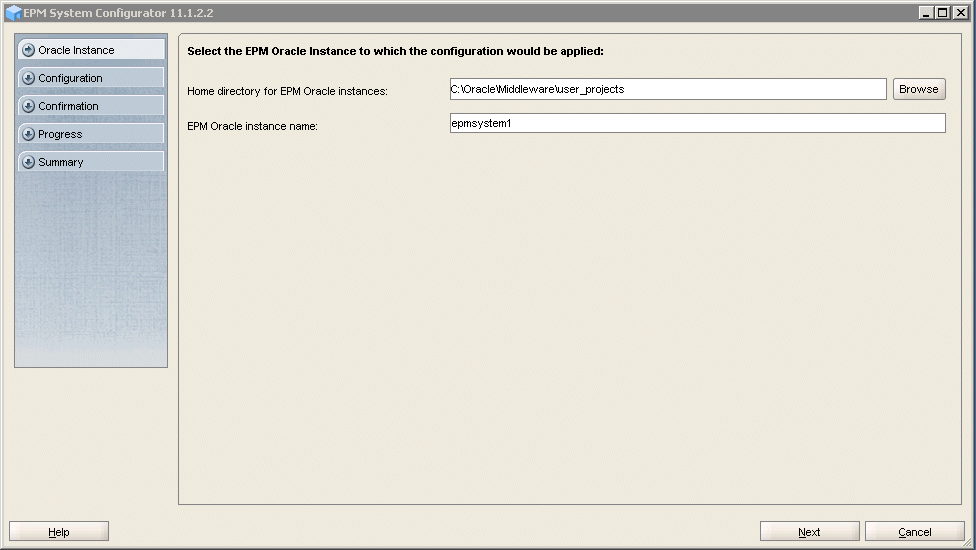
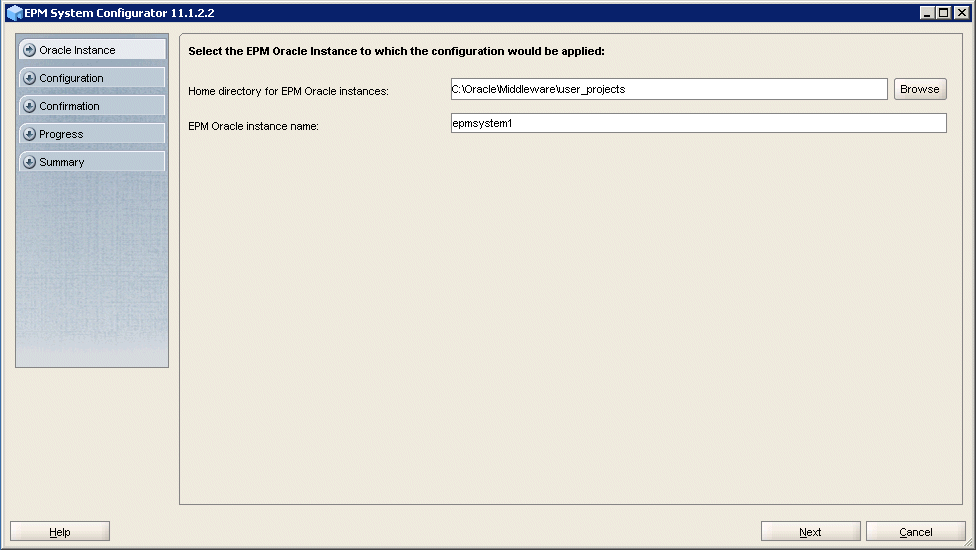
Select the EPM Oracle instance to which this configuration would be applied, and click Next.
|
. |
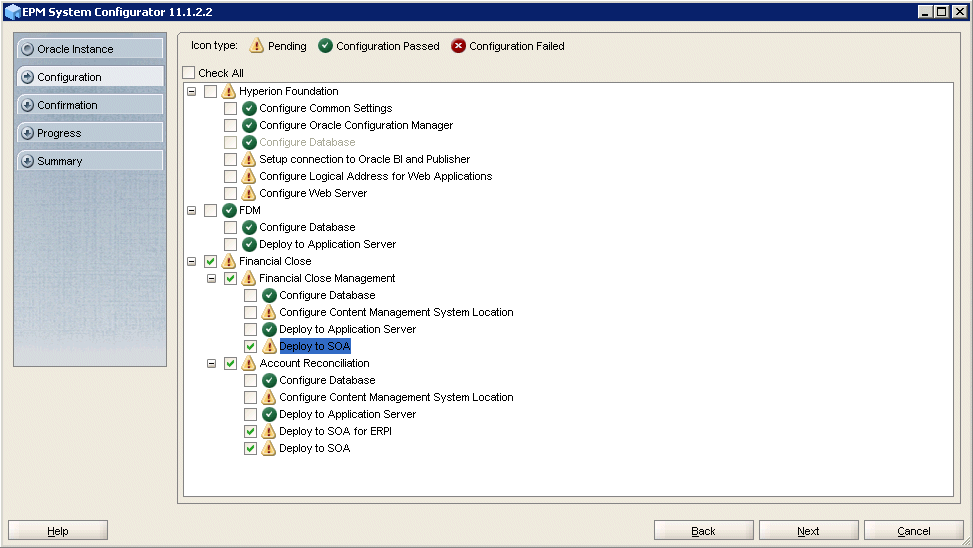
Expand Financial Close, then Financial Close Management and select Deploy to SOA. Ensure that none of the options under Hyperion Foundation are selected.
|
. |
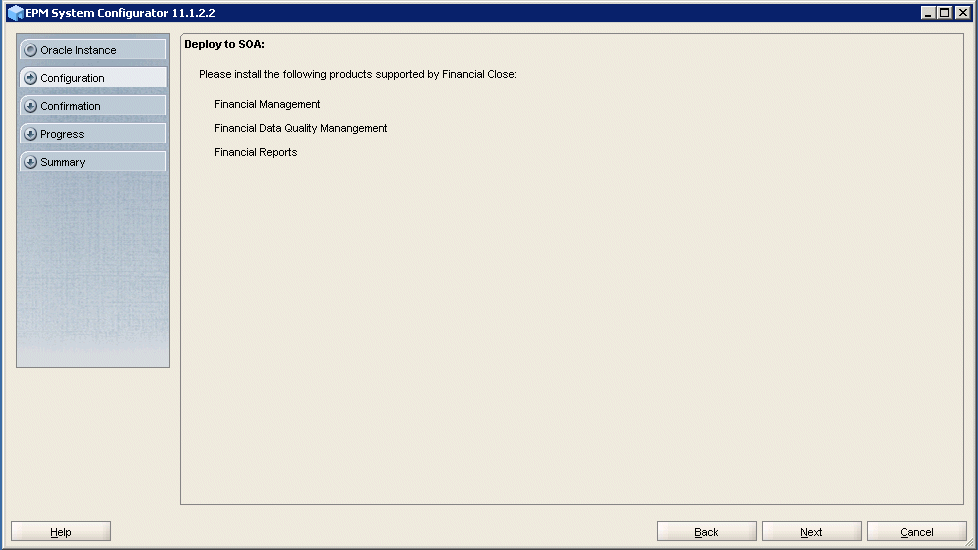
On the Deploy to SOA screen, click Next.
|
. |
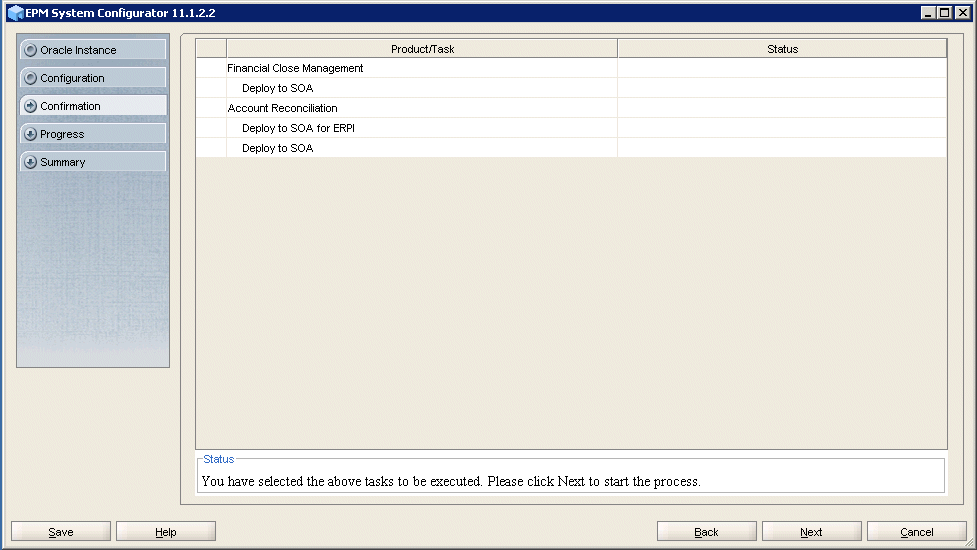
On the Confirmation screen, click Next to launch the configuration.
|
. |
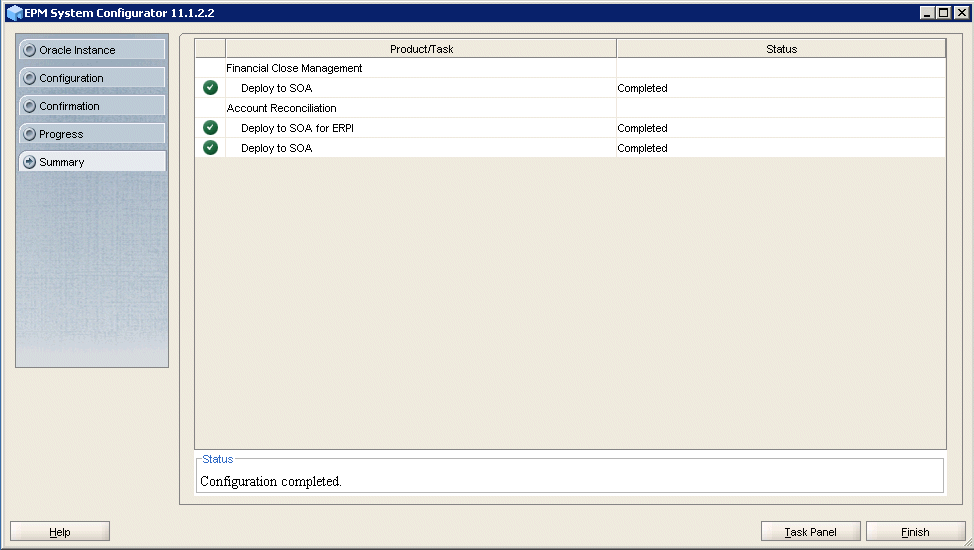
When the configuration is complete, click Finish.
|
Performing Post-Installation Manual Configuration Tasks
You perform the manual configuration tasks after installing and configuring SOA Suite and the EPM components.
Start Admin Server
. |
WebLogic Admin server must be running before you start manual configuration tasks. a. To start the WebLogic Admin Server, select Start, then Programs, then Oracle WebLogic, then User Projects, then <domain>, and then Start Admin Server, where <domain> is the WebLogic domain you created with the SOA configuration tool. b. When prompted, enter the WebLogic admin user name and password.
|
|---|
Connecting External Authentication Providers to the Weblogic Server
To communicate with an external authentication provider, such as Oracle Internet Directory or Microsoft Active Directory, you must configure WebLogic. You must configure Shared Services to use the same external authentication provider. For more information on configuring Shared Services, see the Oracle Enterprise Performance Management System User and Role Security Guide.
The following instructions show an example of how to configure MSAD as the authentication provider.
. |
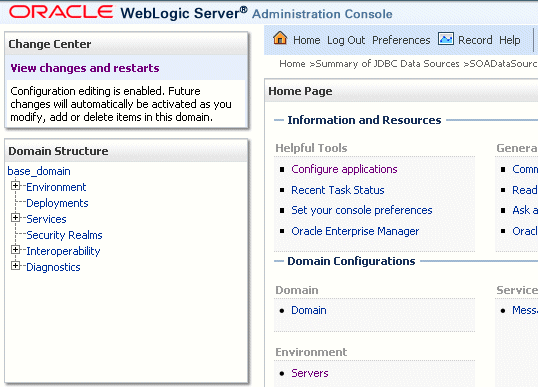
Connect to WebLogic Console http://host:7001/console where host is the name of the Machine.
|
|---|---|
. |
Log on using the WebLogic administrator name and password that you specified for the domain.
|
. |
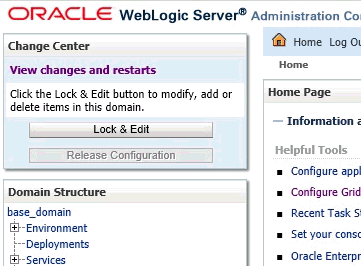
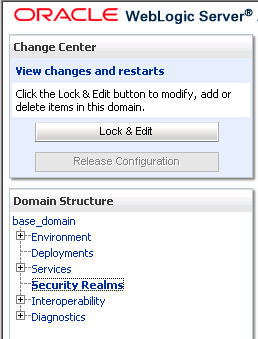
Click on Lock & Edit.
|
. |
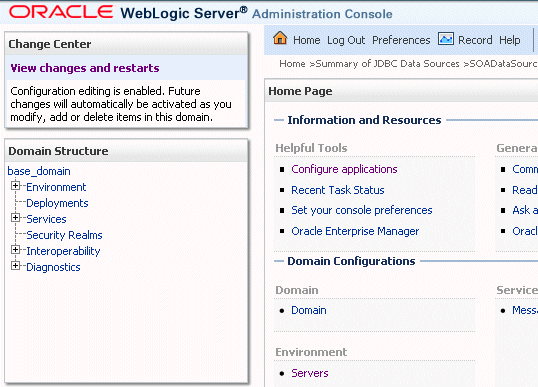
In the Domain Structure area, click Security Realms.
|
. |
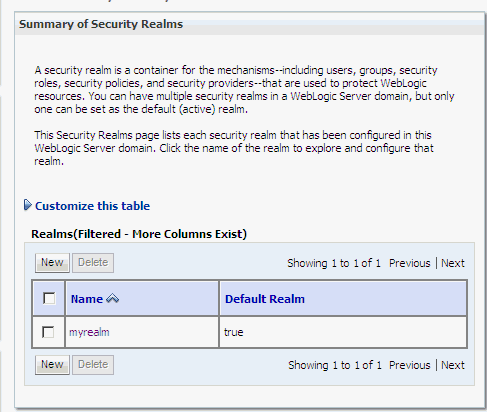
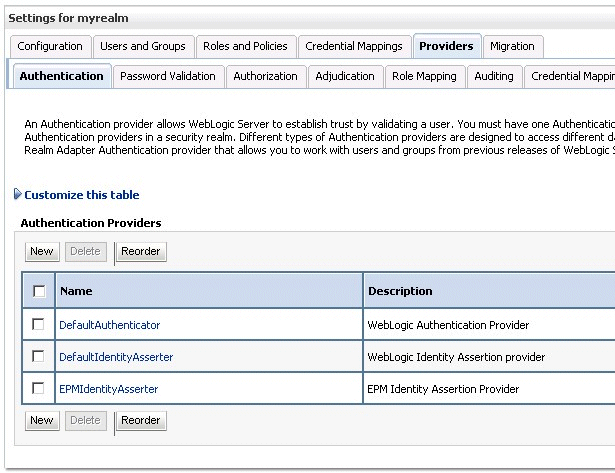
Click myrealm.
|
. |
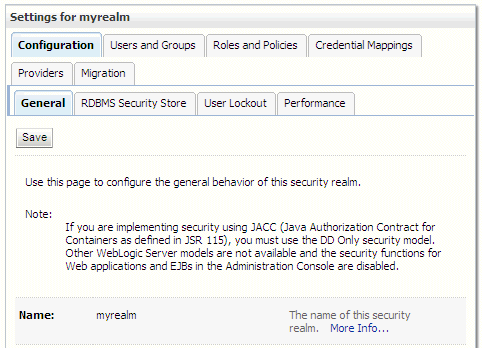
Select the Providers tab.
|
. |
Click New.
|
. |
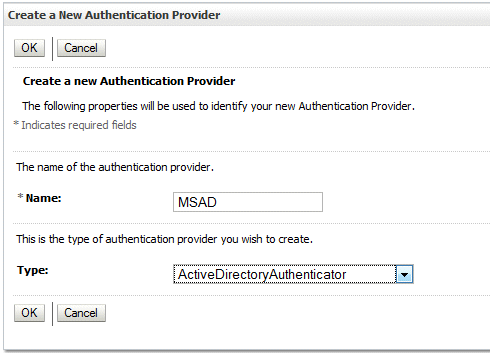
Configure your authentication provider. For Microsoft Active Directory, in the Name text box enter MSAD, and
|
. |
Click OK.
|
. |
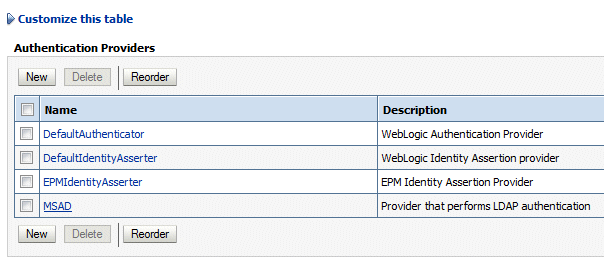
In the Authentication Providers list, click MSAD.
|
. |
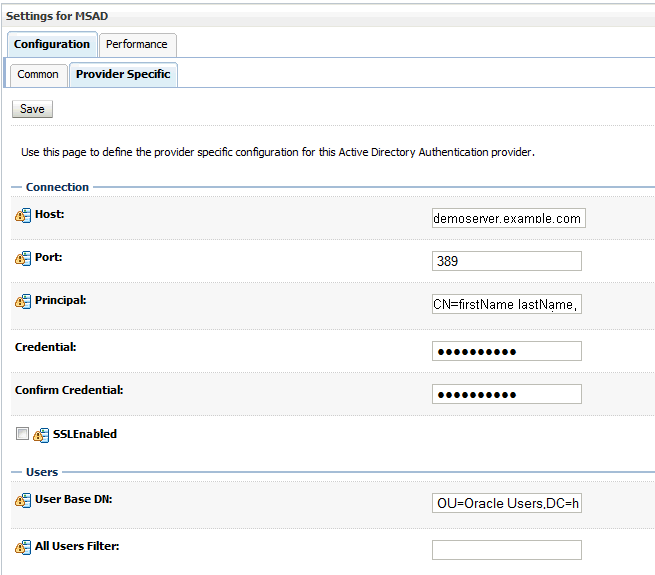
Select the Provider Specific tab. Enter the principal user name and credentials, and
|
. |
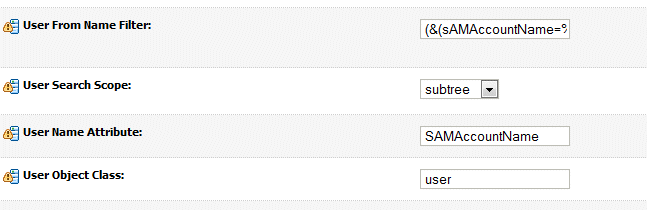
Make sure you provide SAMAccountName as User Name Attribute and in
|
. |
Click Save.
|
. |
In the Domain Structure area, click Security Realms, and then myrealm.
|
. |
Select the Providers tab.
|
. |
In the Authentication Providers list, click MSAD.
|
. |
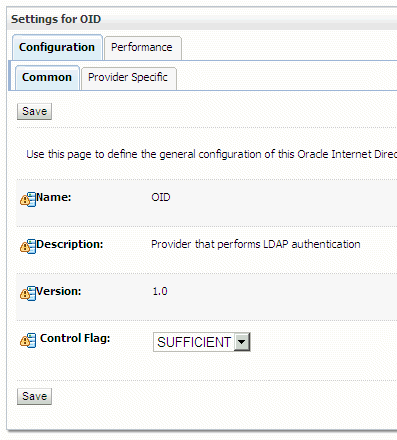
In the Control Flag list, select Sufficient.
|
. |
Click Save.
|
. |
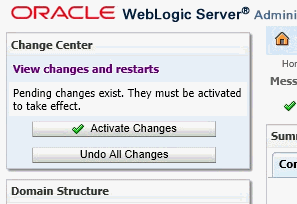
Click Activate Changes.
|
. |
Click Logout.
|
. |
Select Start, then Programs, then Oracle WebLogic, then User Projects, then <domain>, Note: You can also stop it with stopWebLogic.cmd. For example: C:\Oracle\Middleware\user_projects\domains\base_domain\bin\stopWebLogic.cmd).
|
. |
Select Start, then Programs, then Oracle WebLogic, then User Projects, then <domain>, Note: You can also start it with startWebLogic.cmd. For example; C:\Oracle\Middleware\user_projects\domains\base_domain\bin\startWebLogic.cmd). When prompted, enter the WebLogic admin user name and password.
|
Configuring the external Provider with Shared Services
. |
Start Foundation Services and Oracle Process Manager (OHS) from windows Services.
|
|---|---|
. |
Connect to Shared Service Console http://host:port/interop/index.jsp where host is the name of the Machine and port is Listen port of FoundationServices0 managed Server in WebLogic console.
|
. |
Login as admin.
|
. |
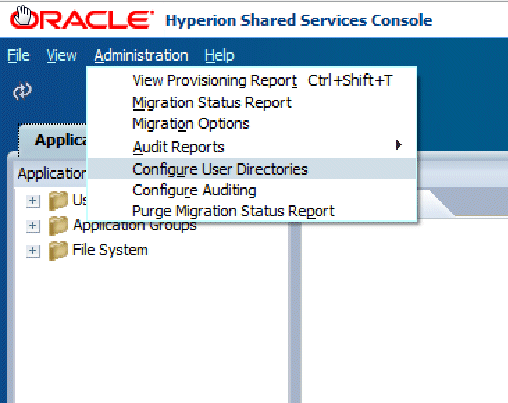
Click on Administration and Select Configure User Directories.
|
. |
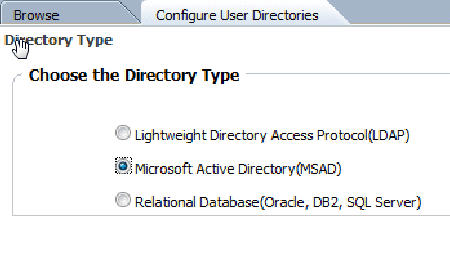
Click New and choose the Directory Type as MSAD, and click Next.
|
. |
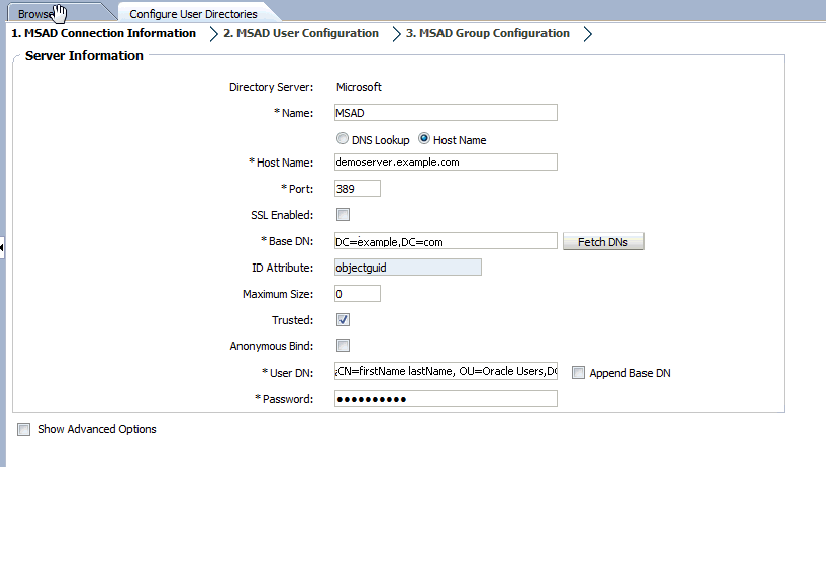
Enter the following in the Server information tab:
|
. |
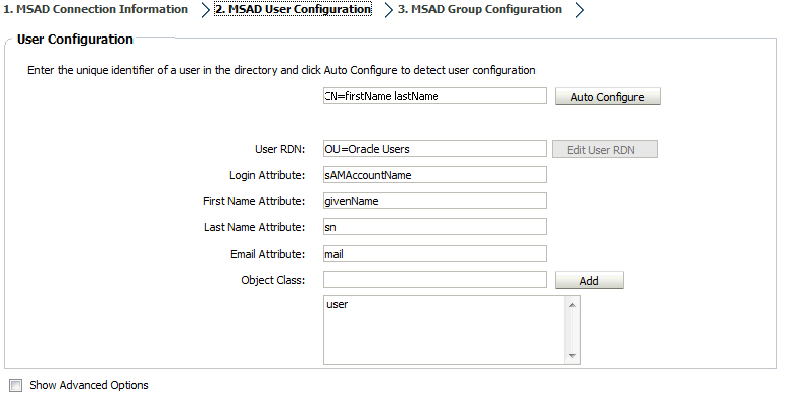
Click “Next” to navigate to the MSAD User Configuration Tab and enter user information.
|
. |
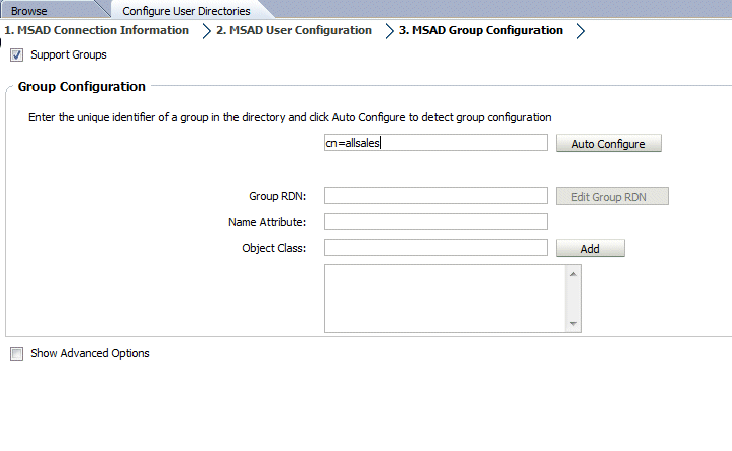
Click “Next” to navigate to the MSAD Group Configuration Tab and enter group information.
|
. |
Click Save and Logout.
|
. |
Restart the FoundationServices0 Managed Server.
|


Configuring the Keystore for Oracle Web Services Manager
You must set up the Keystore for message protection and configure the Credential Store Provider. The Financial Close Management client and the Oracle Hyperion Financial Management Web service use the following policies:
- wss11_saml_token_with_message_protection_client_policy
- wss11_saml_token_with_message_protection_service_policy
. |
At a command prompt, enter the following command to add the JDK to the path: set PATH=%PATH%;C:\Oracle\Middleware\jdk160_29\bin\ where C:\Oracle\Middleware\jdk160_29\bin has to be your JDK path The JDK must be included in the path in order to run the Java keystore utility.
|
|---|---|
. |
Use the Oracle keystore utility to create a keystore on the Weblogic Admin server hosting your EPM System domain by navigating to c:\oracle\middleware\user_projects\domains\<domain>\config\fmwconfig (where <domain> is the WebLogic domain you created with SOA configuration tool), and entering the following command: keytool -genkey -keyalg RSA -alias orakey -keypass welcome1 -keystore default-keystore.jks -storepass welcome1 -validity 3600 This command creates a keystore with the name default-keystore.jks if it does not command.
|
. |
Enter the following URL to start Oracle Enterprise Manager, replacing <host> with your host name:
|
. |
Enter your Weblogic administrator name and password to log in.
|
. |
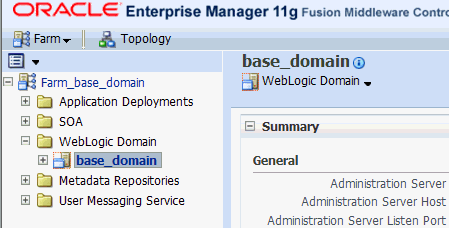
In the navigation pane, expand Weblogic Domain, and then select the WebLogic domain you created in the SOA configuration tool.
|
. |
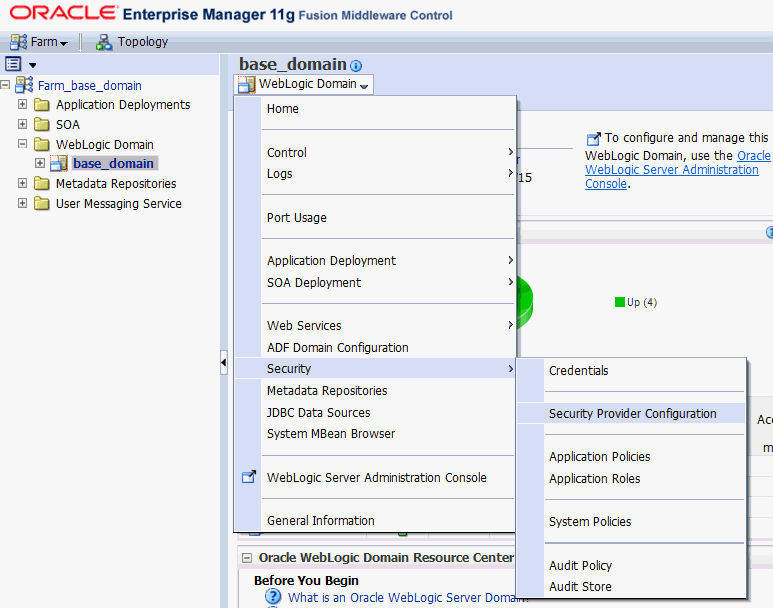
Right-click on WebLogic Domain, then Security, and then Security Provider Configuration.
|
. |
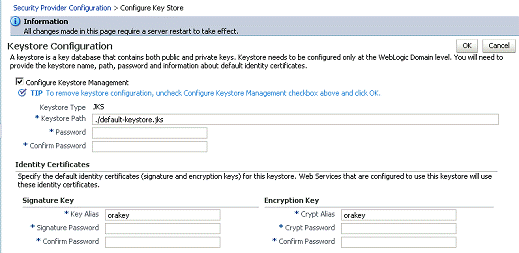
Expand the Keystore section, and click Configure.
|
. |
In the Keystore Path text box, enter the path name for the keystore you created, and enter the keystore password in the password fields. In the Signature Key and Encryption key text boxes, enter the alias and password for the signature and encryption keys. It should be noted that the "Keystore Path" requested by EM is relative to "C:\Oracle\Middleware\user_projects\domains\<domain>\config\fmwconfig" so it should be ./default-keystore.jks
|
. |
Click OK.
|

Delete Data Sources (Only for MS SQL Server)
After you install and configure SOA, you delete the EDNDataSource and EDNLocalTxDataSource data sources.
. |
<If the Weblogic Admin server is not already running, select Start, then Programs, then Oracle WebLogic, Note: You can also start it with startWebLogic.cmd. For example; C:\Oracle\Middleware\user_projects\domains\base_domain\bin\startWebLogic.cmd). When prompted, enter the WebLogic admin user name and password. The process will take a few minutes and is complete when you see '<Server started in RUNNING mode>' in the command prompt box.
|
|---|---|
. |
Select Start, then Programs, then Oracle WebLogic, then User Projects, then<domain>,
|
. |
Log on using the WebLogic administrator name and password that you specified for the domain.
|
. |
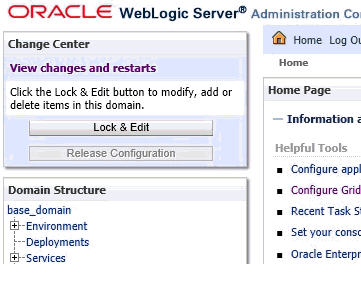
Click Lock & Edit.
|
. |
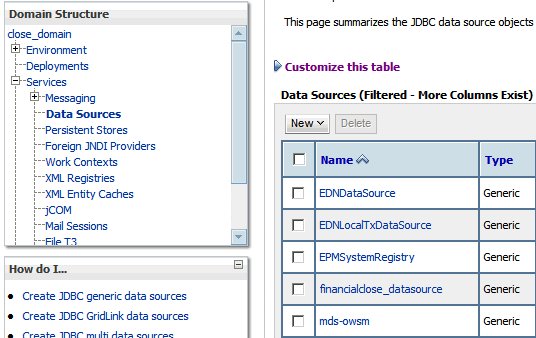
In the Domain Structure area, expand Services and select DataSources.
|
. |
In the Datasources table, delete EDNDataSource and EDNLocalTxDataSource.
|
. |
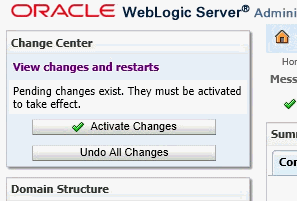
Click Activate Changes.
|
. |
Click Logout.
|
Raising the Maximums for Connection Pools
. |
Select Start, then Programs, then Oracle WebLogic, then User Projects, then <domain>,
|
|---|---|
. |
Log on using the WebLogic administrator name and password that you specified for the domain.
|
. |
Click on Lock & Edit.
|
. |
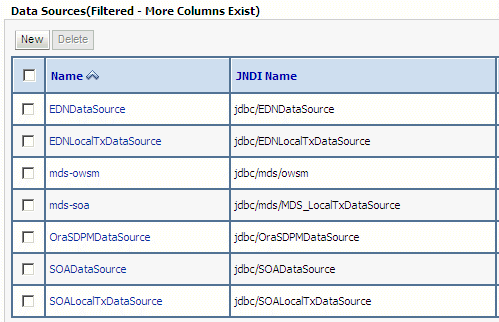
In the Domain Structure area, expand Services, and click on Datasources. Note: For SQL Server Only: Skip “Raising the Maximums for Connection Pools” for the deleted datasources
|
. |
In the Name list, click EDNDataSource.
|
. |
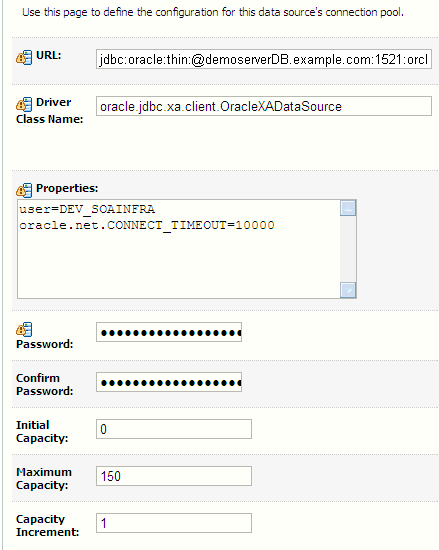
Select the Connection Pool tab.
|
. |
In the Maximum Capacity text box, enter 150.
|
. |
Click Save.
|
. |
In the Domain Structure area, click Data Sources to return to the list of data sources.
|
. |
Repeat the above steps to increase the connection pools for the EDNLocalTxDataSource, If you receive resource errors specific to any of the following data sources,
|
Raising the StuckThreadMaxTime
. |
In the Domain Structure area, expand Environment and select Servers.
|
|---|---|
. |
In the server list, click ERPIntegrator0.
|
. |
Select the Tuning tab.
|
. |
In the Stuck Thread Max Time textbox, enter 6000.
|
. |
Click Save.
|
. |
In the Domain Structure area, click Servers to return to the list of servers.
|
. |
Repeat the above steps to increase the Stuck Thread Max Time for soa_server1 and FinancialClose0.
|
. |
Click Activate Changes.
|
. |
Click Logout.
|
. |
Stop Foundation Services from windows Services.
|
. |
To stop the WebLogic Admin Server,press and hold Ctrl + C in the command window where WebLogic Admin server
|
. |
To stop the SOA managed server,press and hold Ctrl + C in the command window where WebLogic Admin server
|
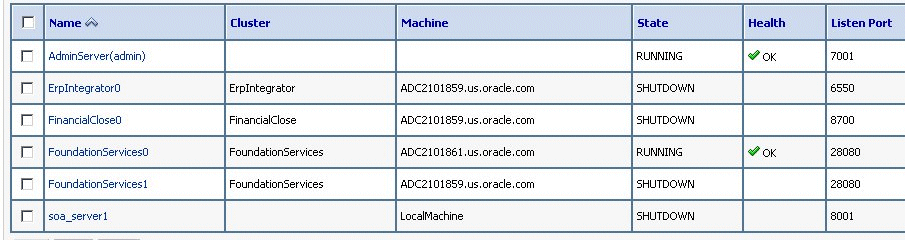

Starting the Servers
You must start the servers required for Financial Close Management in the following order:
- WebLogic Admin Server
- Foundation Services managed server
- Oracle HTTP Server
- ERP Integrator
- Optional: Managed servers for integration products (for example, Financial Management or Financial Reporting)
- SOA managed server
- Financial Close Management Managed server
Note: Wait until each server status changes to the RUNNING state before you go to the next server in the sequence.
. |
In the Domain Structure area, click Environment, then Servers to return to the list of servers. You see the list of servers to be started:
Note: Wait until each server status changes to the RUNNING state before you go to next server in the sequence.
|
|---|---|
. |
To start the WebLogic Admin server, select Start, then Programs, then Oracle WebLogic, then User Projects, Note: You can also start it with startWebLogic.cmd. For example; C:\Oracle\Middleware\user_projects\domains\base_domain\bin\startWebLogic.cmd). When prompted, enter the WebLogic admin user name and password.
|
. |
To start Foundation Services, select Start, then Programs, then Oracle EPM System, then Foundation Services, Note: You can also start it with startFoundationServices.bat. For example C:\Oracle\Middleware\user_projects\epmsystem1\bin\startFoundationServices.bat).
|
. |
To start the Oracle HTTP server, enter the following command at a command prompt:
|
. |
To start ERP Integrator on Machine B, start the Hyperion ERP Integrator - Web Application service from Windows Services.
|
. |
To start the SOA managed server , enter the following command at a command prompt: When prompted, enter the WebLogic admin user name and password.
|
. |
To start Financial Close Management Services, select Start, then Programs, then Oracle EPM System,
|
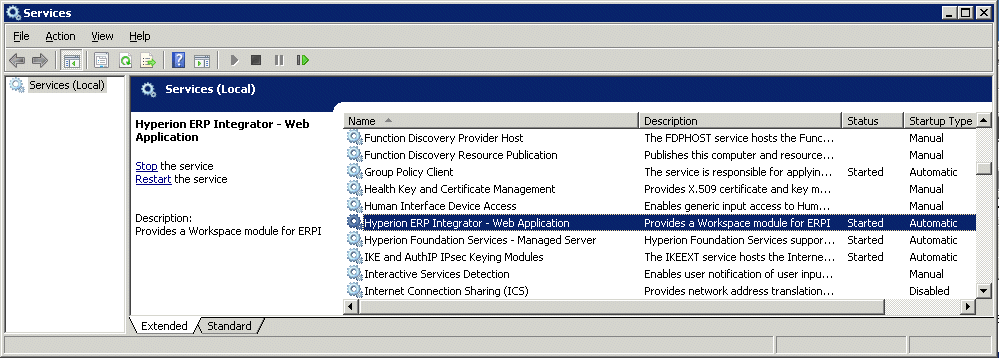
Running the Validation Tool to Verify EPM Configuration
Perform the procedures below to validate the EPM configuration.
. |
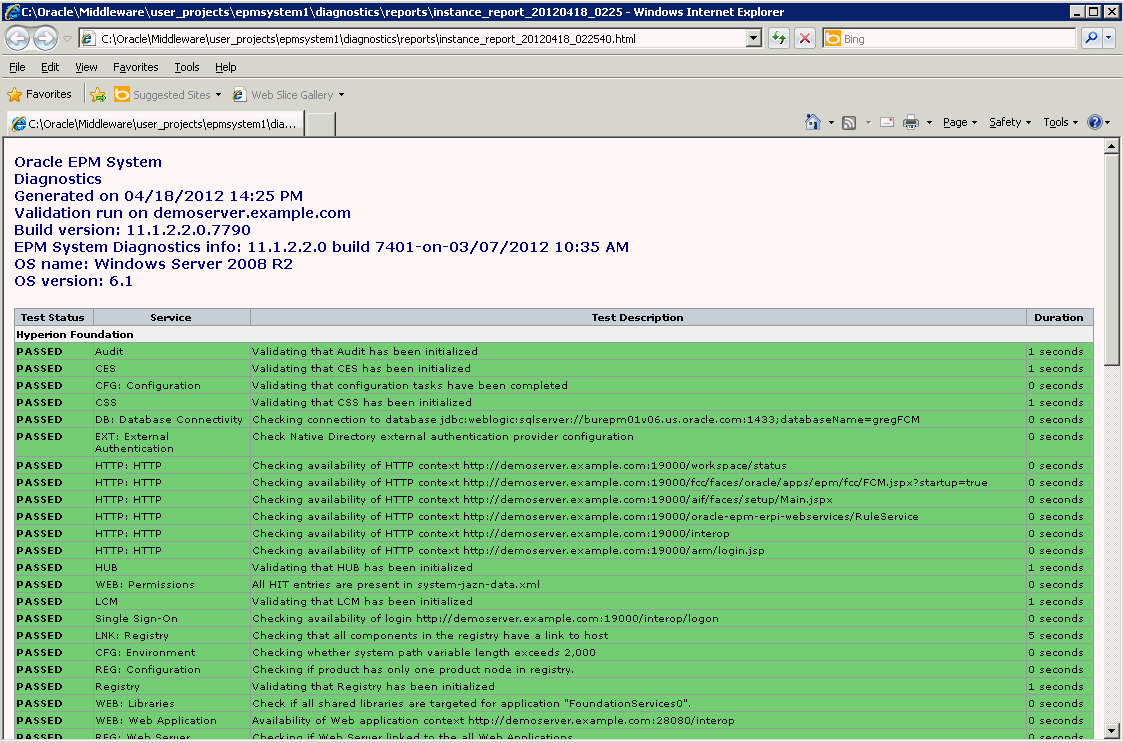
To start the EPM validator tool,select Start, then Programs, then Oracle EPM System, then Foundation Services, then epmsystem1, then EPM System Diagnostics. (You can also start it with validate.bat. For example: Example: C:\Oracle\Middleware\user_projects\epmsystem1\bin\validate.bat This launches a new browser window with the validation status for each EPM component (all components should have a pass status, as in the following example:
|
|---|---|
. |
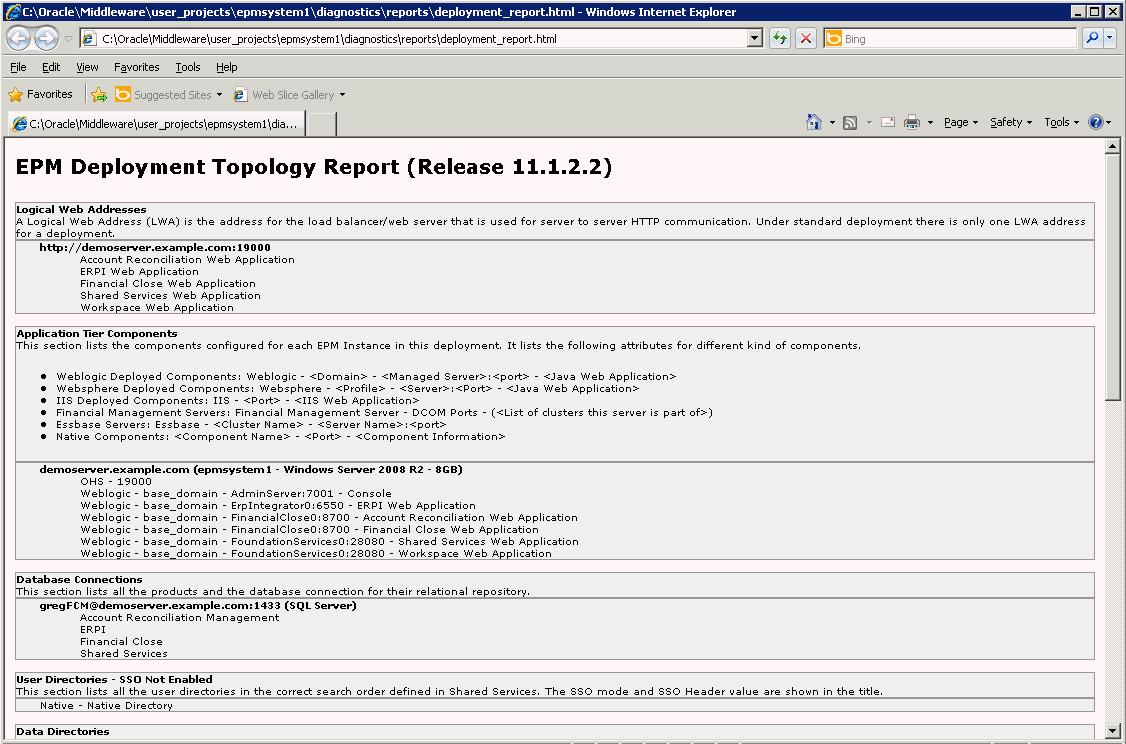
To run an EPM deployment report launch the following bat script:
This produces a new browser window with the following report:
|
. |
Scroll to the end of the report and you should all passed and 0 failed.
|


Running the Validation Tool to Verify Close Manager and Account Reconciliation Manager Configuration
Perform the procedures below to validate the configuration.
Validating Close Manager Configuration
. |
Launch the validator tool from a web browser using the following the URL:
|
||||||||||||||||
|---|---|---|---|---|---|---|---|---|---|---|---|---|---|---|---|---|---|
. |
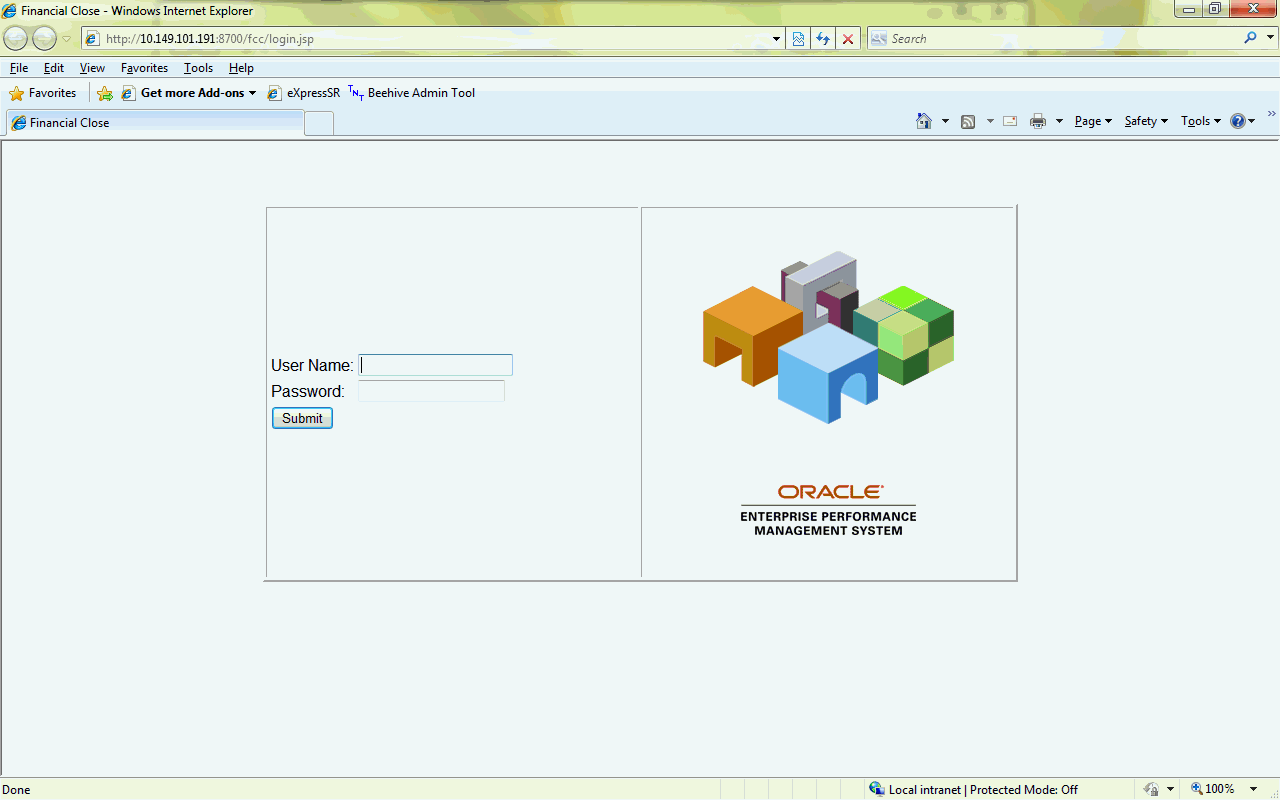
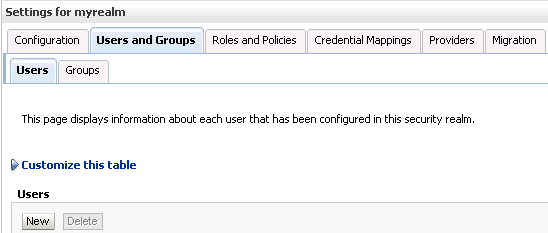
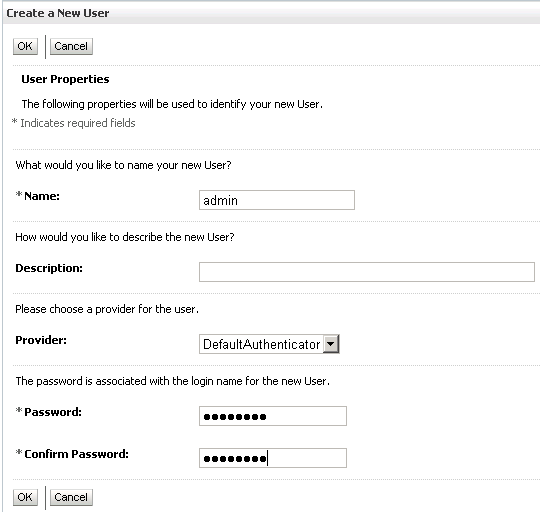
Log in to Close Manager using Shared Services administrator credentials. Note: If an external provider is configured, the log in can also be done with a user from the external provider. Example to seed an “admin” user (who is default administrator in Shared Services) in WebLogic (this way, you can use the admin user a. Log in to the WebLogic admin console (http://<host>:7001/console where <host> is machine name for where admin server is running) b. Click Lock and Edit.
c. Go to the Domain Structure area and click Security Realms.
d. Click the myrealm link.
e. Go to the Users and Groups tab and click New under the Users tab.
f. Enter admin in the Name field and enter the admin user’s password for the Password/Confirm Password fields
f. Click OK. h. Click Activate Changes.
|
||||||||||||||||
. |
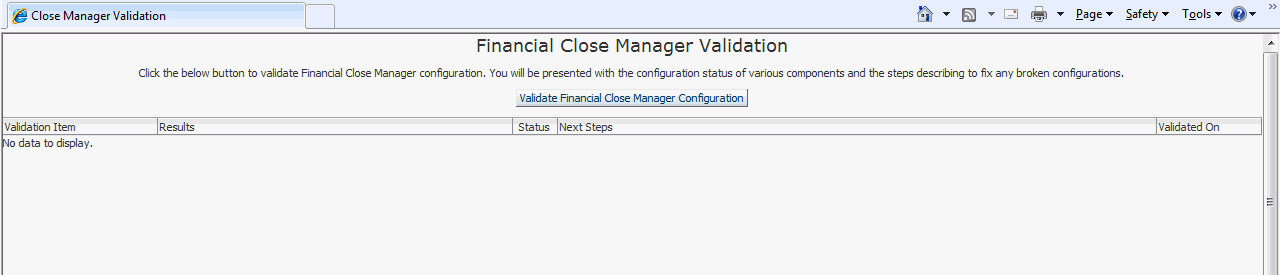
After successfully logging in the following screen is displayed.
|
||||||||||||||||
. |
To validate the close manager configuration, click the “Validate Financial Close Manager Configuration” button
|
||||||||||||||||
. |
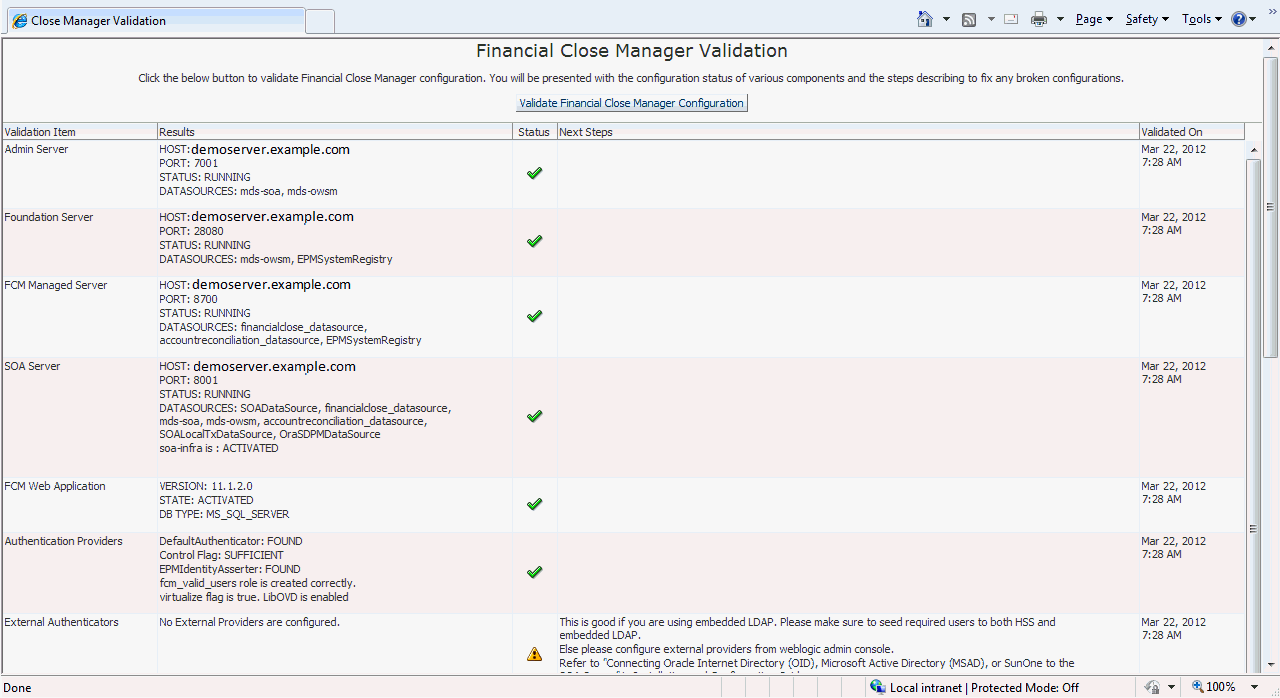
After validation, the configuration information will be displayed in a tabular form.
The table below lists the information that is displayed.
|
||||||||||||||||
. |
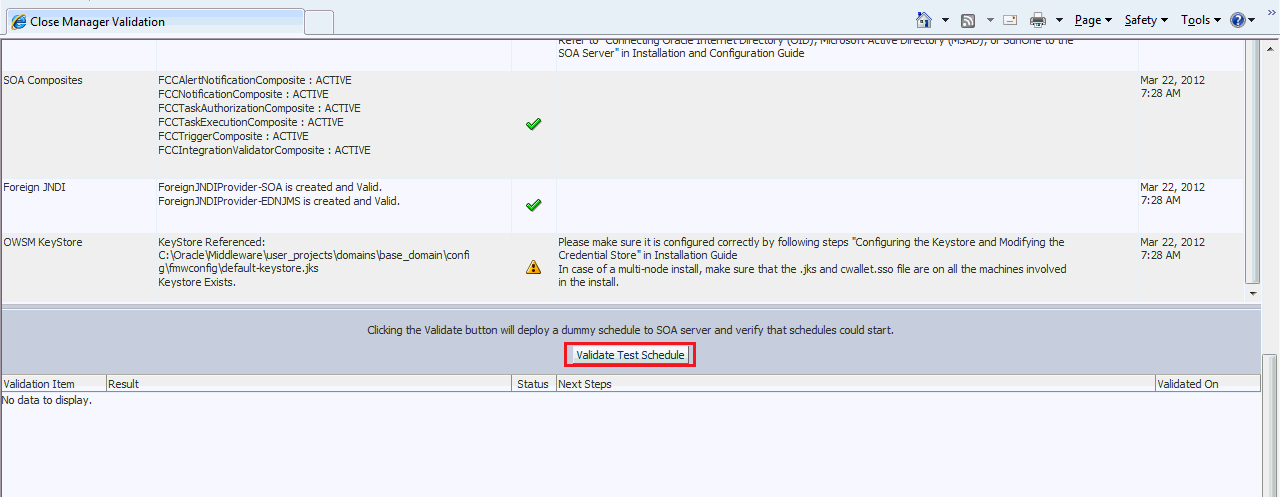
Validate the test schedule: If you are running this part, make sure the user logged into the Diagnostic tool is a user that is also present in HSS. To run validate the test schedule, click Validate Test Schedule. Note: The button to run this test is enabled only if all the required configuration from the above table is in
After validation, the configuration information will be displayed in a tabular form, Below is a list of the information displayed.
|

Validating Account Reconciliation Manager Configuration
. |
Launch the validator tool from a web browser using this URL:
Login with Shared Service administartor credentials.
|
||||||||||||||||
|---|---|---|---|---|---|---|---|---|---|---|---|---|---|---|---|---|---|
. |
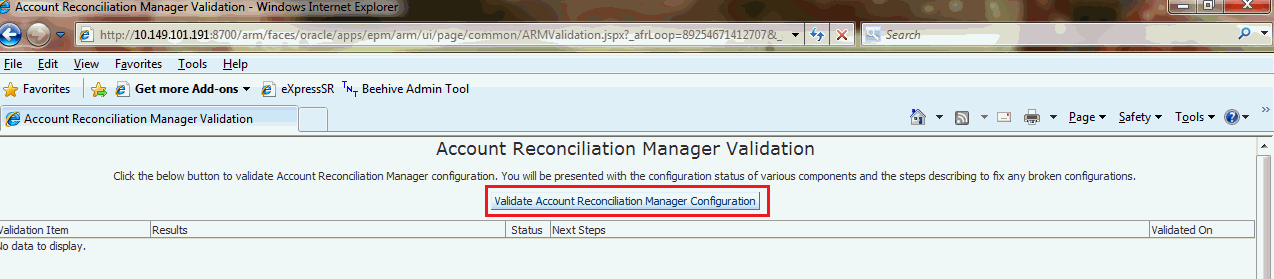
To validate the account reconciliation manager configuration,
|
||||||||||||||||
. |
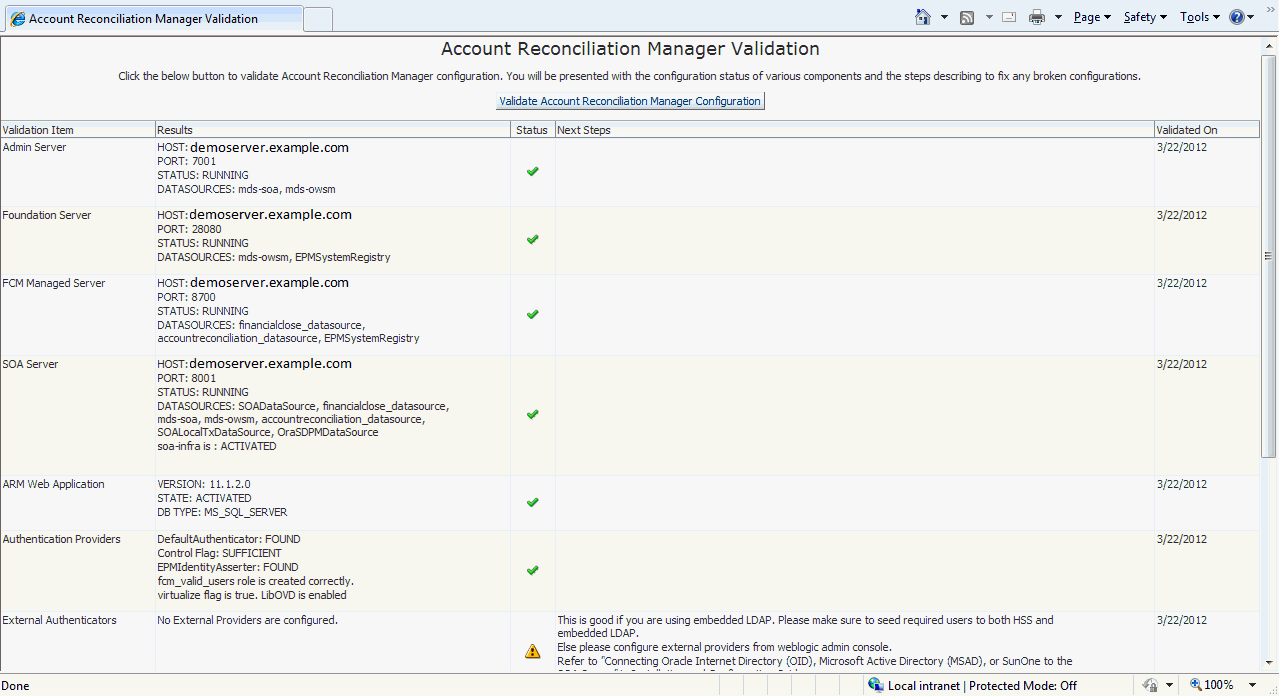
After validation, the configuration information is displayed in a tabular form. See below table for more information on the results.
Below is the information that is displayed:
|
Creating the DB Schema for Oracle Master Repository and Installing Oracle Data Integrator 11g
Prerequisites:
- You should have access with sysdba privileges to an Oracle 11g (11.1.0.7 or higher) database or access with sa privileges to an MS SQL Server (2005 or 2008) database.
- You should have access to the installation files for the following software:
- Oracle Data Integrator 11g
- Oracle EPM Installed machine(s) – Should have installed and configured ERPI
It is not required for the Close Manager module
Creating DB schema for ODI Master Repository
It is required to create a database schema for an ODI master repository (where “DEV_ODI_REPO” is user name and “welcome1” is the password that can be customized).
Note: Throughout the document, DEV_ODI_REPO is used for examples and screenshots.
. |
For Oracle, log in to SQLPlus as sys user and run the following: a. Create user DEV_ODI_REPO identified by welcome1, default tablespace users, temporary tablespace temp; b. Grant connect, resource to DEV_ODI_REPO;
|
|---|---|
. |
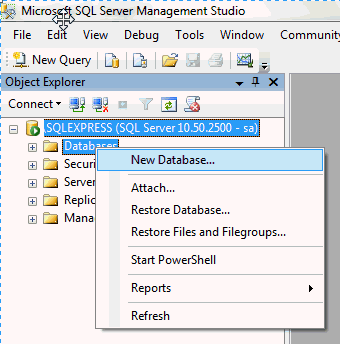
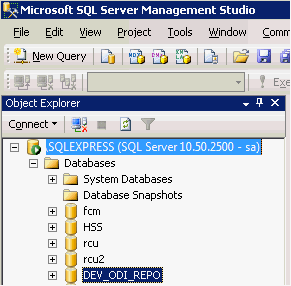
For SQL Server, log in to Microsoft SQL Server Management Studio as sa user and do the following: a. Right-click on Database and select “New Database…”
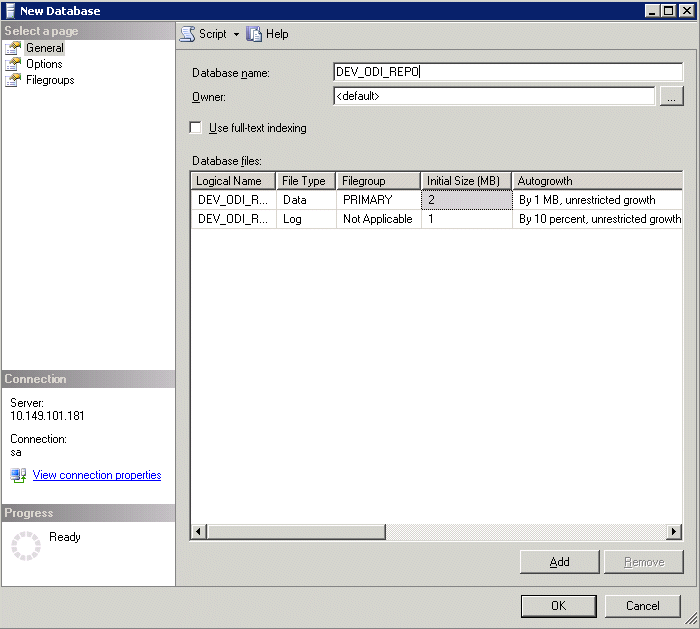
b. On the New Database screen, enter Database name you want to create for ODI Master repository and Owner is <default>.
c. A new database is created under the the Database folder.
|
Installing Oracle Data Integrator
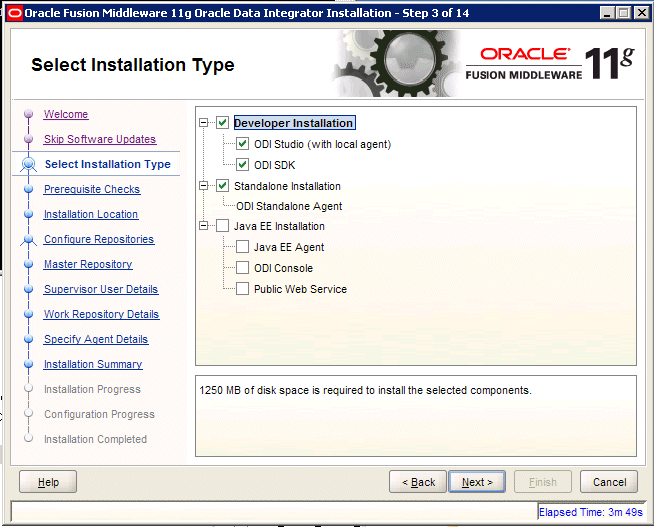
To install the Oracle Data Integrator, you run the Oracle Data Integrator Installer with following options:
- ODI Studio (with local agent)
- ODI SDK
- ODI Standalone Agent
. |
Open a command prompt and navigate to <ODI Installation folder>\Disk1 and run the following command: where –jreLoc value is your JDK location In this example, the jdk path is c:\Oracle\Middleware\jdk160_29.
|
|---|---|
. |
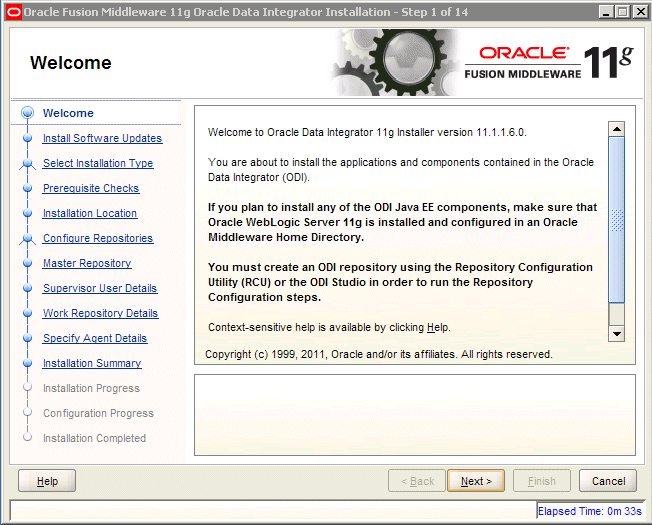
At the Welcome page, click Next.
|
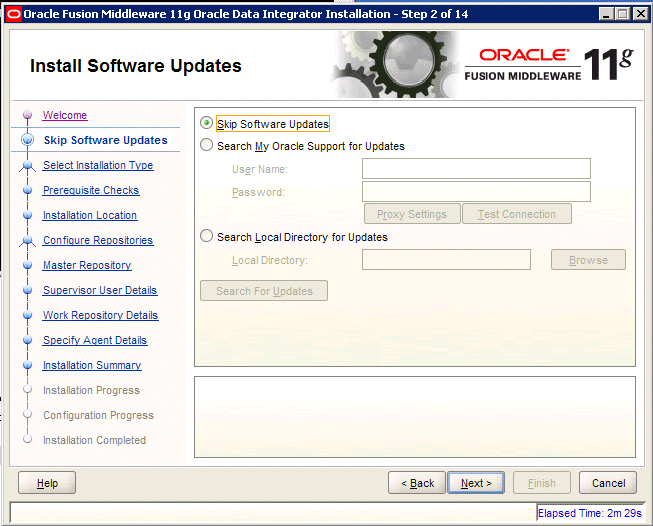
. |
Select Skip Software Updates, and click Next.
|
. |
Select ODI Studio, ODI SDK, and Standalone Installation, and click Next.
|
. |
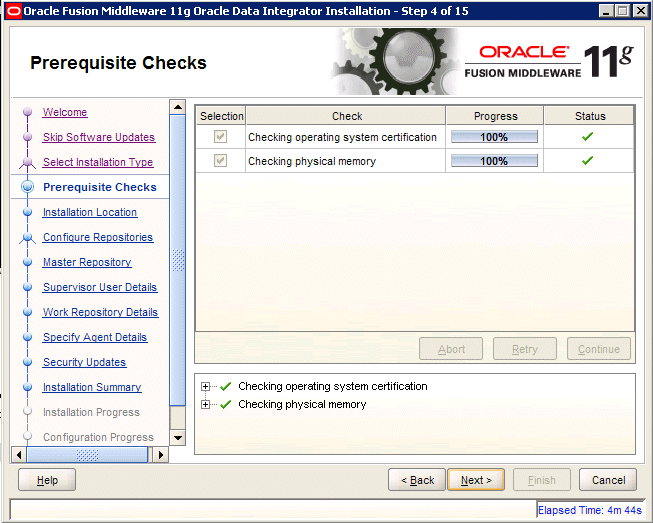
On the Prerequisite Checks screen, click Next.
|
. |
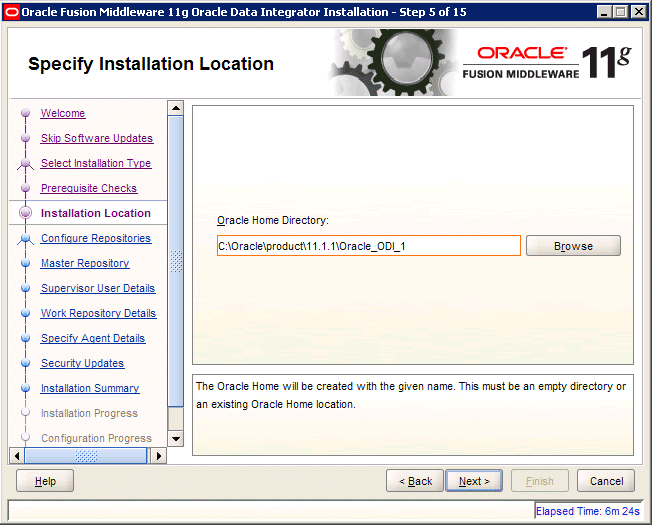
On the Installation location screen, accept the default or click browse to navigate to the desired location, and click Next.
|
. |
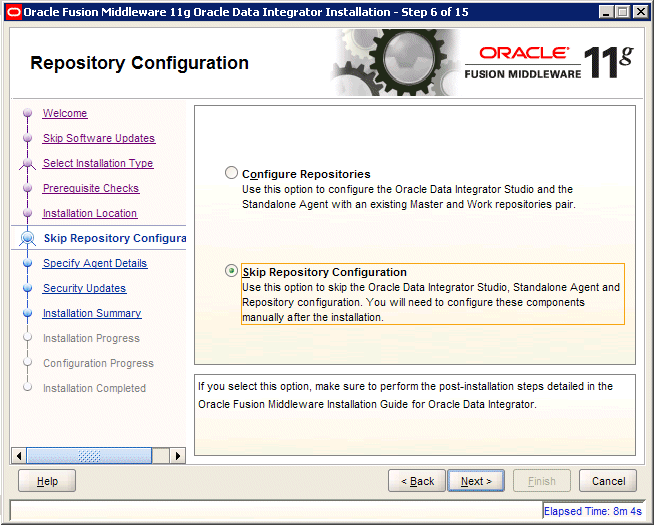
On the Repository Configuration screen, select Skip Repository Configuration and click Next.
|
. |
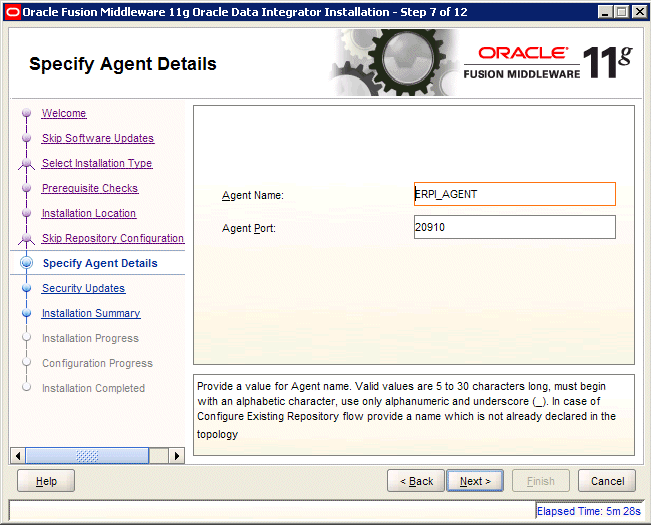
On the Agent Details screen, enter ERPI_AGENT and 20910 and click Next.
|
. |
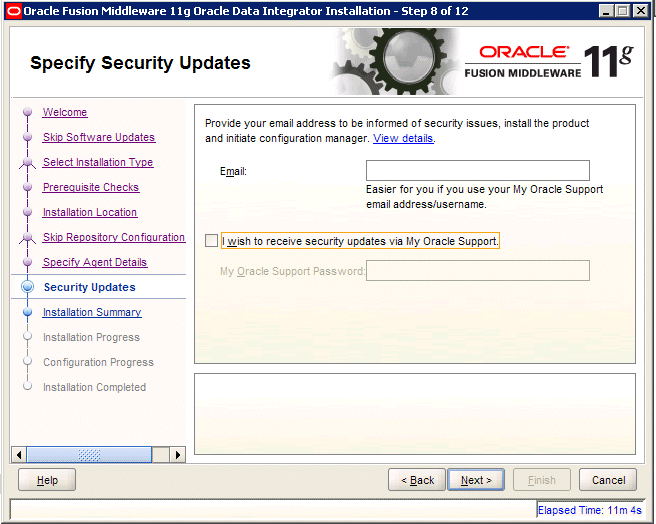
On the Security Updates screen, clear the (I wish to receive security updates… checkbox and click Next
|
. |
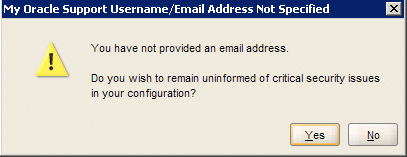
Click Yes on the warning screen
|
. |
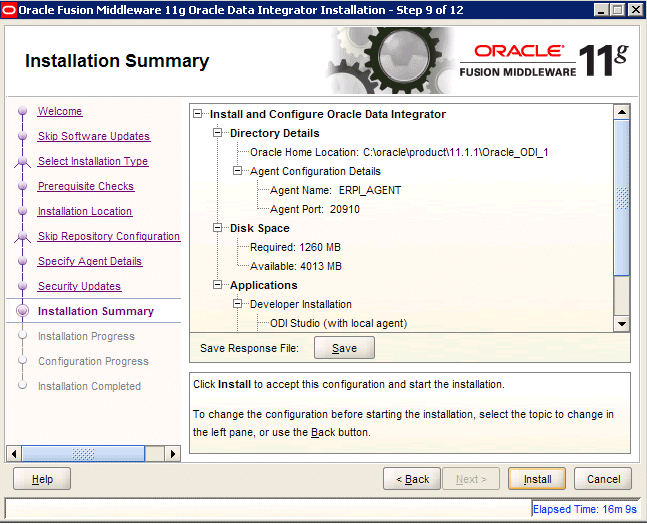
On the Installation Summary screen, click Install
|
. |
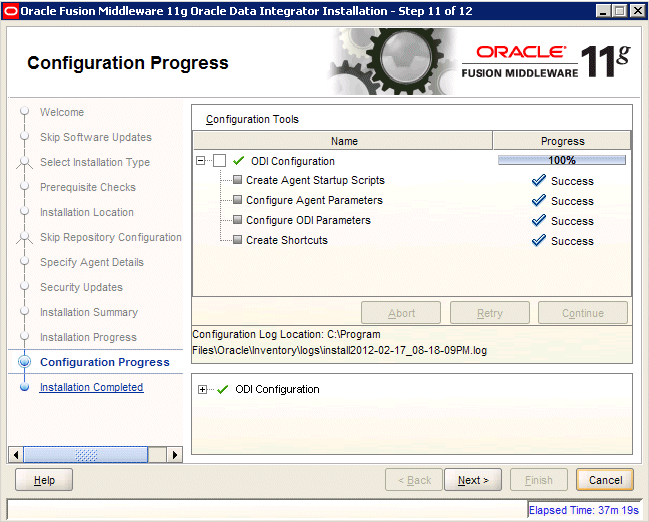
On the Configuration Progress screen, click Next.
|
. |
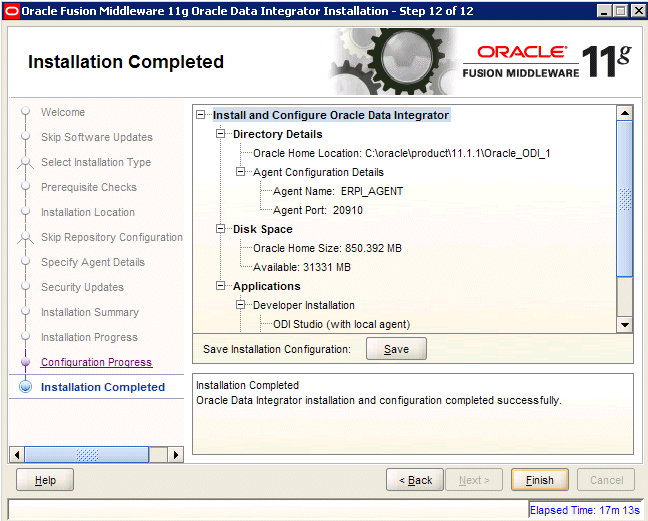
On the Installation Completed screen, click Finish.
|

Configuring Oracle Data Integrator
Configuration of Oracle Data Integrator requires you to perform the following tasks.
Importing the Master Repository
If you haven’t installed ERPI from EPM Suite Installer then please install it first.
“<EPM_ORACLE_HOME>/products/FinancialDataQuality/odi” folder is required to get ODI objects to import master and work repositories.
. |
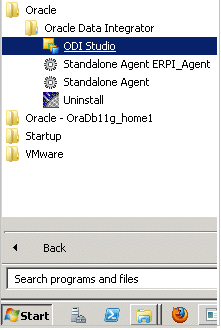
To start ODI Studio, select Start, then Program Files, then Oracle, then Oracle Data Integrator, then Oracle ODI Studio.
|
|---|---|
. |
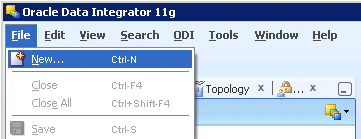
Select File, and then New.
|
. |
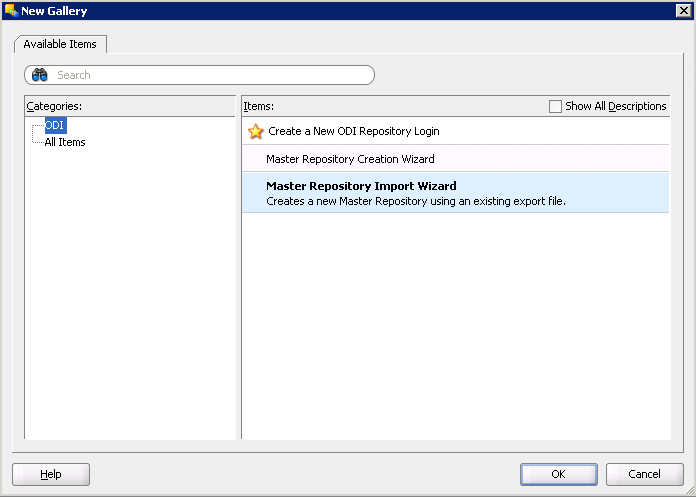
Select Master Repository Import Wizard from New Gallery and Click “OK”.
|
. |
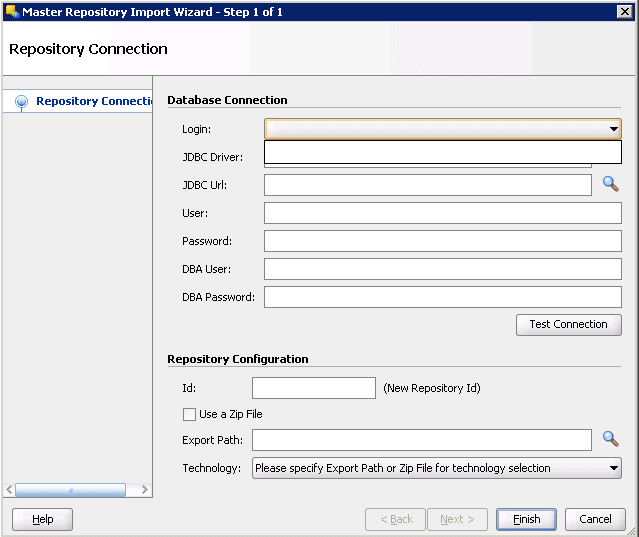
The Master Repository Import Wizard is displayed with empty fields for you to fill in.
|
. |
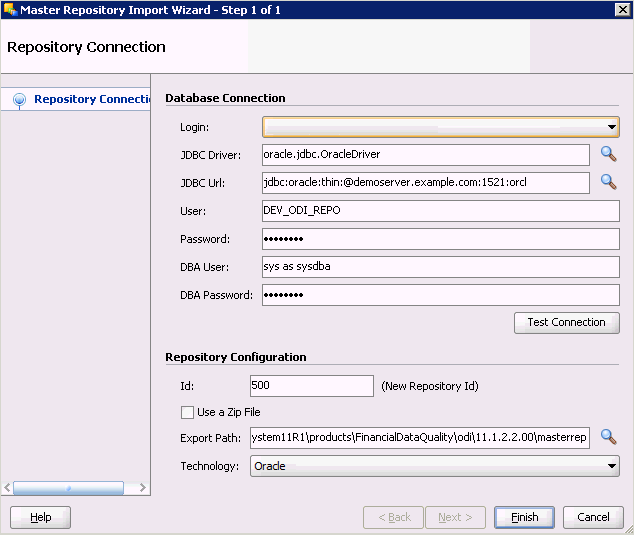
On the Master Repository Import Wizard Repository Connection screen: For Oracle Database a. Enter the database connection details for the ODI Schema you created. - For JDBC Driver, select oracle.jdbc.OracleDriver - For JDBC URL, use the following option; jdbc:oracle:thin:@<host>:<port>:<SID> Example: jdbc:oracle:thin:@deoserver:1521:orcl - For User/Password, use ODI schema user and password- For DBA User/DBA Password, use sys as sysdba user and the password for user sys. b. Enter 500 for New Repository ID (it is required to enter 500) c. Enter the masterrep folder for Export Path. The masterrep folder can be found from the EPM installation location for ERPI such as “<EPM_ORACLE_HOME>/products/FinancialDataQuality/odi/11.1.2.2.00/masterrep”) d. Be sure to test the connection with the “Test Connection” button. e. To start importing the master repository, click Finish.
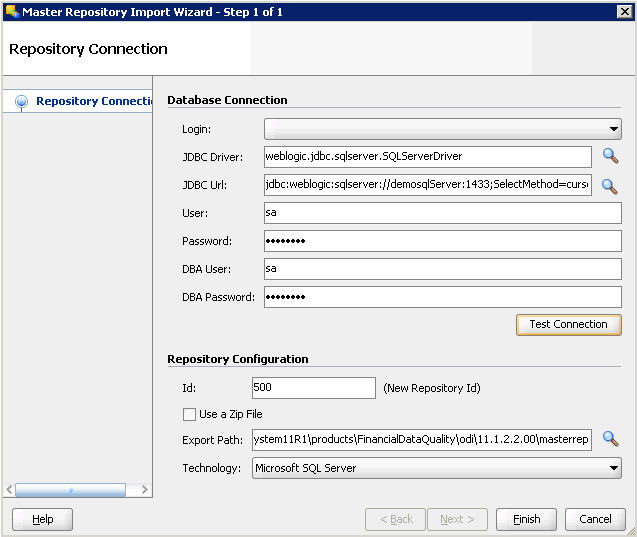
For SQL Server Database a. Enter the database connection details for ODI Schema you created.- For JDBC Driver, weblogic.jdbc.sqlserver.SQLServerDriver - For JDBC URL, use the following option: Example: jdbc:weblogic:sqlserver://demoserver:1433;SelectMethod=cursor; – For User/Password and DBA User/DBA Password, use sa user and password b. Enter 500 for New Repository ID (it is required to enter 500). c. Enter the masterrep folder for Export Path. The masterrep folder can be found from the EPM installation location for ERPI such as “<EPM_ORACLE_HOME>/products/FinancialDataQuality/odi/11.1.2.2.00/masterrep”) d. Be sure to test connection with “Test Connection” button. e. Otto start importing the master repository, click Finish.
|
Creating the Master Repository Login
. |
Select File,and then New
|
|---|---|
. |
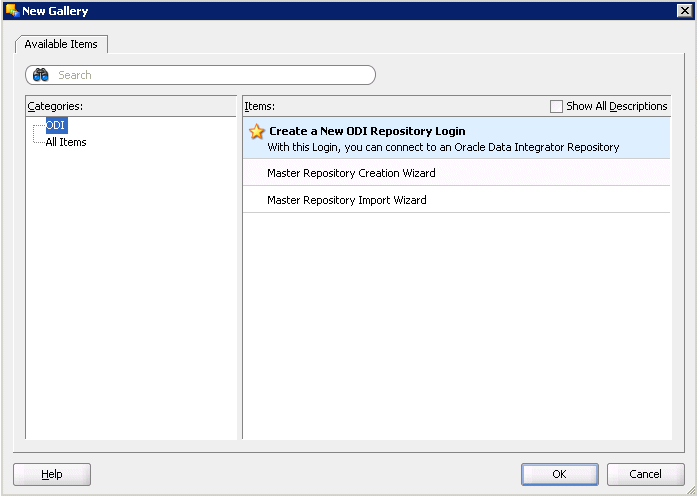
On the New Gallery screen, select Create a New ODI Repository Login and click OK.
|
. |
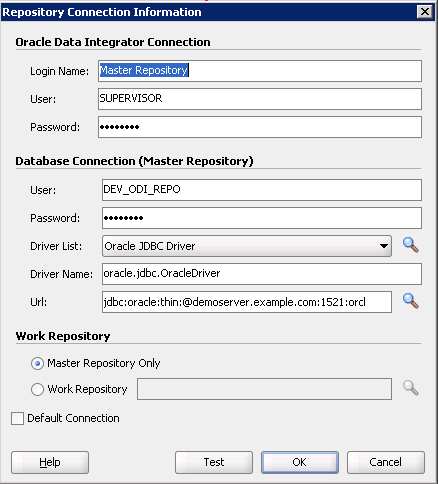
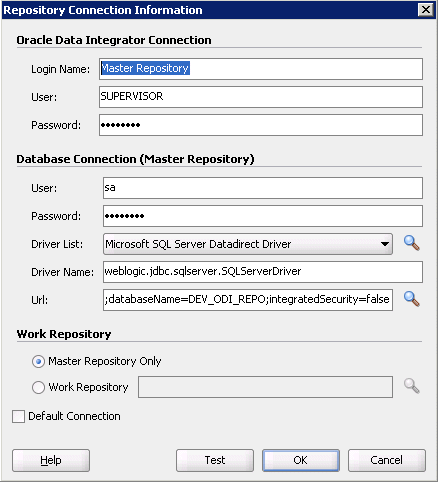
On the Repository Connection Information screen: a. Enter the Login Name (e.g. Master Repository). b. Enter the User and Password (User is SUPERVISOR and Password is SUNOPSIS). It is case sensitive. c. Enter the Database Connection information( the same as in the previous step).. d. Select the Master Repository Only option. e. Test the DB connection with the Test button. f. Click OK. Example for Oracle:
Example for MS SQL Server(the database name is for the ODI database):
|
. |
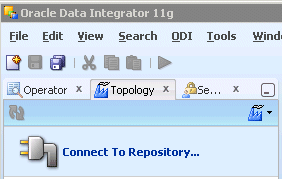
Click the Connect To Repository link.
|
. |
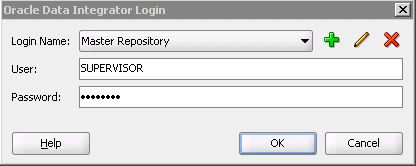
Log in to ODI Studio with the Master Repository log in (SUPERVISOR / SUNOPSIS).
|
Creating the Work Repository
. |
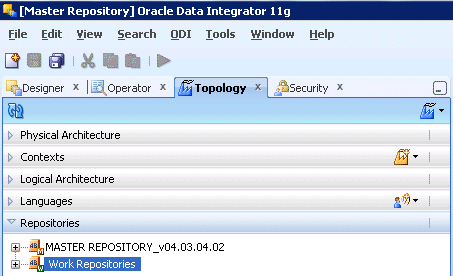
On ODI Studio, select the Topology tab and expand Repositories panel.
|
|---|---|
. |
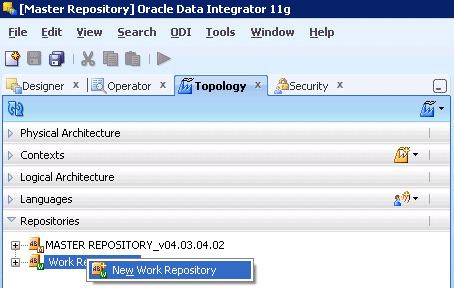
Right-click on Work Repositories and click on New Work Repository.
|
. |
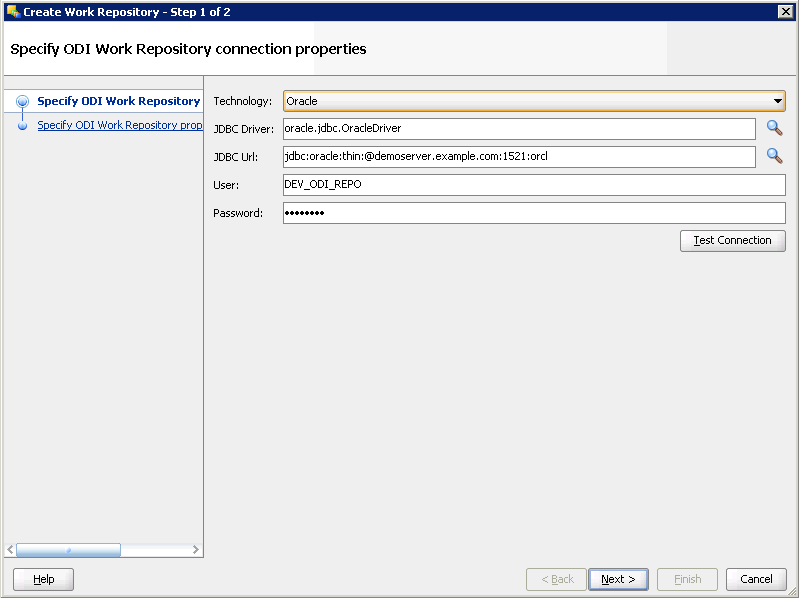
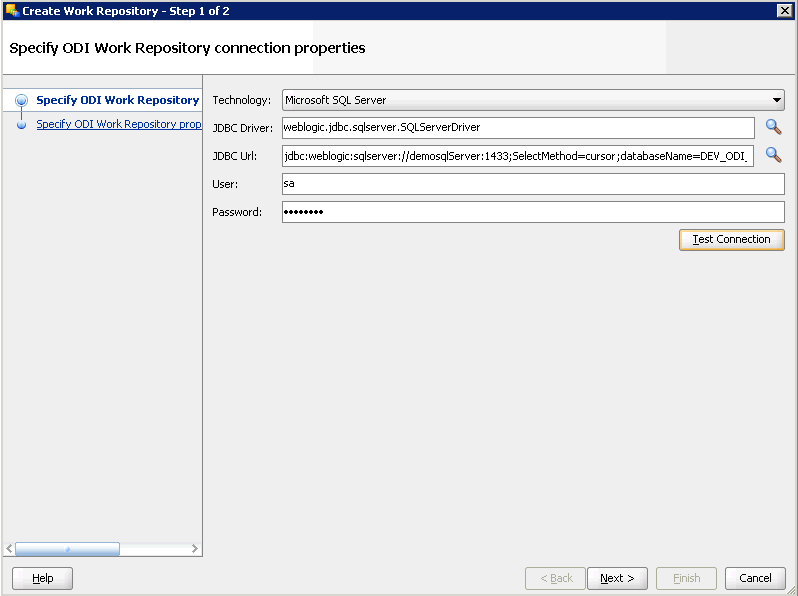
On the Create Work Repository wizard screen perform these steps: a. Enter DB connection information (values are auto populated) and validate the connection with the Test Connection” button. b. Click Next. Example for Oracle:
Example for MS SQl Server: Note that databaseName is your ODI database in the JDBC URL. JDBC URL sample;
|
. |
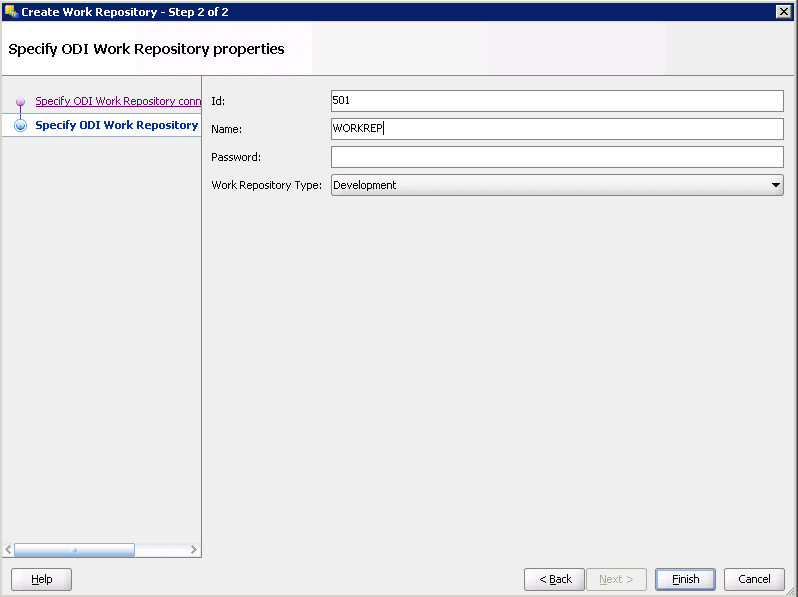
On the Specify ODI Work Repository Properties screen: a. Enter 501 for Id (it is required to enter 501) b. Enter WORKREP for Name (WORKREP is the recommended name). c. Don’t enter anything for Password. d. Click Finish
|
. |
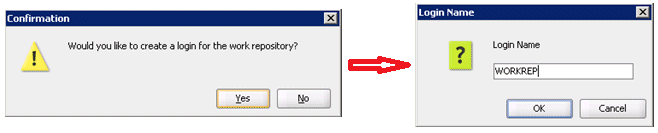
When ODI asks whether to create a log in for work repository, click Yes and create it with name WORKREP (WORKREP is the recommended name)..
|
. |
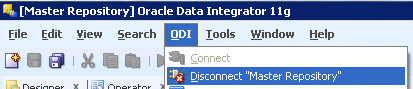
Log off from the Master repository (select ODI, then Disconnect “Master Repository”).
|
Importing the Work Repository
. |
Click the Connect To Repository link
|
|---|---|
. |
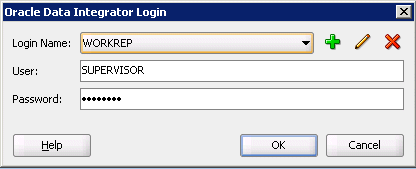
Log in to ODI Studio with WORKREP (SUPERVISOR/SUNOPSIS).
|
. |
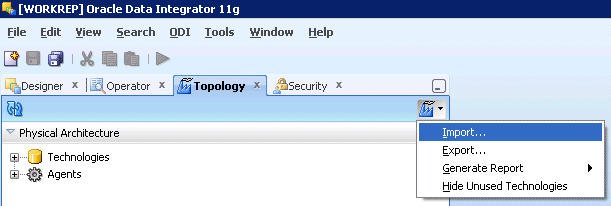
Go to the Topology tab and click on Import.
|
. |
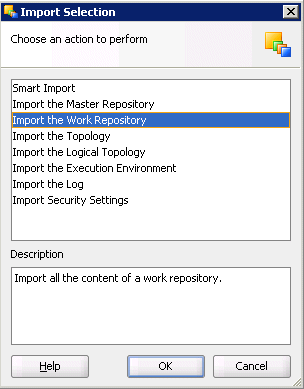
On the Import Selection screen, select Import the Work Repository and click OK;
|
. |
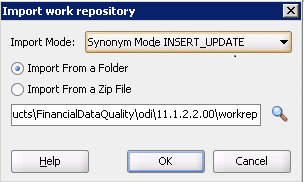
On the Import work repository screen perform these steps: a. In the Import Mode list, select Synonym Mode INSERT_UPDATE. b. Select the Import from a Folder option c. Enter the workrep folder ( The workrep folder can be found from the EPM installation location for ERPI . For example “<EPM_ORACLE_HOME>/products/FinancialDataQuality/odi/11.1.2.2.00/workrep”). d. Click OK
|
. |
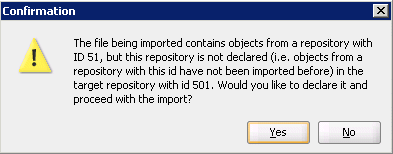
When asked for confirmation, click “Yes” (You need to repeat the confirmation several times for different IDs).
|
. |
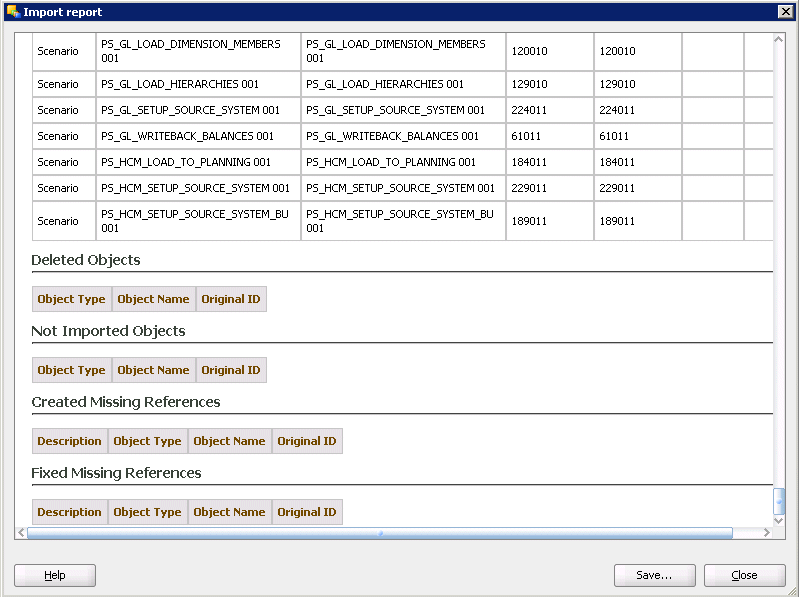
When the Import report screen is shown, scroll to bottom of the screen, verify that nothing is present under Not Imported Objects,
|
Configuring ODI Topologies - Configure the Physical Schema
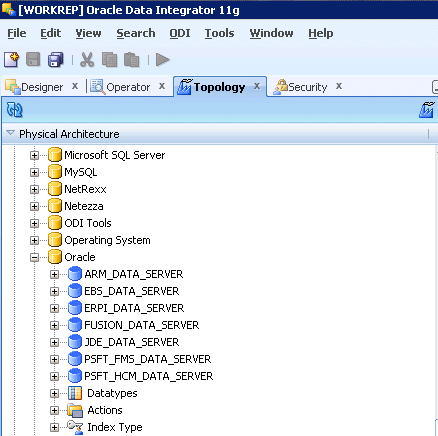
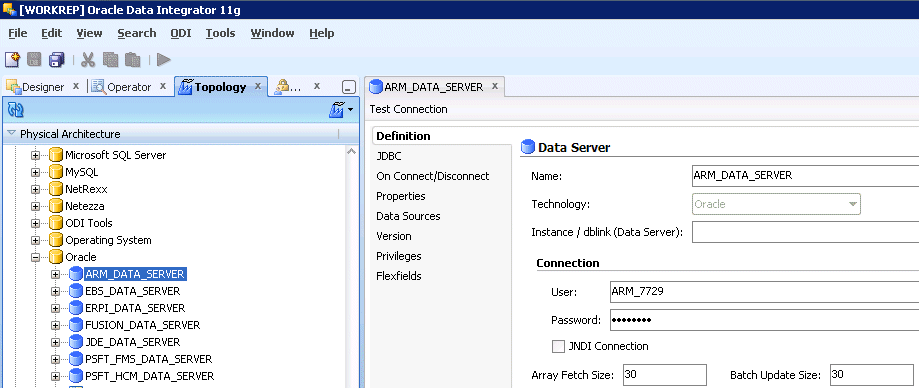
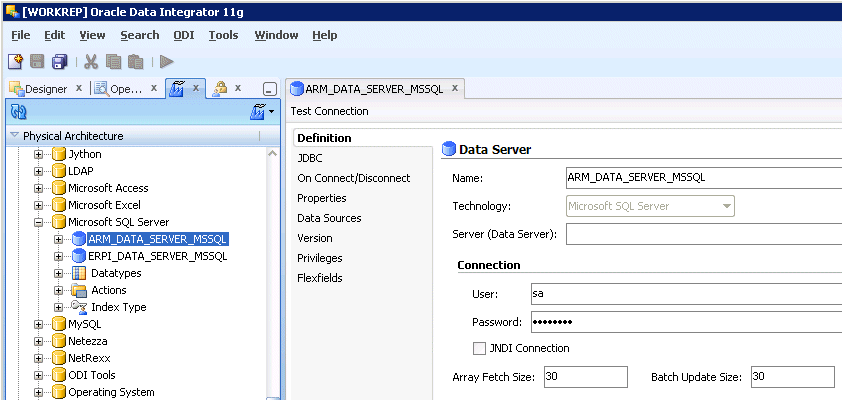
After you have imported Master and Work repositories, ODI has a base topology objects for ARM, ERPI, EBS, Peoplesoft and other supported servers.You must update the connection information for the server. For example, to use Account Reconciliation Manager , you need to configure ARM_DATA_SERVER and ERPI_DATA_SERVER. EBS_DATA_SERVER and PSFT_FMS_ DATA_SERVER are the most common severs you would want to configure.
. |
If you're not already logged in to ODI Studio as WORKREP (SUPERVISOR/SUNOPSIS) do so now.
|
|---|---|
. |
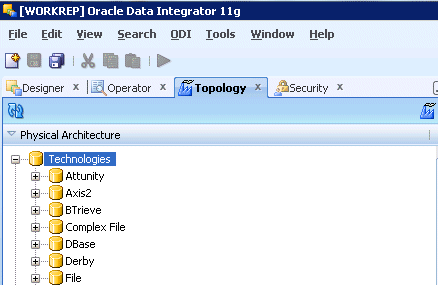
Go to Topology tab and expand Physical Architecture panel
|
. |
Expand the desired folder such as Oracle (It has Physical servers for ARM, ERPI, EBS, and Peoplesoft)
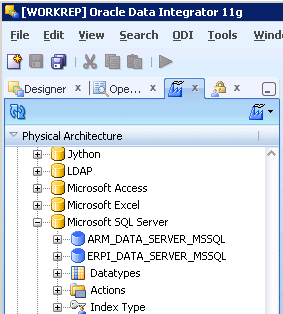
(For SQLServer, there are ARM and ERPI Physical servers. EBS and Peoplesoft are only supported under Oracle)
|
. |
Double click to open the desired server (e.g. ARM_DATA_SERVER). For Oracle, on the Definition screen, enter the user with DBA privileges for your ARM schema.
|
. |
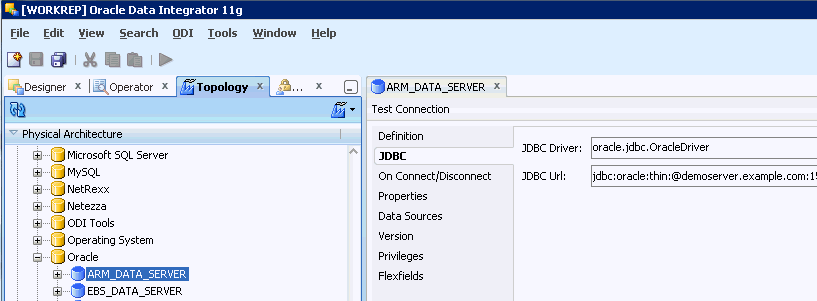
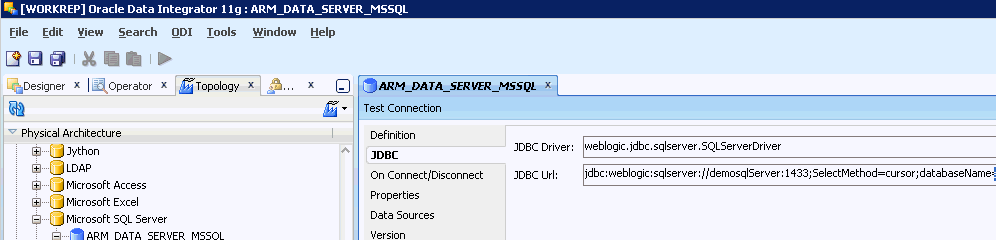
Click the JDBC tab on the left side of the ARM_DATA_SERVER window, and enter the JDBC Driver and URL. Example for Oracle: JDBC URL sample:; jdbc:oracle:thin:@demoserver.example.com:1521:orcl
Example for MS SQL Server (the databaseName is for the ARM database): JDBC URL sample:
|
. |
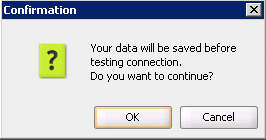
When you are asked to save and continue then click OK.
|
. |
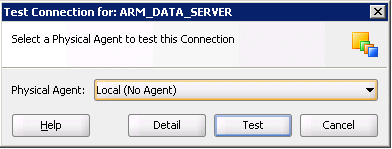
Choose No Agent to test the connection (note that you haven’t configured ODI Agent yet) and click Test.
|
. |
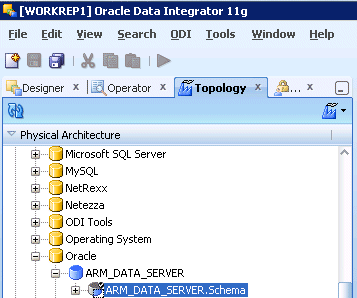
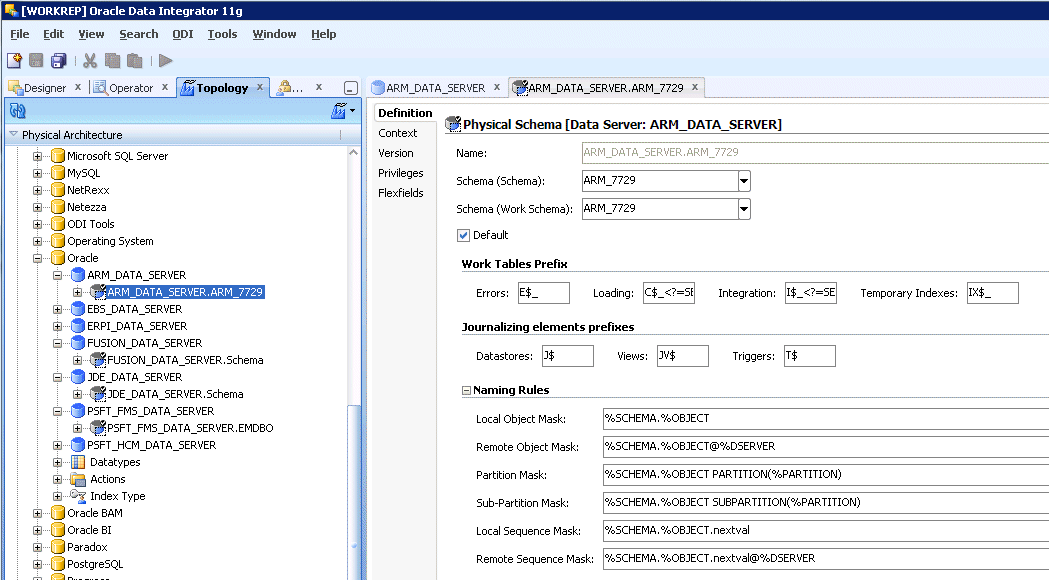
Expand the desired server (ARM_DATA_SERVER): For Oracle, double click to open Physical schema (ARM_DATA_SERVER.Schema)
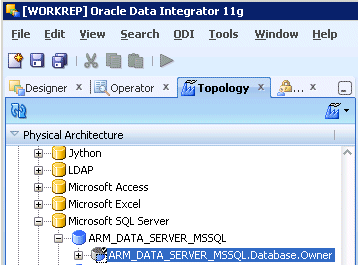
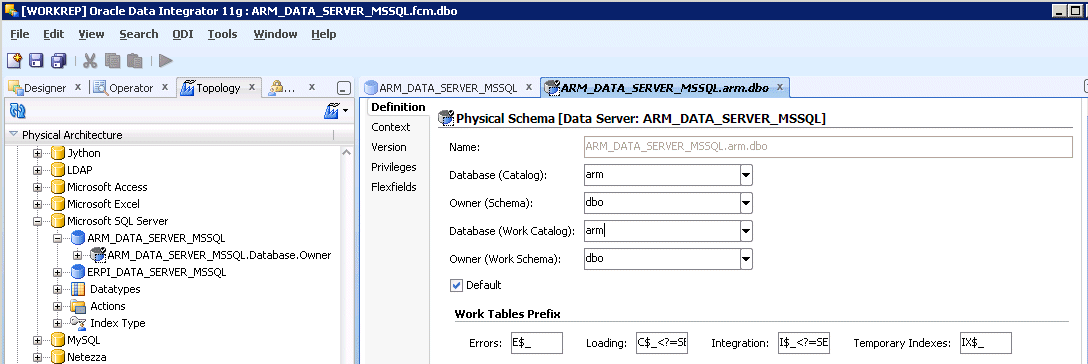
For MS SQl Server,double-click to open Physical schema (ARM_DATA_SERVER_MSSQL.Database.Owner).
|
. |
On the Definition screen: For Oracle, select the physical schema (for example the FCM schema created from the EPM Configurator) for Schema(Schema)
For SQLServer, select Database (for example, the FCM database created from EPM Configurator) and Owner (for example, dbo).
|
. |
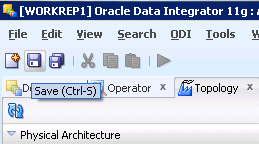
Click the Save icon to save the changes you made to the Physical schema.
|
. |
Repeat the same steps you did for ARM_DATA_SERVER for ERPI_DATA_SERVER and other Physical servers as needed. Example for EBS and Peoplesoft DB connections:
JDBC Driver: oracle.jdbc.OracleDriver
JDBC Driver: oracle.jdbc.OracleDriver
|
Configuring ODI Topologies: Configure the ODI Context
By default, ODI has Global context and it is associated with all predefined Logical & Physical schema
. |
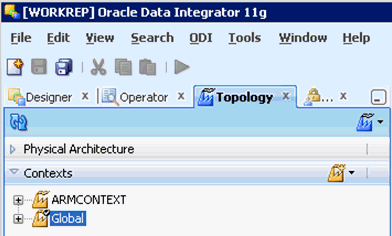
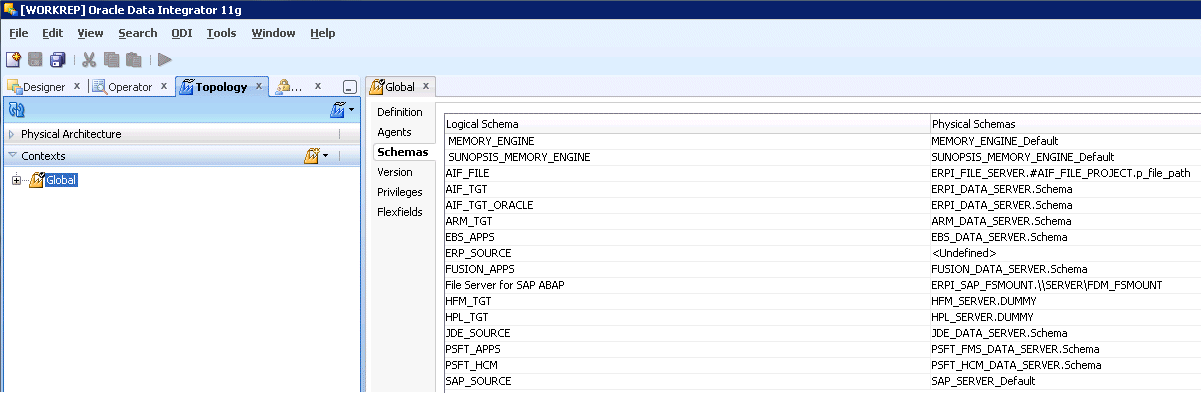
Expand the Contexts panel from the Topology tab and double click on Global context (Note that you need to use Global;
|
|---|---|
. |
Select the Schemas tab. Note: By default, Global context has a map for all predefined schema but you need to choose the physical schema that you configured.
|
. |
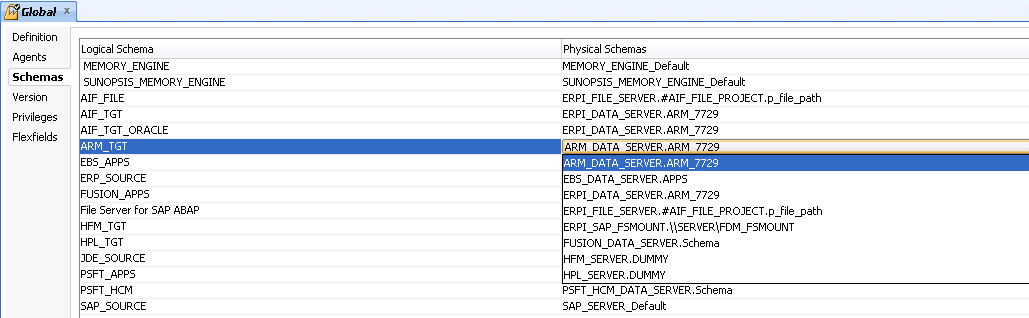
Choose a Physical schema you have configured from the Physical Schemas pull down menu . For example: If you need to use an EBS source then EBS_APPS should map to
|
. |
If any changes were made, click Save. Note: The last value selected from the pull down menu is not saved so please change the selected to |
Configuring ODI Topologies: Configure the ODI Agent
. |
Set the following parameters in the odiparms.bat under the Oracle Example: set ODI_MASTER_DRIVER=oracle.jdbc.OracleDriver set ODI_MASTER_URL=jdbc:oracle:thin:@demoserver:1521:orcl (add your ODI master repository URL) set ODI_MASTER_USER=DEV_ODI_REPO (add your ODI master schema username) set ODI_MASTER_ENCODED_PASS=aYyHdZSEixcjzk2RGMi.iy (to get the encrypted password, see the instructions below) set ODI_SECU_WORK_REP=WORKREP ( your work repository name) set ODI_ADDITIONAL_CLASSPATH=%ODI_HOME%\..\..\oracledi.sdk\lib\* MS SQL Server Example: set ODI_MASTER_DRIVER=weblogic.jdbc.sqlserver.SQLServerDriver set ODI_MASTER_URL=jdbc:weblogic:sqlserver://demoserver:1433;SelectMethod=cursor;databaseName=DEV_ODI_REPO;integratedSecurity=false (add your ODI master repository URL. Note that databaseName is for your ODI database) set ODI_MASTER_USER=sa ( sa user) set ODI_MASTER_ENCODED_PASS=aYyHdZSEixcjzk2RGMi.iy (to get the encrypted password, see the instructions below) set ODI_SECU_WORK_REP=WORKREP ( your work repository name) set ODI_ADDITIONAL_CLASSPATH=%ODI_HOME%\..\..\oracledi.sdk\lib\*
|
|---|---|
. |
Save and close the odiparms.bat file.
|
. |
It is required to get an encrypted password for ODI_MASTER_ENCODED_PASS in odiparms.bat: a. In <Oracle_Home>\product\11.1.1\Oracle_ODI_1\oracledi\agent\bin run encode.bat from b. Copy the encrypted password output and add it to value of ODI_MASTER_ENCODED_PASS in odiparms.bat
|
. |
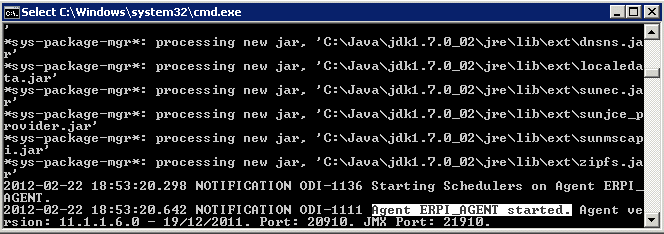
In the same directory run agent_ERPI_AGENT.bat to start ODI Agent. Look for the following message: Agent ERPI_AGENT started." Message
|

Configuring Oracle Security Policy for ERPI
Configuration of Oracle Security Policy with OWSM is required to enable communication between
Account Reconciliation Manager and ERPI.
Prerequisites
- Verify that the EPM_ORACLE_HOME system variable has been set (it should be already have been set from the EPM Installation step).
- ERPI is installed
- WebLogic admin server is in running state.
- Start “Hyperion ERP Integrator-Web Application” from Windows Services (You should start ERPI service from Windows Services). If the ERPI service is already running, then restart it .
Running Automated Scripts to set Oracle Security Policy
. |
Edit the wls-infra.properties file a. Go to directory <EPM_ORACLE_HOME>/products/FinancialDataQuality/bin For WebLogic Admin server connection:
For MDS schema information (You should have already setup your MDS schema from RCU configuration step):
Note: If you are not sure, then you can get above information from the mds_owsm datasource from the WebLogic For Account Reconciliation Manager configuration:
|
|---|---|
. |
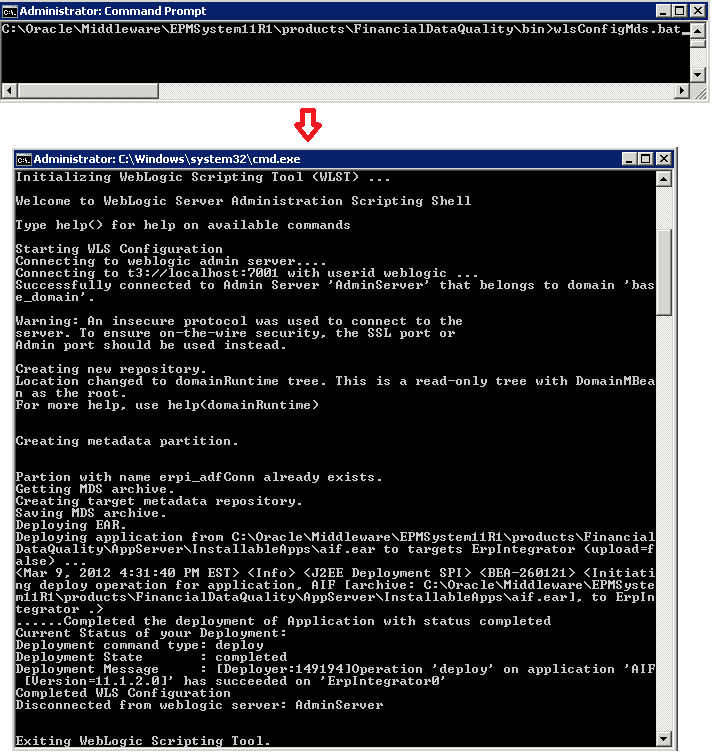
Run the wlsConfigMds.bat file: a.Open a command prompt. b. Change directory to <EPM_ORACLE_HOME>/products/FinancialDataQuality/bin. c. Run wlsConfigMds.bat file and ensure that the script runs successfully
|
. |
Restart Hyperion ERP Integrator-Web Application. (Note that you should start the ERPI service from Windows Services).
|
. |
Check the status of ERPI server: Login to WebLogic admin console (http://<host>:7001/console
|
. |
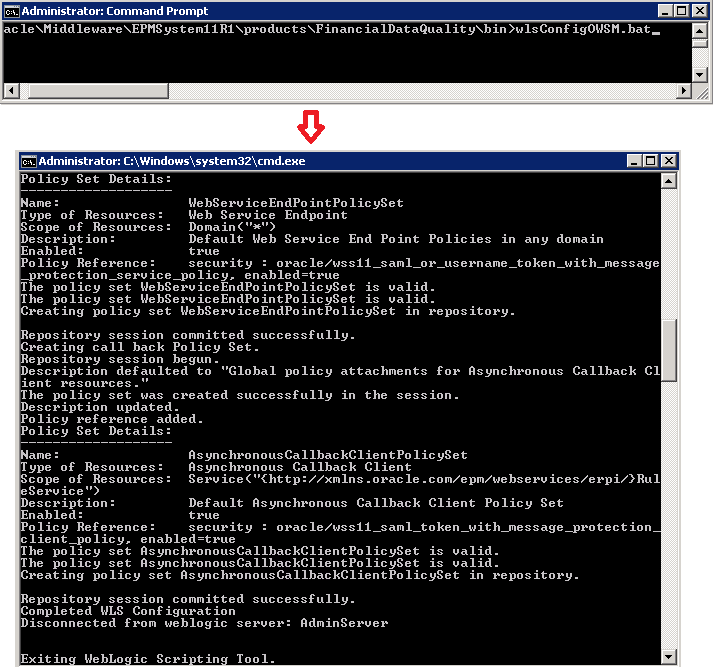
Run the wlsConfigOWSM.bat file: From the same command prompt, run wlsConfigOWSM.bat and ensure that the script runs successfully
|
. |
Restart ERPI Service and Admin Server. Note: You should start the ERPI service from Windows Services.
|
. |
Check the status of ERPI server: Log in to the WebLogic Admin console (http://localhost:7001/console ). In the Domain Structure area,
|
Appendix A: Creating an Oracle Database User
This procedure explains how to create an Oracle database user.
. |
To open the SQLPlus window, select Start, then All Programs, then Oracle - OraDb 11g_home1,
|
|---|---|
. |
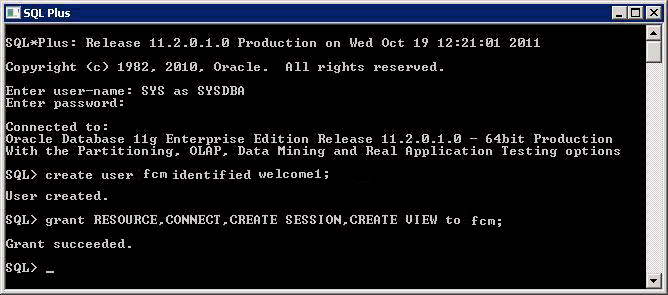
Login to SQLPlus as sys user and run the following: create user fcm identified by welcome1; grant RESOURCE, CONNECT, CREATE SESSION, CREATE VIEW to fcm;
|
Appendix B: Configuring Microsoft SQL Server
This appendix contains information for using Microsoft SQL Server as the database.
Creating the Required Databases
. |
Install SQL Server and log in to Microsoft SQL Server Management Studio as sa user.
|
|---|---|
. |
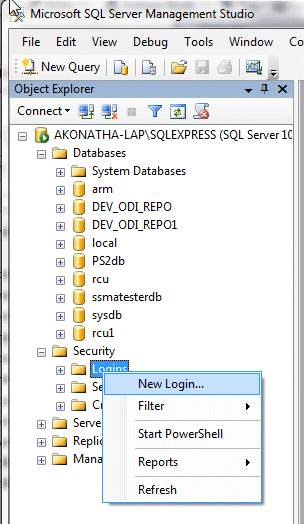
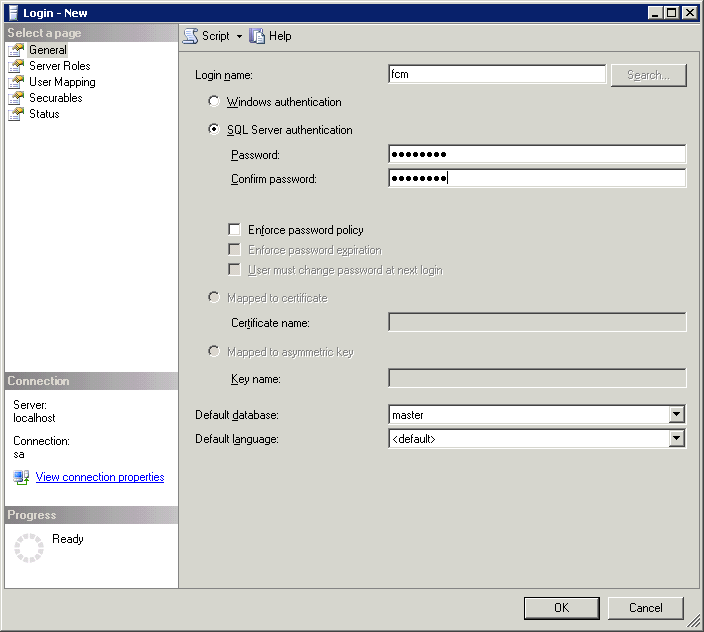
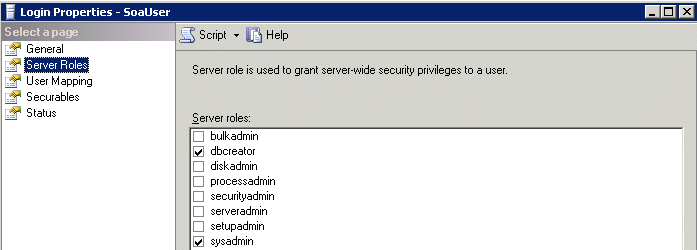
Create a login with the db owner role: a. Go to the Object Explorer window and right-click on the Logins folder under the Security folder.
b. In the General tab, select SQL Server authentication, and enter Login Name, password and Confirm password
|
. |
Select the Server roles tab, and then select the dbcreator and sysadmin Server roles.
|
. |
Click OK to create the user.
|
. |
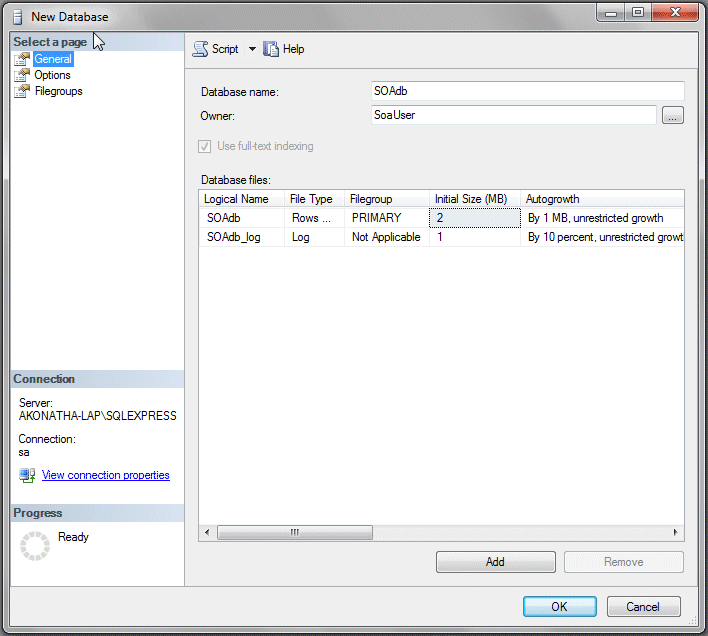
Create three databases: one for SOA, one for Financial Close Management, and one for Shared Services. a. Right click on Database and select “New Database…”
b. Enter the database name and owner.
c. Click OK to create the database. |
. |
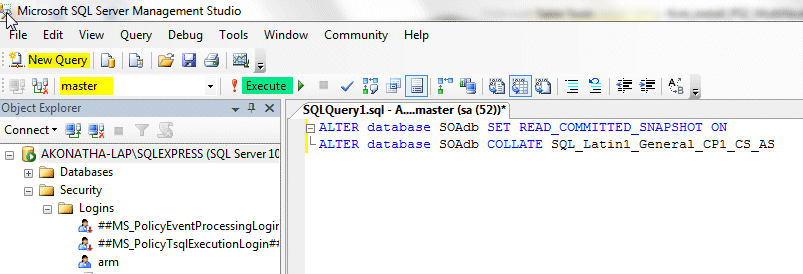
Modify the properties of the database for SOAdb: a. Click on the ‘New Query’ button in the upper left and choose ‘master’ database from the drop-down just below it. b. Enter the commands below. replacing <database name> with the SOA Database.ALTER database <database name> SET READ_COMMITTED_SNAPSHOT ON
c. Click on the ‘Execute’ button to run the commands.
|
. |
Modify the properties of the database for Financial Close Management by using the following command:
|
Enabling XA Transactions
You must Enable XA transactions for SQL Server in both SQL Server and at the operating system level.
You should perform these procedures before you install and configure SOA Suite.
. |
Copy instjdbc.sql from C:\Oracle\Middleware\wlserver_10.3\server\lib into: C:\Program Files\Microsoft SQL Server\MSSQL.1\MSSQL\Binn for SQL Server 2005 or C:\Program Files\Microsoft SQL Server\MSSQL10.<INSTANCE_NAME>\MSSQL\Binn for SQL Server 2008
|
|---|---|
. |
Copy one of the following:
|
. |
After copying the file, rename the 64sqljdbc.dll or x64sqljdbc.dll to sqljdbc.dll.
|
. |
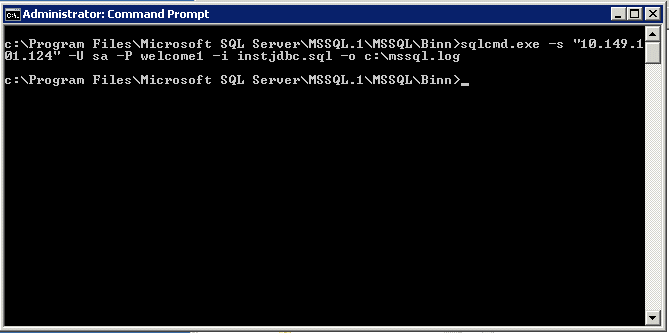
Run the following command from the command prompt: SQLCMD.EXE is located at C:\Program Files\Microsoft SQL Server\90\Tools\Binn\ for SQL Server 2005 and In the above command "SERVER NAME" is the server name used to
|
. |
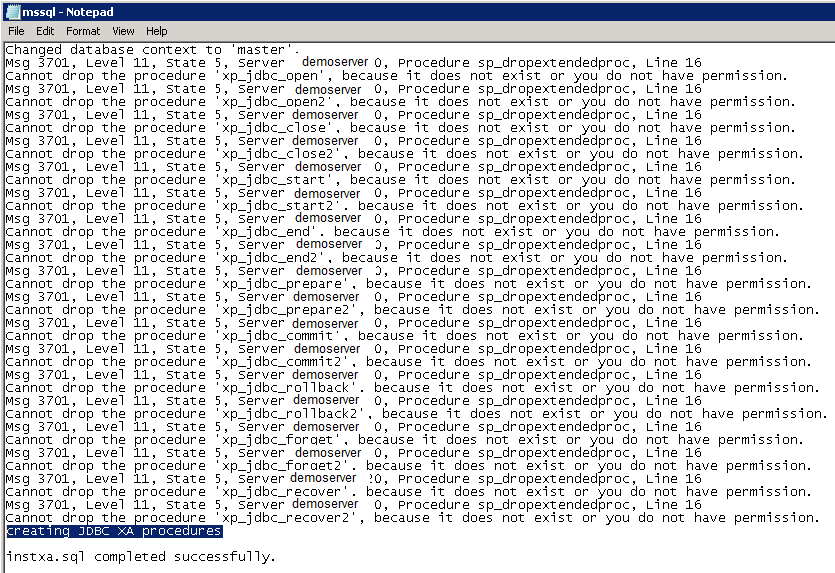
Look for the messages creating JDBC XA procedures and instxa.sql completed successfully in the log.
|
. |
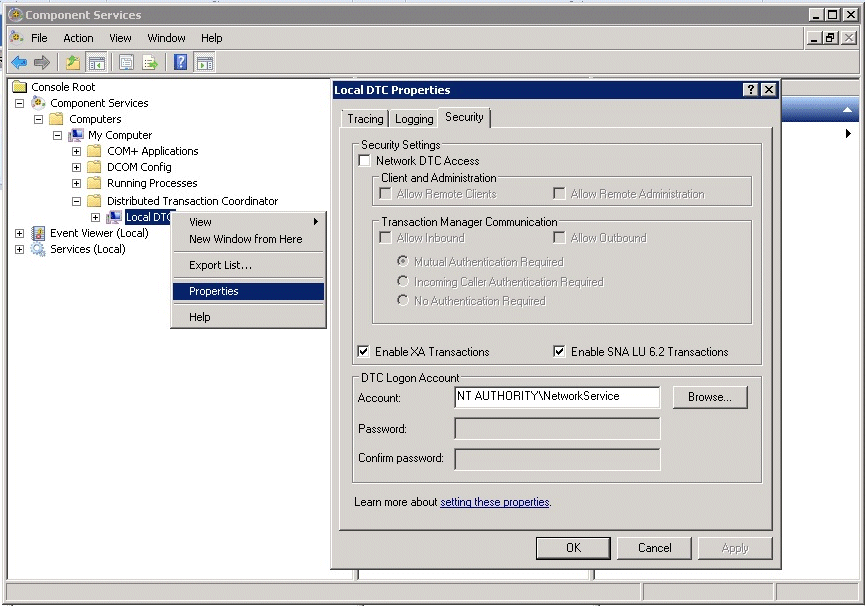
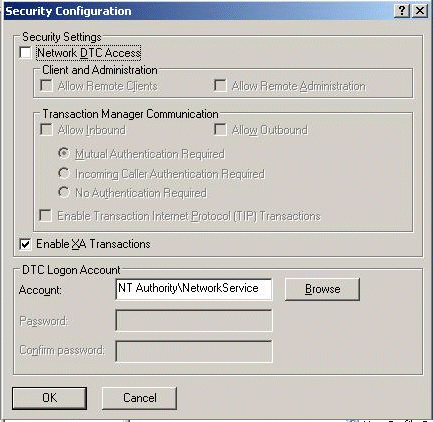
For Windows 2008: a. Select Start, then Programs, then Administrative Tools, then Component Services, b. Right Click Local DTC and select Properties c. Select the Security Tab and then select Enable XA Transactions d. Click OK
Note: Click OK through the warning dialogs about service restarting.
|
. |
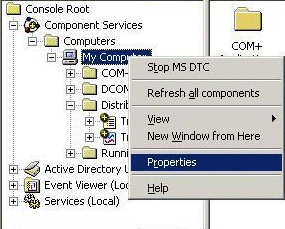
For Windows 2003: a. Select Start, then Programs, then Administrative Tools, then Component Services, and then Computers. b Right click on My Computer and select Properties.
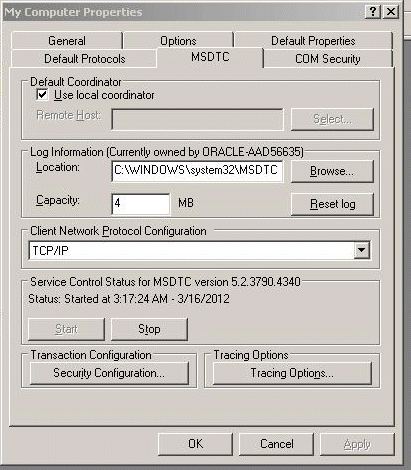
c. Select the MSDTC tab and click Security Configuration.
d. Select Enable XA Transactions e. Click OK
|
. |
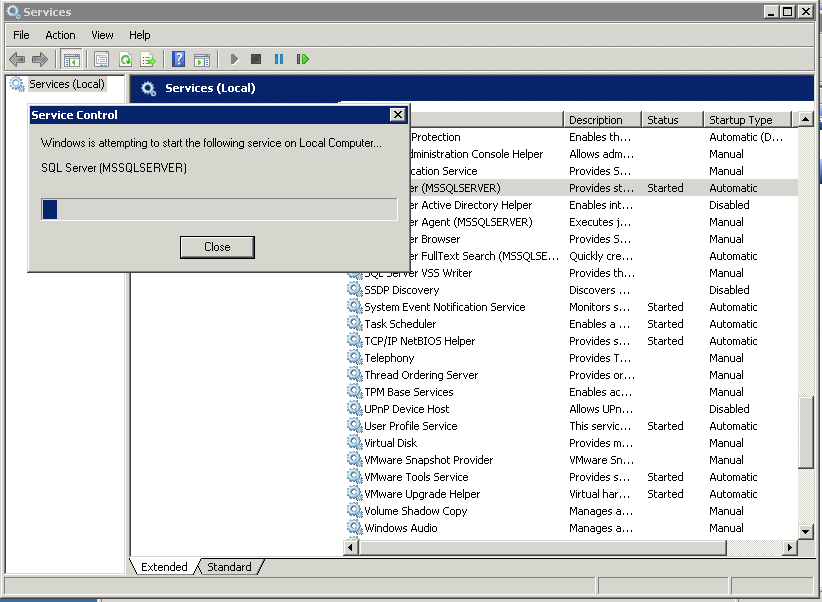
Restart SQL Server (MSSQLSERVER) from Windows Services.
|
Appendix C: IPv6 Network
This appendix contains information for testing IPv6 Network on your environment. If IPv6 is turned on for your machines, then you have to make sure IPv6 routing is properly working in your network. If your network doesn't support IPv6, then
you have to turn off IPv6 device(s) before you start EPM installation.
IPv6 Network Testing
. |
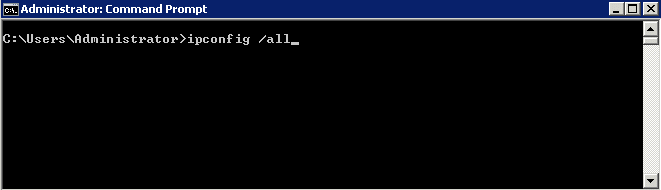
Run "ipconfig /all" from a command prompt:
|
|---|---|
. |
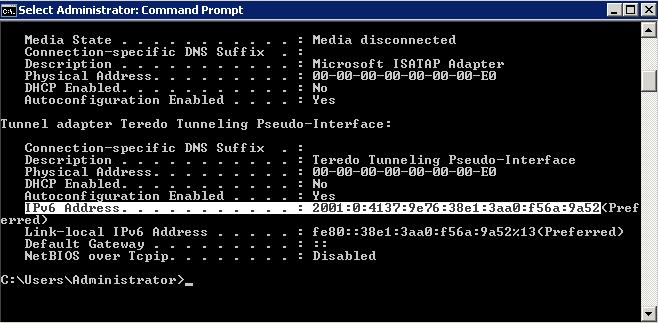
If there is any device using IPv6 such as in the following example then you need to test IPv6 connection
|
. |
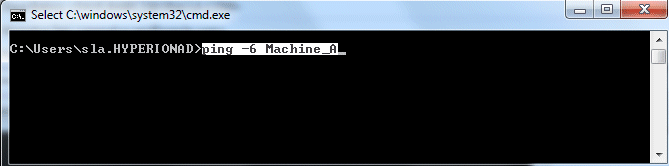
From the other remote machine, ping your machine (Machine A) from a comman prompt as follows:
|
. |
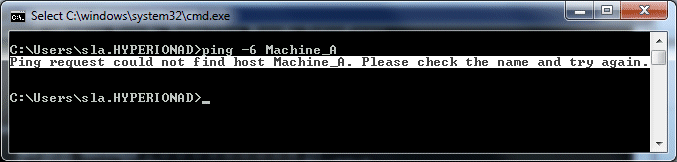
If ping returns "Ping request could not find host <Machine A>" then your network doesn't support IPv6 and
|
Turning Off IPv6
. |
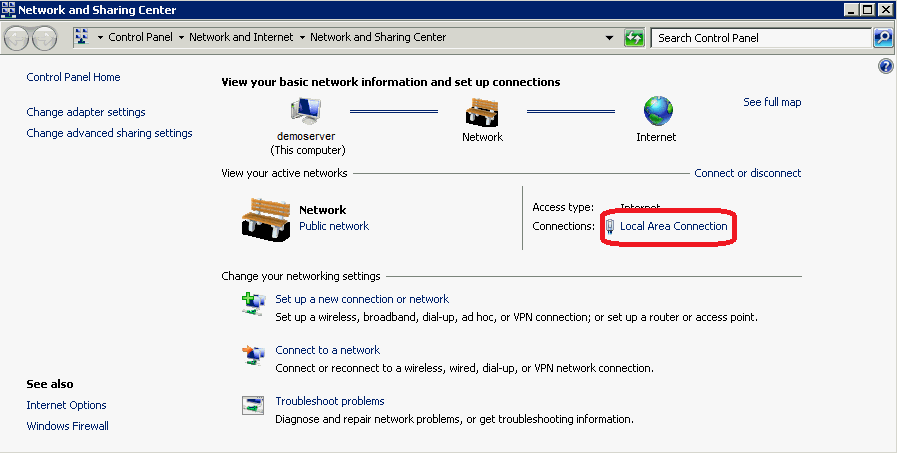
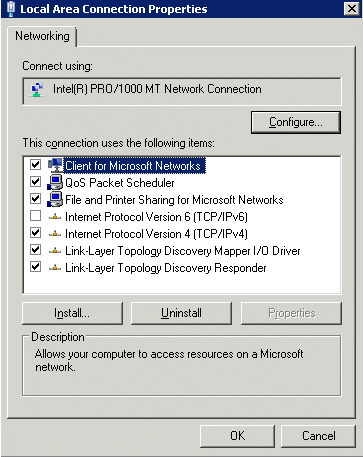
From Local Area Connection Properties, deselect IPv6. a. From Start menu, right click on Network and click on Properties. b. From the Network and Sharing Center screen, click on Local Area Connection.
|
|---|---|
. |
|
. |
From a command prompt, run "ipconfig /all" and verify there is no process using
|
. |
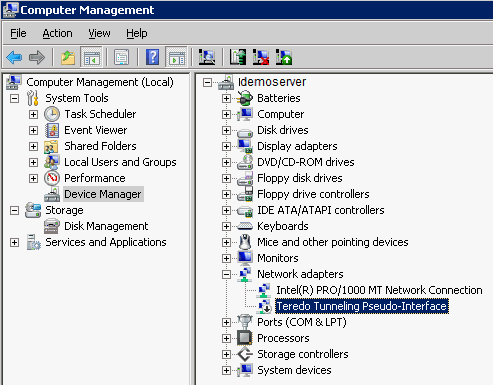
To disable devices using IPv6 do the following: a. From the Start menu, select Administrative Tools, then Computer Management" b. Go to Device Manager. c. Select Show hidden devices from the View menu d. Expand Network adapters. e. Right-click on Teredo Tunneling Pseudo-Interface (or any other device that is using IPv6) and disable it
|
. |
Run “ipconfig /all” again from the command prompt to make sure there are no longer any devices using IPv6.
|
Appendix D: Linux Commands
- To launch the EPM System installer: Execute
installTool.sh
- To launch the SOA Installer: Execute
./runInstaller –jreLoc /oracle/middleware/jdk160_29
- To launch the SOA Configurator: Run
<MIDDLEWARE_HOME>/oracle_soa1/common/bin/config.sh
- To launch the EPM System Configurator: Run
<EPM_ORACLE_HOME>/common/config/version_number/configtool.sh
- To start weblogic server: Run
<Middleware_home>/user_projects/domains/<domain>/bin/startWebLogic.sh
- To start SOA server : Execute
<Middleware_home>/user_projects/domains/<domain>/bin/startManagedWebLogic.sh soa_server1
- To start Foundation Services: Run
<MIDDLEWARE_HOME>/user_projects/epmsystem1/bin/startFoundationServices.sh
- To start OHS: Run
<MIDDLEWARE_HOME>/user_projects/epmsystem1/bin/startOHS.sh
- To stop Foundation Services: Run
<MIDDLEWARE_HOME>/user_projects/epmsystem1/bin/stopFoundationServices.sh
- To launch EPR Integrator: Run
<MIDDLEWARE_HOME>/user_projects/epmsystem1/bin/startErpIntegrator.sh
- To launch the ODI installer: Execute
./runInstaller -jreLoc /scratch/Oracle/Middleware/jdk160_29
- To start the ODI studio: Run
<ODI_HOME>/oracledi/client/odi.sh
- Configuring Oracle Security Policy for ERPI:
Run wlsConfigMDS.sh
If loading the properties and running the py from the wlsConfigMDS.sh does not succeed, you may load the properties and execute the py script from wls.
Example:
wls:/offline>loadProperties('/scratch/Oracle/Middleware/EPMSystem11R1/products/FinancialDataQuality/bin/wls-infra.properties')
wls:/offline>execfile('/scratch/Oracle/Middleware/EPMSystem11R1/products/FinancialDataQuality/bin/wlsConfigMDS.py')
Appendix E: Stopping and Restarting the Servers
When you restart the services, you must start the servers required for Financial Close Management in the following order:
- WebLogic Admin Server
- Foundation Services managed server
- Oracle HTTP Server
- ERP Integrator
- Optional: Managed servers for integration products (for example, Financial Management or Financial Reporting)
- SOA managed server
- Financial Close Management Managed server
Note: Wait until each server status changes to the RUNNING state before you go to the next server in the sequence.
. |
To stop the WebLogic Admin Server, press and hold Ctrl + C in the command window where WebLogic Admin server has been started.
|
|---|---|
. |
To stop the SOA Managed Server, press and hold Ctrl + C in the command window where SOA Managed Server has been started.
|
. |
Stop Hyperion Foundation Services - Manager Server from the Services window.
|
. |
To stop Financial Close Managment servers, select Start, then Programs, then Oracle EPM System, then Financial Close, then Stop Financial Close.
|
. |
Stop the Hyperion ERP Integration - Web Application service in the Services window.
|
. |
To start the WebLogic Admin server, select Start, then Programs, then Oracle WebLogic, then User Projects, Note: You can also start it with startWebLogic.cmd. For example; C:\Oracle\Middleware\user_projects\domains\base_domain\bin\startWebLogic.cmd). When prompted, enter the WebLogic admin user name and password.
|
. |
To start Foundation Services, select Start, then Programs, then Oracle EPM System, then Foundation Services, Note: You can also start it with startFoundationServices.bat. For example C:\Oracle\Middleware\user_projects\epmsystem1\bin\startFoundationServices.bat).
|
. |
To start the Oracle HTTP server, enter the following command at a command prompt:
|
. |
To start ERP Integrator, start the Hyperion ERP Integrator - Web Application service from Windows Services.
|
. |
To start the SOA managed server , enter the following command at a command prompt: When prompted, enter the WebLogic admin user name and password.
|
. |
To start Financial Close Management Services, select Start, then Programs, then Oracle EPM System,
|
Summary
In this tutorial, you have learned how to:
- Install and configure SOA Suite
- Install and Configure EPM Components for Financial Close Management
- Install and configure Oracle Data Integrator and ERPI

 |
About
Oracle | Oracle and Sun |  | Subscribe | Careers | Contact
Us | Site Maps | Legal
Notices | Terms of Use | Your Privacy Rights | Subscribe | Careers | Contact
Us | Site Maps | Legal
Notices | Terms of Use | Your Privacy Rights |