

This document will continue to evolve as existing sections change and new information is added. All updates appear in the following table:
| Date |
What's Changed |
Notes |
|---|---|---|
| 19 SEP 2017 |
Updated Document. Added Oracle Eloqua 491 Release |
|
| 19 SEP 2017 |
Updated Document. Added Oracle Eloqua Apps 238 Release. |
|
| 19 SEP 2017 |
Updated Document. Added Oracle Eloqua Apps 237 Release. |
|
| 08 AUG 2017 |
Initial Document Creation. |
This guide outlines the information you need to know about new or improved functionality in Oracle Eloqua Q3 2017 Release. Each section includes a brief description of the feature, any tips or considerations that you should keep in mind, and the resources available to help you.
Security & New Features
We would like to remind you if your system has modified security structures you may need to advise your security administrator of new features you would like to take advantage of. To assist you Appendix A provides a listing of the new features and the security attributes needed to employ the new features when you have decided to implement them.
Give Us Feedback
We welcome your comments and suggestions to improve the content. Please send us your feedback at omcdocumentation_ca@oracle.com.
You do not need to take any action to receive this upgrade. The upgrade occurs automatically in your instance during the maintenance window.
Some of the new Oracle Eloqua features are automatically available to users after the upgrade and some require action from the user, the company administrator, or Oracle.
The table below offers a quick view of the actions required to enable each of Eloqua’s Q3 FY17 features.
| Action Required to Enable Feature |
||||
|---|---|---|---|---|
| Feature |
Automatically Available |
End User Action Required |
Administrator Action Required |
Oracle Service Request Required |
| Oracle Eloqua Apps: Release 236 |
||||
|
|
||||
|
|
||||
| Oracle Eloqua: Release 490 |
||||
|
|
||||
|
|
||||
|
|
||||
|
|
||||
|
|
||||
|
|
||||
|
|
||||
| Oracle Eloqua Apps: Release 237 |
||||
|
|
||||
|
|
||||
|
|
||||
|
|
||||
| Oracle Eloqua Apps: Release 238 |
||||
|
|
||||
|
|
||||
|
|
||||
|
|
||||
|
|
||||
|
|
||||
| Oracle Eloqua: Release 491 |
||||
|
|
||||
|
|
||||
|
|
||||
|
|
||||
|
|
||||
|
|
||||
|
|
||||

Oracle Eloqua Apps: Release 236
Feature updates for the Eloqua Apps 236 release.
Release Dates
- July 21, 2017: 6:00am - 11:00am ET (POD7)
- July 21, 2017: 4:00pm - 9:00pm ET (POD6)
- July 21, 2017: 8:00pm - 1:00am ET (POD1, POD2, POD3, POD4)
LinkedIn AutoFill App Enhancements
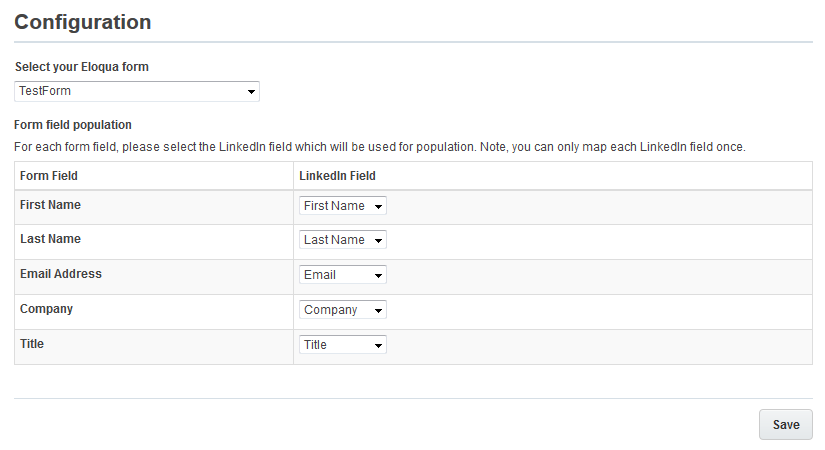
The installation and configuration for this app have been simplified. You are no longer required to associate a LinkedIn app when installing the LinkedIn AutoFill app in Oracle Eloqua, or when configuring the app on your landing page. Learn more
Eloqua-WeChat Integrator App Enhancements
The official account configuration page has been redesigned to simplify account creation. Learn more
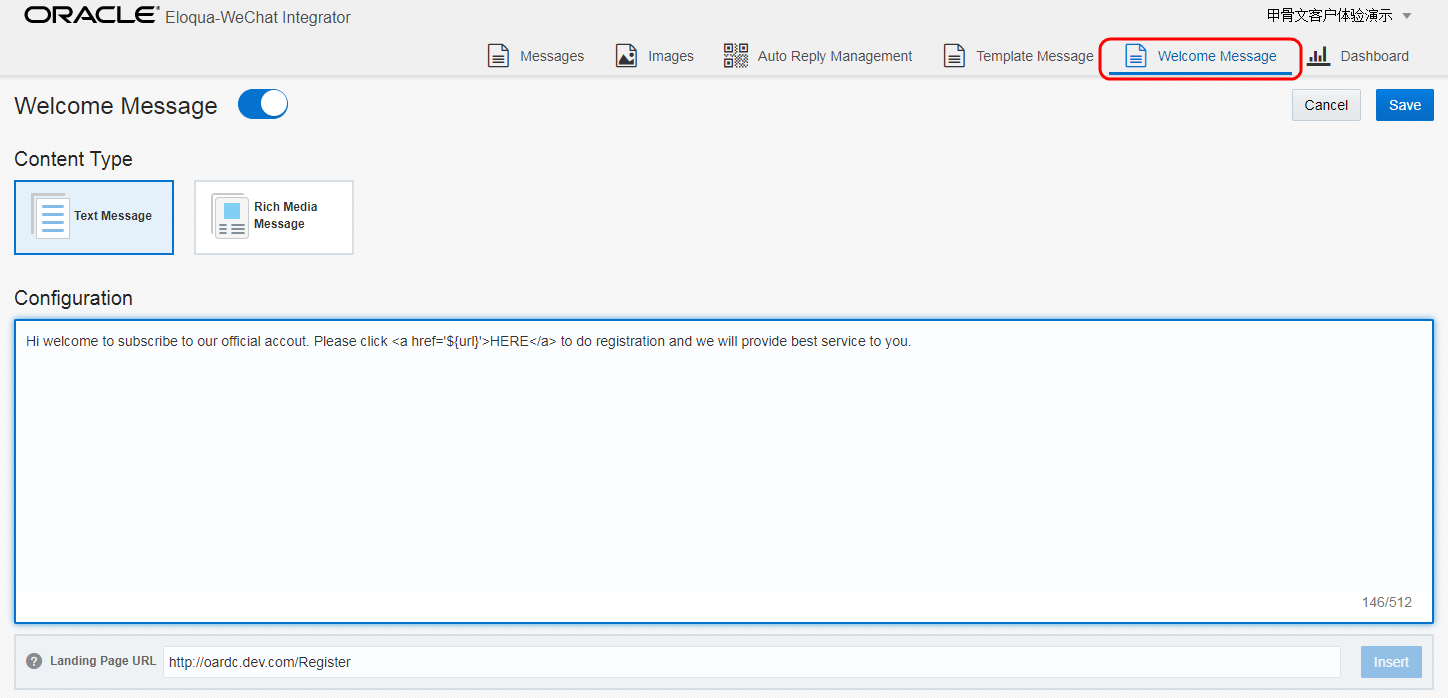
Welcome message configuration has been moved from the official account configuration area to a Welcome Message configuration in the cloud menu service. Welcome messages can be enabled and disabled. Rich media messages are now supported for welcome messages. Learn more
You can now control access to users for each official account. This access is set when adding the official account and controls which users have access to the WeChat menu, action, and content services in Oracle Eloqua. Learn more
The subscription status field records the follower’s subscription status for the official account:
When existing WeChat contacts in Eloqua cancel the subscription for an official account, an unfollow status is mapped; when the contact subscribes to an official account again, a follow status is mapped.
For newly created WeChat contacts collected from an Eloqua form, a hidden field with a fixed value of follow should be added to map the follower's status.
Feature updates for the Eloqua 490 release.
Release Dates
- August 8, 2017: 11:00pm - 5:00am ET (POD2)
- August 11, 2017: 6:00am - 12:00pm ET (POD7)
- August 11, 2017: 4:00pm - 10:00pm ET (POD6)
- August 13, 2017: 5:00am - 5:00pm ET (POD3)
- August 18, 2017: 8:00pm - 2:00am ET (POD4)
- August 20, 2017: 5:00am - 5:00pm ET (POD1)
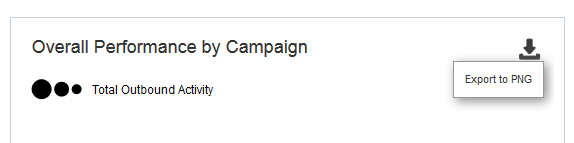
You can now download dashboards to a .png file. This allows you to share dashboard data with interested parties. This is available for all dashboards except the Individual Email Performance dashboard. Learn more
In Insight, the Landing Page subject area has been updated to include Total New Visitors. Learn more
IMPORTANT: This feature is part of a Controlled Availability program that is now closed. If you have access to this feature and require support, log in to My Oracle Support and create a service request. Visit the Oracle Eloqua Release Center for the latest product release
When opening a canvas that contained an add or move step pointing to it from another canvas, the steps appeared on top of each other. This issue has been resolved and steps now appear on different locations of the canvas.
Simple campaign and A/B test campaign results now show greater granularity when you have a clickthrough rate or open rate of less than 1%. Oracle Eloqua now displays 2 decimal places for rates of less than 1%. Learn more
When uploading Microsoft Excel files, Oracle Eloqua will read raw values of the spreadsheet, instead of evaluating functions. Learn more in our product notice.
Imports from an SFTP server are now limited to 5GB. Learn more in our documentation and product notice.
On the My Eloqua Dashboard, the approvals dashboard has been updated to show only records for the last 2 years. Learn more
If you enable a domain whitelist for form redirect domains, and a user is directed to a domain that is not on the whitelist, an error page is now displayed. The error page indicates that the form submission was captured but that the new page could not be found. Learn more in our product notice.
You can now turn off whitelist validation for form redirect domains. Learn more in our product notice.
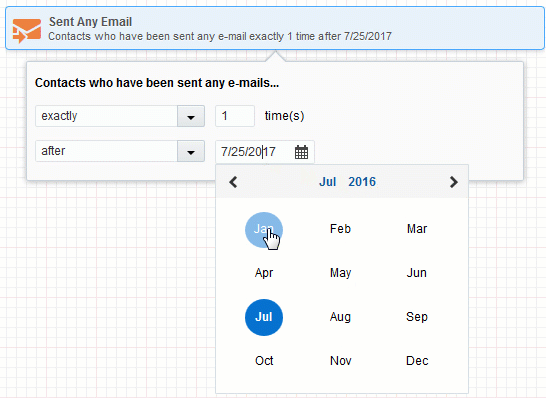
The segments date picker has been updated. It is now easier to change month and year selections. Learn more
When retrieving a list of custom object data in REST 2.0, you can now filter by uniqueCode as a search query parameter to filter results. Each custom object data entity contains a unique code that can be used in a filter. Learn more
Resolved an issue where retrieving a list of custom object data in REST 2.0 when ordering by UpdatedAt would result in an error. You can now send this request ordering results using UpdatedAt in REST 2.0.
The custom object data API in REST 1.0 and 2.0 will no longer result in an error when using name in the search query parameter to filter results.
For additional information and examples, refer to the changelog.
Oracle Eloqua Apps: Release 237
- August 18, 2017: 6:00am - 11:00am ET (POD7)
- August 18, 2017: 4:00pm - 9:00pm ET (POD6)
- August 18, 2017: 8:00pm - 1:00am ET (POD1, POD2, POD3, POD4)
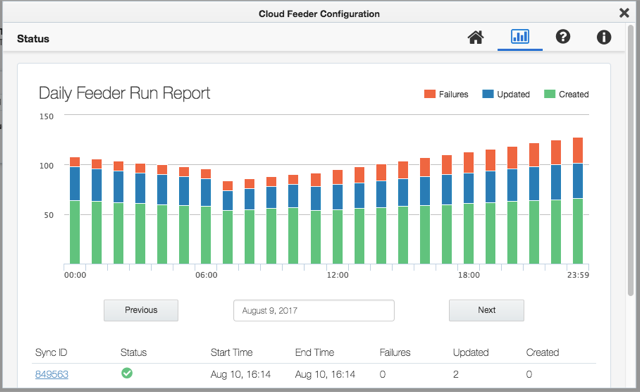
Daily Feeder Run Report Now Available for Apps
You can now monitor the progress of feeder apps on the campaign and program canvases by viewing the Daily Feeder Run Report. This report is available for apps with cloud audience services. Learn more
Oracle Sales Cloud Integration App Enhancements
Detailed error messages are now available when creating and editing actions and imports. These include maintenance notifications, invalid password, and so on.
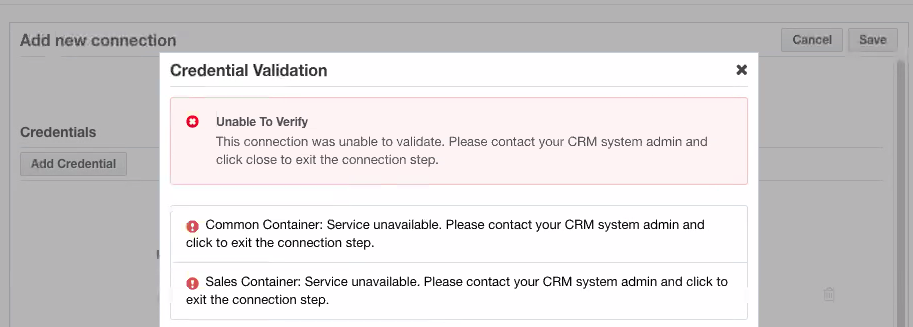
When creating a connection and validating credentials, additional verification messages are now available to provide more details about failed and successful validations.
Eloqua-WeChat Integrator App Enhancements
You can now create a registration landing page using the WeChat Landing Page Generator cloud content service as a template. Learn more
- When sending rich media messages, you now have the option to bypass the WeChat article page after a follower clicks the cover of a WeChat article. Learn more
- If a contact has registered with more than one email address for an event via your WeChat channel, the contact now receives only one WeChat message from one action step of WeChat message sender. Previously, they occasionally received multiple messages.
NOTE: Duplicated WeChat contacts are only filtered based on OpenID in one segment which has maximum 5000 contacts. If the target audience exceeds 5000, the segment should be split into multiple segments which do not exceed the maximum 5000 contacts.
You dreamed it, We Delivered It!
You can now include images in your RSS feeds! Update your existing feeds to the new layout and include images by clicking Update To New Version for each cloud content configuration included in your existing assets. Atom feeds are now also supported.
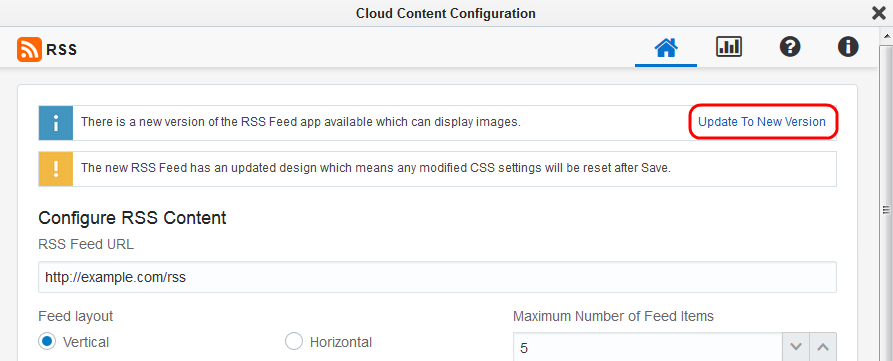
All existing instances will behave as is until you upgrade. You can modify the blog URL, number of stories, and length of stories. However, the feed layout cannot be changed.
IMPORTANT: Updating the RSS content service in existing assets in the configuration screen, will cause any modified CSS settings to be reset. All new instances of the RSS content service will use the newest version of the RSS Feed app.
Learn more about this feature by reviewing our documentation. You can also view the idea on Dream It related to this feature.
Oracle Eloqua Apps: Release 238
- September 15, 2017: 6:00am - 11:00am ET (POD7)
- September 15, 2017: 4:00pm - 9:00pm ET (POD6)
- September 15, 2017: 8:00pm - 1:00am ET (POD1, POD2, POD3, POD4)
A badge now displays for every feeder service to show whether a feeder is running, stopped, and when it was last run.

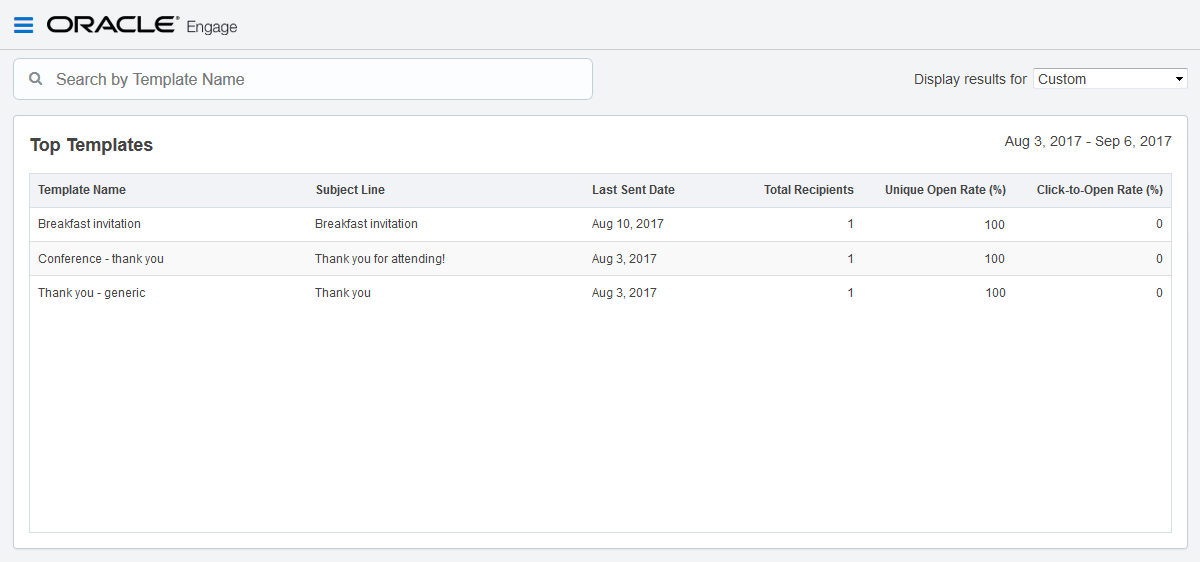
An Engage top templates report is now available. It provides information about the performance of your templates over a given period. Therefore, you can reuse the templates that have the best performance. Learn more
Contact Washing Machine App Enhancements
You can now add names to your Contact Washing Machine app steps. This makes it easier to manage configurations with many steps. Learn more
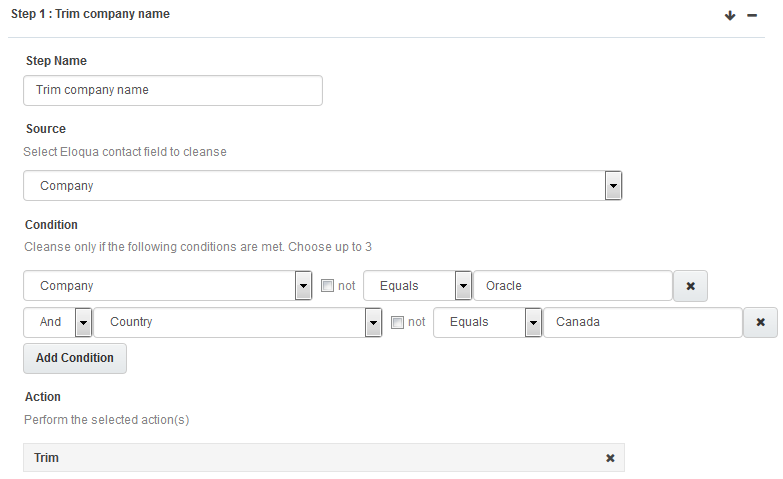
We have made performance improvements to the Contact Washing Machine app.
A warning now displays when there is an issue with the app's configuration or field mapping (for example, if a previously mapped contact field has been deleted).
Oracle Sales Cloud Integration App Enhancements
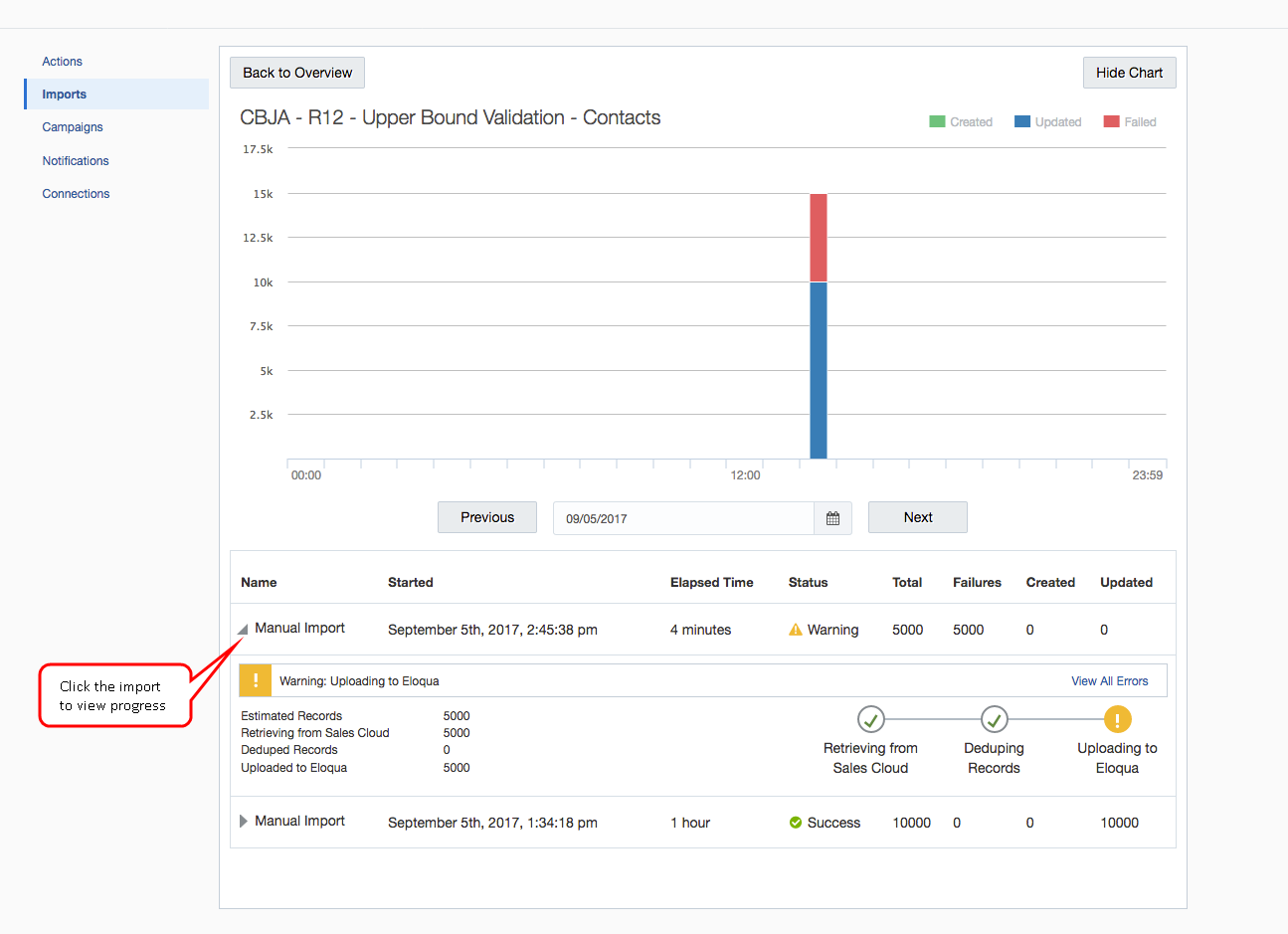
We have made several visual enhancements to import and action reports. Changes include graph colors, date picker location, and title format. Learn more
NOTE: Oracle Sales Cloud Integration app is currently released under our Controlled Availability program. To request access to this feature, please log in to My Oracle Support and create a service request.
Eloqua-WeChat Integrator App Enhancements
When sending a message using an Oracle Eloqua campaign with links to rich media message, template messages, and text message, a query string parameter with the CampaignID is automatically added. Learn more
You can now insert more than one hyperlink in your welcome messages using the text message editor. Learn more
- September 19, 2017: 11:00pm - 5:00am ET (POD2)
- September 22, 2017: 6:00am - 12:00pm ET (POD7)
- September 22, 2017: 4:00pm - 10:00pm ET (POD6)
- September 24, 2017: 5:00am - 5:00pm ET (POD3)
- September 29, 2017: 8:00pm - 2:00am ET (POD4)
- October 1, 2017: 5:00am - 5:00pm ET (POD1)
General Oracle Eloqua Enhancements
As part of a broader and on-going effort to unify all Oracle cloud applications, we have updated the Oracle Eloqua application main navigation. Learn more by reviewing our product notice and watching our video.
The new date picker available from some areas of Oracle Eloqua has been updated to make it easier to view today's date on the calendar. The new date picker is now available when configuring lead scoring.
Client Security Configuration screens have been updated to match the look and feel of Oracle Eloqua application. Learn more
NOTE: The redesigned Client Security Configuration screens are currently released under our Controlled Availability program. To request access to this feature, please log in to My Oracle Support and create a service request.
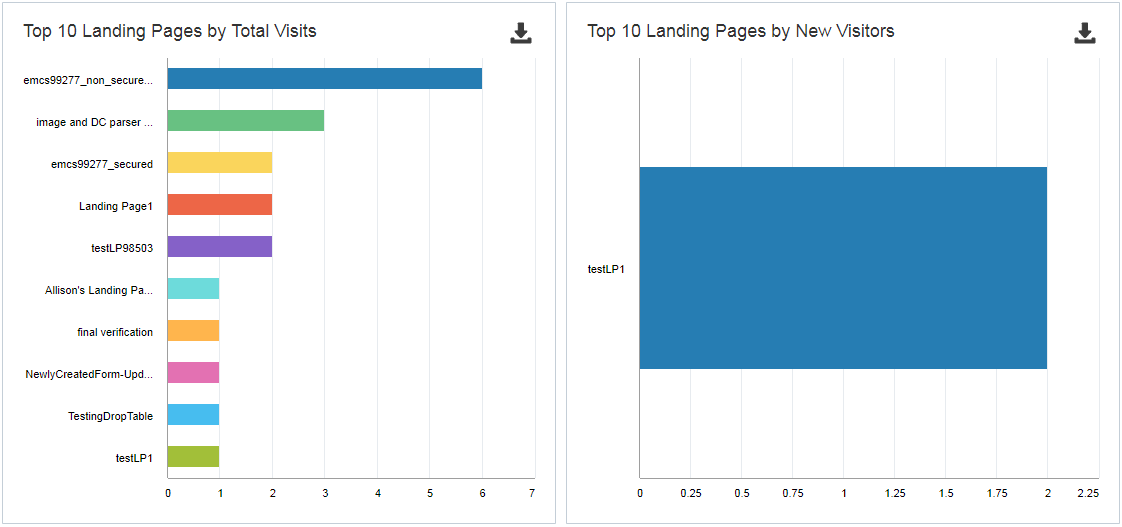
A new Landing Page dashboard is available. The Landing Page dashboard includes various charts providing you with an overview of landing page performance and trends. Learn more
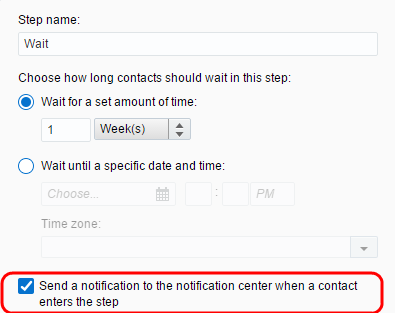
The wait step notification feature for campaigns and programs is now generally available. Learn more
The campaign end date notification feature is now generally available. Learn more
Creating an email or an email template no longer requires you to choose the type of email (Design or HTML). You are taken directly to the template chooser where you can choose the email template you want to use. Learn more
The label assignment workflow canvas is now generally available. Learn more
Firefox 52 and Chrome 58 are the preferred browsers for Eloqua. For a complete list, please see Supported Environments.
We have modified the endpoints used to retrieve Events, so that partial depth will return all properties except for sessions, sessionFieldValues, emailAddressFieldId, eventGroupByFieldId, and uniqueCodeFieldId. Currently, partial depth returns all properties. Learn more
Added the ability to include up to 10 contact fields in an activity export definition. Note that the addition of contact fields to activity exports will add to export time. If more than 10 contact fields are included, Eloqua will respond with a 400 validation error. The syntax for a contact field statement in a Bulk API activity export definition is:
{{Activity.Contact.Field(<contact_field_name>)}}
You can now include the following fields when creating a Bounceback activity export definition:
- EmailRecipientId
- EmailDeploymentId
- SmtpErrorCode
- SmtpStatusCode
- SmtpMessage
This enhancement enables developers to tie a hard Bounceback to an email send, and provides further details on the Bounceback. For more information on these fields, see Activity Fields.
Resolved an instance where creating a Feeder sync action definition for custom objects was causing an error.
Modified the behavior of the ExternalId field on custom objects. The ExternalId field can now be used as the identifierFieldName on bulk imports even if there is a unique code field set on the destination custom object.
For additional information and examples, refer to the changelog.
---

Copyright © 2017, Oracle and/or its affiliates. All rights reserved.
This document is provided for information purposes only, and the contents hereof are subject to change without notice. This document is not warranted to be error-free, nor subject to any other warranties or conditions, whether expressed orally or implied in law, including implied warranties and conditions of merchantability or fitness for a particular purpose. We specifically disclaim any liability with respect to this document, and no contractual obligations are formed either directly or indirectly by this document. This document may not be reproduced or transmitted in any form or by any means, electronic or mechanical, for any purpose, without our prior written permission.
Oracle and Java are registered trademarks of Oracle and/or its affiliates. Other names may be trademarks of their respective owners.
Intel and Intel Xeon are trademarks or registered trademarks of Intel Corporation. All SPARC trademarks are used under license and are trademarks or registered trademarks of SPARC International, Inc. AMD, Opteron, the AMD logo, and the AMD Opteron logo are trademarks or registered trademarks of Advanced Micro Devices. UNIX is a registered trademark of The Open Group.

Q32017ver2