
This document will continue to evolve as existing sections change and new information is added. All updates appear in the following table:
| Date | Product | Feature | Notes |
|---|---|---|---|
| 04 AUG 2022 | Created initial document. |
 HAVE AN IDEA?
We’re here and we’re listening. If you have a suggestion on how to make our cloud services even better then go ahead and tell us. There are several ways to submit your ideas, for example, through the Ideas Lab on Oracle Customer Connect. Wherever you see this icon after the feature name it means we delivered one of your ideas.
GIVE US FEEDBACK
We welcome your comments and suggestions to improve the content. Please send us your feedback at omcdocumentation_ca@oracle.com.
DISCLAIMER
The information contained in this document may include statements about Oracle’s product development plans. Many factors can materially affect Oracle’s product development plans and the nature and timing of future product releases. Accordingly, this Information is provided to you solely for information only, is not a commitment to deliver any material, code, or functionality, and should not be relied upon in making purchasing decisions. The development, release, and timing of any features or functionality described remains at the sole discretion of Oracle.
This information may not be incorporated into any contractual agreement with Oracle or its subsidiaries or affiliates. Oracle specifically disclaims any liability with respect to this information. Refer to the Legal Notices and Terms of Use for further information.
Column Definitions:
Report = New or modified, Oracle-delivered, ready to run reports.
UI or Process-Based: Small Scale = These UI or process-based features are typically comprised of minor field, validation, or program changes. Therefore, the potential impact to users is minimal.
UI or Process-Based: Larger Scale* = These UI or process-based features have more complex designs. Therefore, the potential impact to users is higher.
Features Delivered Disabled = Action is needed BEFORE these features can be used by END USERS. These features are delivered disabled and you choose if and when to enable them. For example, a) new or expanded BI subject areas need to first be incorporated into reports, b) Integration is required to utilize new web services, or c) features must be assigned to user roles before they can be accessed.
| Ready for Use by End Users Reports plus Small Scale UI or Process-Based new features will have minimal user impact after an update. Therefore, customer acceptance testing should focus on the Larger Scale UI or Process-Based* new features. |
Customer Must Take Action before Use by End Users Not disruptive as action is required to make these features ready to use. As you selectively choose to leverage, you set your test and roll out timing. |
|||||
|---|---|---|---|---|---|---|
| Feature |
Report |
UI or |
UI or |
|
||
Disable Deletion of Attributes Included in Publish Jobs
When a publish job is running, Oracle Unity prevents the deletion of attributes included in the publish job. The delete option for these attributes can't be selected.
This enhancement ensures that appropriate safety checks are in place to prevent system and job errors.
Steps to Enable
You don't need to do anything to enable this feature.
Key Resources
Role Information
This feature is available to Data engineers.
Display Latest 1,000 Jobs in Data Feeds Page
The Data Feeds page now displays the latest 1,000 jobs for each data feeds category (ingest, export, delete).
This enhancement improves the user experience by allowing you to view and search for a larger number of jobs.
Steps to Enable
You don't need to do anything to enable this feature.
Key Resources
Enhancement to Deleting Data by Using Segments
The following information is now displayed when configuring a delete job by using segments:
- The base object used for the segment
- The record count of the segment
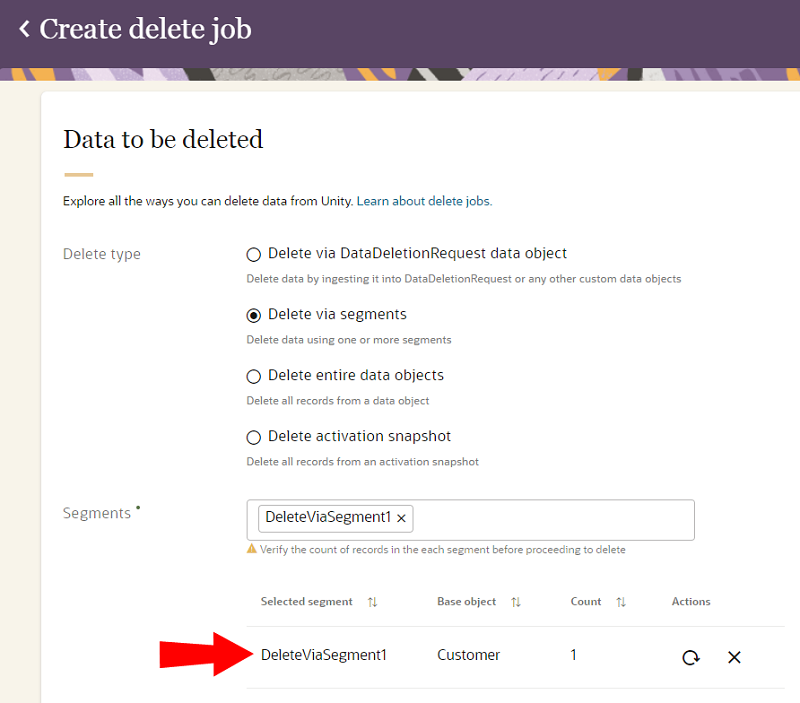
This enhancement allows you to make a more informed decision when deleting data using an existing segment.
Steps to Enable
You don't need to do anything to enable this feature.
Key Resources
Role Information
This feature is available to Data engineers.
Job Retries During Job Sequences
When a job sequence fails, it now automatically retries to complete successfully.
This enhancement has been implemented to achieve higher levels of reliability and success.
Steps to Enable
You don't need to do anything to enable this feature.
Key Resources
Role Information
This feature is available to Instance admins.
Support Multiple Date Formats for Secure FTP Export
You can now append different date formats to a file name when configuring a Secure FTP destination for export jobs.
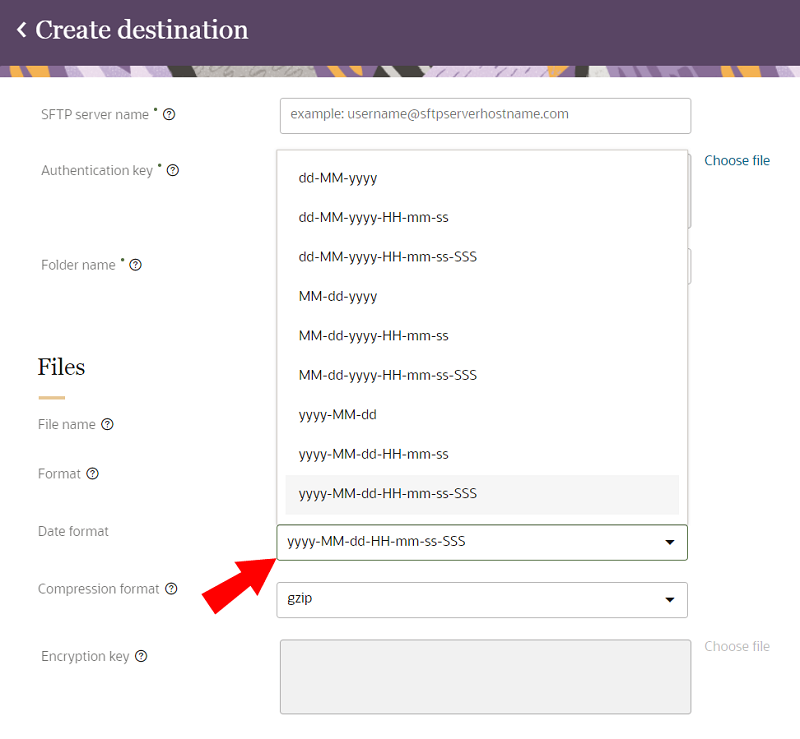
This enhancement provides more file naming options and improves file management in downstream systems.
Steps to Enable
You don't need to do anything to enable this feature.
Key Resources
Role Information
This feature is available to Business users.
Engagement Propensity Data Science Model
The Engagement Propensity model measures a customer's likelihood to engage with emails (open, click, subscribe, unsubscribe) based on their past interactions.
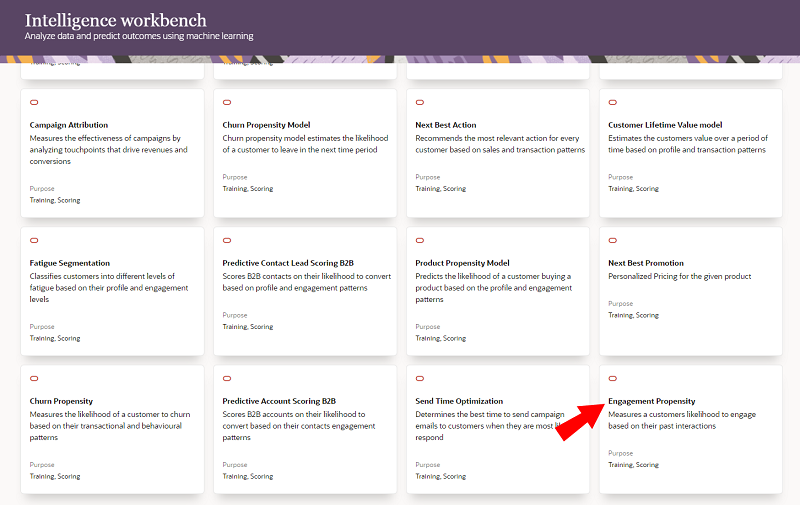
The model allows you to effectively engage with customers by targeting them with the appropriate messaging.
Steps to Enable
You don't need to do anything to enable this feature.
Key Resources
Role Information
This feature is available to Instance admins.