-

Justice and Public Safety
Industry Viewpoints
-
Welcome
Introduction
-
Justice and Public Safety
The Changing Face
of Crime and Policing -
Justice and Public Safety
Policing
and Technology -
Justice and Public Safety
The Rise
of Cybercrime -
Oracle
Cloud Is the Destination
-
Oracle
What's New
-
Oracle
Customer Stories
-
Estimated reading time: 1 minute
Justice and Public Safety Industry Viewpoints
Today, police departments and law enforcement agencies must keep the peace and protect the public in two distinct worlds: the physical and the digital.
The threat of terror remains ever present, and police must adopt a preventative approach over a reactive one to keep the public safe. Meanwhile, online crime is proliferating—with new threats emerging every year. The justice and public safety sector must anticipate and respond to such threats to stay ahead of crime trends.
"Cybercrime will cost businesses over US$2 trillion by 2019." —"The Future of Cybercrime and Security: Financial and Corporate Threats and Mitigation," Juniper Research
Technology plays twin roles in this new world of crime and policing. Crimes including financial fraud, hate speech, grooming, and radicalization are increasing in the digital realm, while social media is used to plan and discuss crimes, or even boast about criminal activity. But technology is also a tool for law enforcement, providing police with new insights, evidence, and techniques to protect the public. The emergence of new technologies—such as body cams, the Internet of Things (IoT), and analytics—is helping to ensure officers' safety, and empowering them to do their jobs more effectively.
With a new world of criminal activity taking place online, justice and public safety departments must modernize rapidly to maintain order.
In this ebook, we'll examine how crime and policing have changed in response to advances in technology, and explore some of those technologies in greater detail. We'll discuss the rise of cybercrime in all of its forms, and look at how a modern cloud platform can help the justice and public safety sector become more secure, collaborative, and efficient.
-
Estimated reading time: 5 minutes
The Changing Face of Crime and Policing
Historically, policing has been a reactive process. Police agencies would respond to crimes that had already been committed, or increase the number of officers on the ground in an attempt to deter criminal activity. Now, all of that is changing. Digital technologies have allowed policing to become both proactive and preventative—with the proliferation of data helping to predict if, where, and when a crime may take place.
It is said that necessity breeds innovation, and that's certainly the case in the justice and public safety sector. In a world where terrorism remains a real threat, reactive policing is no longer adequate. Wherever possible, new tools and techniques must be adopted so that crime can be anticipated—and prevented.

Policing physical and digital worlds.
The nature of crime is changing, too. Criminals have found a new world to exploit online. This scenario is barely a generation old, but it's evolving—and worsening—all the time.
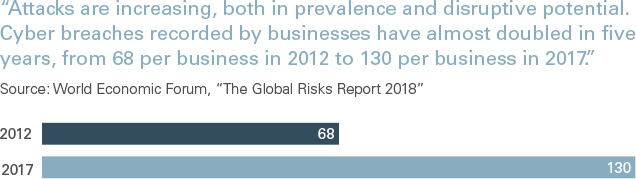
According to Experian, online fraud is now the most common crime in the UK—showing just how quickly and significantly cybercrime has proliferated. But besides fraud and financial crime, countless other criminal activities now take place solely—or predominantly—online. These include:
- Cyberbullying
- Distributed denial-of-service (DDoS) attacks
- Data theft
- Ransomware
- Sexual offenses
- Spyware
- Radicalization
- Hate speech
The upshot of this is that agencies must now police two distinct worlds: the physical and the digital. Combatting a new breed of online crime requires new resources, technologies, and abilities—putting agencies under considerable strain.

Crime and social media.
Although digital technologies are providing criminals with new opportunities to plan and commit crimes, they're also empowering police to fight back. Social media may be a breeding ground for crime, but it's also a forum where crime is uncovered. Criminals often boast about criminal activity via social media, or upload information that may potentially implicate themselves.
Social media is effectively both a vast repository of data and a communications interface. It's a platform upon which police and the public can interact—potentially alerting law enforcement when and where a crime is taking place.
"Today, the uncovering of facts, photos, videos, and people can be revealed online, without prodding by law enforcement…Countless lives have been saved by officers finding crimes occurring or about to occur via social media." —Mike Bires, "Thinking Outside the Box: Police Use of Social Media to Catch Criminals," PoliceOne
Clearer channels of communication present an opportunity for law enforcement to increase trust and improve public relations (PR), painting the police in a more positive light and showing their human side.

Data and privacy.
The PR aspect of social media is becoming increasingly important in an era when policing has suffered a reputational blow. Police need access to criminal justice data to build detailed profiles of suspects and detainees, and they need access to accountability data to help improve transparency and build trust. But the public is growing increasingly aware of data ownership, and there's a fine line between surveillance and intrusion. To win the hearts and minds of citizens, a balance must be struck between data availability and the appearance of an Orwellian surveillance state.
"I think you lose legitimacy when you hide data that doesn't need to be hidden. It sets up the concept of trust—we work with the community, and as part of trying to establish that trust, we're going to open the books and show you what we do." —John Kapinos, Strategic Planner, Fairfax County Police Department

Attracting digital-native talent.
Across the justice and public safety sector, application numbers are falling. Police agencies are fighting a tide of negative PR. Social media is helping to stem this tide, but unfavorable press, coupled with the perceived danger of policing, has affected recruitment. With the nature of crime and policing changing so rapidly, a new breed of young, tech-savvy talent is needed. However, police agencies face a struggle to attract these digital-native workers. Failure to do so means potentially missing out on the skills to make use of disruptive new technologies.
"Studies have shown that millennials have high ethical standards, are willing to work hard, and are highly trainable. Millennials want to be part of something bigger, and they value purpose more than paychecks. These qualities can make millennials great police officers. But police departments may have to make some changes to attract and keep millennial officers." —Matt Gasior, PowerDMS
-
Estimated reading time: 4 minutes
Policing and Technology
Besides social media, other technological developments are providing police agencies with the tools they need to effectively combat crime and maintain officers' safety. However, utilizing these technologies—and extracting value from the huge volumes of data many of them produce—remains a significant challenge.
Video.
Advances in video technology are changing the face of police work. Closed-circuit television (CCTV) has become an accepted aspect of daily life in many nations, but now, other video technologies are becoming increasingly prominent. Dash cams are widely used by police agencies across the United States, but are also used by the public in places like Russia—where dash cam evidence is integral to many criminal investigations and insurance claims. Body cams, meanwhile, have proven to be a game-changer for the police—delivering crucial accountability data in the event of any incident, and enhancing trust and transparency.
"Once [the public] are aware they are being recorded, once they know that everything they do is caught on tape, they will undoubtedly change their behavior because they don't want to get into trouble. Individual officers become more accountable, and modify their behavior accordingly, while the more disingenuous complaints from the public fall by the wayside." —Dr. Barak Ariel, Lecturer in Experimental Criminology, University of Cambridge
Video acts as an effective deterrent—whether captured by citywide CCTV, officer-worn body cams, or wall-to-wall surveillance systems in correctional facilities. However, working through hours of footage to find the seconds of valuable evidence that might make a difference can be extremely labor-intensive. Even here, technology is making a difference. Facial recognition software and video analytics can do the job on behalf of human officers—detecting anomalies in human behavior or identifying particular objects or vehicles, and alerting officers to the appearance of known individuals.
Smart cities.
Smart cities overseen by smart police agencies represent the future of justice and public safety. Technologies such as machine learning, analytics, and IoT are creating, capturing, and analyzing vast quantities of data, allowing police agencies to make more intelligent, informed decisions.
"Accident data collected by telematics could be used to identify the most dangerous intersections in our cities. With that kind of information, municipalities and departments of transportation can put their dollars exactly where it's needed the most, and where it will make the greatest impact." —Neil Cawse, CEO, Geotab
With sensors monitoring everything from the location of emergency service vehicles to registering when a weapon has been unholstered, and even the proximity of gunshots, IoT provides the infrastructure to effectively detect and prevent crime—and enhance first-responder efficiency.
But these aims will only be achieved by embracing the flexibility, scalability, and security of cloud.
Analytics.
Analytics is key to transforming policing from reactive to preventative—and predictive. It's a means of extracting valuable information from vast quantities of structured and unstructured data. Advanced probabilistic algorithms and real-time tracking can be used to identify patterns in the data flood, effectively calculating the likelihood of a crime occurring—even where, when, and by whom it may be perpetrated.
Automation and modernization.
Digital technologies offer the promise of automation, and with it, the chance to achieve the Holy Grail of "doing more with less." Technologies including artificial intelligence (AI), machine learning, and chatbots are capable of automating back-office systems—freeing staff to concentrate on frontline tasks, saving the agency money, and serving as a virtual force multiplier. There are other policing tasks that can be automated, too. Electronic monitoring can effectively act as "virtual incarceration," with GPS tracking allowing officers to monitor suspects and parolees at low cost and with minimal effort.
A further benefit of automation is that the creation of a modern workplace empowered by new communications technologies will help attract and retain the best young talent, bridging the growing skills gap in justice and public safety. Meanwhile, autonomous "self-driving" databases will completely remove the need for manual database management—saving time and effort while improving security, performance, and data availability.
-
Estimated reading time: 6 minutes
The Rise of Cybercrime
The prevalence of cybercrime has risen in parallel with the adoption of connected technologies. Now, practically every home has various smartphones, tablets, laptop computers, smart televisions, and other connected devices. Even in developing countries, most citizens are now smartphone-connected. With technological developments such as IoT, smart cities, and autonomous vehicles on the rise, the number of networked products is set to increase significantly. The more devices and infrastructure connected to wireless networks, the greater our susceptibility to attack.
Today, cybercrime against individuals is one of the fastest-growing crimes worldwide.
"Clearly, this (cybercrime against individuals) is a less-targeted and smaller-value approach than targeting companies with ransomware, but it may also be easier to succeed, as individuals are unlikely to have the security knowledge and resources that organizations have to defend against these threats." —SecureWorks, "2017 State of Cybercrime Report"
But depending on how you define the term, cybercrime against individuals isn't always about financial gain. A plethora of new online crimes has developed over the last decade or so, and police agencies must be alert to all of them if they are to keep the public safe.
A new breed of crime.
The internet, in particular, has become a breeding ground for crime—some of which is still poorly understood and inadequately legislated against.
Financial crime.
Financial crime remains what first comes to mind when most people think about cybercrime. Financial cybercrime generally targets businesses and institutions over individuals, as it's more profitable to do so—but individuals are still at risk. Fraud and identity theft remain rife, while more complex forms of financial crime have also proliferated. Ransomware attacks—in which an individual or business' data is stolen or device functions disabled until a ransom is paid—are increasingly common.
In 2017, the UK's National Health Service (NHS) was hit by a major ransomware attack. More than one-third of NHS trusts in England were affected, and almost 7,000 appointments were canceled as a result.
Data theft.
Cybercriminals have found that targeting data—and then selling it or extorting the original owners—is often more successful than targeting funds directly. Adding a layer of complexity to data theft is the fact that the majority of data breaches are caused by employees—either through human error, malice, or exposure to criminal third parties.
DDoS attacks.
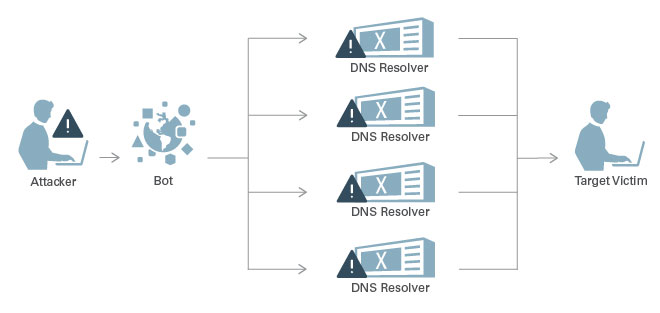
DDoS attacks show how cybercrime is becoming increasingly complex and nuanced. They're designed to render an online service offline, bombarding a target server with traffic until it can no longer function. DDoS attacks are employed by online activist groups, terrorist organizations, and individuals to disrupt and undermine their targets. As digital activism and terrorism become more prevalent, such attacks are a growing threat.
Radicalization.
In an age of international terror, radicalization is a concern for many police agencies. Terrorist organizations target vulnerable individuals—often the young and disenfranchised—and manipulate them from afar. In worst-case scenarios, these individuals can be persuaded to carry out terrorist atrocities, or join terror cells in foreign countries.
Hate speech.
With the veneer of anonymity the internet provides, encouraging people to say and do things they'd never consider in person, online trolling is rife. Often, this behavior passes beyond the simply unacceptable and into the realm of the illegal. Online hate speech—including threatening behavior and racial, sexual, and gender discrimination—can often be traced, and the perpetrators brought to justice. AI, machine learning, and analytics, are making such convictions quicker and easier.
"While the internet is not separate from the realm of laws, there are complications in developing and applying legal responses to perceived online hate speech." —UNESCO Publishing, "Countering Online Hate Speech"
Sexual offenses.
Police agencies must combat a wide range of online sexual offenses, from child pornography and the grooming of minors to revenge porn and sexual threats to individuals. With networked device numbers skyrocketing, spyware—and extortion—are other growing threats.
The sheer quantity and variety of online offenses illustrates the changing nature of modern-day policing. A little more than two decades ago, none of these offenses existed. Today, police agencies must balance the need to maintain public safety in the physical world with the need to protect citizens online. It's effectively doubled their workload, and necessitated countless new skills.
-
Estimated reading time: 6 minutes
Cloud Is the Destination
Many justice and public safety leaders are reluctant to move to the cloud. They have lingering concerns over data security—understandable, given the unique sensitivity of much of the data they process. But the cloud represents undeniable opportunities for police agencies—opportunities to share invaluable data and insights, save money, and automate countless mundane tasks.
"Adoption of cloud computing by police forces will be a key enabler of modern crime prevention. In order to fully realize the potential of data and analytics tools, forces must embrace cloud computing." —techUK, "Digital Policing: The Future of Modern Crime Prevention"
Cost savings.
Cloud migration can help police agencies achieve significant cost savings. Police are under pressure to deliver cost savings in the back office, and the greater efficiency provided by cloud-enabled technologies can help them do so. Automation of back-office processes provides agencies with an opportunity to enhance efficiency and free up resources, which equates to long-term benefits for frontline officers and investigators.
Data security.
For justice and public safety leaders, security of sensitive criminal data and intelligence information remains a top priority. Meanwhile, stringent government regulations—such as the General Data Protection Regulations (GDPR) in Europe—make compliance an ongoing challenge. Doubts over the security of cloud remain among some industry leaders, while certain regulated sectors simply don't have the option to adopt a public cloud model.
However, on-premises cloud services—such as Oracle Cloud at Customer—deliver the power and flexibility of the public cloud, securely in users' data centers. This model helps to ease data security fears and ensures ongoing compliance, delivering total data control and sovereignty behind the users' firewall.
Data sharing and collaboration.
The cloud also provides an opportunity to more effectively share data within—and between—agencies. In many countries, agencies act autonomously and are effectively siloed—with disparate legacy IT systems impeding collaboration and hindering investigations. Moving police and justice data to a single, unified cloud platform makes it more accessible, and helps to facilitate better interregional cooperation, and more effective investigations.
Easier access to criminal justice data will allow police agencies to build detailed profiles of suspects and detainees, and better access to accountability data helps increase transparency, and build trust following an incident. New technologies such as blockchain can help make data both easier to access, and more secure—particularly digital evidence.
"Over time, blockchain can help agencies digitize existing records and manage them within a secure infrastructure, allowing agencies to make some of these records 'smart.'" —Steve Cheng, Matthias Daub, Axel Domeyer, and Martin Lundqvist, "Using Blockchain to Improve Data Management in the Public Sector"
An integrated policing platform.
Effective policing starts with efficient processes. The needs of modern policing demand an efficient, integrated, cloud-based policing platform. By replacing legacy evidence-management systems with new, digital alternatives, police agencies can make evidence analysis faster and more effective—even introducing automation to enhance efficiency and minimize human error.
A modern records management system (RMS) and computer-aided dispatch (CAD) system will enable the management and dissemination of critical data. And with the support of video and data analytics, these systems can enhance the efficacy of investigations and preventative measures with valuable insights.
To overcome the threats of the digital age and effectively protect citizens, justice and public safety agencies must embrace the flexibility, scalability, and security of the cloud. The benefits are clear: Cloud helps agencies achieve improved security and transparency, cut back-office costs, and enable an integrated policing platform to more effectively preserve public safety.
With the right cloud strategy in place, justice and public safety organizations can face the challenges of tomorrow with confidence.
-
Estimated reading time: 3 minutes
What's New
With the nature of crime and policing in constant flux, keeping pace with change requires access to the latest insights and information available. But it's impossible to read everything. That's why we've curated a selection of news items and updates on the biggest justice and public safety topics—from new integrated policing platforms to managing evidence securely in the cloud.
A more efficient policing process.
For police agencies, modernization means enhancing process efficiency. That means adopting and integrating a host of new solutions: RMS, CAD systems, social media analytics tools, and more. A secure, cloud-ready platform is needed if these applications are to be integrated—and utilized—successfully. Find out how Oracle's Integrated Policing Platform can help.
Digital evidence: ordered, secure, and user-friendly.
New technologies are creating vast quantities of digital evidence. Body cams, networked devices, social media analytics, and more all collect valuable insights that can support investigations and more effectively protect the public. Legacy evidence management systems are rarely user-friendly, cost-effective, or secure—and that's if they exist at all. Find out how Oracle's Digital Evidence Management Solution for Police can help.
-
Estimated reading time: 3 minutes
Customer Stories
Transforming efficiency, services, and business.
With police force budgets continually constricted, the pressure is on to deliver cost savings through greater collaboration.
Capgemini developed the Transform Police Support (t-Police Support) solution, based on Oracle's cloud applications and technology stack. This solution delivers police force efficiency savings and service delivery improvements across the back office, while ensuring a rapid return on investment. Now, more than 70,000 police officers and staff in the UK use t-Police Support, with Cheshire and Northamptonshire forces realizing cost savings in excess of 40 percent.
"The cost of transactional processing has already reduced by 39 percent. We estimate that reduction will eventually be nearer 50 percent." —Sarah Copley-Hirst, Head of the Multi-Force Shared Service, Cheshire Constabulary
Helping refugees settle with Oracle Exalogic and Oracle Exadata.
The refugee crisis of 2015 saw up to 10,000 displaced people seek asylum in Germany every day—more than 1 million people in total. So the Federal Office for Migration and Refugees (Bundesamt für Migration und Flüchtlinge—BAMF) had an important job to do: quickly, correctly, and securely register each new arrival against a backdrop of heated sociopolitical debate.
Having not been designed for such a rapid influx of people, the organization's existing systems simply weren't up to the task. BAMF needed a central storage system capable of handling and exchanging huge volumes of data, and they needed it yesterday.
"To date, I haven't experienced a single project that can be compared even remotely with ASYL Online in terms of its importance, complexity, or implementation schedule. The professionalism and phenomenal dedication of BAMF and Oracle enabled successful realization within an extremely short period of time." —Dr. Markus Richter, Head of Infrastructure and IT Department, Federal Office for Migration and Refugees
Breaking new ground in the cloud.
England's West Midlands Police wanted to create a modern, efficient, technologically enabled force—so they turned to Oracle and Accenture for help.
Together, Oracle and Accenture implemented one of the first instances of cloud adoption by a public safety agency in the UK. We successfully deployed a suite of Oracle Cloud applications, effectively modernizing processes across West Midlands Police's human resources, finance, procurement, and shared services departments.
"This project represents a significant investment by the force as part of our transformation program and demonstrates our commitment to investing in digital technologies to enable new and more efficient ways to manage operations, share information, and deliver police services to the public." —Neil Chamberlain, Director of Commercial Services, West Midlands Police