Table of Contents
Table of Contents
Real-Time Enterprise8
Engineered Together48
-
-
Table of ContentsChapter 1: Innovation 2Chapter 2: Powering the Real-Time Enterprise 8Chapter 3: Database Consolidation 16Chapter 4: Database Storage Optimization 20Chapter 5: Defense-in-Depth Security 26Chapter 6: Maximum Availability 30Chapter 7: Data Warehousing and Big Data 36Chapter 8: Rapid Time to Value 42Chapter 9: Database Management 46Chapter 10: Hardware and Software Engineered Together 48Chapter 11: Conclusion 52Resources 541
-

A Revolution in Data Management
Data is now a critical differentiator in nearly every industry. Organizations on the leading edge of data management are able to achieve greater profitability and compete more effectively. To stay ahead, you need a database management system that will accommodate relentless growth, support increasingly faster decision-making, and deliver breakthroughs in performance, security, availability, and manageability.
Enter Oracle Database 12c, the next generation of the world’s most popular database. It’s built on a new multitenant architecture that enables the deployment of database clouds. A single multitenant container can host and manage hundreds of pluggable databases to dramatically reduce costs and simplify administration. Oracle Database 12c also includes in-memory data processing capabilities delivering breakthrough analytical performance to power the real-time enterprise.
2
 Video: “It’s one shot: unplug it, plug it in someplace else.”James Lui, Senior Oracle Applications DBA, AramarkWatch the Video (1:23)
A Breakthrough in Database Consolidation
According to Research Vice President Carl Olofson of IDC, Oracle’s new pluggable database architecture not only enables multiple databases to be managed as a group, but it also forms the basis for database resource virtualization—a key element of cloud deployments. “Significantly, this feature may be implemented with no change to application code or existing SQL queries or reports,” he says.1
 “Oracle Database users can take heart in knowing that the technology to which they are committed is developing aggressively in the right direction.”Carl W. Olofson, Research Vice President, IDC
1IDC Insights Report, “Oracle Announces GA for Oracle Database 12c,” (July 2013, IDC #242093).
3 -
A New Level of Performance in Analytics
Enterprises are always looking to make business decisions more quickly to drive higher profits and maintain a competitive advantage. Oracle’s new Oracle Database In-Memory column store accelerates database queries and enables businesses to make better and faster decisions. Oracle’s unique approach speeds up analytics, data warehousing, and reporting workloads with almost no effort. Existing applications automatically and transparently take advantage of in-memory processing without requiring any changes and without losing any existing Oracle Database capabilities. Oracle Database 12c enables a new level of business performance for accelerating operations, quickly discovering new growth opportunities, improving the customer experience, and making smarter business decisions.

Reinventing Database Protection
Enterprises never want to lose vital business data; however, they can’t spare the time to back up data for multiple critical
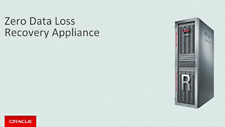
4applications. Oracle’s Zero Data Loss Recovery Appliance (Recovery Appliance) is the industry’s first engineered system designed specifically to protect Oracle databases.
It addresses the biggest enterprise data protection challenges, delivering unparalleled availability, efficiency, scalability, and manageability. The Recovery Appliance captures real-time redo blocks to eliminate data loss and enable full database recovery, while minimizing the impact of backups on production systems. This massively scalable appliance can protect thousands of databases while enabling IT to manage the entire data protection lifecycle—from data creation to tape archives—from a single interface. Experience unparalleled database protection today with the Zero Data Loss Recovery Appliance.
A New Standard for the Database Industry
With Oracle Database 12c, modern computing paradigms such as database as a service (DBaaS) and big data aren’t just
5academic concepts—they are a natural part of everyday business. Oracle Database 12c features more than 500 innovations that help customers fulfill the most demanding online transaction processing (OLTP), data warehousing, and big data requirements. Other innovations include the new Automatic Data Optimization and Heat Map features in Oracle Advanced Compression that enable administrators to create and apply information lifecycle management (ILM) policies based on the usage patterns of their user’s data to enable automatic compression and storage tiering. Together, they help reduce storage costs and improve application performance. In addition, major enhancements in availability, security, and support for big data make Oracle Database 12c the ideal platform for private and public cloud deployments.
Read on to learn why early adopters of Oracle’s new database management system are so enthusiastic. Or dive into the details by downloading the Oracle app from the Apple App Store on your mobile device and launching Oracle’s AR scanner app to bring the image to the right to life.
Embrace New Technology with Oracle Database 12c
- Plug into a cloud-based architecture with a fast, scalable, reliable, and secure database platform.
- Lower the cost and risk of database consolidation.
- Deliver enterprise-class performance, availability, security, and analysis for big data.
6

100x Faster Decision-Making
Businesses must compete in today’s high-speed, always-on world where customers are more demanding than ever. With relational databases powering the most mission-critical applications in enterprises today, database performance directly influences the quality of business decision-making. Business stakeholders need the ability to model scenarios quickly based on up-to-date information to make decisions in the moment instead of after the fact.

Oracle Database In-Memory transparently accelerates analytics by orders of magnitude while simultaneously speeding up transactions in mixed-workload systems. Leveraging SIMD vector instruction processing available in modern CPUs, Oracle Database In-Memory is able to execute queries in parallel directly from RAM at blazing speeds compared to traditional disk-based
8methods. This enables database users to get immediate answers to business questions that previously took hours without the need to restrict functionality or accept compromises, complexity, and risk.
Data Sheet: Oracle Database In-Memory: Powering the Real-Time Enterprise.Read the Data SheetAnalytics Based on Up-to-Date Transactions
Oracle Database In-Memory seamlessly extends existing Oracle databases with a new high-speed in-memory column format while preserving the existing row format on disk. The dual-format architecture of Oracle Database In-Memory represents database tables simultaneously in both formats. Reporting and analytics workloads automatically use the in-memory column format on the production database while transactional workloads use the traditional row format. By ensuring that both formats stay transactionally consistent, business stakeholders now have the ability to run queries against the most recent and up-to-date transactions.
9Faster Mixed-Workload Transactions
Enterprises are increasingly consolidating databases into mixed-workload environments that both run analytical queries and process OLTP transactions. To accelerate mixed-workload reporting, it is common to create dozens of analytic indexes on important tables. With the blazing speed of Oracle Database In-Memory, the manual effort and storage cost needed to build analytic indexes can now be eliminated.
By virtue of eliminating analytic index overhead, OLTP operations have much less burden when processing transactions. Thus, by adopting an in-memory column store for faster analytical processing, enterprises receive the benefit of accelerating transaction processing as well.
Implementation as Easy as Flipping on a Switch
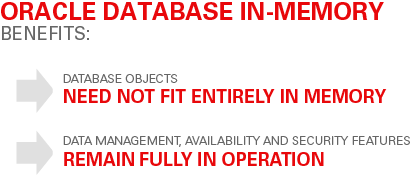
As an option of the industry-leading Oracle Database, Oracle Database In-Memory can be implemented on any existing Oracle Database system as easily as flipping a switch. As an option of Oracle Database, Oracle Database In-Memory offers a number of benefits. First, database objects need not fit entirely in memory. Oracle Database allows the use of mixed storage tiers for balancing optimal performance with cost-efficiency. Oracle Database In-Memory simply enables a new database-aware tier of storage for the database administrator to control.
10With Oracle Database In-Memory, your databases can grow to any size while keeping costs low by transparently blending memory with flash and disk.
Second, all of Oracle Database’s industry-leading data management, availability, and security features remain fully in operation. This means any existing Oracle Database–compatible application automatically and transparently benefits from columnar in-memory processing without additional programming or application changes. Database administrators and application developers need not rewrite, rebuild, or migrate their applications.
 11
11In-Memory Fault Tolerance
As enterprises run mission-critical applications on Oracle Database, fault tolerance of performance characteristics are critical as well. Server failures can potentially cause degradation of performance while new server memory stores are populated with relevant data and queries are served from disk. Oracle Database In-Memory’s fault tolerance feature eliminates the risk of this degradation by optionally mirroring data across the servers of a cluster. Just as storage subsystems stripe and mirror data across disks to achieve high performance and high availability, Oracle Database In-Memory distributes and duplicates in-memory data across the servers of a cluster. If a server fails, queries transparently start using redundant copies of the data stored in the memory of surviving servers. Oracle Database In-Memory fault tolerance ensures that aggressive SLAs are never compromised.
Simplified Management
Beyond ease of implementation, Oracle Database In-Memory dramatically simplifies the operational tasks of a database administrator. Complex data integration, tuning, and index-building operations are eliminated. Oracle Enterprise Manager also makes it easy to monitor and measure the benefits of in-memory columns. Database administrator productivity is significantly enhanced with Oracle Database In-Memory.
12Likewise, the elimination of separate copies of production databases in siloed data marts enables significant capital cost reduction and higher asset utilization. Server and storage hardware can be consolidated as data is loaded into the existing memory of production systems. By eliminating time-consuming administrative overhead and reducing capital costs, database professionals have the opportunity to provide radically better and more-efficient service to their enterprises.

Smarter Decisions in Real Time
IT organizations have the opportunity to transform their businesses and change a long-held view of analytics as an adjunct activity to business operations. Enterprises have a unique opportunity to merge business operations with business analytics into an environment of continuously optimized and information-powered business processes. As business executives have less luxury to wait for information or prescribe
13their information requirements ahead of their needs, Oracle Database In-Memory enables decision-makers to get answers as fast as they can ask questions. The real-time responsiveness enabled by Oracle Database In-Memory delivers insights in the moment instead of after the fact.
 14
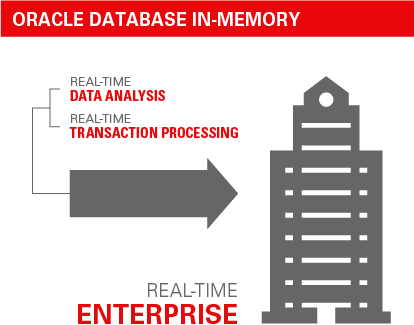
14The ability to easily combine real-time data analysis with real-time transaction processing enables organizations to become real-time enterprises. Oracle Database In-Memory powers the real-time enterprise, unleashing new levels of competitiveness and profitability by enabling them to make data-driven decisions, respond instantly to customer demands, and continuously optimize key processes.
 Video: Oracle Applications Executives Discuss Oracle Database In-Memory Benefits.Watch the Video (2:38)15
Maximize Utilization
Consolidation allows organizations to maximize IT resources and minimize idle compute cycles. This in turn lowers costs because fewer resources are required to achieve the same outcomes. According to a 2013 survey of 160 organizations conducted by the Independent Oracle Users Group (IOUG), 36 percent of respondents said they are either planning to consolidate or have already consolidated their critical-business application onto a common database platform.
With the introduction of new multitenant capabilities, Oracle Database 12c is the world’s first database optimized for database consolidation. Until now, most database management systems could only run one database at a time. In order to run multiple databases on a single server, IT pros often had to provision and maintain multiple instances—one for each database. Although this architecture ensured strong security and separation of data, it required excessive overhead.
Oracle Multitenant offers all the benefits of managing many databases as one, yet retains the isolation and resource control
16of separate databases. The multitenant container architecture enables customers to set up one cloud environment with up to 250 pluggable databases in each container database.
 Video: e-DBA Achieves DBaaS with Oracle Multitenant.James Anthony, Technology Director, e-DBAWatch the Video (2:35)
 "The upgrade to Oracle Database 12c and the multitenant capabilities have given us a huge amount of benefits. We’ve been able to massively decrease our hardware budget by about 75 percent. Our consolidation ratio on [Oracle] Database [12c] is about five times what we were looking at previously. We’ve been able to significantly reduce the time, effort, and, therefore, cost associated with standing up new environments and making clones for existing customer environments."James Anthony, Technology Director, e-DBA17
Deliver Database as a Service
Database as a service (DBaaS) is a cloud paradigm that enables users to request database environments via a self-service portal. Oracle Database 12c provides a new architecture to simplify DBaaS environments. Oracle’s flagship enterprise management solution, Oracle Enterprise Manager 12c, automates administrative tasks such as provisioning databases, metering usage, and troubleshooting issues. Together, these solutions provide a self-service portal that allows users to request database capacity and perform management operations—without tying up IT resources.
The DBaaS model can help standardize hardware and software, simplify technical support, and give users the autonomy to provision database resources on their own. Metering consumption provides visibility into actual usage so that people only pay for what they use—instead of paying up front for more capacity than they might otherwise need. With DBaaS, IT departments can increase agility, minimize costs, and reduce risk.
18White Paper: Delivering Database as a Service (DBaaS) using Oracle Enterprise Manager 12c.Read the White PaperConsolidate and Compress Database Workloads at a Higher Density Than Ever Before
- Increase DBA productivity dramatically by managing many databases as one.
- Implement a multitenant architecture with no application changes.
- Reduce system resources up to 6x while maintaining full data isolation.
- Start the journey to DBaaS and cloud computing.
19
Information Lifecycle Management Breakthroughs
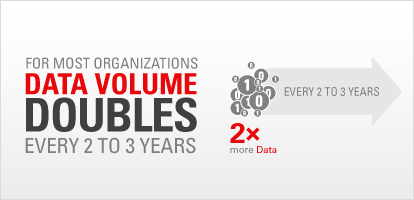
For most organizations, data volume doubles every two to three years, making storage one of the costliest elements of today’s IT budgets. This increase in data volume also makes it more difficult to maintain performance requirements. That’s why forward-looking IT organizations are adopting advanced database technologies that automate compression and storage tiering to scale with the growth of data volume while also improving database performance.
 20
20For example, Oracle Database 12c supports advanced information lifecycle management (ILM) capabilities that automatically compress and store data according to business and performance needs. The Heat Map and Automatic Data Optimization features in Oracle Advanced Compression work together to automatically compress and move data based on data usage. These technologies enable users to reduce their storage footprint across tiers of storage while improving database performance. Heat Map provides detailed insights into how data is being accessed. Automatic Data Optimization uses this information to automate compression and storage tiering according to user-defined policies.
Many IT organizations implement storage tiering by deploying data on different tiers of storage so that less-accessed (“colder”) data is migrated away from the costliest and fastest storage—still available, but at slower speeds—the effect on the overall application performance is minimized, due to the rarity of accessing colder data.
21But even with the right storage and compression capabilities, deciding which data should reside where and when to migrate data from one tier to another remains a serious challenge. Oracle Database 12c addresses this challenge with features that automatically discover data access patterns and uses the information to automatically optimize how data is organized.
Oracle Advanced Compression
Oracle Advanced Compression can compress all types of data—including relational (table) data, unstructured (file) data, network data, and backup data. This unique technology significantly reduces the storage footprint while improving performance across the entire IT infrastructure—without requiring any changes to your applications.
Podcast: Listen to Satish Zalavadia, senior database administrator at Bank of America, describe how Oracle Advanced Compression and the SecureFiles feature in Oracle Database help the bank accommodate growth by reducing database storage and improving query performance by 80 percent.Listen to the Podcast22Oracle Hybrid Columnar Compression
Oracle Hybrid Columnar Compression, used in many of Oracle’s engineered systems, saves storage space and accelerates performance by utilizing a combination of row and columnar compression formats. For example, Oracle ZFS Storage Appliance and Oracle’s Pillar Axiom storage systems use Oracle Hybrid Columnar Compression to enable tighter integration with Oracle Database. Oracle Advanced Compression and Oracle Hybrid Columnar Compression can be used together to ensure all database data can be managed cost-effectively with typical compression ratios from 3x to 15x.
23Maximize Database Storage Efficiency with
Automatic Data Optimization- Maximize storage utilization, reduce costs, and improve performance automatically.
- Automate storage compression and storage tiering with the Heat Map and Automatic Data Optimization features in Oracle Database 12c.
- Reduce storage requirements by 50 percent or more while improving query performance.
Oracle Advanced Compression Advisor
Oracle Advanced Compression Advisor is a free tool included with Oracle Database that provides you with an estimate of the compression ratio you’ll realize when you use Oracle Advanced Compression. Oracle Advanced Compression Advisor analyzes sample data you provide to estimate the actual results you’ll see when you use OLTP table compression in your environment.
24
Respond Decisively to Threats
Insecure database configurations can make corporate data susceptible to intrusion. Attacks can come from many places, including socially engineered e-mails, legitimate user credentials, and SQL injections designed to modify or extract sensitive information from corporate databases.
It’s not just external thieves and malcontents you need to worry about. The 2013 IOUG Enterprise Data Security Survey found that the #1 risk to organizations, for the second year in a row, is human error. Internal system administrators and DBAs are an ever-present security risk based on their ability to access sensitive information and configure systems, modify databases, and grant privileges to others. In some cases, important production data moves through dev/test environments where any developer can see it.
The stakes have never been higher: security and data breaches represent billions of dollars in lost business. They often require tedious and expensive remediation and can cause irreparable damage to your corporate reputation, eroding customer confidence.
26Adopt a Comprehensive Defense-in-Depth Strategy
Oracle Database 12c was designed with security foremost in mind. It enforces a multilayered security strategy that includes preventive, detective, and administrative controls. New capabilities such as privilege analysis, conditional auditing, real application security, data redaction, mandatory realms, and integration with Oracle Multitenant make Oracle Database 12c the most secure database in Oracle history. And simplified setup procedures let you take advantage of advanced technologies for encryption, auditing, and access control—without impacting your business operations.
SquareTwo Financial has a defense-in-depth strategy that includes Oracle Audit Vault and Database Firewall, Oracle Advanced Security with transparent data encryption, and Oracle Data Masking Pack. This multifaceted approach protects data at rest, during testing and development, and during production activity.
27 Video: “Since we implemented Oracle Data Masking Pack we went from a 15-day refresh time to a 15-hour refresh time on our 3 TB database environment.”J.T. Gaietto, Manager of Information Security, SquareTwo FinancialWatch the Video (2:29)
Enable a Defense-in-Depth Strategy for
Maximum Security- Protect your mission-critical business information internally and externally with new features such as Data Redaction in Oracle Advanced Security.
- Ensure regulatory compliance while protecting against threats and ensuring privacy.
- Take advantage of advanced technologies for encryption, auditing, and access control.
28
Database technology is fundamental to business operations. Whether it’s booking orders or predicting equipment failures, enterprises rely on up-to-the-second information to make sound decisions. A single outage can have devastating consequences, potentially causing millions of dollars in losses and irreparable damage to a company’s reputation. The growth in mission-critical information is further driving the need for highly available database solutions to ensure continuous access to applications during any unplanned or planned outage.
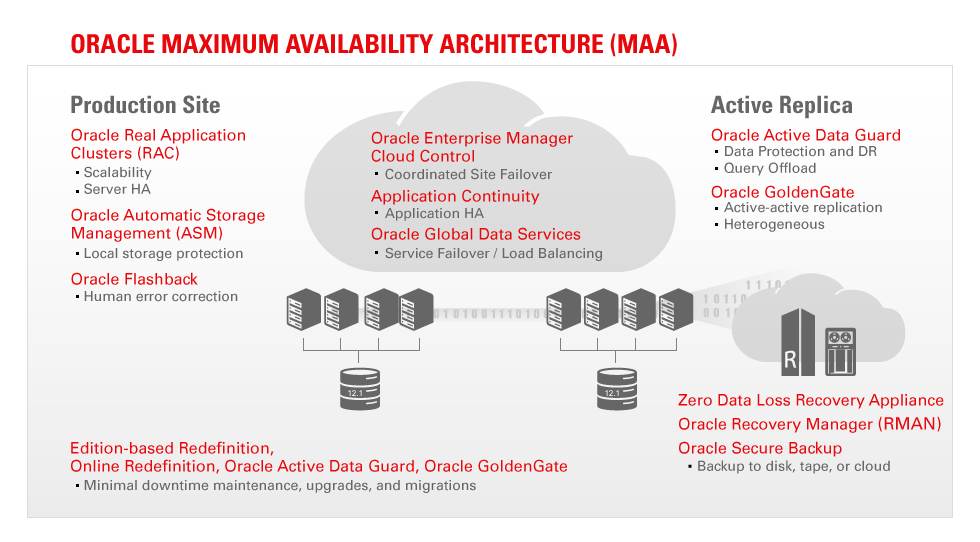
Oracle Database high-availability (HA) technologies, collectively referred to as Oracle Maximum Availability Architecture, provide complete resiliency against all types of outages—from component failures to natural disasters. Industry-leading Oracle HA technology such as Oracle Real Application Clusters (Oracle RAC) provides the highest levels of server HA while Oracle Active Data Guard protects data and applications against sitewide outages. Oracle GoldenGate lets you perform a variety of planned activities online, including upgrades, database consolidation, and cross-platform migrations.
30New capabilities in Oracle Database 12c help businesses deliver even higher levels of availability and data protection for critical databases—enabling zero data loss and zero downtime.
 Video Series: Ashish Ray: Maximum Availability with Oracle Database 12c.Ashish Ray, Vice President of Product Management, Database, and Exadata High Availability, OracleWatch the Videos (9:26)
Eliminate the Trade-Off Between Performance
and AvailabilityReplicating data synchronously to a standby site is the best protection against data loss in the event of a primary site outage. However, this usually means slower database performance, especially when your primary and standby sites are on different sides of the continent—or on different continents altogether. Oracle eliminates this trade-off between performance and data protection with the new Far Sync Instance feature in Oracle Active Data Guard. Far Sync Instance lets you maintain a synchronized standby database at any location without worrying about performance degradation. Not only can you eliminate any single point of failure, but you can also ensure zero-data-loss
31replication across any distance while optimizing database performance.
Enable Application Continuity
Have you tried to order merchandise online, only to have a screen time out on you or display a message asking you to resubmit your information? This means that a failure has occurred while the transaction was in progress, preventing it from completing. Imagine what happens to your business when hundreds or thousands of transactions are either lost or duplicated. The new Application Continuity feature in Oracle Database 12c protects applications and minimizes user disruption by automatically replaying “in-flight” transactions after an outage has occurred. It enables continuous service and effectively masks the outage from your end users and applications.
Deliver Intelligent Workload Balancing
Organizations with geographically dispersed data centers often have a hard time optimizing workloads for performance and availability. Resources are often underutilized and service levels may not be met consistently. The new Global Data Services feature in Oracle Database 12c enables you to simplify manageability and better utilize replicated databases for disaster protection or distributed HA. Global Data Services intelligently
32balances workloads so you can make better use of your global database resources. It automatically fails over services across replicated databases for higher availability and directs user connections to the database that best optimizes service.
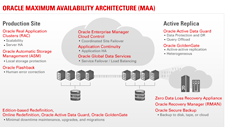 Expand ViewOracle Maximum Availability Architecture (MAA)
Eliminate Data Loss and Backup Overhead
Exponential data growth, shrinking backup windows, unexpected outages, and data loss continue to plague database backup and recovery operations, consuming production resources and increasing IT complexity. Oracle’s Zero Data Loss Recovery Appliance (Recovery Appliance) is a revolutionary new engineered system specifically designed to protect Oracle databases. It delivers zero to sub-second data loss protection with minimal impact on your production database servers and users. It also provides incremental backups that eliminate backup windows and enable you to restore databases to any point in time. The Recovery Appliance scales to protect all your databases—up to thousands—while offering end-to-end management from a single interface.
33
Optimize Your HA Architecture with Oracle Engineered Systems
Oracle’s Maximum Availability Architecture (MAA) technologies can be deployed on any server and storage platform running on any operating system. For optimal performance, scalability, and availability, Oracle offers engineered systems specifically designed for Oracle Database and include many built-in MAA capabilities. For example, Oracle Database Appliance combines redundant server, storage, and networking resources within a compact enclosure that’s ideal for simplified, cost-effective Oracle RAC deployment and management in midsize environments. At the other end of the spectrum, Oracle Exadata Database Machine is engineered to be deployed rapidly and deliver the performance, scalability, and availability required for the largest mission-critical Oracle databases.
34Guarantee Uptime with Oracle Maximum
Availability Architecture- Achieve the highest availability at the lowest cost.
- Deliver application continuity in the event of
any outage. - Implement zero-data-loss protection across any distance without compromising performance.
- Eliminate idle redundancy with the simplicity of an Oracle-integrated HA solution.
- Eliminate data loss exposure without impacting production environments.
35
Database technology is also the foundation for enterprise data warehousing systems that enable businesses to make fast and high-quality, data-driven decisions. In the era of big data, information is now being generated much more quickly than it can be consumed. Meanwhile, leveraging information to make complete business decisions is becoming ever more critical to enterprises. All of these factors increase demand for comprehensive data warehousing and big data solutions.
Oracle provides the industry’s leading data warehousing platform for delivering business insights across a wide range of activities, from optimizing customer experiences to increasing operational efficiency. Oracle’s high-performance and optimized solutions provide in-database advanced analytics and enhanced data sets from big data to drive increased innovation, profitability, and competitive advantage.
 36
36Better and Faster Decision-Making
Quickly discovering meaningful insight from high volumes of information is a key challenge faced by organizations. Oracle Database In-Memory enables better and faster business decision-making by accelerating database performance without requiring changes to existing applications. Oracle Database In-Memory introduces a new compressed columnar format that enables any subset of a database, including an individual table or partition, to be loaded in-memory and queried instantly. Any application that runs on Oracle Database 12c can automatically and transparently take advantage of faster query processing while retaining all the functionality of Oracle Database 12c.
Oracle simplifies the deployment of high-performance data warehousing systems with Oracle Exadata—an engineered system with unique performance optimizations for enabling better and faster decision-making. Oracle Exadata Smart Scan technology accelerates queries by looking for data only where it’s most likely to be found. This makes nearly every query go faster by cutting out unnecessary work. Oracle Exadata Smart Flash Cache technology automatically moves data to faster storage tiers to optimize query performance. By intelligently caching data, it replaces magnetic disk operations with lower-latency, solid-state memory operations.
See Chapter 10, “Hardware and Software Engineered Together,” for more information on Oracle Exadata.
37 Video: Wm Morrison Supermarkets Plc Improves Performance on Exadata.Jonathan Walsh, MIS Manager, William MorrisonWatch the Video (1:42)
Maximum Analytical Return on Data
Higher volumes of data generally translate into higher-quality analysis. Using Oracle’s information lifecycle management technologies—such as advanced compression and partitioning—data warehouses can be easily scaled to handle greater volumes of data without compromising query performance. Automated segmentation of data by usage enables hot data to be migrated to high-performance storage, while cold data can be actively archived to lower-cost media. By intelligently leveraging information lifecycle management technologies, businesses can multiply the benefits of higher data volumes without multiplying the cost.
Data warehouse consolidation is often constrained by the need to move data to alternative systems for analytics. Using Oracle in-database analytics, business analysts can perform statistical analysis, data mining, and geospatial analysis without moving
38data out of the database. Analytical tools include data-mining algorithms, native SQL functions for basic statistical activities, and integration with statistical programming languages like R. Because these techniques are applied directly within the database, the costs and latencies associated with data movement are entirely eliminated.
Automated information lifecycle management and in-database analytics enable business analysts to achieve faster time to insight and higher analytical return on data. Meanwhile, the capital expense and management footprint for IT is simpler and more efficient.
 Video: dunnhumby Increases Customer Loyalty with Big Data.Chris Wones, Director of Data Solutions, dunnhumbyWatch the Video (2:24)
Enhance Relational Data Sets with Nonrelational Data
Much of the growth in data volumes comes from unstructured and semistructured data sources like mobile devices, social media, and sensors. To generate business value from big data, unstructured and semistructured data must be captured,
39filtered, analyzed, and organized from different sources. Then, data must be transformed and integrated with existing data sets and processes. Oracle Big Data Appliance and Oracle Big Data Connectors dramatically simplify the process of enhancing enterprise data sets with big data. Oracle’s big data solutions include unique optimizations to accelerate Apache Hadoop processing and protect data from unauthorized access. Using Oracle’s big data solutions, enterprises can build an enterprise big data management system that enables all data to be captured and analyzed quickly, efficiently, and securely.
 Video: Customers Discuss the Benefits of Oracle Big Data Management.Syed Rafice, Solution Architect, BAE Systems DeticaWatch the Video (0:57)40
Trouble-Free Migrations and Upgrades
Oracle provides multiple methods for upgrading or migrating your existing database assets to Oracle Database 12c. Advanced deployment tools reduce downtime and minimize manual effort. All customers have a choice of upgrade paths and tools, and technology such as Oracle GoldenGate and Oracle Data Pump make it quick and easy to migrate data.
 Video: Oracle Senior Director Rod Swonger explains how you can ensure a successful upgrade to Oracle Database 12c, with minimal risk to your operation.Roy Swonger, Senior Developer of Software Development, OracleWatch the Video (8:30)42
Whether you upgrade to Oracle Multitenant or stick with the traditional architecture, upgrading your existing Oracle Database is a straightforward process. As InfoWorld reports, an administrator can install a new copy of Oracle Database and then, in a single operation, switch all the pointers to that new copy on the root database—“...an operation that should take only a few seconds.”
Article: “Upgrading the database software is 1,000 times faster, because you are just updating the metadata.”Read the InfoWorld ArticleMinimize Maintenance
Consolidation with Oracle Database 12c results in fewer databases to manage. The benefits permeate throughout the data center: fewer patches and upgrades, fewer backups, and fewer standby databases to worry about. Oracle Multitenant is particularly easy to manage because all the routine maintenance activities take place at the container level.
The Value of Oracle Service
Oracle Service can help you install and configure Oracle Database 12c so you can get your database assets online quickly—and ensure optimal deployments and upgrades in the
43future. From refining your deployment strategy to ongoing support and education, Oracle Service helps you get the most from your Oracle investments.
- Complete support essentials: Enjoy 24/7 coverage for hardware and software to keep your Oracle systems reliable, available, and secure.
- Migration and upgrade services: Accelerate adoption of Oracle Database with automated tools and product expertise.
- Installation, configuration, and monitoring services: Learn best practices for deploying, configuring, and monitoring Oracle Database to achieve maximum availability.
- Training: Give your staff the essential skills and expertise they need to take full advantage of Oracle Database.
Accelerate Deployments and Upgrades
- Automate routine administrative tasks.
- Simplify database consolidation.
- Enable database as a service.
- Reduce transformational risks with Oracle Real Application Testing.
44
Innovations in database management took a leap forward with the latest release of Oracle Database 12c and Oracle Enterprise Manager 12c. Together, they form one of the industry’s leading database management solutions—transforming the way you manage your database.
Oracle Enterprise Manager 12c streamlines all aspects of database management, from testing and consolidation planning to lifecycle and quality-of-service management.
 Video: Oracle Senior Director Jagan Athreya talks about the next evolution in database management.Jagan Athreya, Senior Director of Product Management, OracleWatch the Video (8:45)46
Managing Database as a Service
Database as a service (DBaaS) architectures offer a variety of benefits to help you improve your operations and move more quickly to the cloud. Using Oracle Multitenant and Oracle Enterprise Manager 12c ensures that you make the most of those benefits. Whether it’s accelerated provisioning or automated consolidation, Oracle Enterprise Manager 12c speeds up the process of deploying DBaaS solutions.
Industry-Leading Database Self-Manageability
Oracle Enterprise Manager 12c is the only management solution to offer complete support for Oracle Database 12c right out of the box. Whether you want to take advantage of data redaction capabilities or leverage the Heat Map feature, it’s all available through Oracle Enterprise Manager 12c.
Boost Service Quality, Lower Risk
- Manage application service levels from a single pane of glass.
- Accelerate DBaaS provisioning through a self-service environment.
- Maximize quality with real-time proactive performance management.
- Enforce compliance across the entire
information lifecycle.
47
Why Oracle engineered systems?
Oracle engineered systems simplify IT operations and lower your costs with extreme performance—accelerated deployments, high-speed processing, and lightning-fast analytics.
Extreme performance is about taking advantage of new opportunities, discovering new areas of efficiency, and enabling innovation to deliver the kind of results and business performance that simply weren’t possible—until now.
 Video: Oracle Engineered Systems Simplify IT by Delivering Hardware and Software Engineered to Work Together.Watch the Video (4:31)48
Oracle Exadata Database Machine: The Fastest Database Machine for Data Warehousing and Online Transaction Processing
Oracle Exadata Database Machine is the first and only database machine that provides extreme performance for both data warehousing and online transaction processing (OLTP) applications, and is an ideal platform for consolidating database workloads in the cloud and in the data center.
 Video: Procter & Gamble Drives 30x Performance Gains with Exadata.Procter & Gamble completed specific point-of-sale data queries up to 30x faster, reducing IT costs with 15x the data compression.Watch the Video (1:43)
Oracle Big Data Appliance: The Solution for Big Data
With Oracle Big Data Appliance, extreme performance means quickly getting real business value from your big data—rapidly provisioning a single system that’s scalable, highly available, and optimized to transform massive amounts of data into usable information.
49 Video: InfoSys Discusses Benefits of Oracle Big Data Appliance.Rajeev Nayar, AVP, InfoSysWatch the Video (1:50)
Oracle Database Appliance: Simply Amazing
The benefits of Oracle engineered systems aren’t limited to large enterprises. With Oracle Database Appliance, midsize businesses—as well as department-level organizations—can dramatically reduce the time, risk, and costs usually associated with deploying a high-availability database or solution in a box. You can deploy Oracle Database Appliance in a single operation because Oracle has completely automated the setup for you—including all configurations for the clustered database.
Analyst Report: Time Savings and Ease of Deployment Comparison Study: Oracle Database Appliance vs. Microsoft SQL Server.Research by ORC International found that DBAs could save 835 hours in the first year of system implementation and 669 hours in subsequent years.Read the Analyst Report50Zero Data Loss Recovery Appliance
Say NO to Data Loss and Data Protection Overhead
Today’s solutions for protecting business data are unable to meet all the needs of mission-critical databases. They fail to ensure that data won’t be lost, that end users won’t be impacted, and that deployments will be scalable yet centralized. Oracle’s Zero Data Loss Recovery Appliance (Recovery Appliance), the industry’s first engineered system for database protection, addresses these challenges head-on. Designed to maximize protection for Oracle databases, the Recovery Appliance eliminates data loss without affecting production systems or end users. The Recovery Appliance is built on a massively scalable, cloud-based architecture that lets you protect and centrally manage all your databases enterprisewide.
"Enterprises need to protect vital data for their critical business applications in real time without the downtime or data loss often experienced when using traditional approaches," said Laura Dubois, Program Vice President for IDC's Storage practice. "The Zero Data Loss Recovery Appliance meets this demand with a simple, yet powerful solution that easily scales to protect databases enterprise-wide and meet ever-stringent recovery point objectives."51
More Than 35 Years of Continuous Database Innovation
Oracle Database is the world’s #1 enterprise database—enabling more than 300,000 customers to improve operational agility and power the real-time enterprise. Oracle Database plugs into the cloud, accelerating the performance of applications, ensuring maximum availability and optimized storage management, and consolidating the management of hundreds of databases as one.
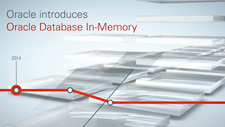
Over the years, Oracle has established a track record of delivering breakthrough advances in performance, scalability, high availability, data optimization, data security, and ease of management to support the most demanding OLTP, data
52warehousing, and big data customer requirements. Prior releases of Oracle Database have always been developed with customers’ IT and business requirements in mind, and that philosophy continues with Oracle Database 12c.
Plug into the Cloud by Downloading Oracle Database 12c Today
In the Oracle Database family of products, there’s an edition, option, or engineered system to fit all business needs, providing the necessary foundation to successfully deliver more information with a higher quality of service, and to efficiently manage change within the environment to deliver better value. We invite you to learn more by downloading Oracle Database 12c and experiencing it yourself.
 53
53
Innovation
- White Paper: Plug into the Cloud with Oracle Database 12c
Consolidation
- Infographic: Oracle Multitenant
Storage Management
- White Paper: Automatic Data Optimization with Oracle Database 12c
- Webcast: Oracle Database 12c Storage Optimization
54Customer Success Story
Maximum Availability
- White Paper: Maximize Availability with Oracle Database 12c
- Webcast Series: Plug into Maximum Availability with Oracle Database 12c
Database Security
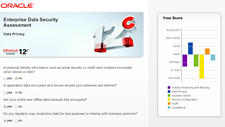
- Website: Enterprise Data Security Assessment
55Featured Customer Videos
Data Warehousing and Big Data
Faster Deployment
- Video: Upgrading to Oracle Database 12c (8:30)
- White Paper: Upgrading to Oracle Database 12c
- Report: Upgrading to Oracle Database 12c
56Database Management
- White Paper: Manageability with Oracle Database 12c
Services
Support Essentials
Migration and Upgrade Services
- Data Sheet: Oracle Migration Factory
- Data Sheet: Oracle Database Upgrade Services
57Installation, Configuration, and Monitoring Services
- Website: Advanced Customer Services Overview
- Website: Oracle Database 12c Training
Oracle Engineered Systems
Oracle Exadata
Oracle Big Data Appliance
- Website: Your Guide to Engineered Systems
Oracle Database Appliance
Zero Data Loss Recovery Appliance
- Data Sheet: Zero Data Loss Recovery Appliance
58 Copyright © 2014, Oracle and/or its affiliates. All rights reserved. Oracle and Java are registered trademarks of Oracle and/or its affiliates. Other names may be trademarks of their respective owners. Intel and Intel Xeon are trademarks or registered trademarks of Intel Corporation. All SPARC trademarks are used under license and are trademarks or registered trademarks of SPARC International, Inc. AMD, Opteron, the AMD logo, and the AMD Opteron logo are trademarks or registered trademarks of Advanced Micro Devices. UNIX is a registered trademark of The Open Group.