
- Revision History
- Overview
- Update Tasks
- Feature Summary
- Transportation Management
-
- Transportation and Global Trade Platform
- Transportation Management (Base)
- Logistics Network Modeling
- Transportation Intelligence
This document will continue to evolve as existing sections change and new information is added. All updates appear in the following table:
| Date | Module | Feature | Notes |
|---|---|---|---|
| 23 FEB 2023 | Transportation and Global Trade Platform |
Limit Agent Loops | Updated document. Revised feature information. |
| 21 NOV 2022 | Transportation and Global Trade Platform | Use Domain Default from Address | Updated document. Delivered new feature in 22B. |
| 22 JUN 2022 | Transportation and Global Trade Platform |
Limit Agent Loops | Updated document. Revised feature information. |
| 25 APR 2022 | Transportation Management (Base) | Move Order to Existing Shipment - Multi-Order Move Supported | Updated document. Revised feature information. |
| 19 APR 2022 | Transportation and Global Trade Platform | Next Generation Enhanced Workbench | Updated document. Revised feature information. |
| 18 APR 2022 | Transportation Management (Base) | Ground Schedule Search by Stop Location Id | Updated document. Revised feature information. |
| 25 MAR 2022 | Created initial document. |
 HAVE AN IDEA?
We’re here and we’re listening. If you have a suggestion on how to make our cloud services even better then go ahead and tell us. There are several ways to submit your ideas, for example, through the Ideas Lab on Oracle Customer Connect. Wherever you see this icon after the feature name it means we delivered one of your ideas.
GIVE US FEEDBACK
We welcome your comments and suggestions to improve the content. Please send us your feedback at otm-doc_us@oracle.com. Please indicate you are inquiring or providing feedback regarding the Oracle Fusion Cloud Transportation Management What's New Update 22B.
DISCLAIMER
The information contained in this document may include statements about Oracle’s product development plans. Many factors can materially affect Oracle’s product development plans and the nature and timing of future product releases. Accordingly, this Information is provided to you solely for information only, is not a commitment to deliver any material, code, or functionality, and should not be relied upon in making purchasing decisions. The development, release, and timing of any features or functionality described remains at the sole discretion of Oracle.
This information may not be incorporated into any contractual agreement with Oracle or its subsidiaries or affiliates. Oracle specifically disclaims any liability with respect to this information. Refer to the Legal Notices and Terms of Use for further information.
This section gives you information to help you plan, deploy, and validate your update. We make frequent additions to this document, so don’t forget to check back and get the latest information before your update starts.
Review the Release Notes.
- The release notes include fixes, special instructions, and resolutions related to the Oracle Transportation and Global Trade Management Cloud.
- Release Notes can be found here:
- https://support.oracle.com/epmos/faces/DocumentDisplay?id=2827533.1
Use the following resources to prepare for and validate your Oracle Engagement Cloud update.
On My Oracle Support Read:
- Doc ID 2095509.1
- Oracle Cloud Applications - Transportation and Global Trade Management Cloud: Environment Refresh Policy
- Doc ID 2095528.1
- Oracle Cloud Applications - Transportation and Global Trade Management Cloud: Quarterly Update Planning
- Doc ID 2096782.1
- Oracle Cloud Applications - Transportation and Global Trade Management Cloud: Quarterly Update Planning FAQs
- Doc ID 2195580.1
- Oracle Cloud Applications - Transportation and Global Trade Management Cloud: Get Started with Your Implementation
- Doc ID 2508854.1
- Oracle Cloud Applications - Transportation and Global Trade Management Cloud: Quarterly Updates - Preparation and Testing Recommendations
Column Definitions:
Report = New or modified, Oracle-delivered, ready to run reports.
UI or Process-Based: Small Scale = These UI or process-based features are typically comprised of minor field, validation, or program changes. Therefore, the potential impact to users is minimal.
UI or Process-Based: Larger Scale* = These UI or process-based features have more complex designs. Therefore, the potential impact to users is higher.
Features Delivered Disabled = Action is needed BEFORE these features can be used by END USERS. These features are delivered disabled and you choose if and when to enable them. For example, a) new or expanded BI subject areas need to first be incorporated into reports, b) Integration is required to utilize new web services, or c) features must be assigned to user roles before they can be accessed.
| Ready for Use by End Users Reports plus Small Scale UI or Process-Based new features will have minimal user impact after an update. Therefore, customer acceptance testing should focus on the Larger Scale UI or Process-Based* new features. |
Customer Must Take Action before Use by End Users Not disruptive as action is required to make these features ready to use. As you selectively choose to leverage, you set your test and roll out timing. |
|||||
|---|---|---|---|---|---|---|
| Feature |
Report |
UI or |
UI or |
|
||
OAuth 2.0 and HTTP Header Profile Support for Addition Content Types |
||||||
Historical Metrics - Count Based Metric Types and Components Added for REST |
||||||
Public Enhanced Workbench - Location Based Dock Scheduling Workbench |
||||||
Move Order to Existing Shipment - Multi-Order Move Supported |
||||||
Logistics Machine Learning - Event-Based ETA Prediction Model |
||||||
Transportation and Global Trade Platform
Next Generation Enhanced Workbench
This feature provides you with the first full release of the Oracle JET based Enhanced Workbench. This release of the Enhanced Workbench (Layouts and Designer) provides you with many of the same or equivalent features and functionality as the original Workbench (developed using ADF technology) while providing you with a long list of usability, functionality and performance improvements.
NOTE: The Enhanced Workbench and the original Workbench will continue to coexist for several update cycles to provide you with ample time to migrate from the older technology to the new Enhanced Workbench technology. Your migration to the Enhanced Workbench is supported by an easy to use migration tool (Workbench Manager) that allow you to easily move your existing Workbench Layouts into the new Enhanced Workbench infrastructure.
The Enhanced Workbench can be accessed via Configuration and Administration > User Configuration > Enhanced Workbench and is located below the original ADF based Workbench Designer and Workbench Manager.
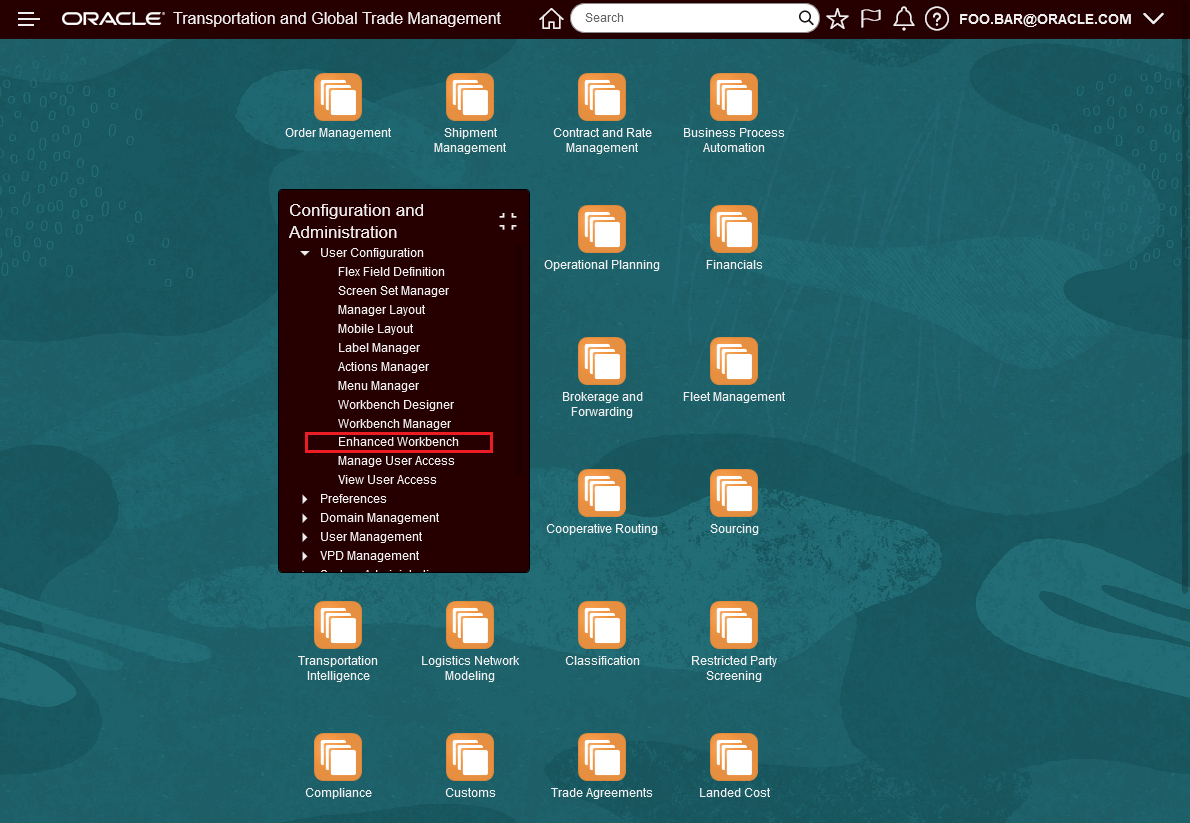
Enhanced Workbench Menu
Some of the highlights of the Enhanced Workbench include:
- The Workbench Manager which supports migrating your existing Workbench Layouts to the Enhanced Workbench Format
- A collapsible menu for navigation that you can easily toggle on and off
- An Analytics Dashboard Content Type which allows you to add BI content as a panel within the workbench
- A Data Visualization Content Type which allows you to incorporate data visualization project content within the workbench
- A Transactional Report Type which allows you to include an Oracle Analytics Publisher report within the workbench
- A new Shipment Gantt Content Type which provides you with a Gantt view of your shipments
- A new Overview Panel for all your Gantts that provides you with an improved navigation experience within the available Gantts
- Gantt Time Zone visibility and Time Zone selection hierarchy for all Gantts.
- The ability to do multiple splits per region
- An enhanced typeahead search in the Workbench Layout ID dropdown
- The ability to collapse tabs in a region to gain additional screen real estate
- Load Config Region now supports Edits within the Enhanced Workbench
- The ability to flip between the Region Content and the Region Details
- Improved Logging
- More Informative - Progress Bar – in-process Logging and error messages all improved
- Configurable “on the fly”
- Duration as a metric
Below you will find an example of just some of the changes and improvements provided by the new Enhanced Workbench.
The Workbench Manager allows you to easily find and select one or more of your Workbench layouts and convert the Workbenches between a Legacy or Enhanced Workbench view using the actions - Enhanced View Enabled - that moves the Legacy Workbench to an Enhanced Workbench - or Legacy View Enabled - that moves an Enhanced Workbench to a Legacy Workbench view.
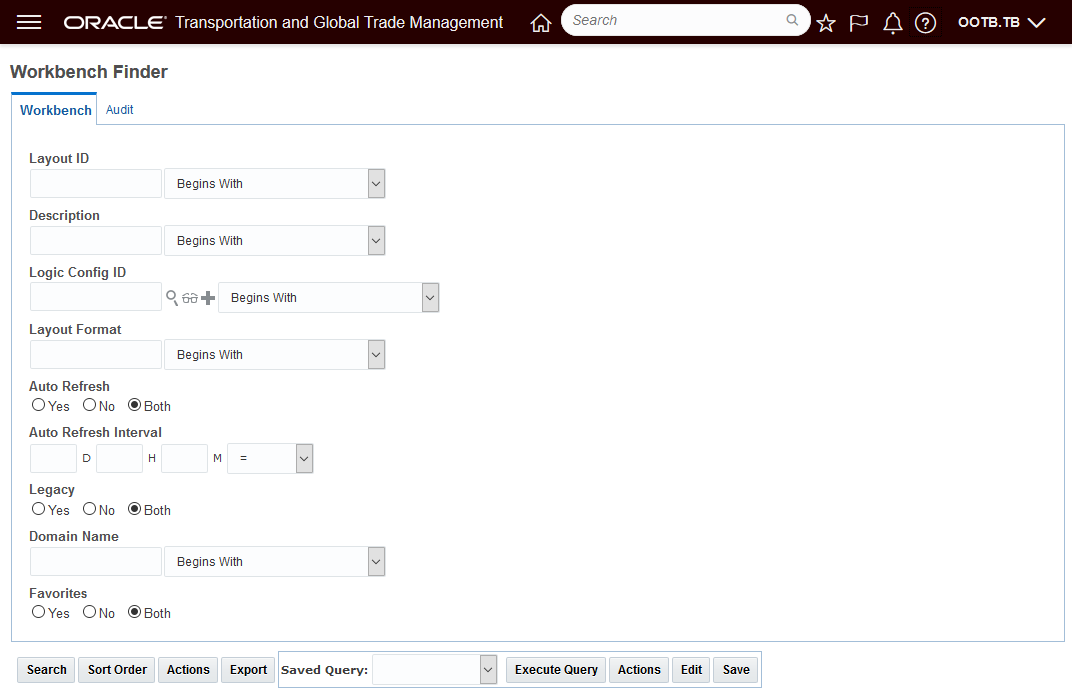
Workbench Manager Finder
Use the Workbench Manager to find all of your Legacy Workbenches.
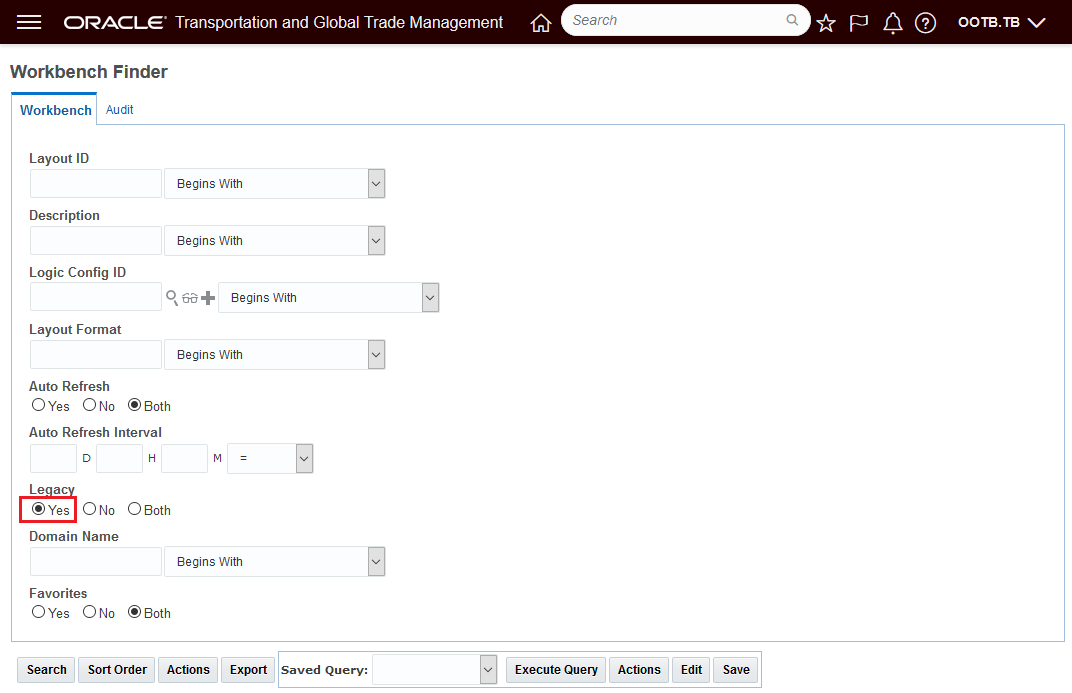
Workbench Manager Finder - Find Legacy Workbench Layouts
The results below show six Legacy Workbenches. Converting all six Workbenches from Legacy to Enhanced only requires you to select all six and run the action Enhanced View Enabled as shown below.
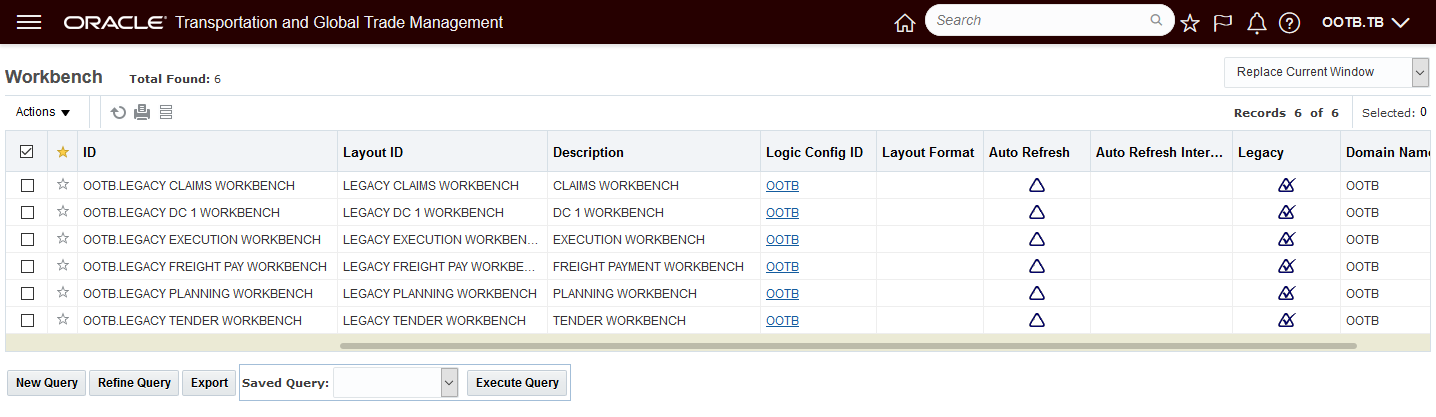
Legacy Workbench Finder Results
Select the set and convert them all to Enhanced using the action Enhanced View Enabled
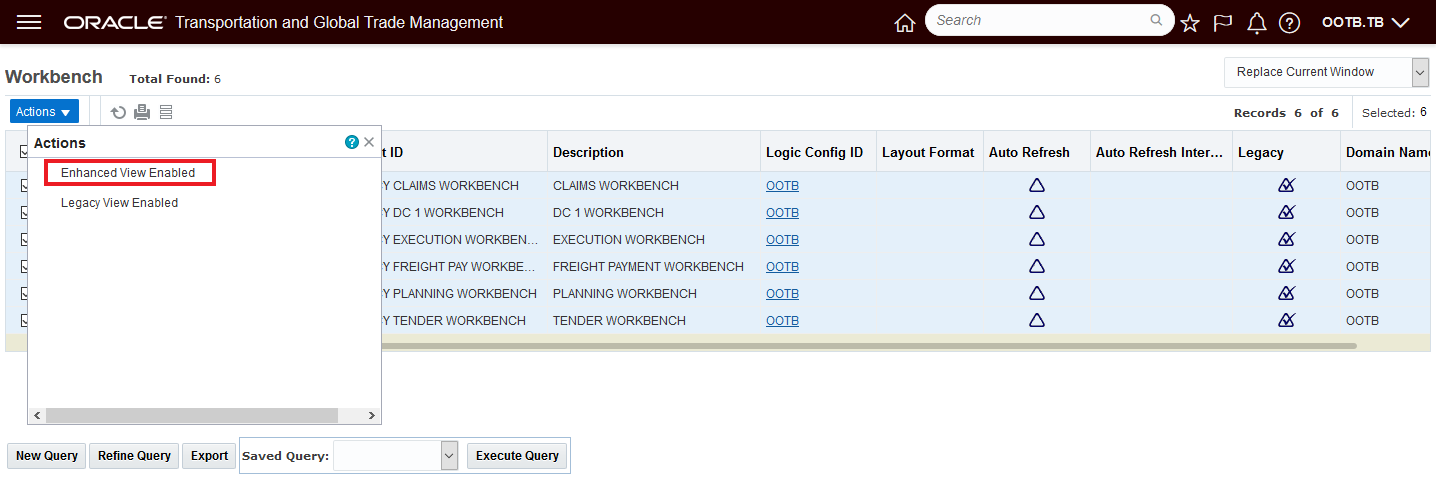
Enhanced View Enabled Action
Results of running the action - each workbench is converted
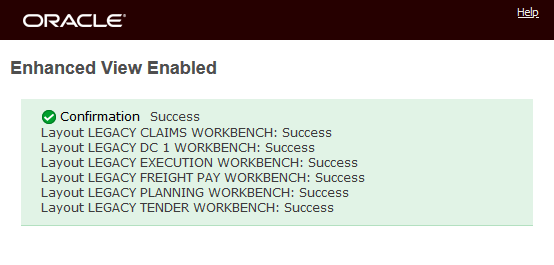
Enhanced View Enabled - Workbench Conversion Message
The six selected Workbenches that were in the Legacy format are no longer legacy workbenches. The converted Workbenches will now show up in the Enhanced Workbench designer and not in the Legacy Workbench Designer.
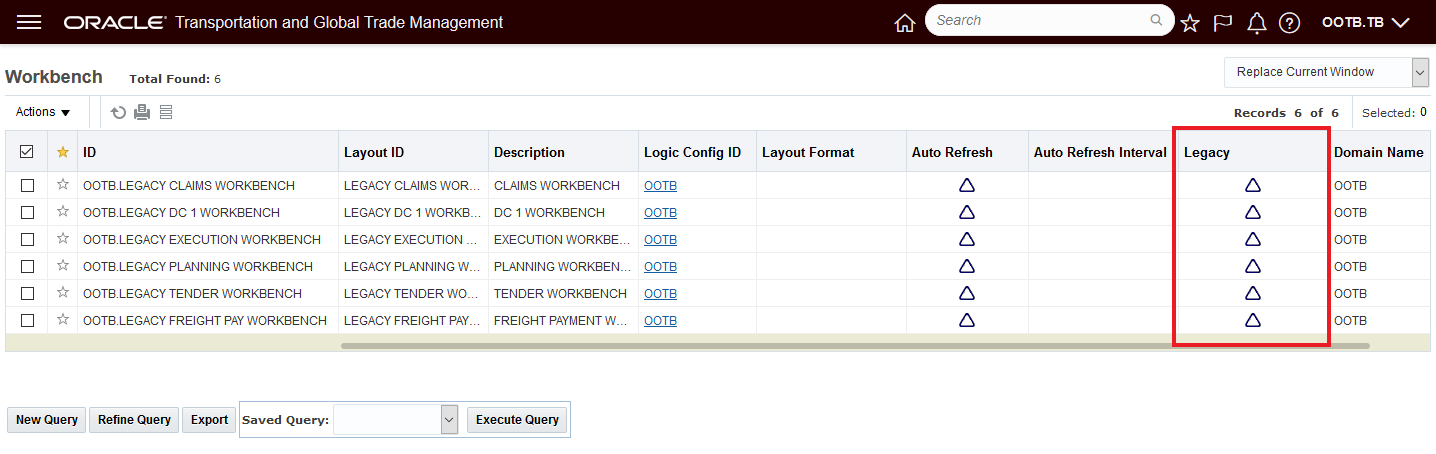
Legacy to Enhanced View Converted
If, for some reason you need to convert the Workbenches back to the Legacy format - that can be done very easily by selecting the Workbenches and running the Legacy View Enabled action as shown below.
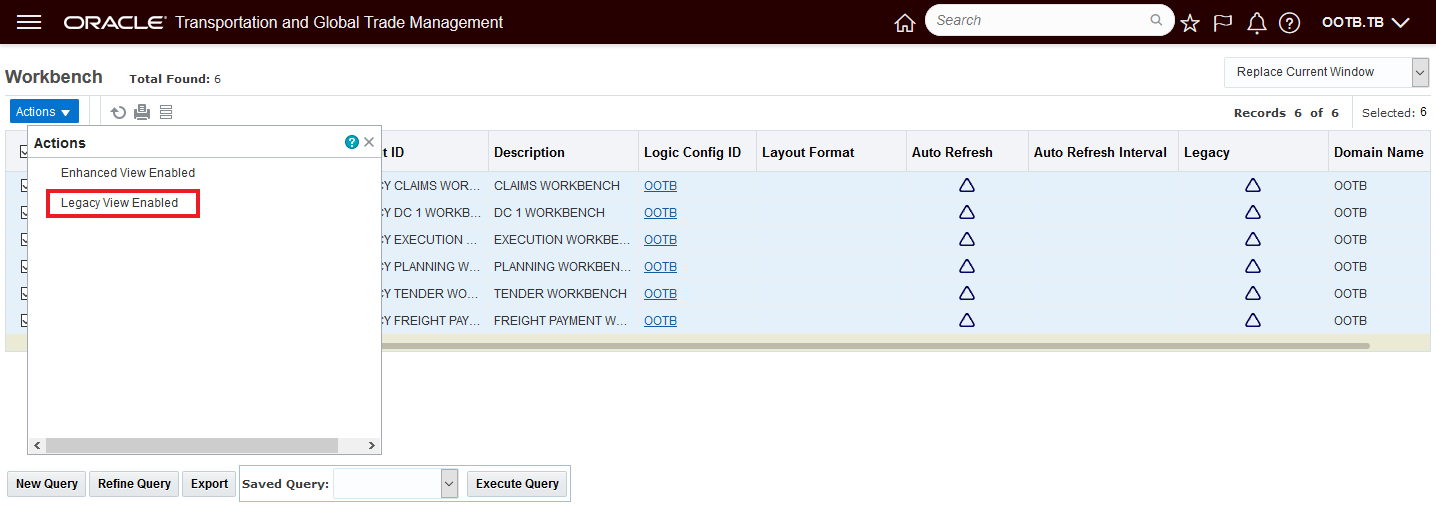
Enhanced Back to Legacy
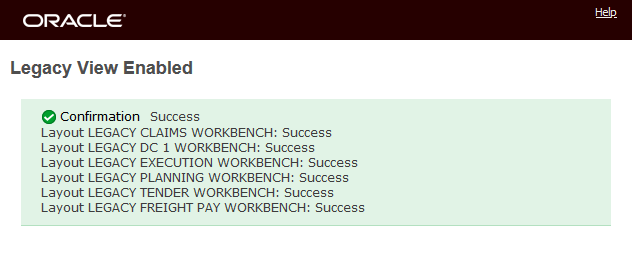
Convert Back to Legacy
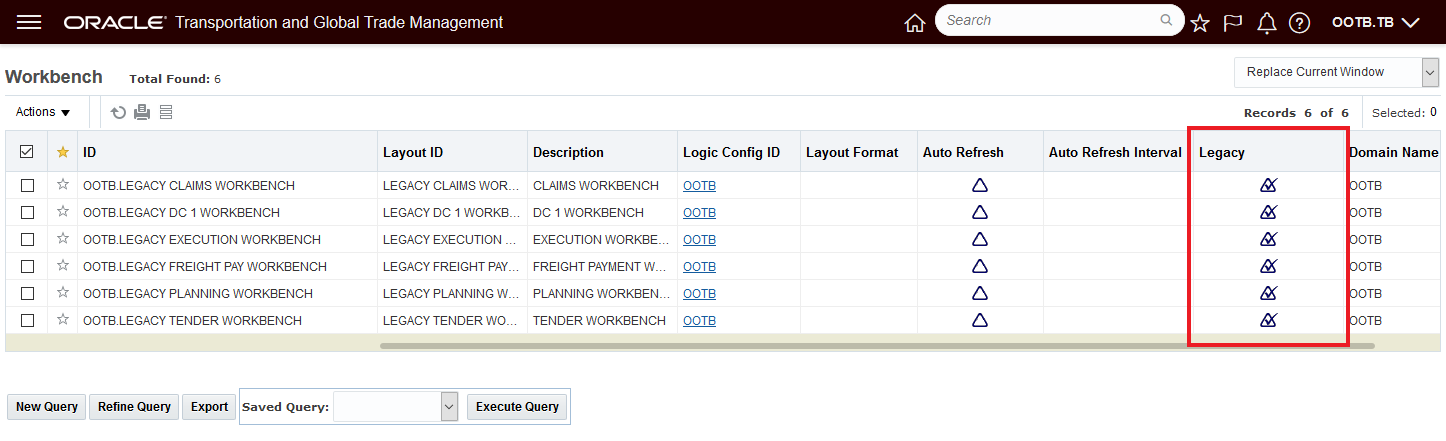
Legacy Flag Visible
The Enhanced Workbench Menu and Navigation options can be easily toggled on and Off.
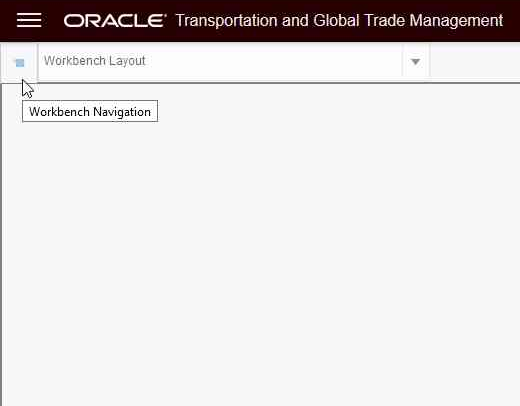
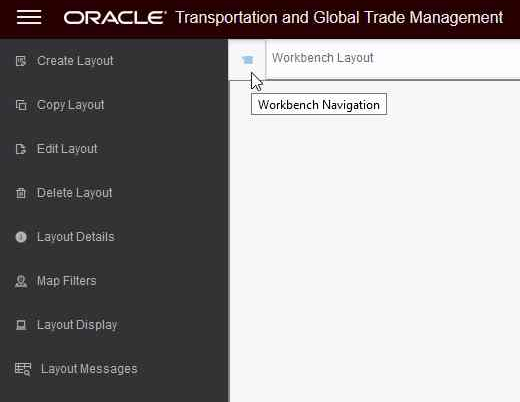
Enhanced Workbench Menu
Additional Content Types
- New Analytics Dashboard Content Type which allows you to add BI content as a panel within the workbench
- New Data Visualization Content Type
- New Shipment Gantt Content Type which provides you with a Gantt view of your shipments over time
- New Transactional Report Type which allows you to include an Oracle Analytics Publisher report within the workbench

New Content Types Analytics and Shipment Gantt
Below is an example of the Analytics Dashboard Content Type incorporated into the Enhanced Workbench Layout. In this example, the Service Provider Metrics Dashboard is incorporated.
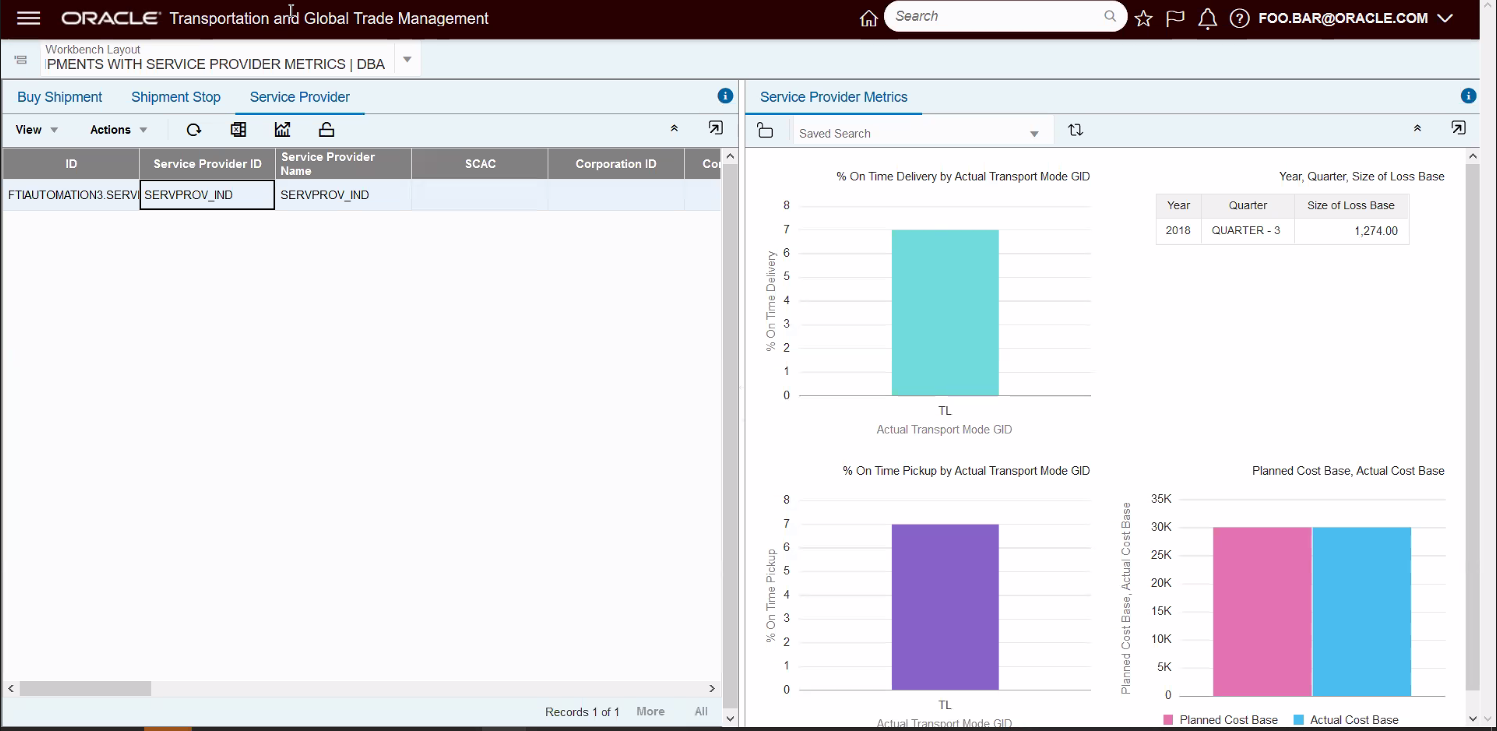
Analytics Dashboard Component - Service Provider Metrics
Below is an example of the new Data Visualization Content Type incorporated into the Enhanced Workbench Layout. In this example, the analysis is for Logistics Machine Learning accuracy.
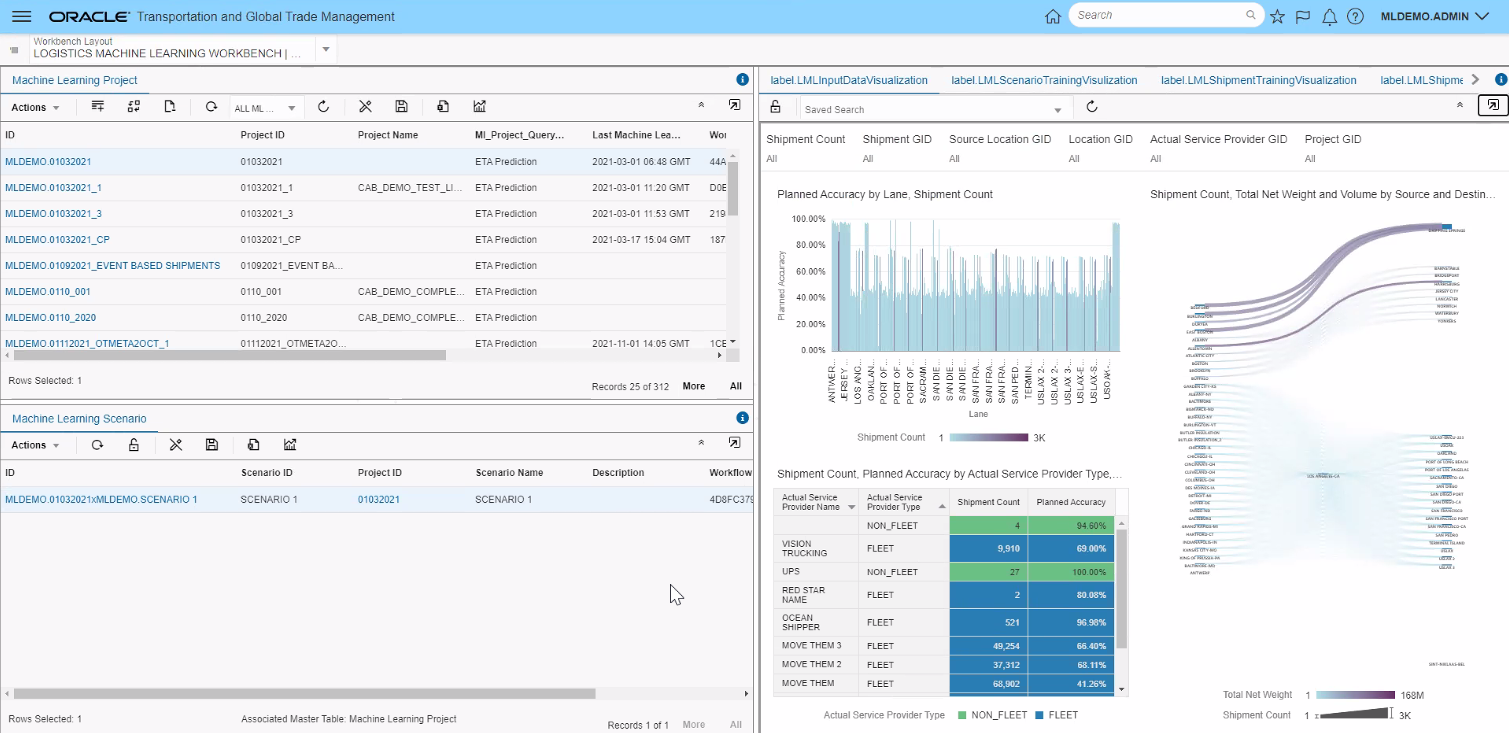
Data Visualization Content Type
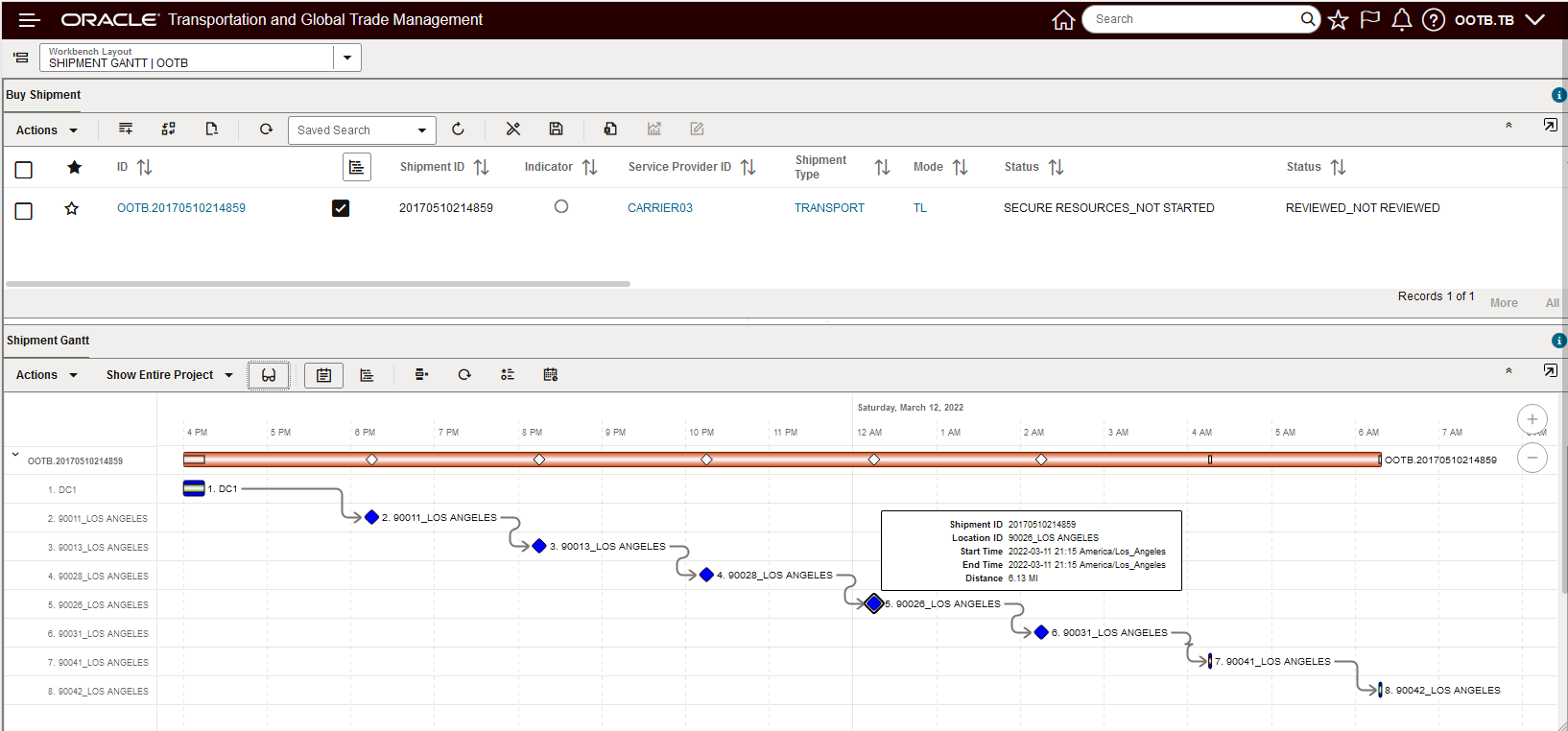
The example below shows the new Shipment Gantt that provides you the opportunity to visualize your shipments and the stops in a Gantt format.
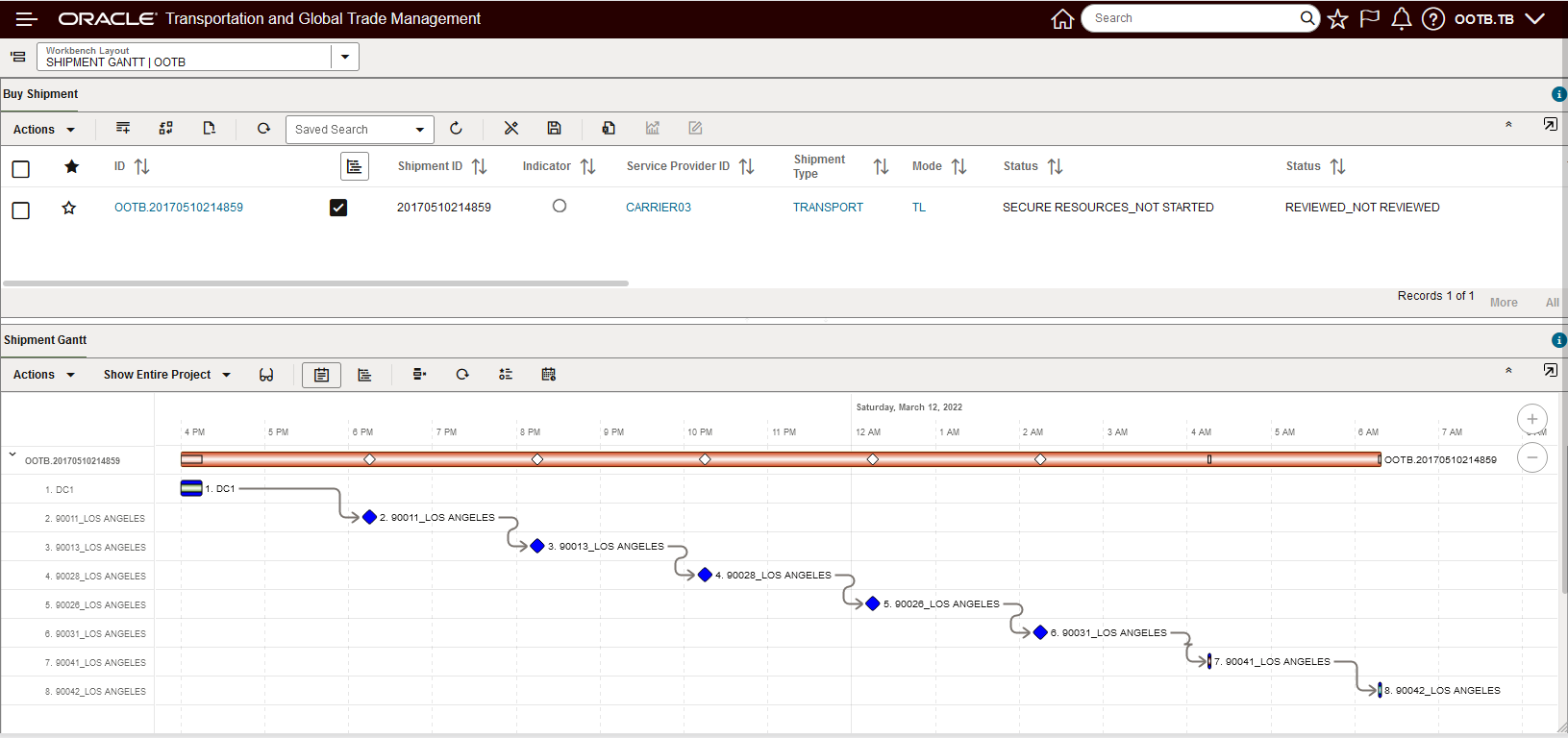
Shipment Gantt
The Shipment Gantt available hover info drills into both the shipment level and the stop level.
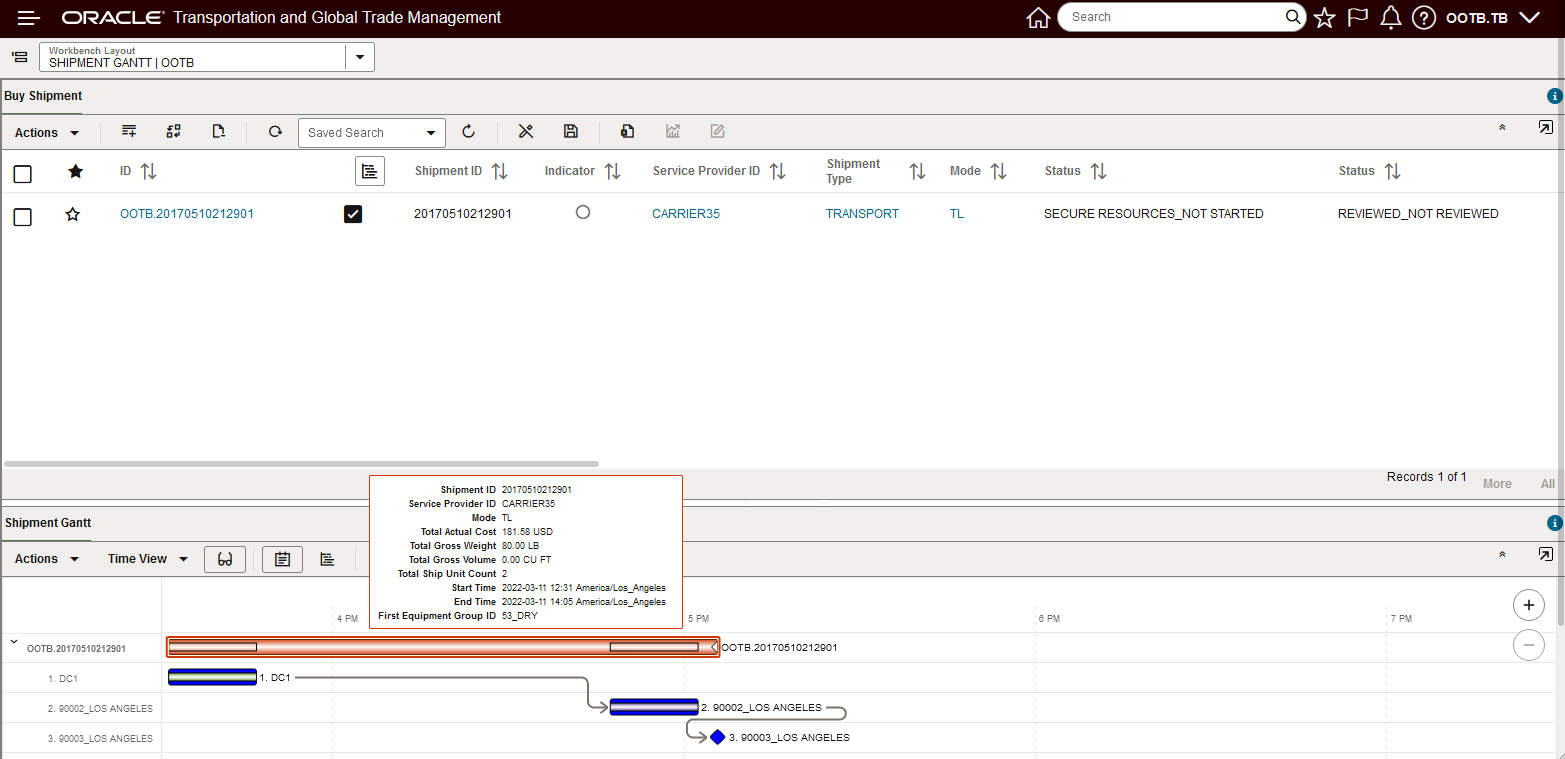
Shipment Gantt Shipment Hover
Shipment Gantt Stop Hover
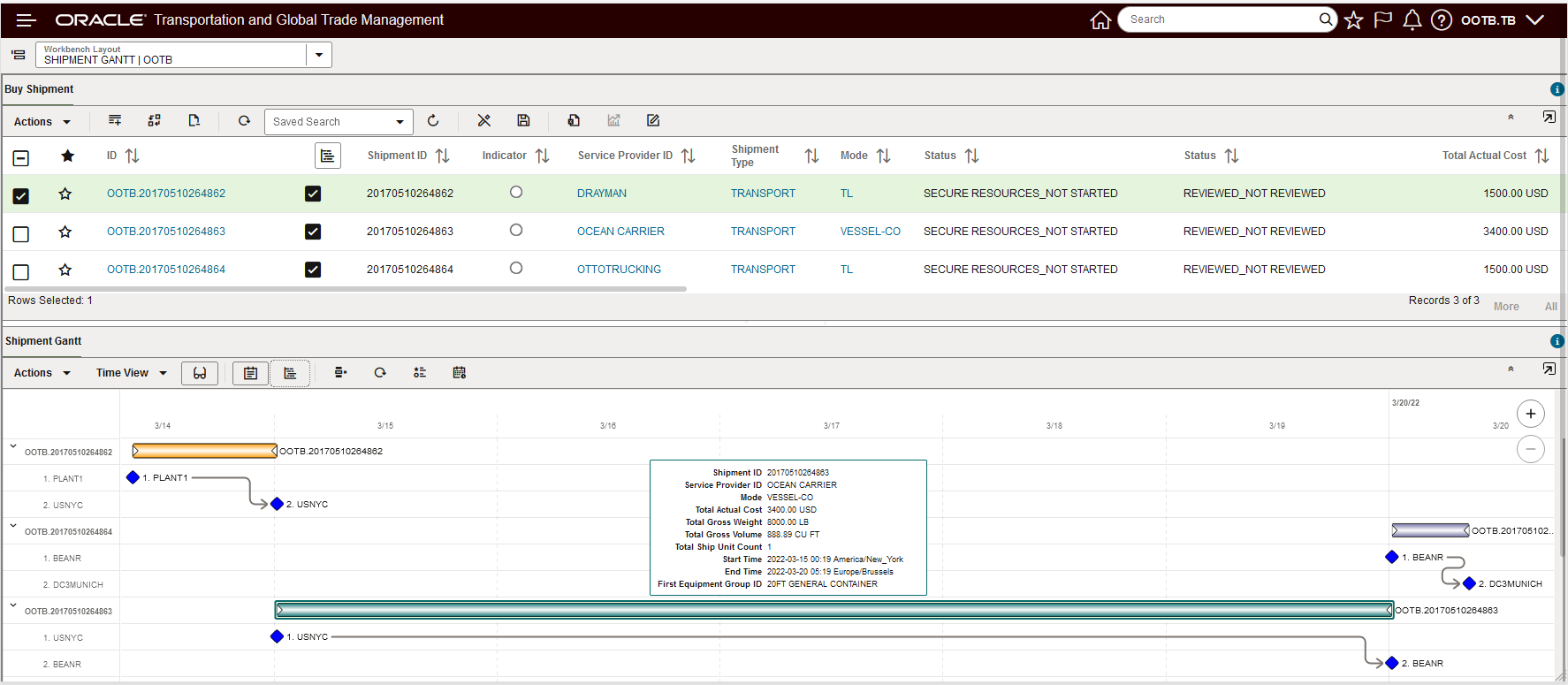
Shipment Gantt Ocean Shipment - Dray - Ocean - Dray
A new Overview Panel is available to be used with all the Gantts (Dock Scheduling, Driver, Shipment, and Work Assignment) providing you with an an improved Gantt navigation experience. The Overview allows you to dynamically set the time window you wish to review the Gantt with, as well as allowing you to slide that defined window across time - either earlier or later.
In the example below, the Overview is used to focus on a set of shipments.
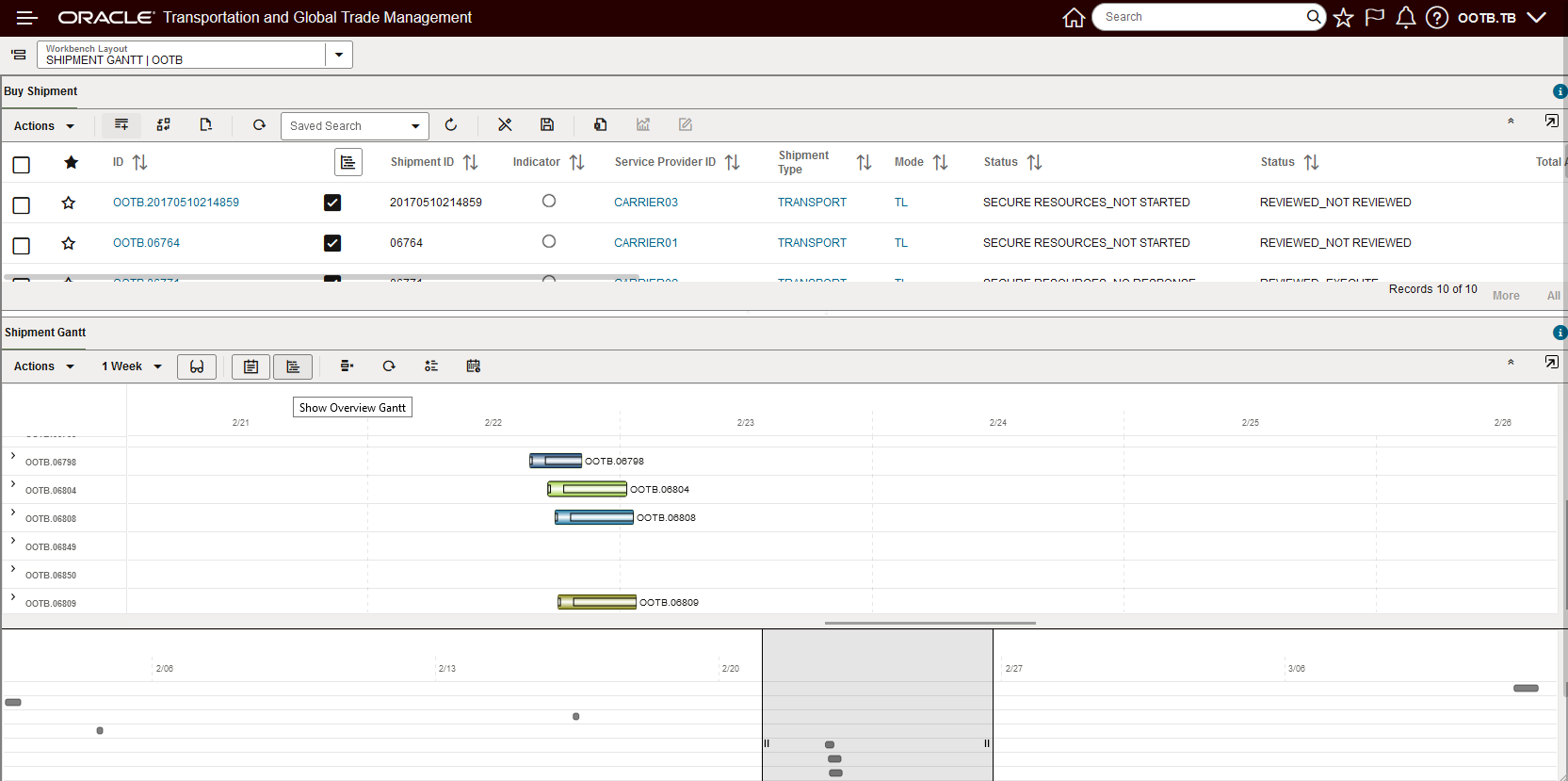
Gantt Overview
In the example below, the Overview is used to view all the shipments.
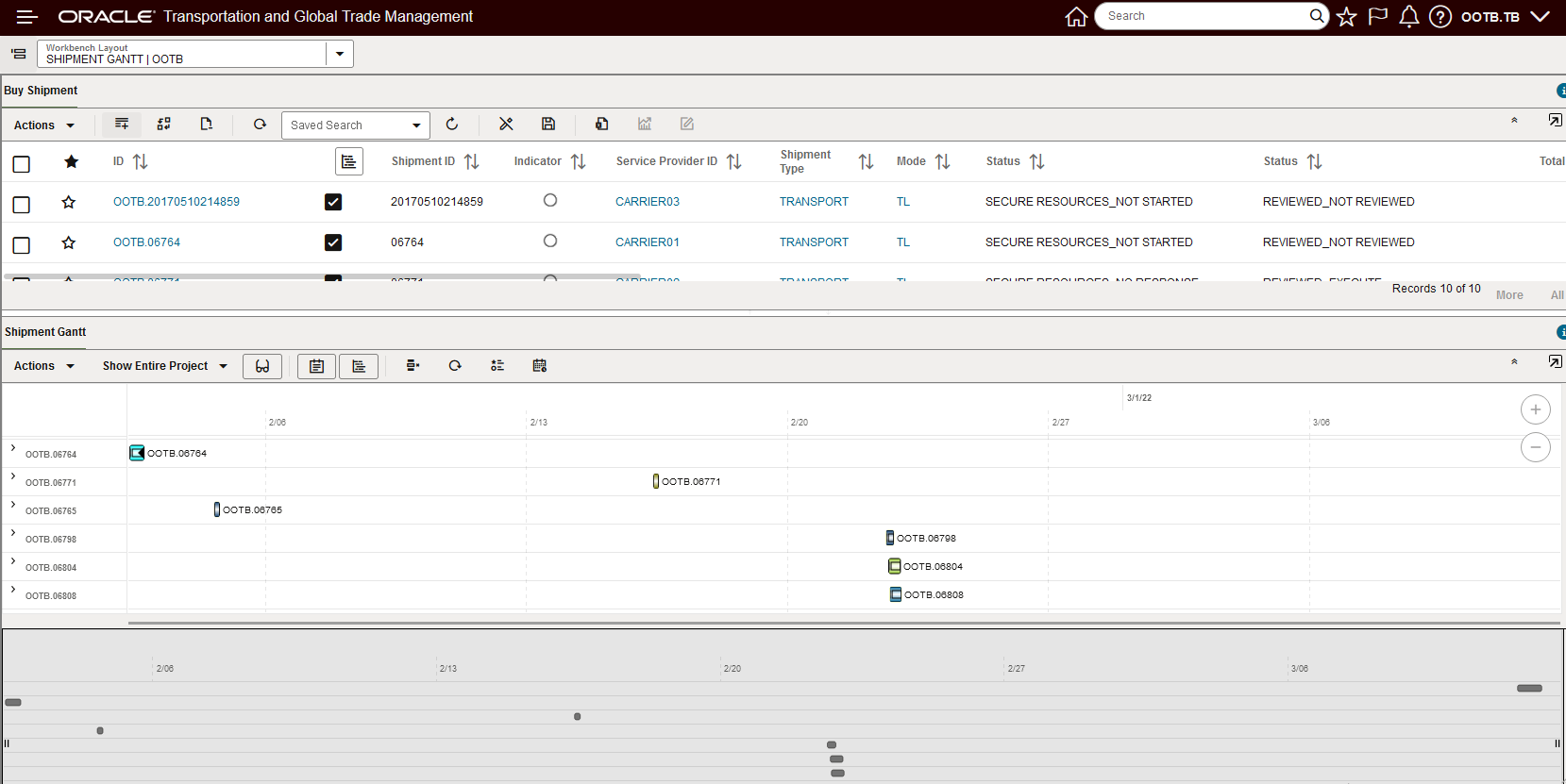
Project Level Overview Shipment Gantt
You can also use the Overview window to change your time frame - left (earlier), or right (later) and to narrow the time range to view.
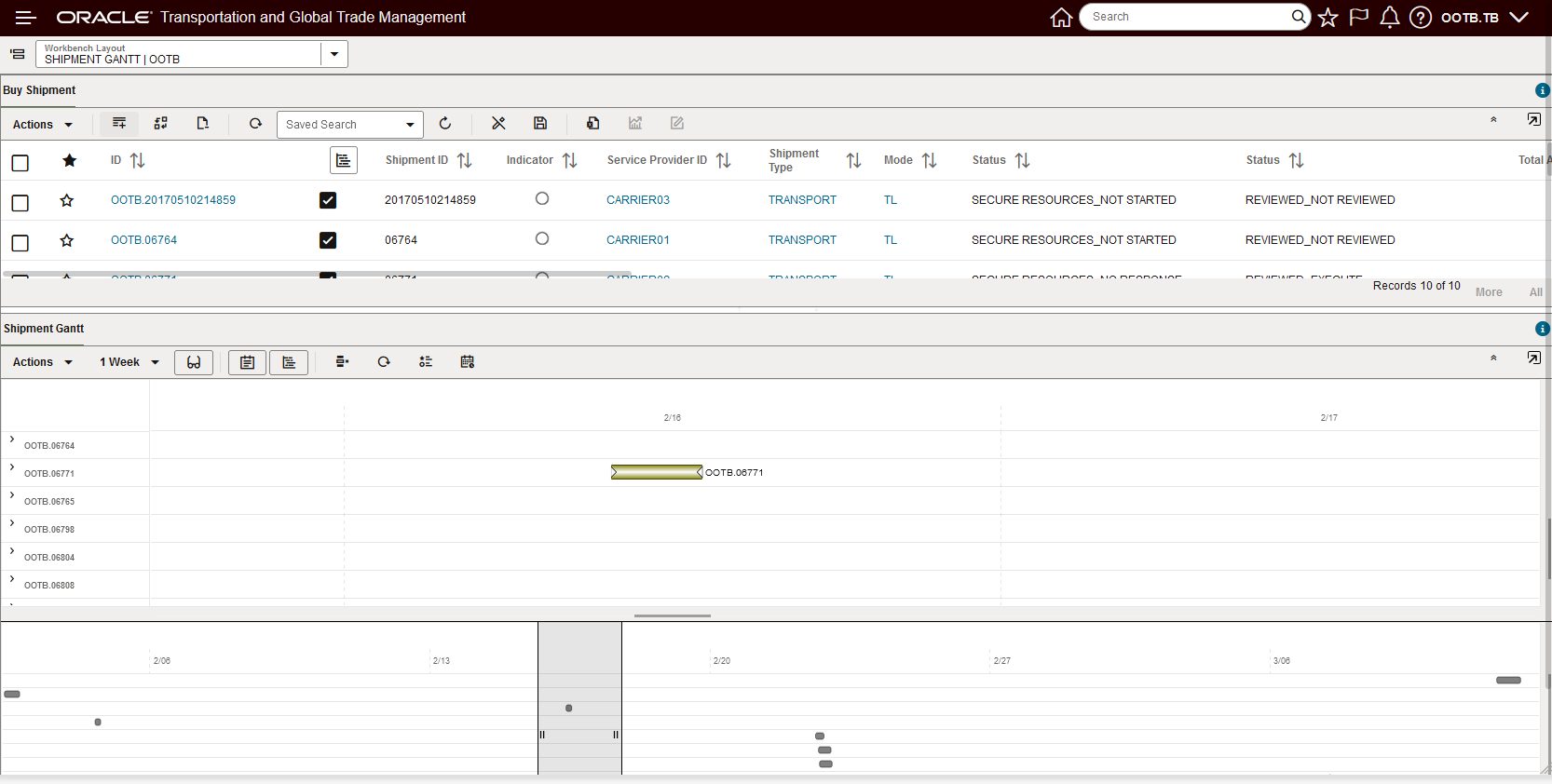
Overview Shifted to the Left with a Narrowed Time Window
The new Work Assignment Gantt, below, has also been enhanced to provide a clean, modern and more information rich view into your work assignments.
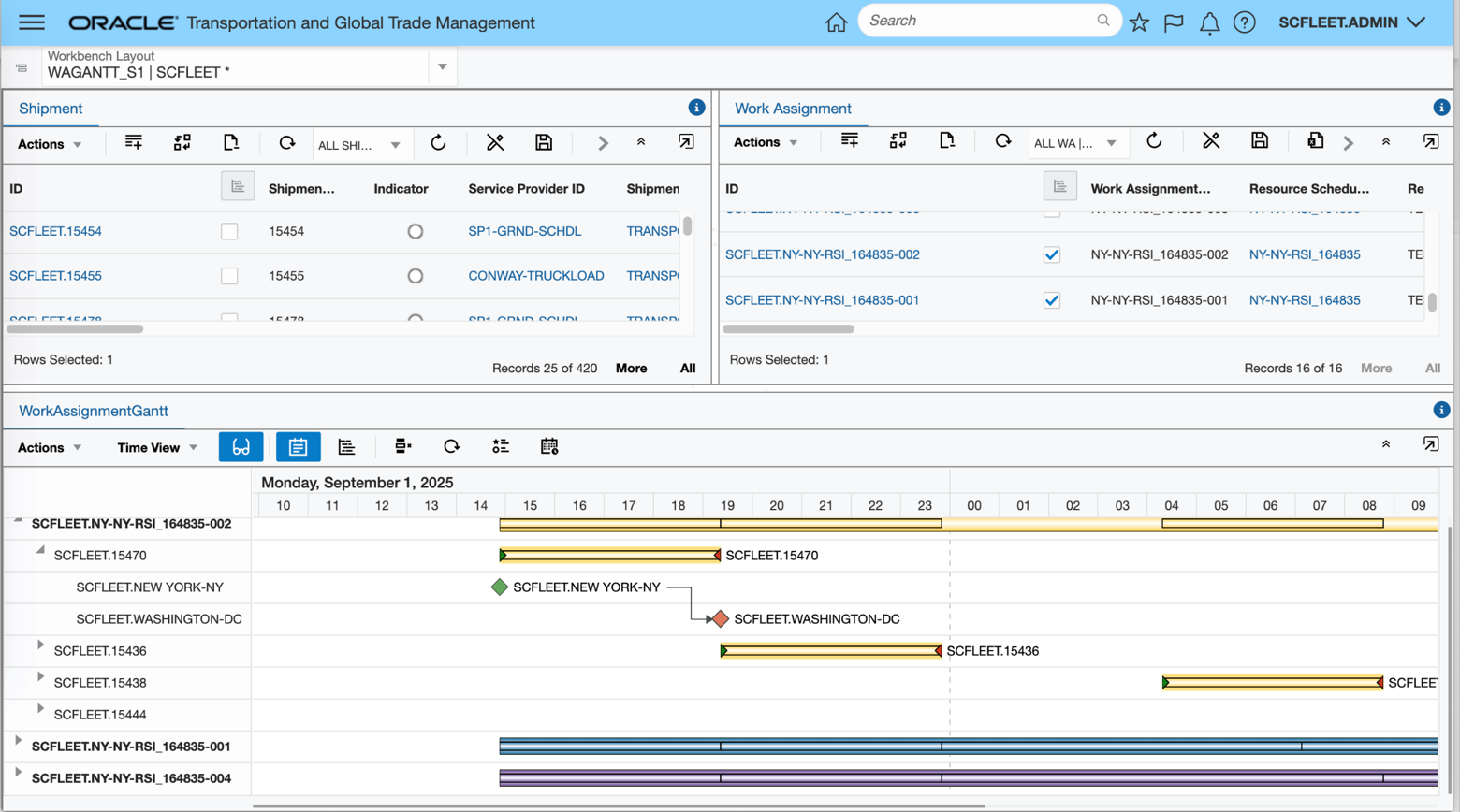
Work Assignment Gantt
Gantt Time Zone Improvements
The Enhanced Workbench Gantts now support a standard hierarchy for setting/determining the Time Zone used in the Gantt.
The Gantt time zone hierarchy logic is as follows:
- Use the time zone defined on the Workbench Gantt Logic Configuration.
- If no time zone is defined on the Workbench Gantt Logic Configuration - then use the time zone defined on the User Preference.
- If no time zone is defined on the User Preference then use the default time zone.
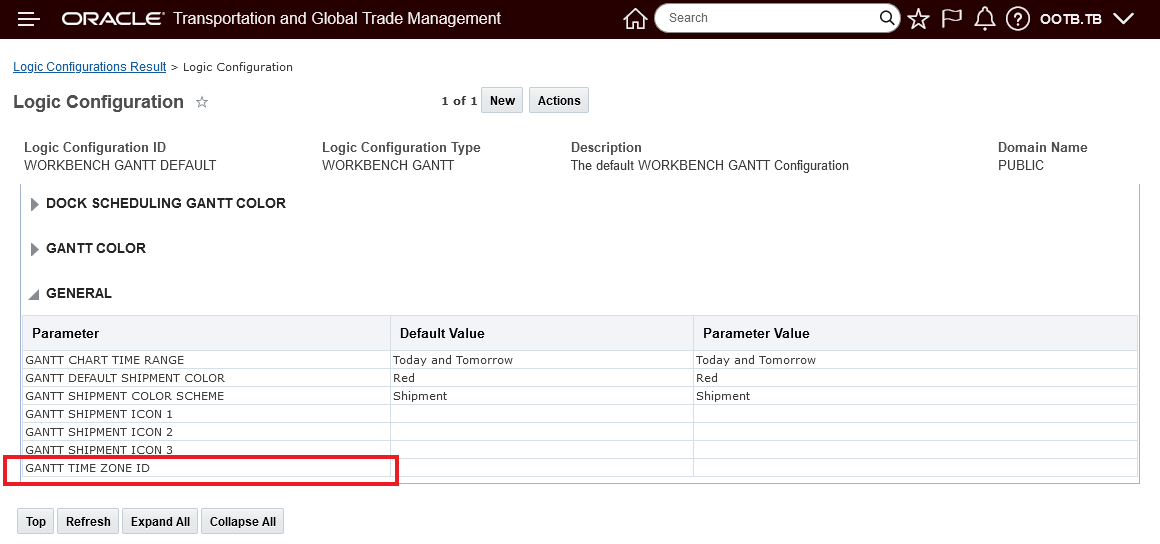
Workbench Gantt Time Zone Logic Configuration
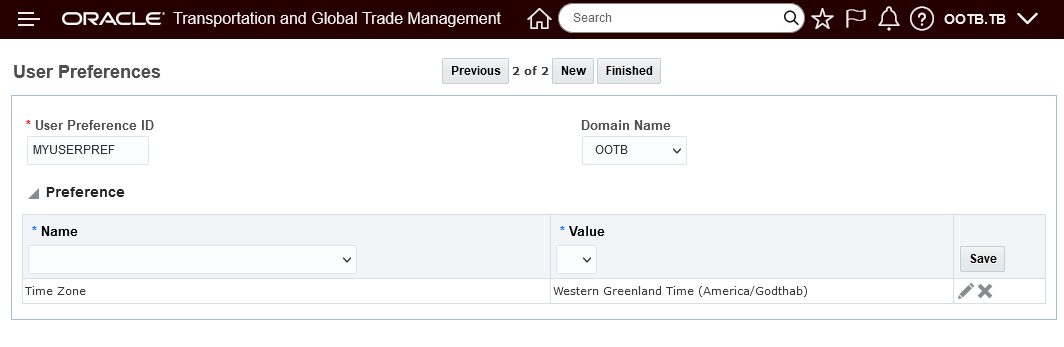
User Preference Time Zone
All of the Enhanced Workbench Gantts (Dock Scheduling, Driver, Shipment, and Work Assignment) now provide you with visibility to the time zone being used for the Gantt.
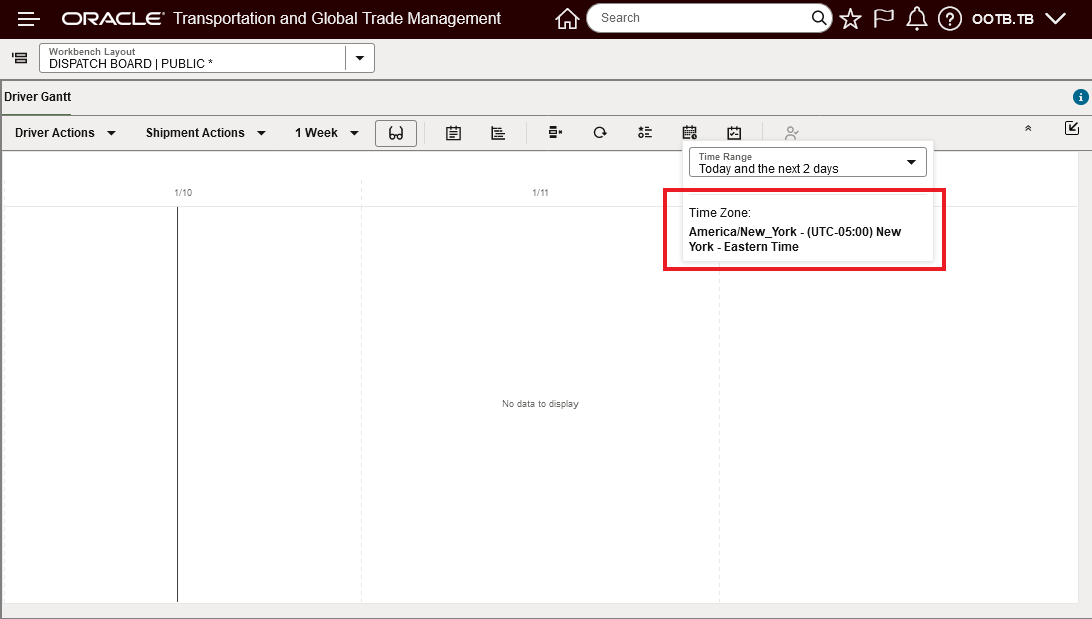
Time Range - Current Time Zone Visibility
The enhanced typeahead search in the Workbench Layout ID dropdown searches for your Workbench Layouts using a contains search for text entered.
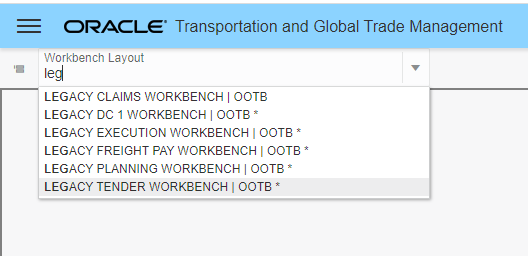
Improved Search - All Enhanced Workbenches with "leg" in the ID
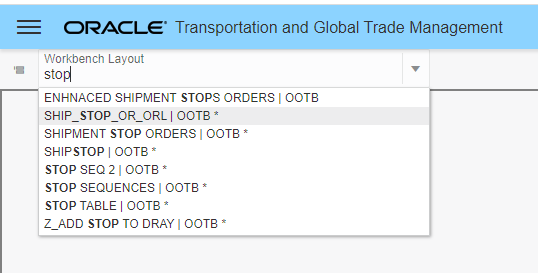
Improved Search - All Workbenches with "stop" in the ID
The example below shows the new capability available to you for collapsing your tabs.
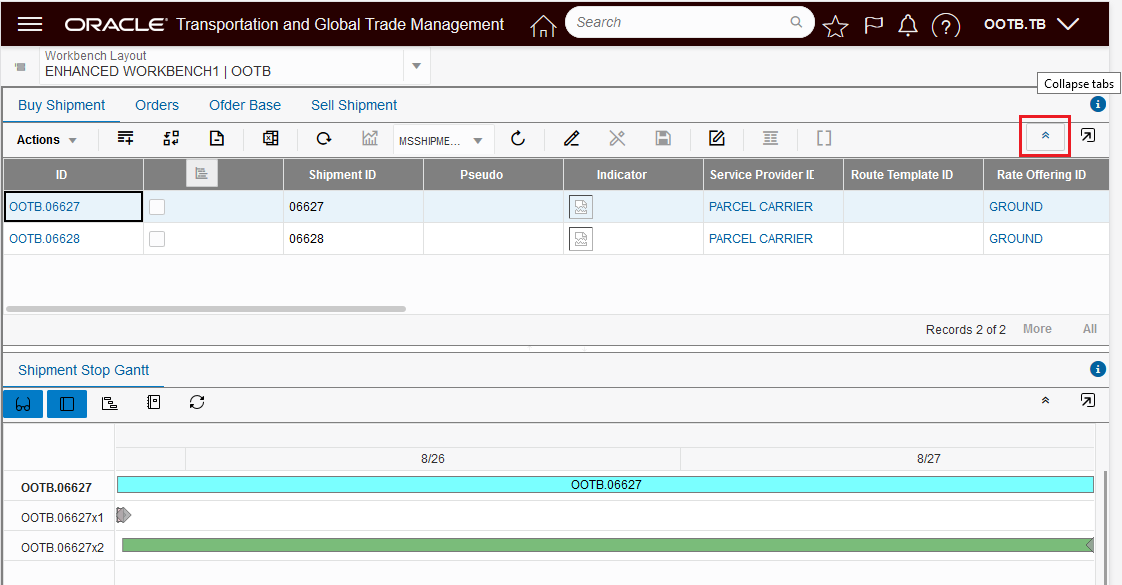
Expanded Tabs View
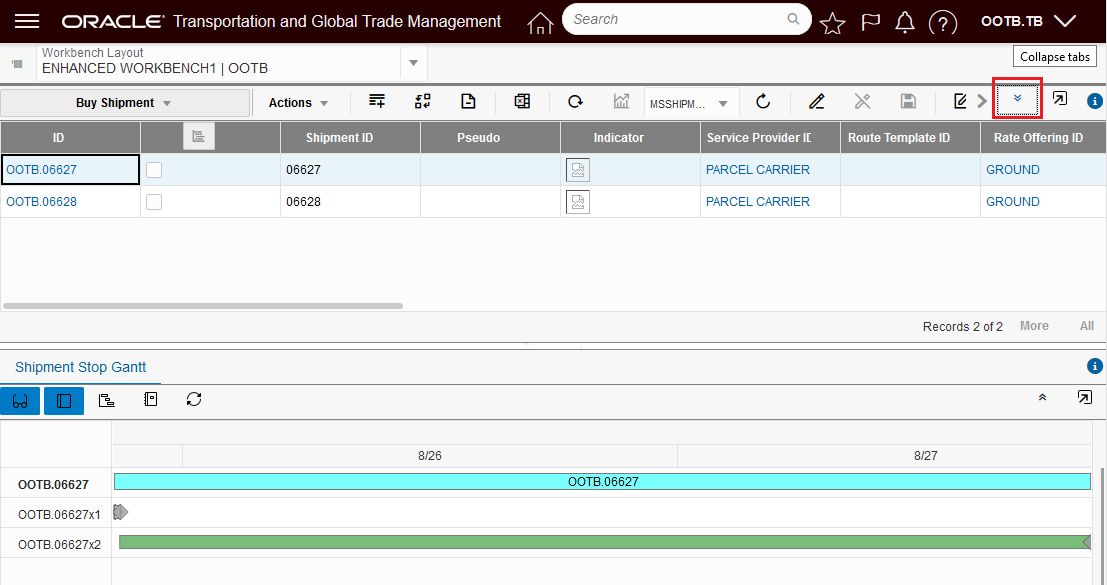
Collapsed Tabs View
The Load Config region now supports the Edit Load Config view and manipulations.
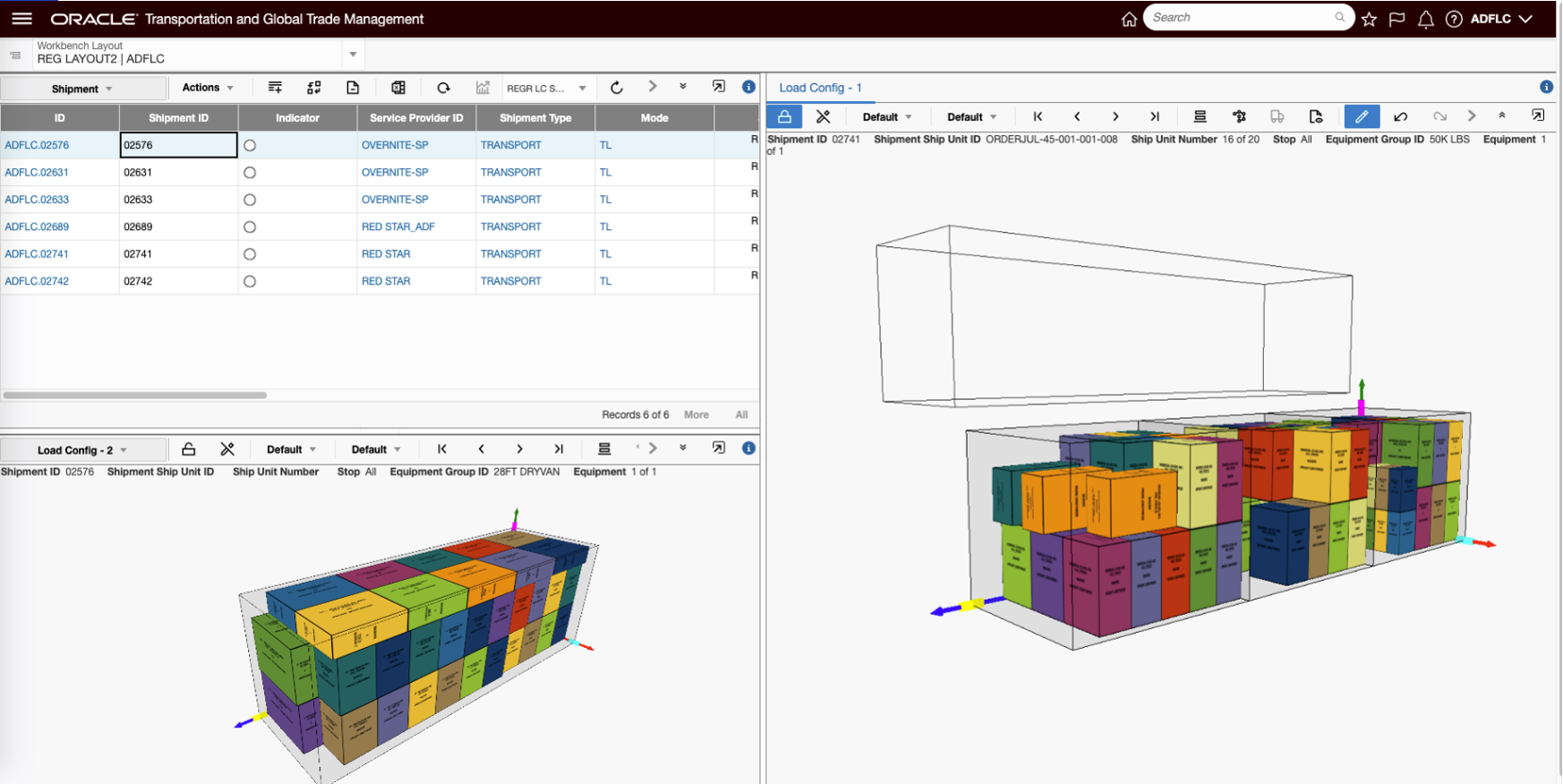
Edit Load Config Available in Enhanced Workbench
The Enhanced Workbench also provides you with greatly improved logging for trouble shooting workbench issues. In addition to improved and expanded Errors, Warnings and Info related messages, logging now uses colors to denote different levels of logging - Errors (red), Debug and Info messages (green).
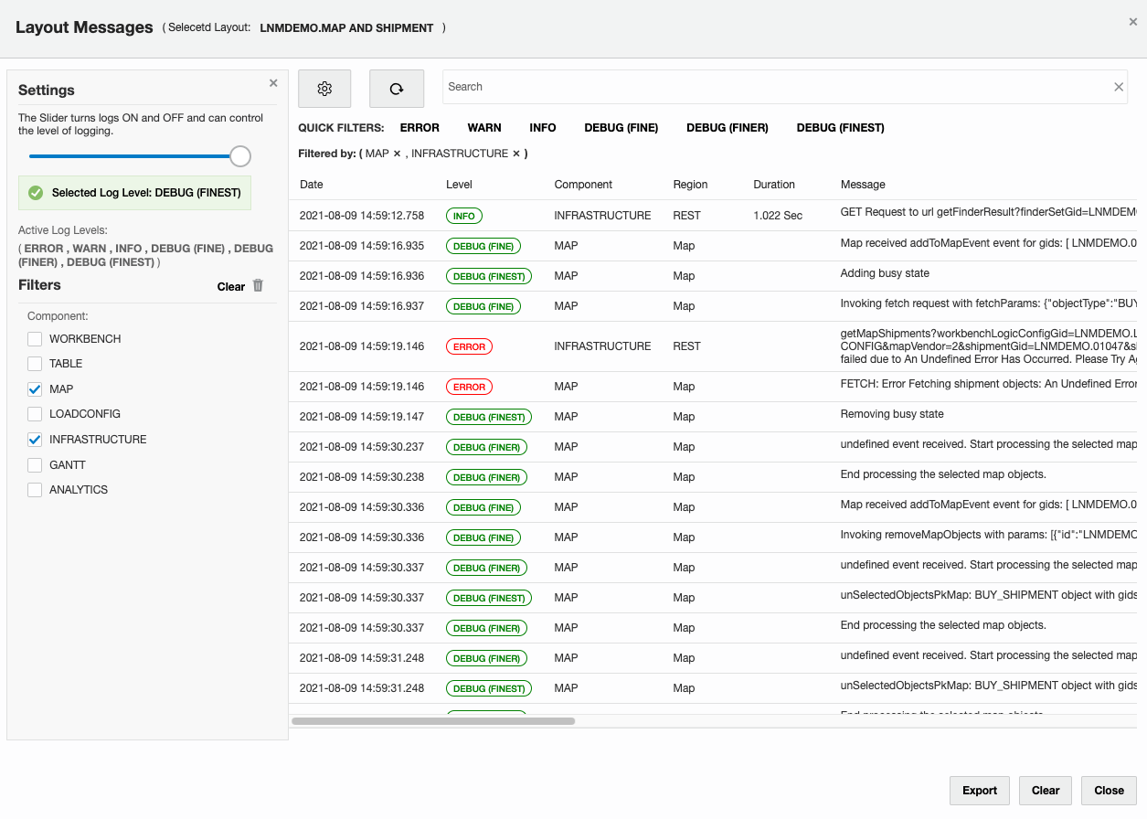
Improved Logging
Steps to Create a Basic Enhanced Workbench
The steps for creating a workbench using the new Enhanced Workbench Designer are equivalent to the steps you have used to create Workbenches previously. There are just a few differences in the navigation and icons displayed to access the functionality used to create and configure an Enhanced Workbench. The example below will be used to identify the steps required to create a simple Enhanced Workbench. The example will focus on the changes.
Step one is to navigate to the Enhanced Workbench Designer. Once there you will select the Create Layout option.
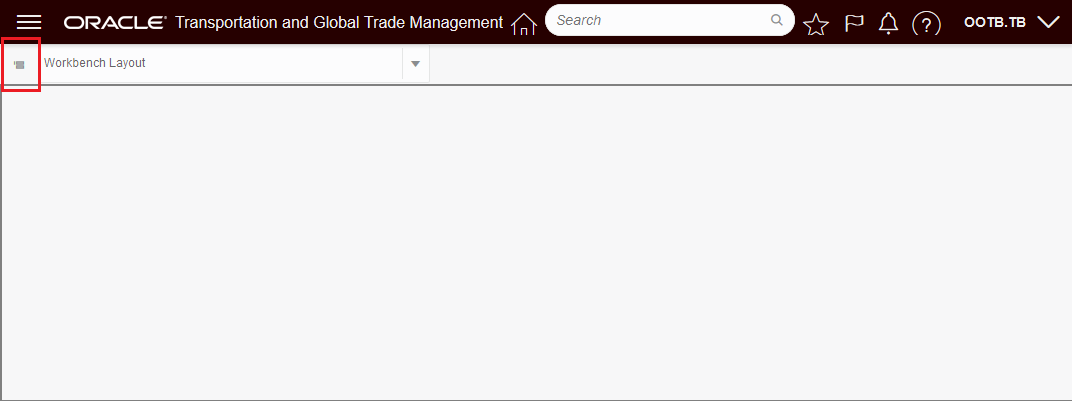
Bring up Enhanced Workbench Navigation menu.
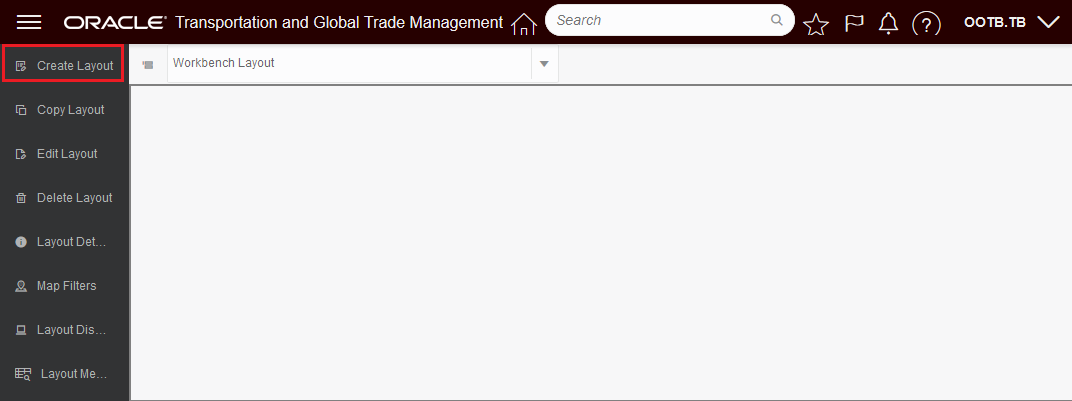
Select Create Layout.
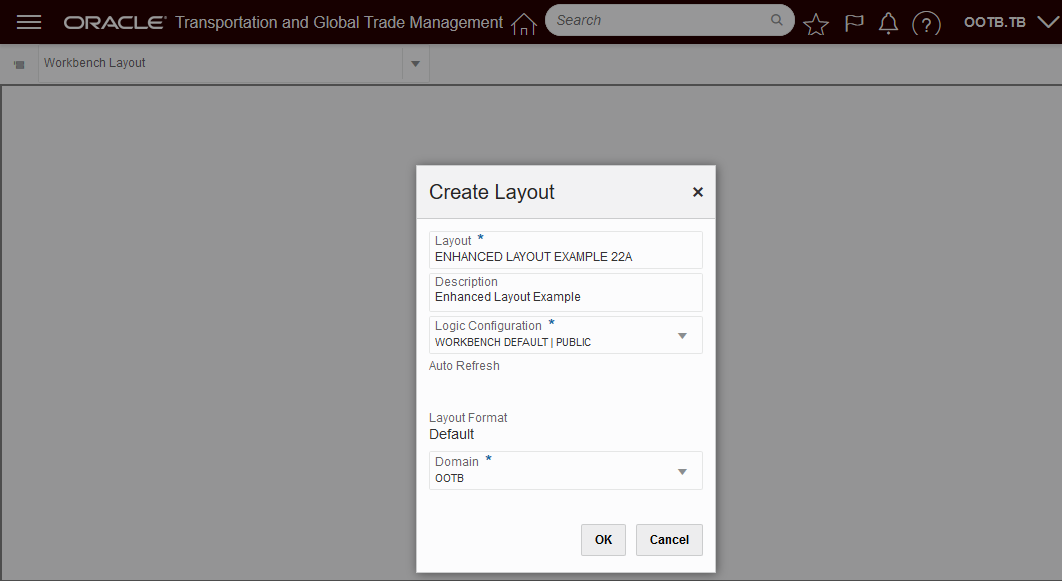
Enter info about your workbench.

Select the Tool Icon to add, delete, and edit content and split vertically or horizontally.
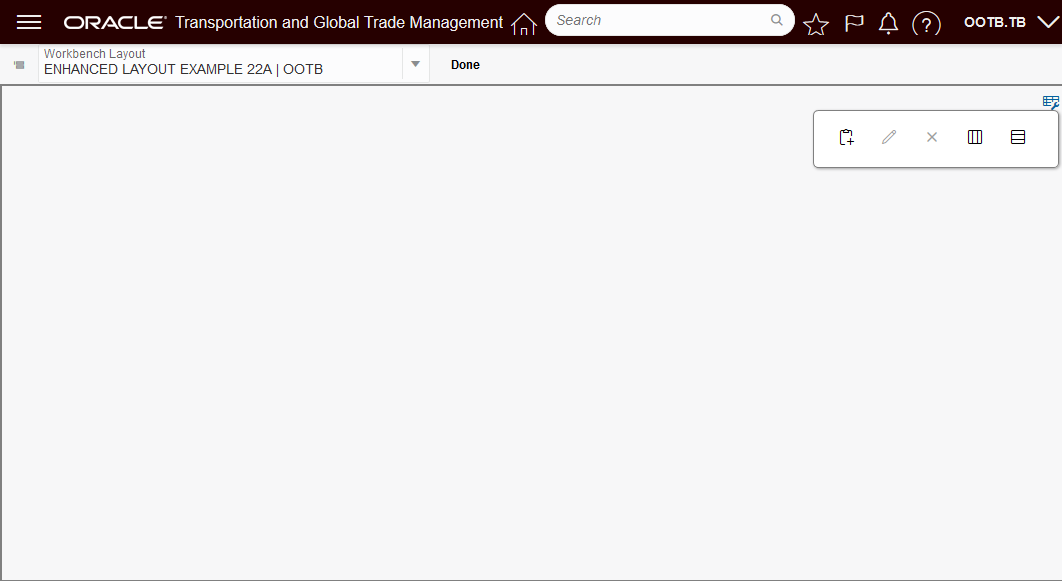
Tool Icon
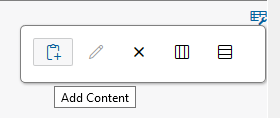
Add Content
Edit Content
Remove Content
Split Horizontally
Split Vertically
This feature resets the development platform for the Workbench Designer and Workbench Layouts providing you with many usability, functionality and performance improvements.
Steps to Enable
You don't need to do anything to enable this feature.
Tips And Considerations
While the Enhanced Workbench is mostly equivalent to the original Workbench - there remains a short list of capabilities that are not yet available in the Enhanced Workbench. The list of items that remain on the product backlog for the Enhanced Workbench include:
- The “Layout Droplist”/upper band of the Enhanced Workbench screen is not collapsible.
- The Layout Display options are not available - i.e., the settings for Compact and Super Compact are not available.
- No Drag/Drop supported for Table to Gantt
- No Right click on an Empty Slot in the Gantt to block/unblock a slot in the Appointment Gantt.
- No support for Work Queues in JET Workbench Tables.
- Map Filters are not available.
- Configuring the table columns on the fly is not available.
There are no steps required to enable the Enhanced Workbench feature and there are four Public Enhanced Workbenches available to use out-of-the-box (below).
Public Enhanced Workbenches:
- LOGISTICS MACHINE LEARNING WORKBENCH
- MODELING ANALYTICS WORKBENCH
- LOCATION BASED DOCK SCHEDULING WORKBENCH
- DIAGNOSTICS_LAYOUT
We would recommend either converting or re-creating one of your current ADF Workbenches using the Enhanced Workbench feature to become familiar with the new look and feel and the capabilities provided by the Enhanced Workbench.
NOTE: The Enhanced Workbench will ONLY work if the JET APPLICATION SHELL Optional Feature is Opted In.
Business Monitor – Alert Badge
This feature provides you with a visual Business Monitor Alert Badge that will be displayed, after a refresh, if any of the saved query counts in your Business Monitor are changed. The Business Monitor Alert Badge allows you keep your Business Monitor minimized and then use the Alert Badge as the trigger for you to open your Business Monitor to review the changes.
In the scenario below, the Business Monitor has one saved query for scheduled order releases, when three of the order releases are scheduled, the Alert Badge is displayed indicating that the count for the saved query has changed.
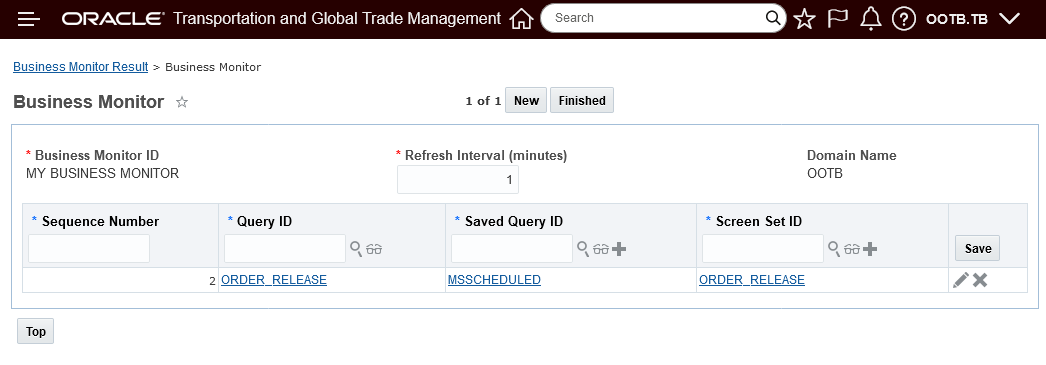
Example Business Monitor
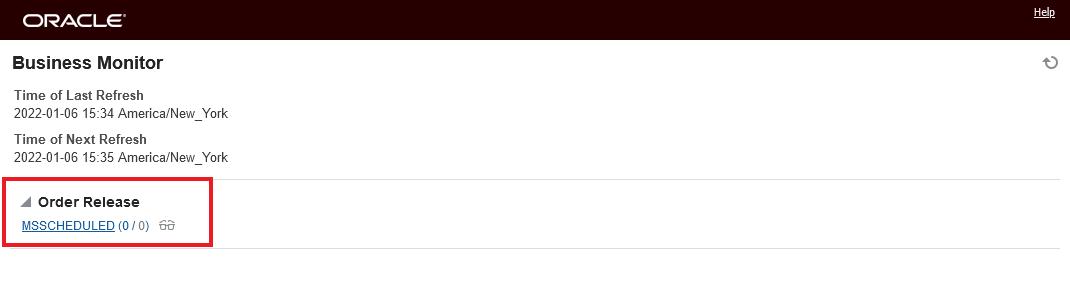
Starting Point No Scheduled Order Releases
In the screen below, the order releases have been scheduled and as a result the Business Monitor Alert Badge in now on - indicating that the count in the business monitor saved query have changed.
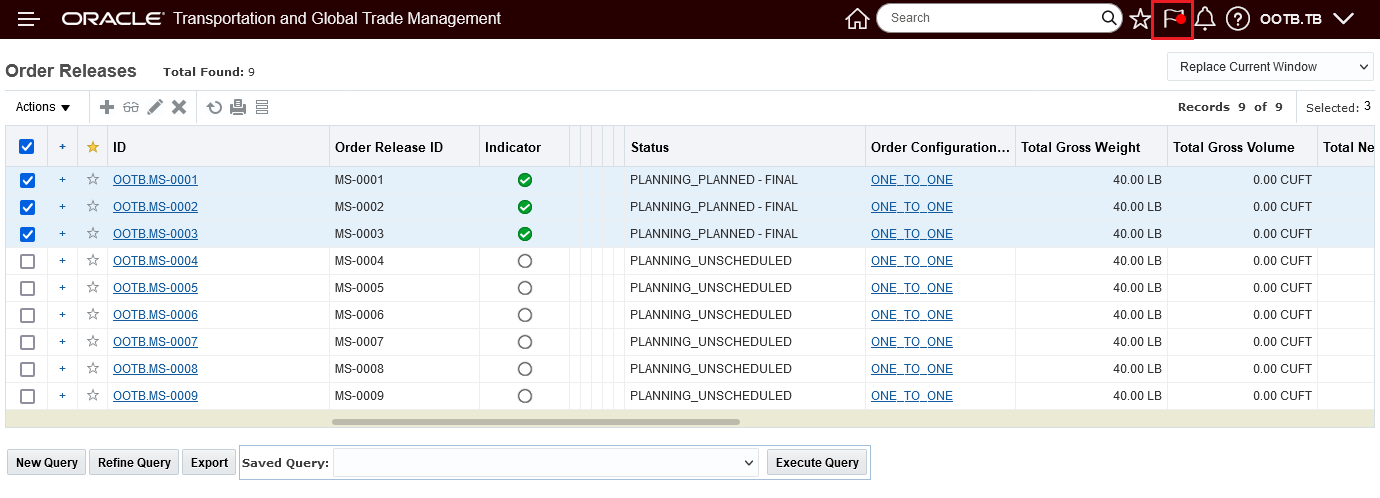
Order Releases Scheduled - Alert Badge Visible
You can review the Business Monitor and clear the Alert Badge by clicking on the Business Monitor icon,
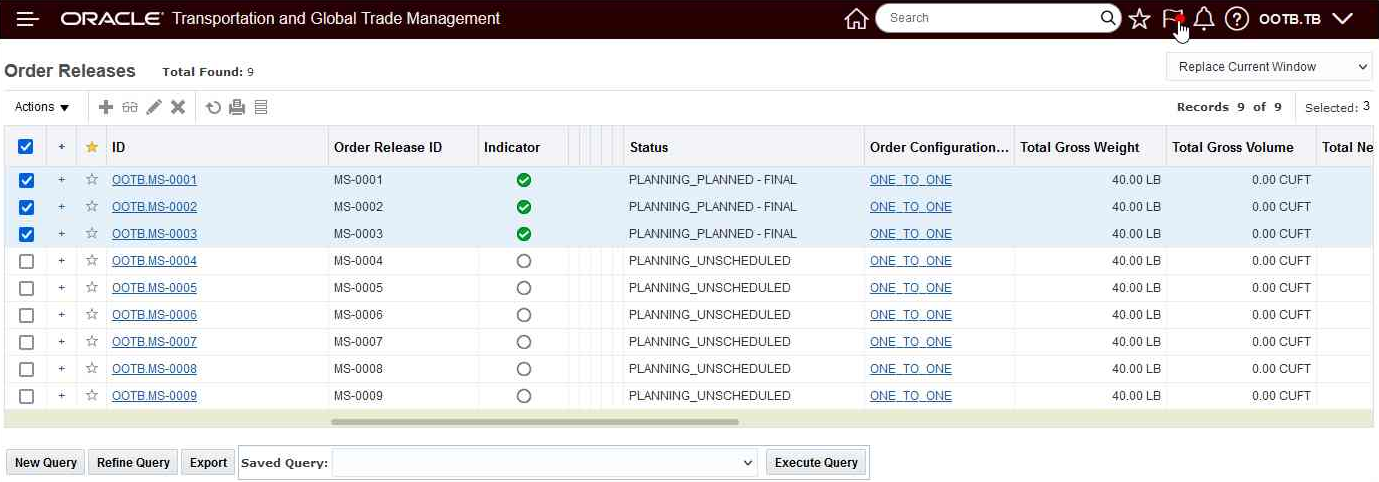
Review Business Monitor and Clear Alert Badge
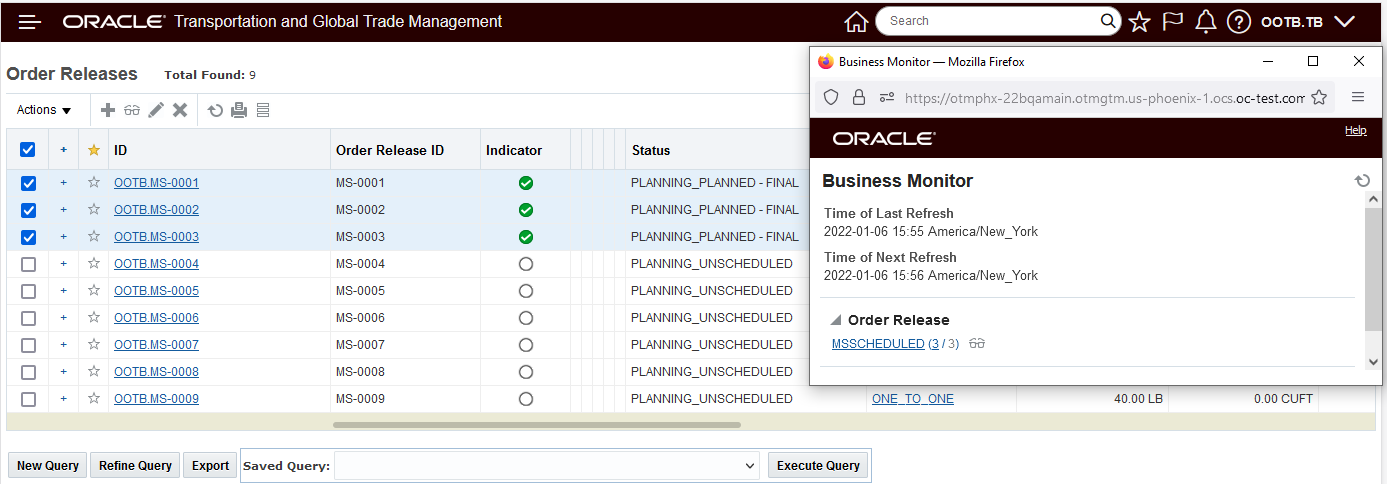
Business Monitor Opened Alert Badge Cleared
The Business Monitor Alert Badge provides a proactive visual queue to help better monitor changes being tracked by your configured Business Monitors.
Steps to Enable
You don't need to do anything to enable this feature.
Tips And Considerations
- The Alert Badge is only available in the JET Home Page.
- The Business Monitor must be open, but can be minimized, for the Alert Badge to be shown.
View Documents SmartLink Added
This feature adds the Documents SmartLink to an addition set of objects including:
- Demurrage Transaction
- Driver
- Equipment
- Power Unit
- Rate Record
- Rate Offering
- SKU
- Tracking Event
- Work Assignment
- Work Invoice
- Bond
- Campaign
- Campaign Line
- Declaration Line
- Item Classification
- Item Origin
- Item Qualification
- License Line
- Transaction Line
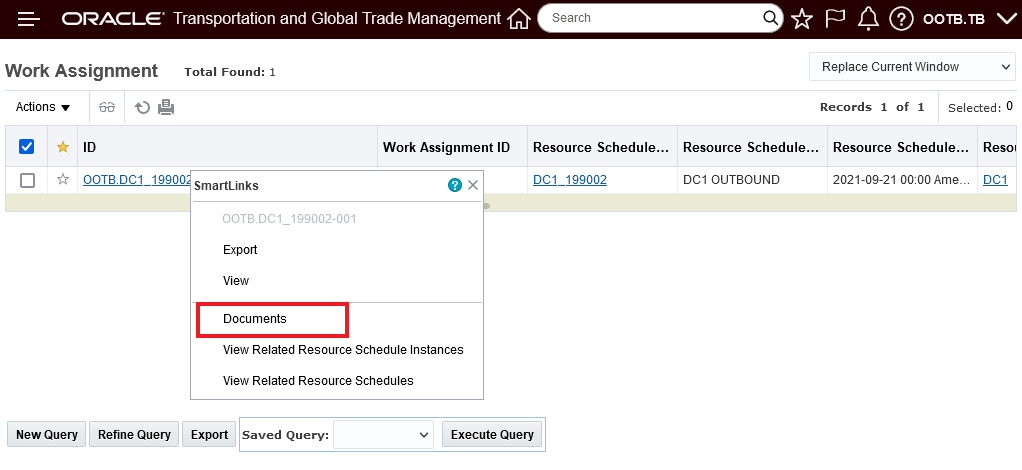
Document SmartLink
This feature improves access and visibility to the documents assigned to the objects where the Documents SmartLink has been added.
Steps to Enable
You don't need to do anything to enable this feature.
OAuth 2.0 and HTTP Header Profile Support for Addition Content Types
This feature extends the BuildNotifyMessageWorkflow, so that the workflow supports REST client capabilities for OAuth 2.0 and custom HTTP Header Profiles for the Content Types of application/xml, and text/xml. This change is in addition to the previously available capabilities provided for the Content Type of application/json.
Given the proper OAuth 2.0 configuration in the External System and the Content Type set to application/xml or text/xml - to take advantage of this new capability, all you will need to do is select REST as the method when sending your XML transmissions.
In the scenario below, the External system setup is created to support sending Content Type 'text/xml' outbound using OAuth 2.0.
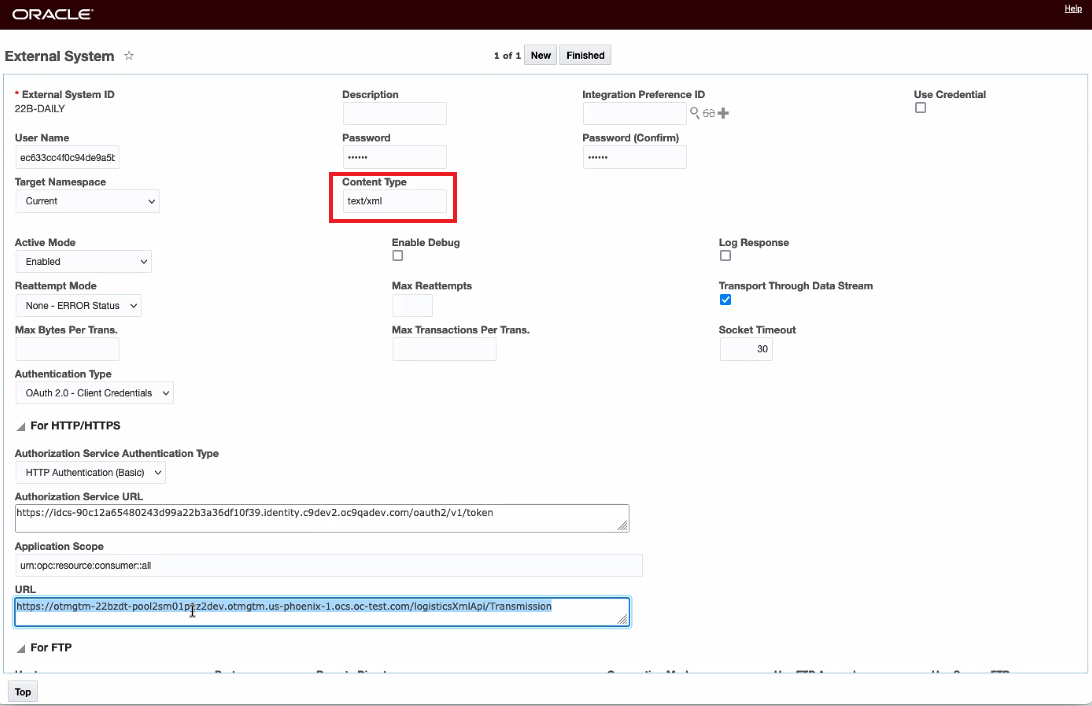
External System Setup
The external system defined above is selected and the run interface command is run against a location.
NOTE: The Notify Type selected is REST.
It is the combination of the REST comm method and the Content Type defined on the external system that determines how the new BuildNotifyMessageWorkflow workflow is used.
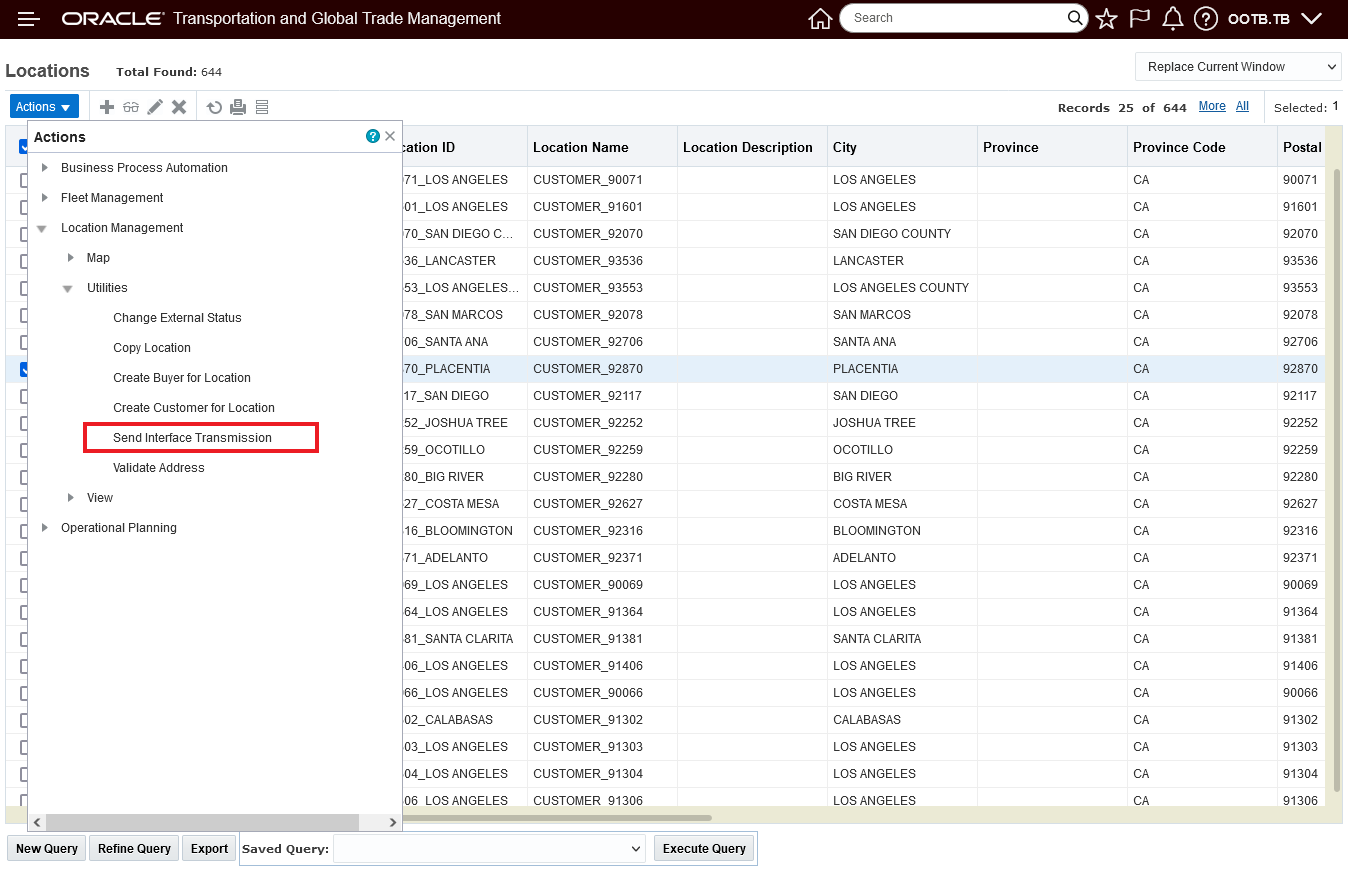
Send Interface Transaction
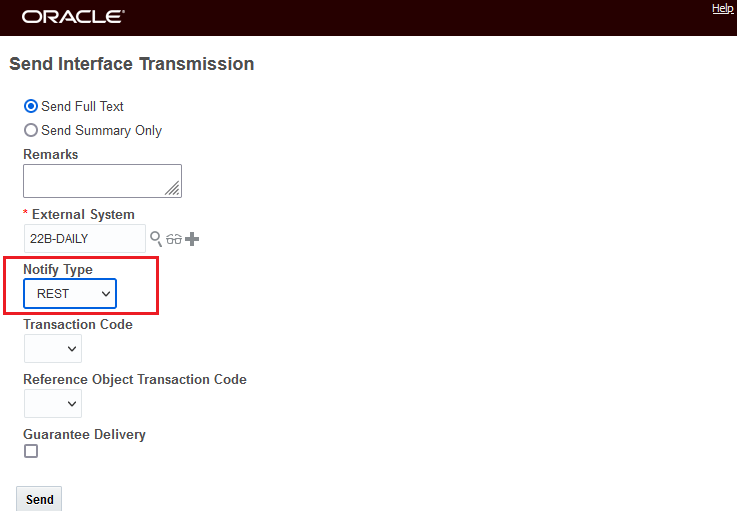
Select Notify Type of REST
If you opted to run Send Integration using the agent action - you would set the Notify Method in the agent action to REST - assuming the same External System setup.
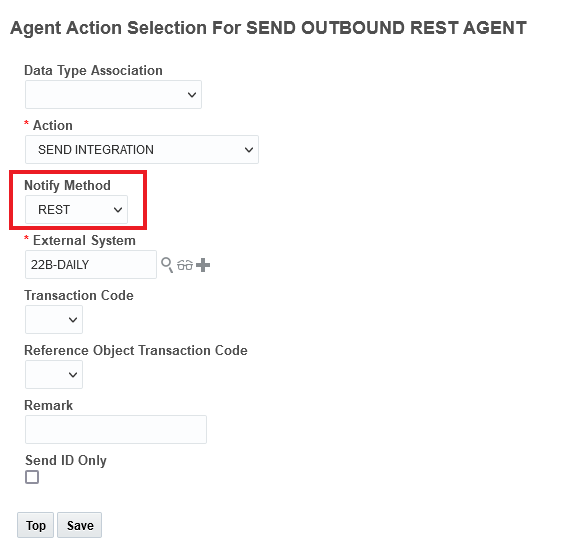
Agent
Provides you access to new integration capabilities (OAuth 2 and custom HTTP Header Profiles) when sending the Content Types of application/xml, and text/xml.
Steps to Enable
- Configure your External System to support OAuth 2.0 - set the Content Type to 'application/xml', or 'text/xml'.
- When using the configured External System for Send Integration/Send Interface Transmission - select 'REST' as the Notify Type/Notify Method.
Tips And Considerations
This feature supports the ability to send outbound Transmission XML with support for OAuth 2.0 and Header Profile. However, the new workflow does not support all the capabilities of Transmission XML integration, namely:
- Outbound Transmission Staging (e.g. issue allocation, send allocation etc.)
- Tender Offer
This feature provides you with a new Log Type - Startup - that captures all the Log Ids related to system startup. Once system startup is complete, the Startup log is disabled. You will find the Startup Log Type beneficial in reviewing all the activities related to system startup.
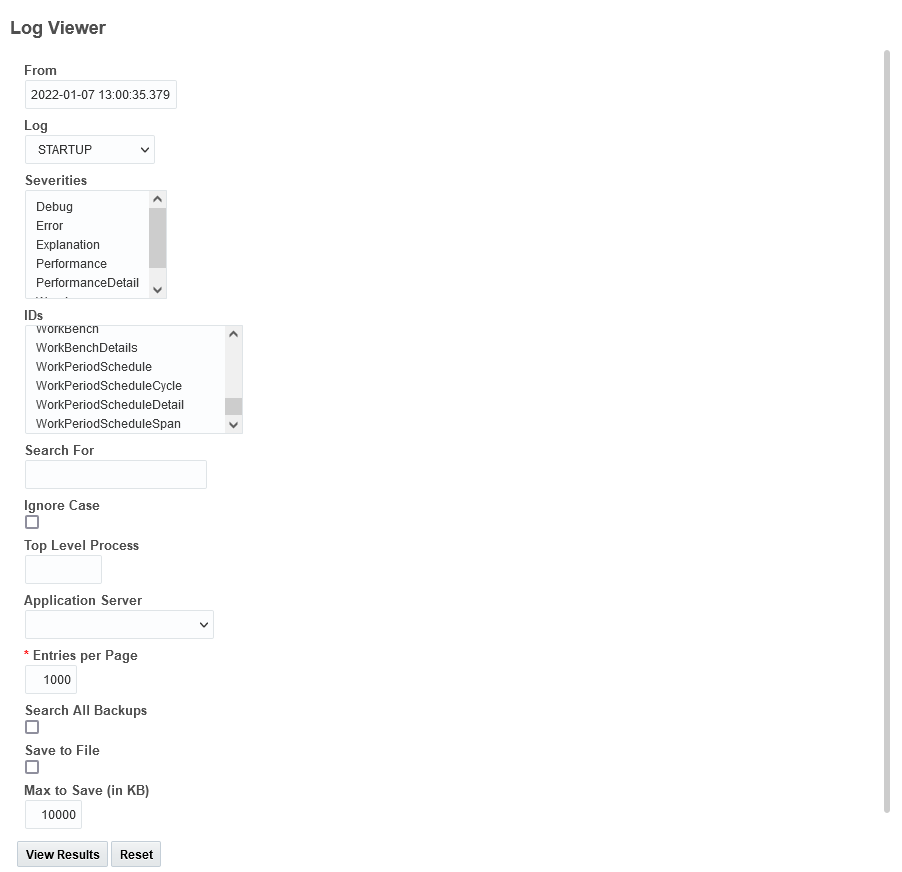
Log Viewer for Startup Log
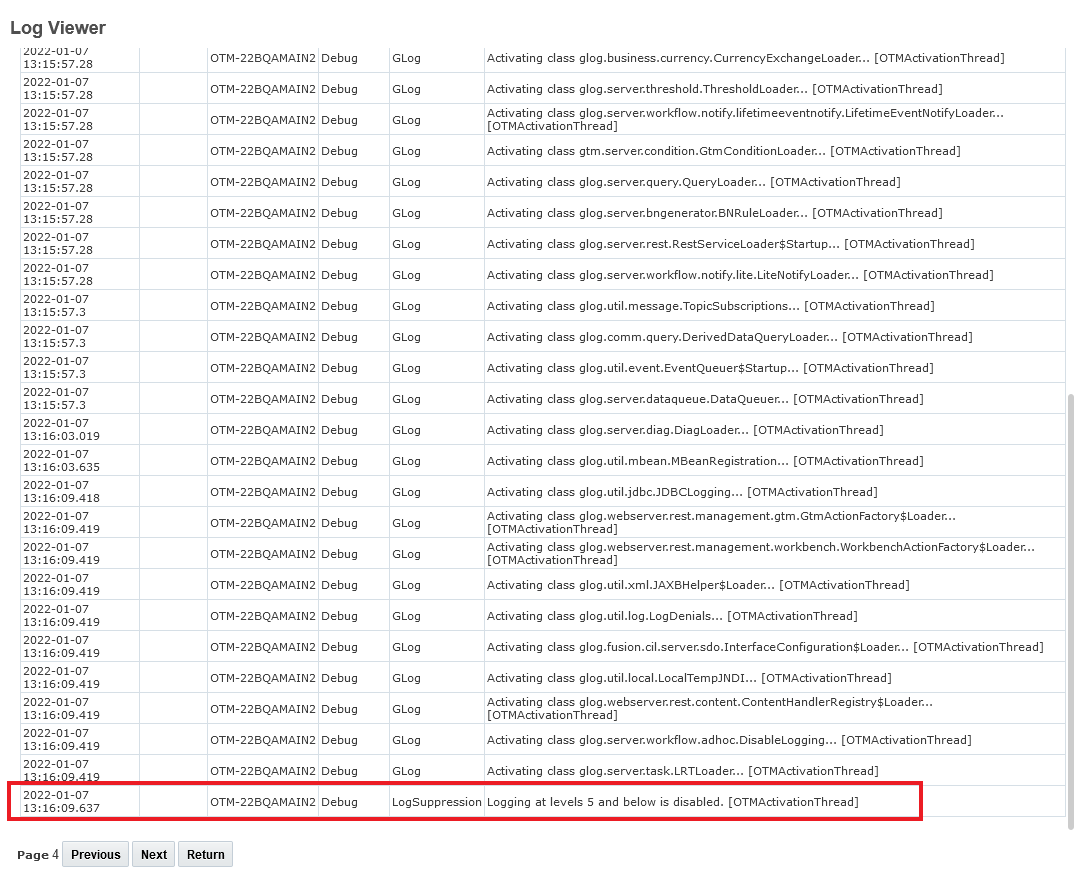
Startup Log Results and Disable Point
This feature provides you with a logging mechanism focused on capturing Startup related activities.
Steps to Enable
Like all logging in OTM, you will need to turn on the Startup logging and specify the details and file name to use for capturing the Startup log entries.
Configuration and Administration > Power Data > Diagnostics > Log Files.
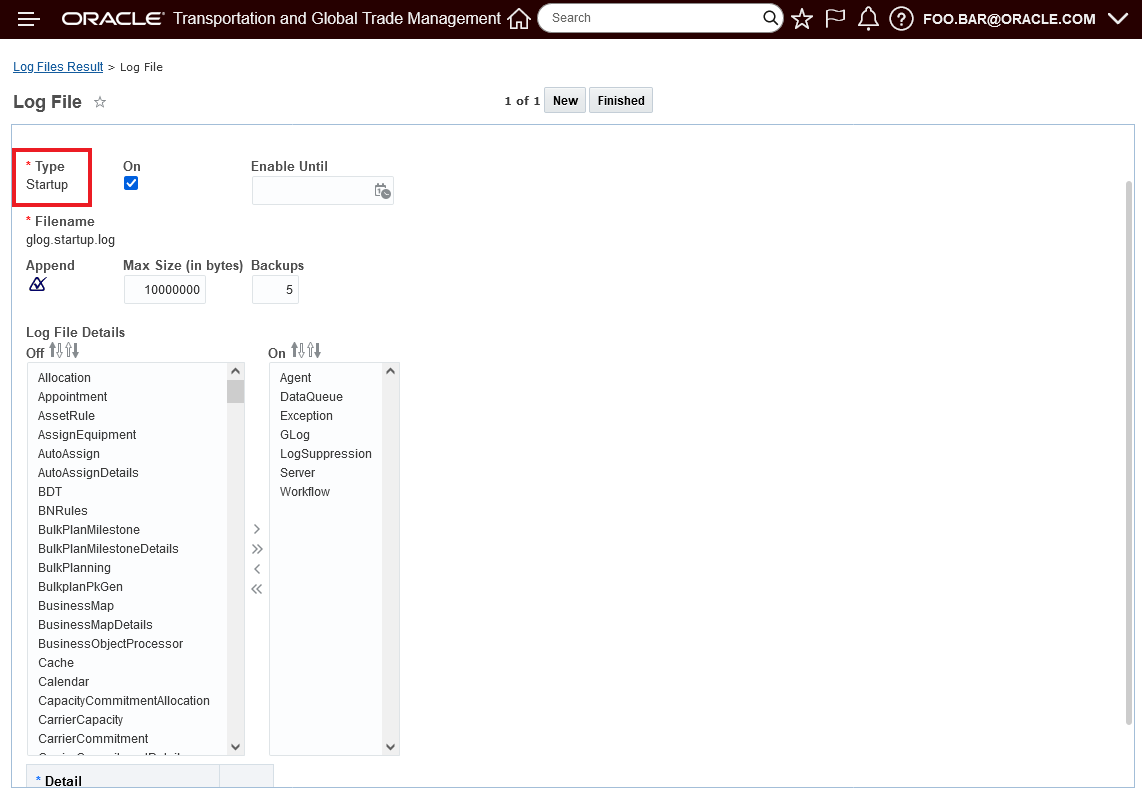
Startup Log Setup
Suppress Currency Conversion Exceptions
The optional feature, SUPPRESS CURRENCY CONVERSION EXCEPTIONS - when enabled, will Log warnings rather than exceptions when currency conversion data are missing. The goal of the feature is to reduce unnecessary clutter in the exception log.
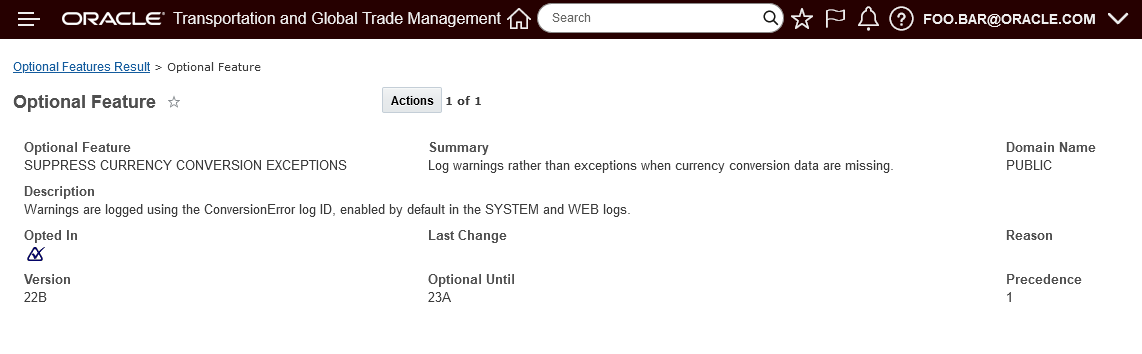
Optional Feature - Su
This feature will, when enabled, help reduce the unnecessary clutter in the exception logs.
Steps to Enable
You don't need to do anything to enable this feature.
Tips And Considerations
While the manager for these features refers to them as "optional" - each of these features will become mandatory when the Optional Until update is released. The optional aspect of these features refers to the period of time where there is an opportunity to Opt In/Opt Out of enabling the feature. During this "optional" period - the time between when the feature is released and the release prior to the Optional Until release - the request/desire/intention is for you to enable the feature(s) for testing purposes so that the transition to mandatory, as of the Optional Until release, is uneventful.
This page is accessed via Configuration and Administration > Property Management > Optional Features.
NOTE: Only the DBA.ADMIN user can access and use the Optional Features page.
This optional feature will provide you with improved stability by avoiding excessive memory usage related to unconstrained queries. When enabled, the Limit Agent Loops optional feature sets a limit for the FOR, FOR EACH and Data Type Association workflow agent loops to avoid excessive memory usage.
Limit Agent Loops - limits the number of items it will match to - limit is 5000.
Improves the stability of your system by avoiding excessive memory usage related to agent loops.
Steps to Enable
You don't need to do anything to enable this feature.
Tips And Considerations
By default the same limit has been set for all Data Query Types - if necessary - the limit can be configured by Data Query Type in the situations where the default is too limiting.
While the manager for these features refers to them as "optional" - each of these features will become mandatory when the Optional Until update is released. The optional aspect of these features refers to the period of time where there is an opportunity to Opt In/Opt Out of enabling the feature. During this "optional" period - the time between when the feature is released and the release prior to the Optional Until release - the request/desire/intention is for you to enable the feature(s) for testing purposes so that the transition to mandatory, as of the Optional Until release, is uneventful.
This page is accessed via Configuration and Administration > Property Management > Optional Features.
NOTE: Only the DBA.ADMIN user can access and use the Optional Features page.
Metric Type - CPU Timer Ahead, CPU Timer Behind
This feature provides you with two new metric types for the CPU Component - CPU - TIMER AHEAD, and CPU - TIMER BEHIND, that will capture statistics related to these events. You will find this information beneficial when these metrics are correlated with other metrics where you note performance issues occurring at the same time as the CPU - TIMER BEHIND or AHEAD metrics are being reported.
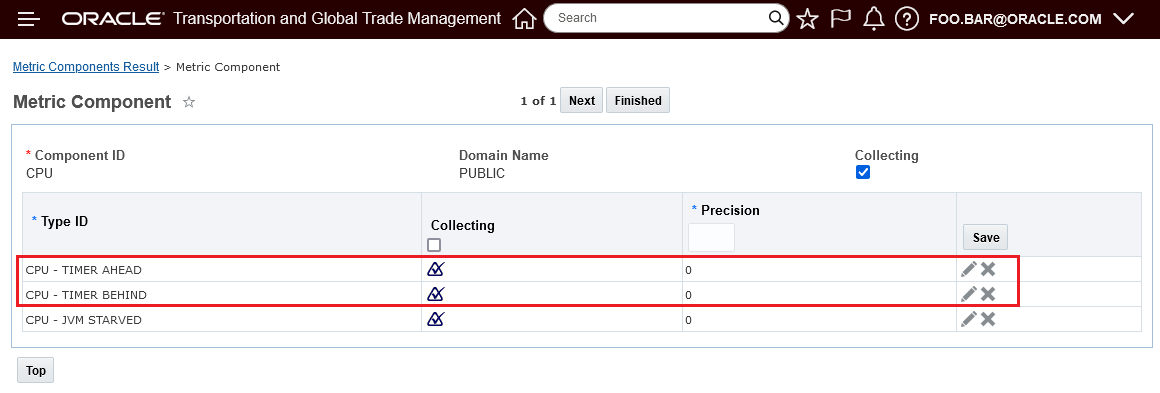
CPU Component ID Metric Types CPU - TIMER AHEAD and CPU - TIMER BEHIND
Allows you to gather CPU Component metrics for these additional Metric Types.
Steps to Enable
You don't need to do anything to enable this feature.
Finder for Metric Subcomponent
This feature provides you with a Finder to find and select the Metric Subcomponent for your Metric Type when defining a Metric Threshold. The ability to find or use autocomplete for the selection of the Metric Subcomponent will save you time and reduce typos. In previous version the Metric Subcomponent was only a free form text field.
In the example below, note that the Metric Subcomponent Search allows you to limit the Subcomponent search by Metric Type ID - which will help you avoid setting up a miss-match between the Metric Type and the Metric Subcomponent.
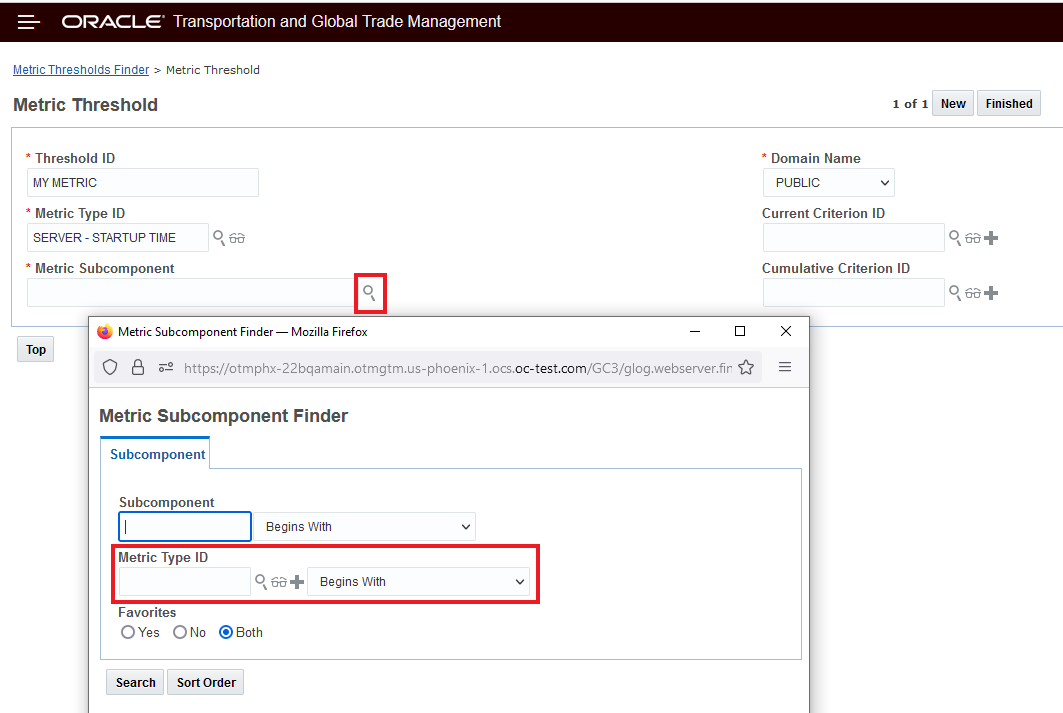
Threshold Metric Subcomponent Search - Option to Limit Search by Metric Type ID
The option to use autocomplete to select the Metric Subcomponent - while good from a time saving perspective - does not limit the autocomplete list by the selected Metric Type - so a miss-match between the selected Metric Type and the Metric Subcomponent is possible. In the example below, Restart is the correct selection.
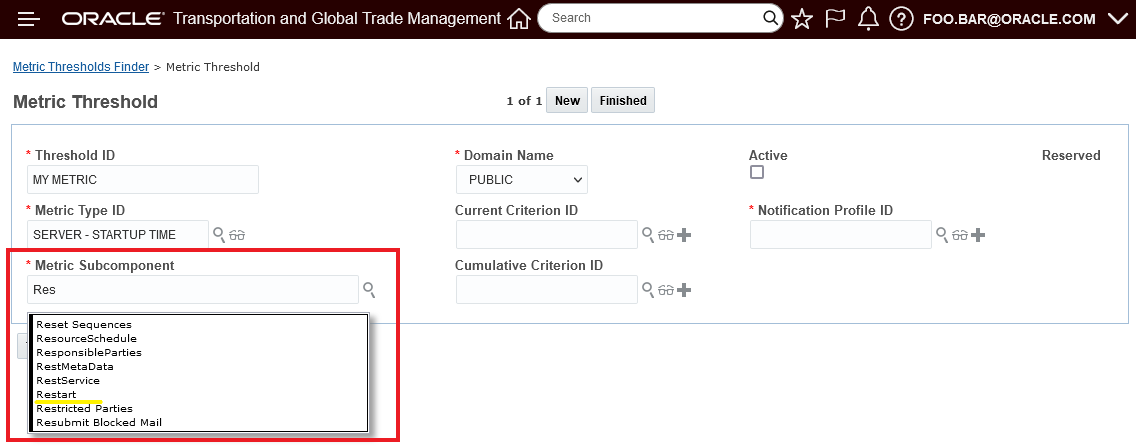
Threshold Metric Subcomponent Autocomplete
This feature will helps eliminate Metric Subcomponent typos by providing access to the list of available Metric Subcomponents using either a finder or auto-complete.
Steps to Enable
You don't need to do anything to enable this feature.
Limit the Collect Diagnostic Log Frequency
This optional feature sets a time limit for how frequently the Collect Diagnostic Logs can be run. The Collect Diagnostic Logs process can significantly impact performance when collecting heap dumps, JRA recordings or thread dumps. This feature sets the Collect Diagnostics Logs run frequency to five minutes.
In the example below - a threshold and notification have been setup, when the defined threshold is exceeded diagnostics logs are automatically collected and an email notification is sent. In the first email below the threshold was exceeded and the diagnostics have been collected and are available in the archive specified.
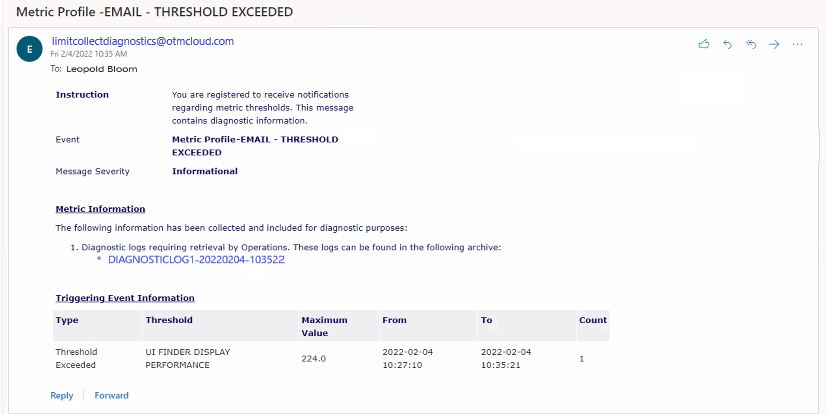
Threshold Exceeded - Collect Diagnostic Logs Run
The email below provides notification that the defined threshold was exceeded - but in this case diagnostic logs were not collected since the threshold was exceeded before the limit for the Collect Diagnostic Log was reached - in this case the next run of Collect Diagnostics cannot happen until 2022-02-04 10:40:22.
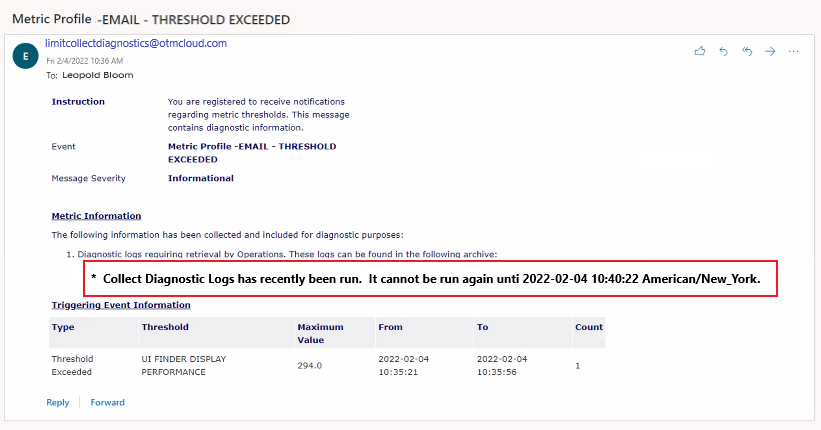
Collect Diagnostics Frequency Limit Example
In the example below, an attempt was made to run the Collect Diagnostic Log manually multiple times within the five minute limit - the error indicates when the timer expirers and the Collect Diagnostic Log can be run again.
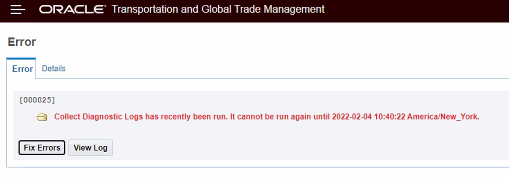
Limit Collect Diagnostic Log Frequency UI Error
Improves the stability of your system by limiting the frequency allowed for collecting diagnostics.
Steps to Enable
You don't need to do anything to enable this feature.
Tips And Considerations
While the manager for these features refers to them as "optional" - each of these features will become mandatory when the Optional Until update is released. The optional aspect of these features refers to the period of time where there is an opportunity to Opt In/Opt Out of enabling the feature. During this "optional" period - the time between when the feature is released and the release prior to the Optional Until release - the request/desire/intention is for you to enable the feature(s) for testing purposes so that the transition to mandatory, as of the Optional Until release, is uneventful.
This page is accessed via Configuration and Administration > Property Management > Optional Features.
NOTE: Only the DBA.ADMIN user can access and use the Optional Features page.
Use Domain Default from Address
This Optional Feature, when enabled will allow you to configure and use a domain level default From address for your outgoing emails.
Provides usability improvements for defining the default From email address used by the system.
Steps to Enable
You don't need to do anything to enable this feature.
Support REST SEquipment Reference
This Optional Feature enhances the 'sEquipments' root resource providing support for update and delete, but not create. The 'sEquipments' as a child resource of the 'shipments' resource now provides the option of showing the full sEquipments structure. The optional feature SUPPORT REST SEQUIPMENT REFERENCE controls whether the full sEquipments structure is shown or not.
Capabilities added:
- 'sEquipments' as root resource supporting update and delete.
- Expand 'sEquipments' child resource of 'shipments' resource to show full sEquipments structure:
- 'seals' - S_EQUIPMENT_SEAL
- 'attributes' - S_EQUIPMENT_ATTRIBUTE
- 'statuses' - S_EQUIPMENT_STATUS
- Optional Feature - SUPPORT REST SEQUIPMENT REFERENCE - controls whether to show the new structure or retain the original structure.
This feature allows Shipment Equipment to appear as a REST referenced resource.
Steps to Enable
You don't need to do anything to enable this feature.
Tips And Considerations
While the manager for these features refers to them as "optional" - each of these features will become mandatory when the Optional Until update is released. The optional aspect of these features refers to the period of time where there is an opportunity to Opt In/Opt Out of enabling the feature. During this "optional" period - the time between when the feature is released and the release prior to the Optional Until release - the request/desire/intention is for you to enable the feature(s) for testing purposes so that the transition to mandatory, as of the Optional Until release, is uneventful.
This page is accessed via Configuration and Administration > Property Management > Optional Features.
NOTE: Only the DBA.ADMIN user can access and use the Optional Features page.
With this Optional Feature, REST API DEFINITION CACHE, when enabled, an additional cache is maintained for a number of frequently used REST API resource definitions.
Improves the operation of the system by adding an additional cache for frequently used API resource definitions.
Steps to Enable
You don't need to do anything to enable this feature.
Tips And Considerations
While the manager for these features refers to them as "optional" - each of these features will become mandatory when the Optional Until update is released. The optional aspect of these features refers to the period of time where there is an opportunity to Opt In/Opt Out of enabling the feature. During this "optional" period - the time between when the feature is released and the release prior to the Optional Until release - the request/desire/intention is for you to enable the feature(s) for testing purposes so that the transition to mandatory, as of the Optional Until release, is uneventful.
This page is accessed via Configuration and Administration > Property Management > Optional Features.
NOTE: Only the DBA.ADMIN user can access and use the Optional Features page.
Open API Schema for REST API Resources
This feature provides you with external access to GET each resource specific schema description at runtime, where there is one metadata resource for each root resource.
The URL pattern to retrieve (GET only) a schema for example resource shipments, would be:
.../logisticsRestApi/resources/v2/metadata-catalog/shipments
The example response below (returned as "application/json" Content Type) will have the high-level structure:
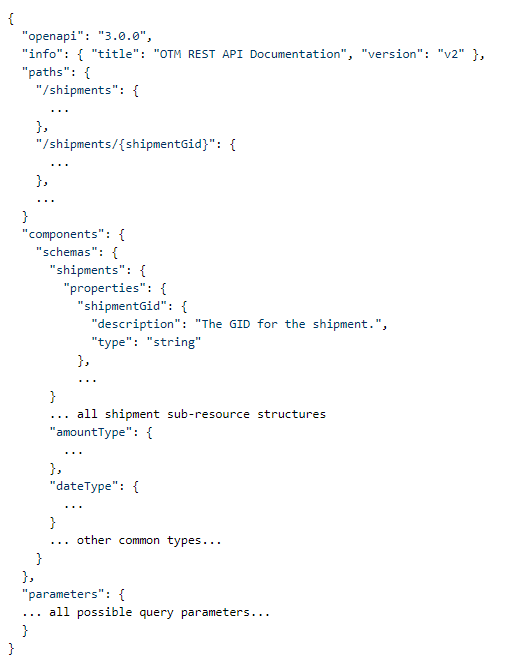
Example Response
NOTE: The common types - "amountType", "dateType" etc. - will appear in each schema.
The OpenAPI Schema provides you with run-time access to the resource schema - which provides you with more immediate access to the REST API schema information.
Steps to Enable
You don't need to do anything to enable this feature.
Key Resources
- Refer to the online documentation for how the runtime API can be used.
Historical Metrics - Count Based Metric Types and Components Added for REST
This feature extends the historical metric types and components available to provide you with count related metrics for REST services. Metric Types supported include SYNC REST and ASYNC REST for Read Counts, Create Counts and Delete Counts as well as ASYNC REST for Batch Counts and REST Custom Action Counts.
You can use these metrics and components to capture key REST count related statistics over time.
Newly Added Metric Component, Metric Type and Metric Subcomponents:
| Metric Component ID |
Metric Type ID |
Metric Subcomponent |
| REST CUSTOM ACTIONS |
REST CUSTOM - ACTIONS COUNT |
advancedQuery |
| SYNC REST RESOURCES |
SYNC REST - READ COUNT |
askOtmSavedQueries |
| REST CUSTOM ACTIONS |
REST CUSTOM - ACTIONS COUNT |
bulkQueries |
| SYNC REST RESOURCES |
SYNC REST - READ COUNT |
countryCodes |
| SYNC REST RESOURCES |
SYNC REST - READ COUNT |
currencies |
| SYNC REST RESOURCES |
SYNC REST - READ COUNT |
customsDeclarations |
| SYNC REST RESOURCES |
SYNC REST - CREATE COUNT |
documents |
| SYNC REST RESOURCES |
SYNC REST - READ COUNT |
documents |
| SYNC REST RESOURCES |
SYNC REST - READ COUNT |
incoterms |
| ASYNC REST RESOURCES |
ASYNC REST - CREATE COUNT |
items |
| ASYNC REST RESOURCES |
ASYNC REST - UPDATE COUNT |
items |
| SYNC REST RESOURCES |
SYNC REST - CREATE COUNT |
items |
| SYNC REST RESOURCES |
SYNC REST - READ COUNT |
items |
| SYNC REST RESOURCES |
SYNC REST - UPDATE COUNT |
items |
| REST CUSTOM ACTIONS |
REST CUSTOM - ACTIONS COUNT |
locations |
| SYNC REST RESOURCES |
SYNC REST - READ COUNT |
locations |
| REST CUSTOM ACTIONS |
REST CUSTOM - ACTIONS COUNT |
locations :: bulkQueries |
| SYNC REST RESOURCES |
SYNC REST - READ COUNT |
logicConfigurations |
| SYNC REST RESOURCES |
SYNC REST - READ COUNT |
orderBases |
| ASYNC REST RESOURCES |
ASYNC REST - CREATE COUNT |
orderReleases |
| SYNC REST RESOURCES |
SYNC REST - CREATE COUNT |
orderReleases |
| SYNC REST RESOURCES |
SYNC REST - READ COUNT |
orderReleases |
| SYNC REST RESOURCES |
SYNC REST - READ COUNT |
productClassificationCodes |
| SYNC REST RESOURCES |
SYNC REST - READ COUNT |
productClassificationTypes |
| SYNC REST RESOURCES |
SYNC REST - READ COUNT |
quickCodes |
| SYNC REST RESOURCES |
SYNC REST - READ COUNT |
quickEvents |
| REST CUSTOM ACTIONS |
REST CUSTOM - ACTIONS COUNT |
quotes |
| REST CUSTOM ACTIONS |
REST CUSTOM - ACTIONS COUNT |
quotes :: advancedQuery |
| REST CUSTOM ACTIONS |
REST CUSTOM - ACTIONS COUNT |
savedQueries |
| SYNC REST RESOURCES |
SYNC REST - READ COUNT |
savedQueries |
| SYNC REST RESOURCES |
SYNC REST - READ COUNT |
sellShipments |
| SYNC REST RESOURCES |
SYNC REST - READ COUNT |
sEquipments |
| ASYNC REST RESOURCES |
ASYNC REST - UPDATE COUNT |
serviceProviders |
| SYNC REST RESOURCES |
SYNC REST - READ COUNT |
serviceProviders |
| REST CUSTOM ACTIONS |
REST CUSTOM - ACTIONS COUNT |
shipments |
| SYNC REST RESOURCES |
SYNC REST - READ COUNT |
shipments |
| REST CUSTOM ACTIONS |
REST CUSTOM - ACTIONS COUNT |
shipments :: savedQueries |
| SYNC REST RESOURCES |
SYNC REST - READ COUNT |
timeZones |
| SYNC REST RESOURCES |
SYNC REST - CREATE COUNT |
trackingEvents |
| SYNC REST RESOURCES |
SYNC REST - READ COUNT |
transmissionReports |
| SYNC REST RESOURCES |
SYNC REST - READ COUNT |
transportModes |
Historical Metrics REST Count
Count Statistics below
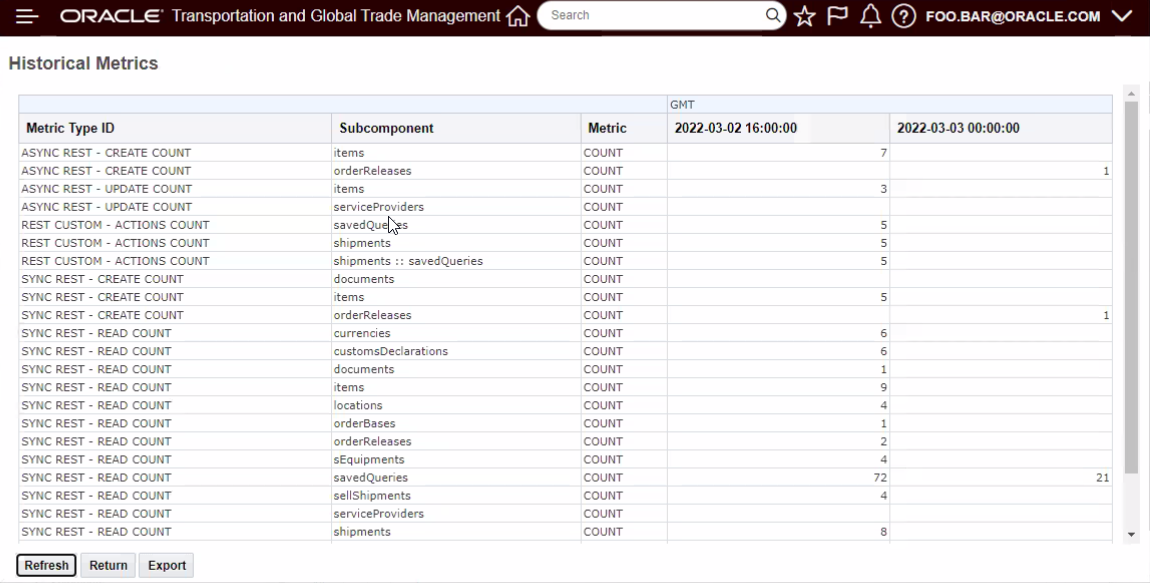
REST Count Statistics
This feature provides access to persisted metrics and statistics for your REST API activity.
Steps to Enable
You don't need to do anything to enable this feature.
Transportation Management (Base)
Ground Schedule Search by Stop Location Id
This feature extends the Ground Schedule Finder to include searching by Stop Location ID. You will find this feature useful in situations where you need to find all Ground Schedules that include a specific Stop Location.
As shown below, the Stop Location ID is now available on the Public Ground Schedule Finder.
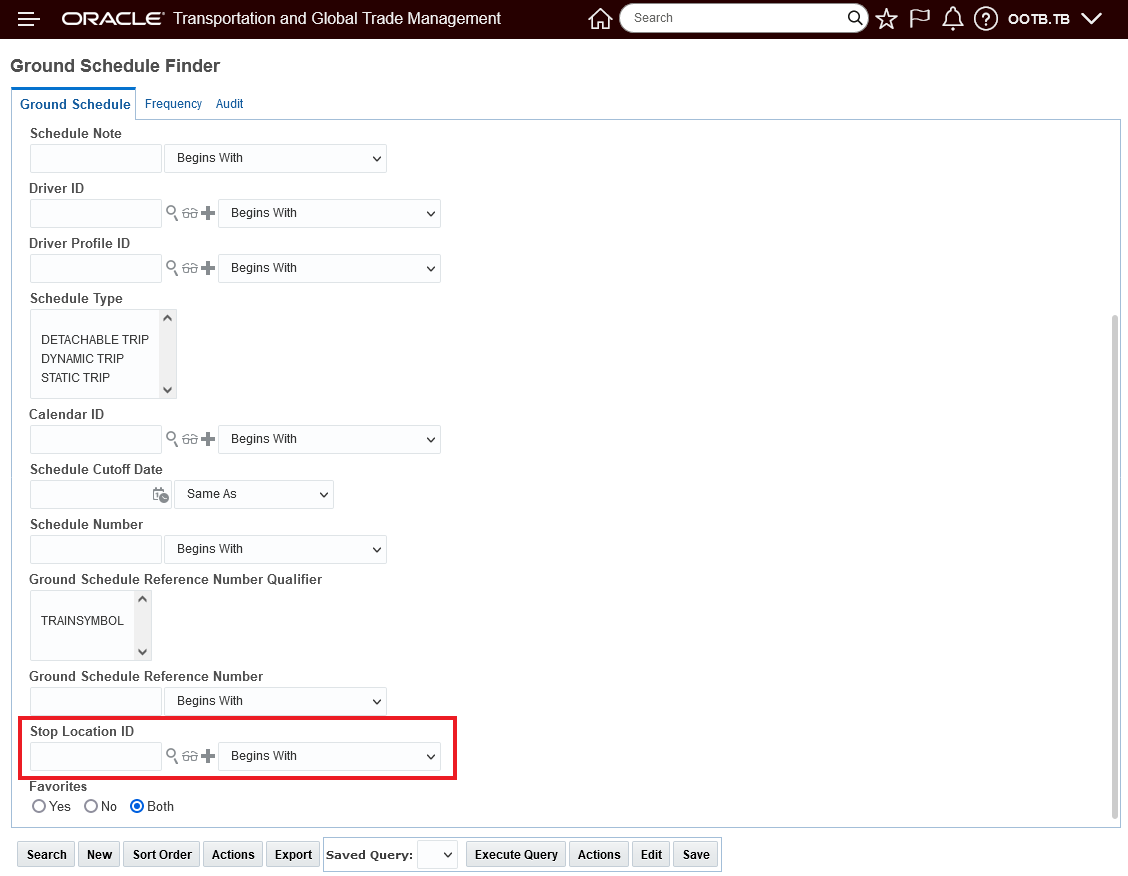
Public Ground Schedule Finder
An open search yields the following result.
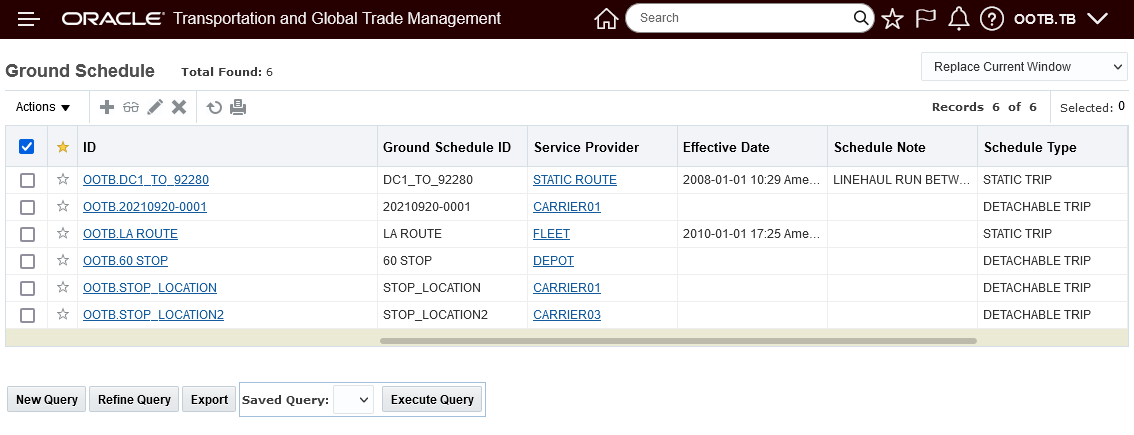
Open Search Stop Location ID not Specified
Specifying a Stop Location ID will now limit the results to only those Ground Schedules that include the Stop Location ID entered.
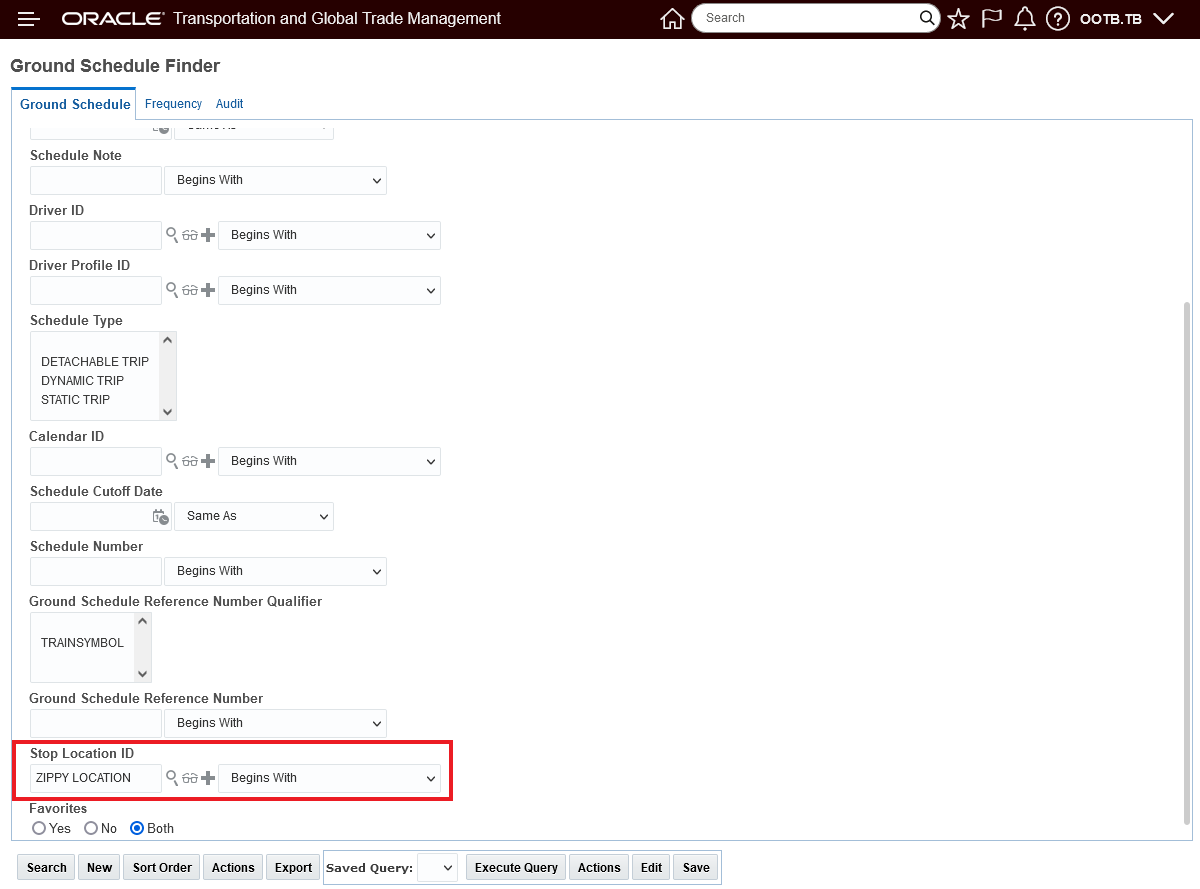
Stop Location Id
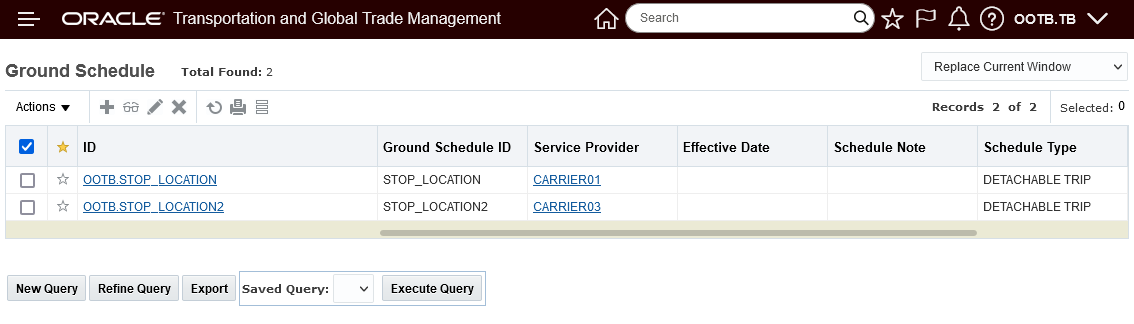
Result - Only Ground Schedules With the Specified Location Returned
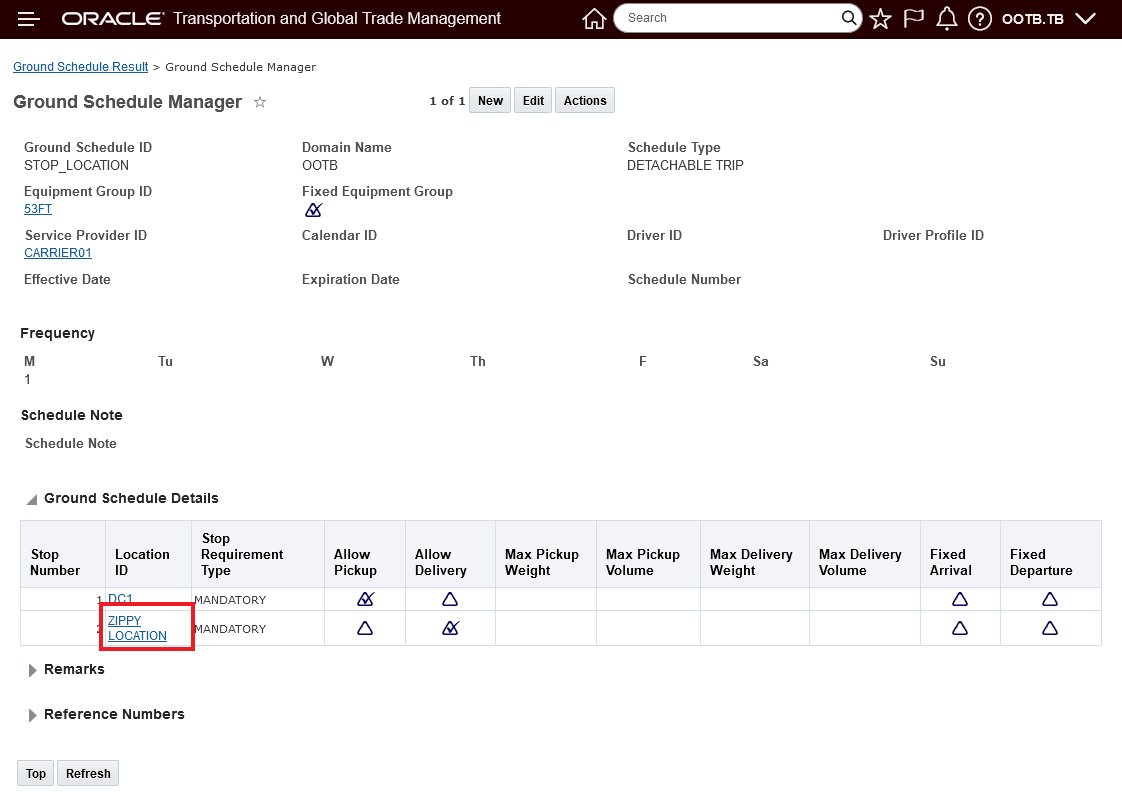
View to Stops
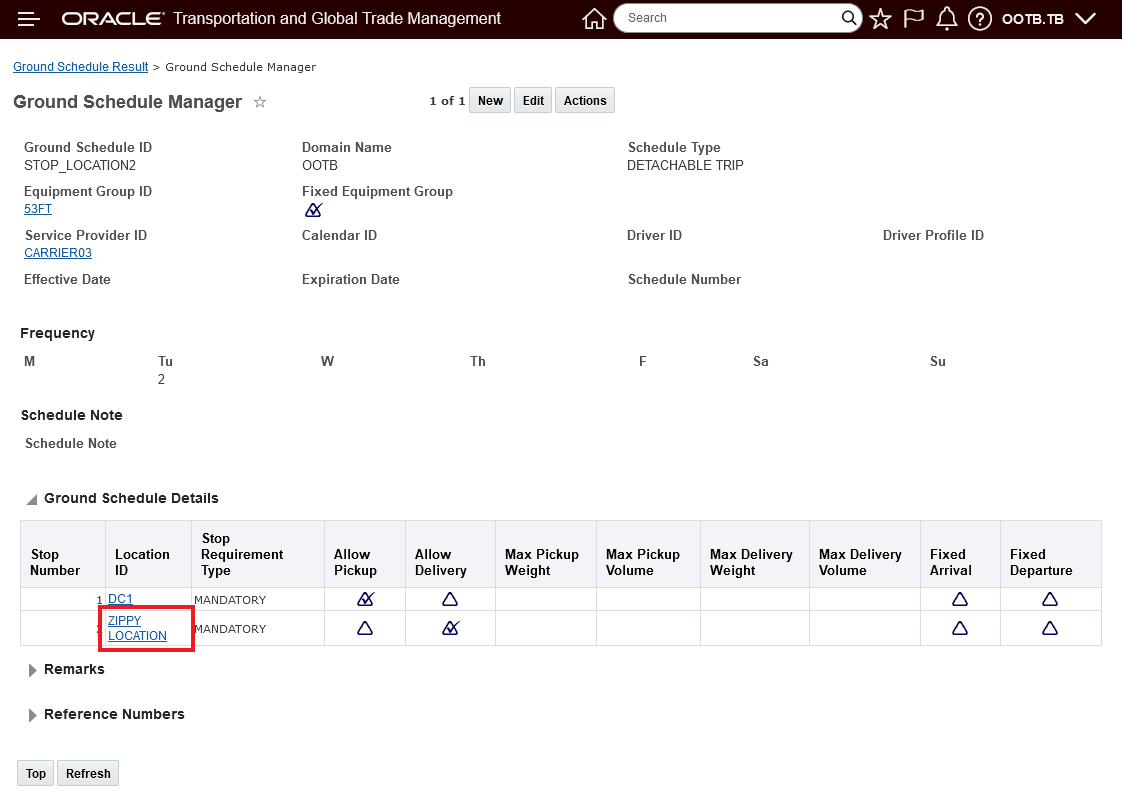
Ground Schedule Stop_Location2 with specified location
Provides you with an easy way to search for all the Grounds Schedules that include a specific Location Id as a stop,
Steps to Enable
You don't need to do anything to enable this feature.
Tips And Considerations
NOTE: If you have already configured a screen set for your Ground Schedule you will need to add the new Stop Location ID to your Search criteria for your configured Ground Schedule Screen Set.
Configuration and Administration > User Configuration > Screen Set Manager. Create or edit a record and go to the Search tab and add the Stop Location ID.
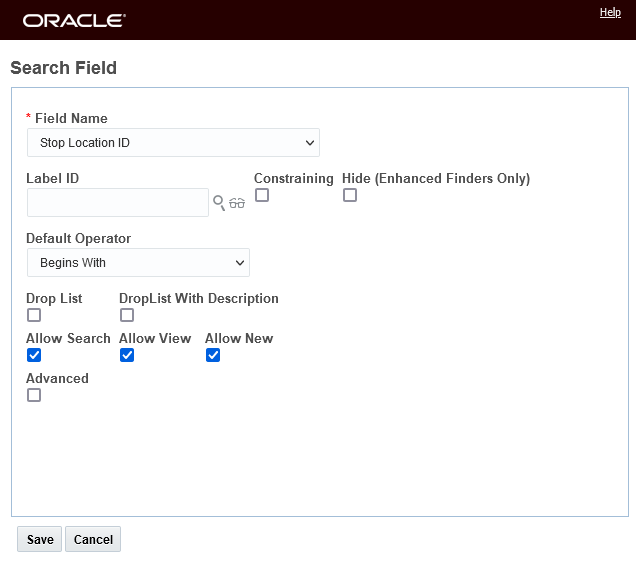
Add Stop Location ID to Screen Set
This feature provides you with a new Shipment Cost manager which, like the other shipment detail managers - stop and ship unit, will allow you to configure the manager layout (view and edit), do inline editing, mass update and incorporate the public or your configured Shipment Cost screenset into your workbench.
Access the Shipment Cost page via Shipment Management > Shipment Management > Shipment Cost.
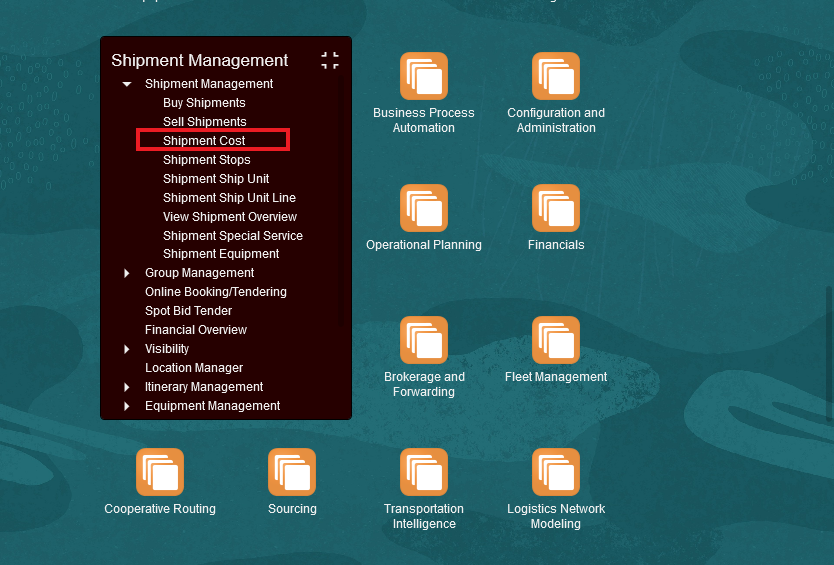
Shipment Cost Manager Springboard Access
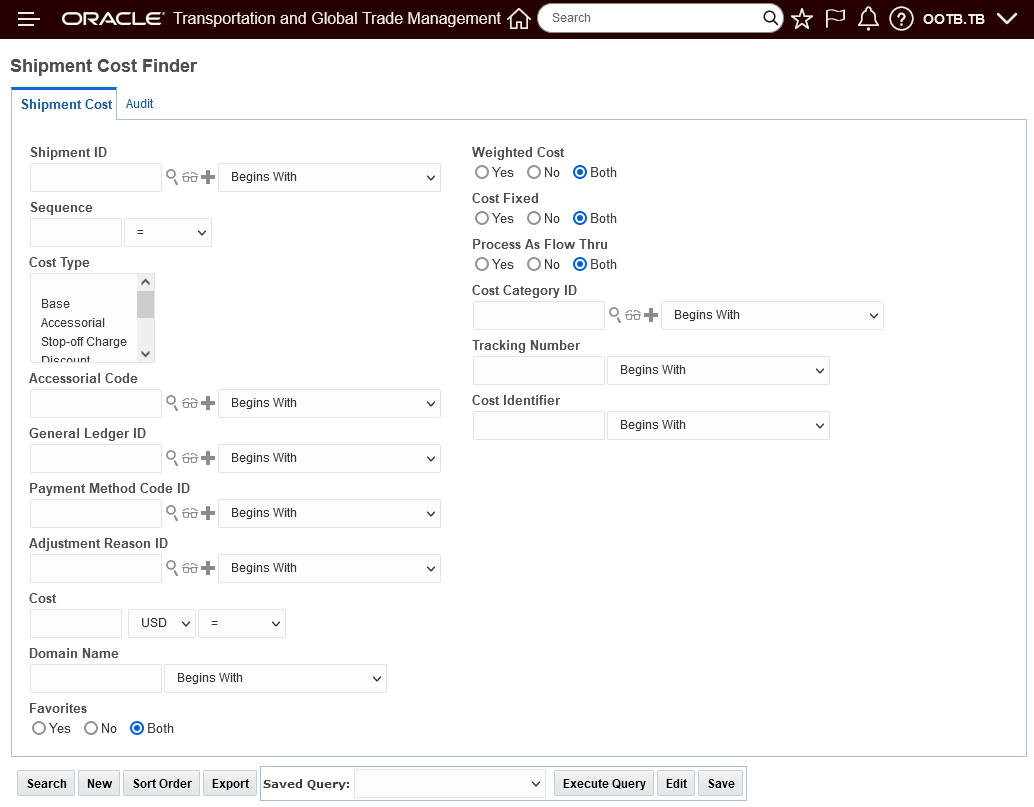
Shipment Cost Public Finder
In the example below - the Shipment Cost manager is used to show all the cost line details for one shipment (06764), the shipment has four accessorial cost lines and two base cost lines.
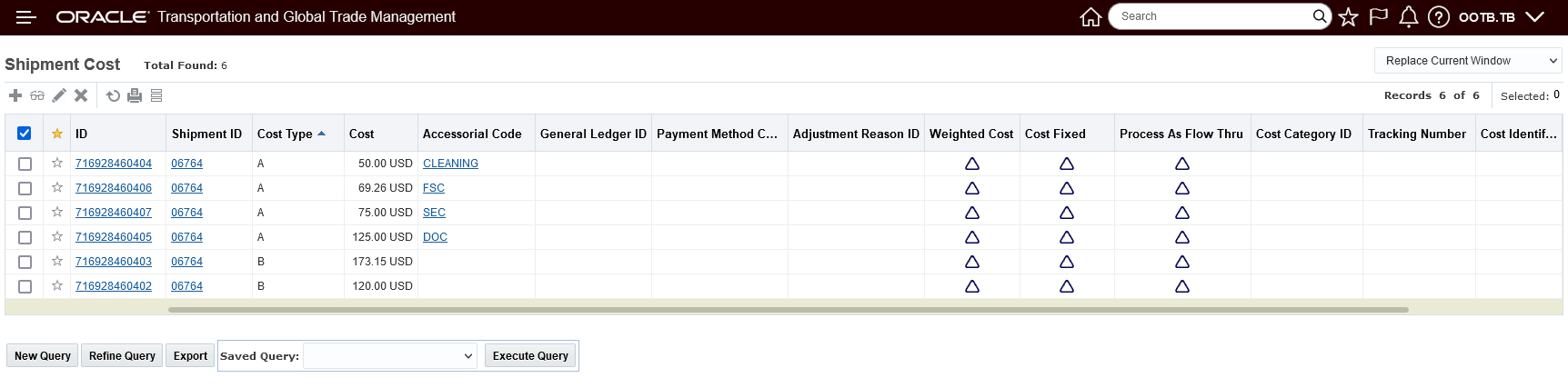
Shipment Cost Finder Results
The most beneficial use case for the new Shipment Cost manager is incorporating the Shipment Cost Screenset into a Workbench as shown below. Adding the Shipment Cost screenset to you workbench allows you to easily review the cost details of your shipments.
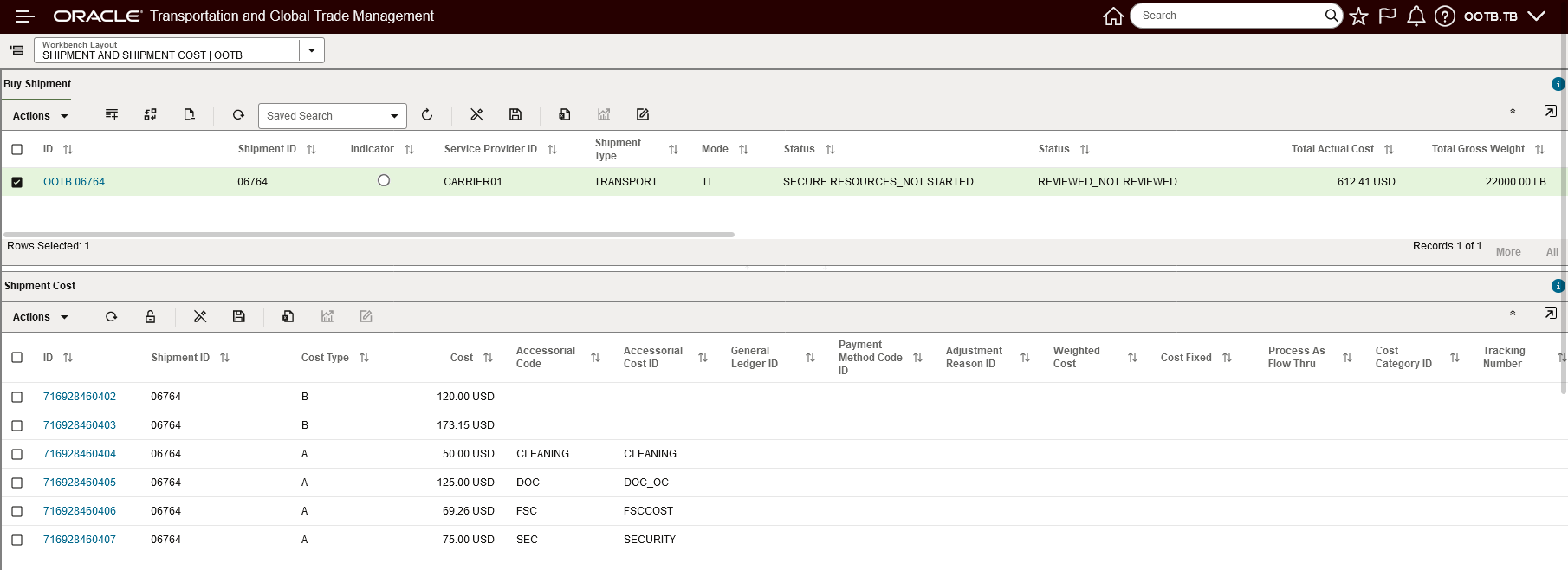
Shipment Cost In Workbench
In the example below, the Shipment Cost Screen set has been configured to allow for editing and mass update for a selected set of fields. In the example, the Payment Method Code will be updated for the three selected records using Mass Update.
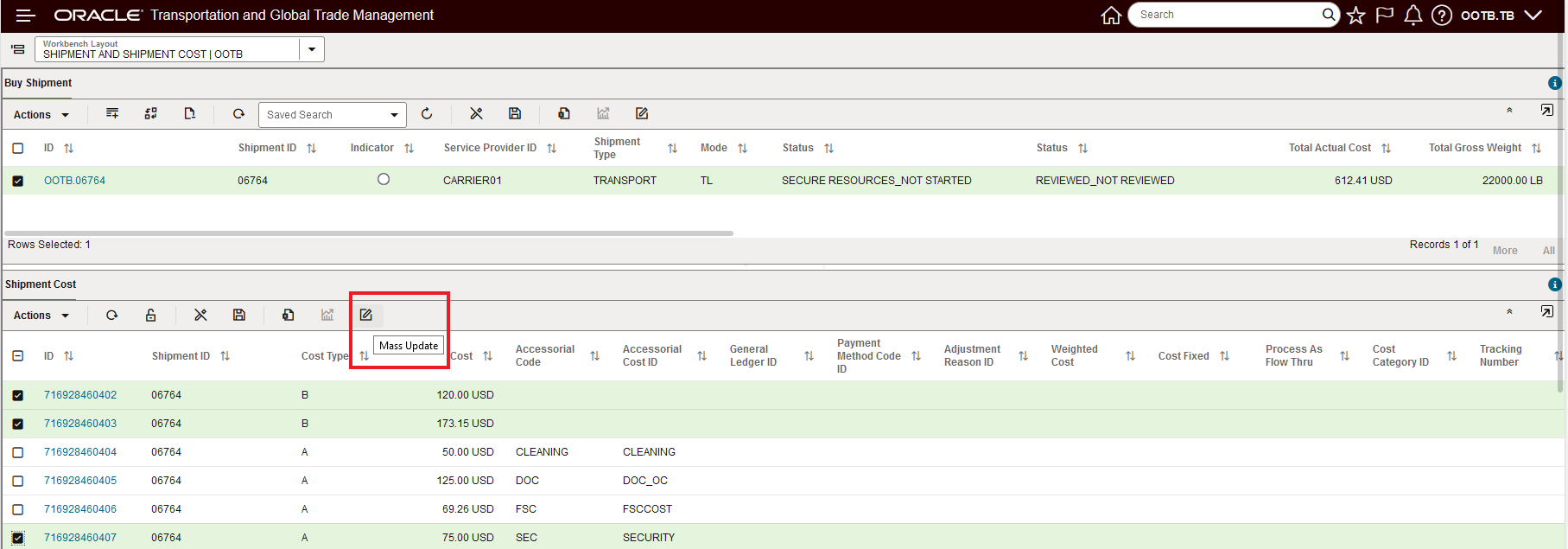
Mass Update
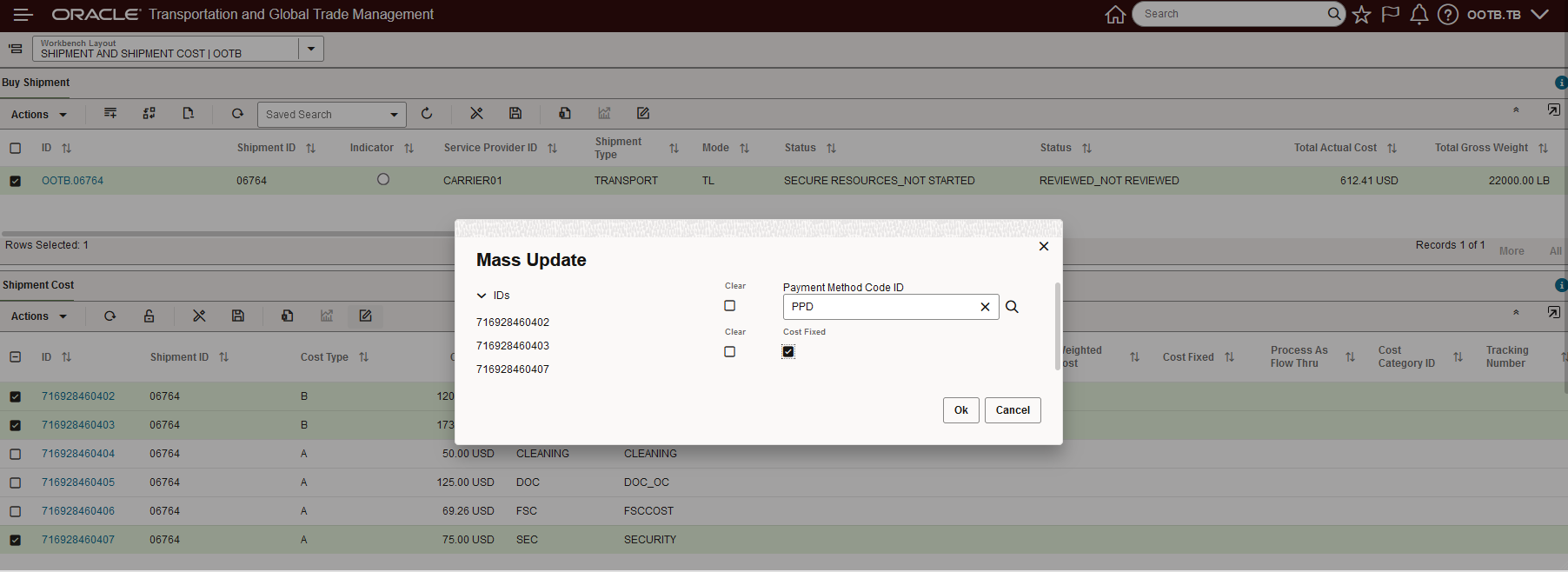
Mass Update Input for Payment Method Code and Cost Fixed
Mass update result for Payment Method Code and Cost Fixed.
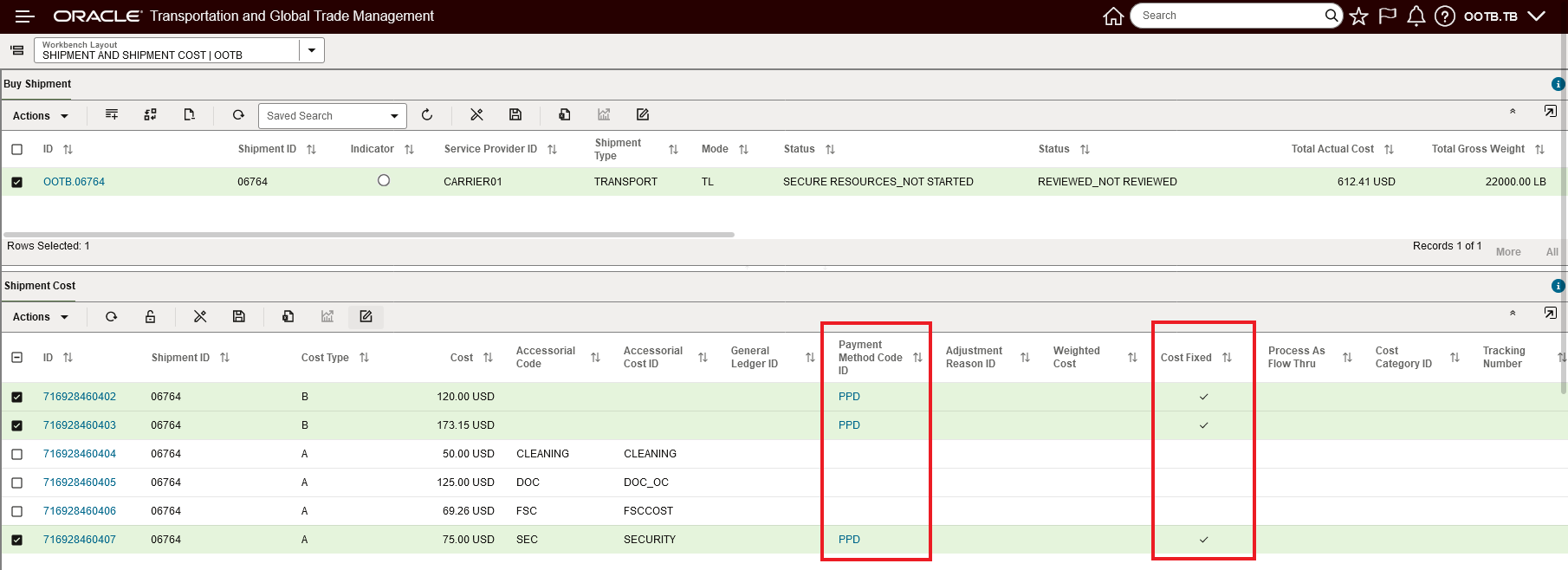
Mass Update Results
In the example below, Inline Edit is used to update all the Cost Fixed flags.
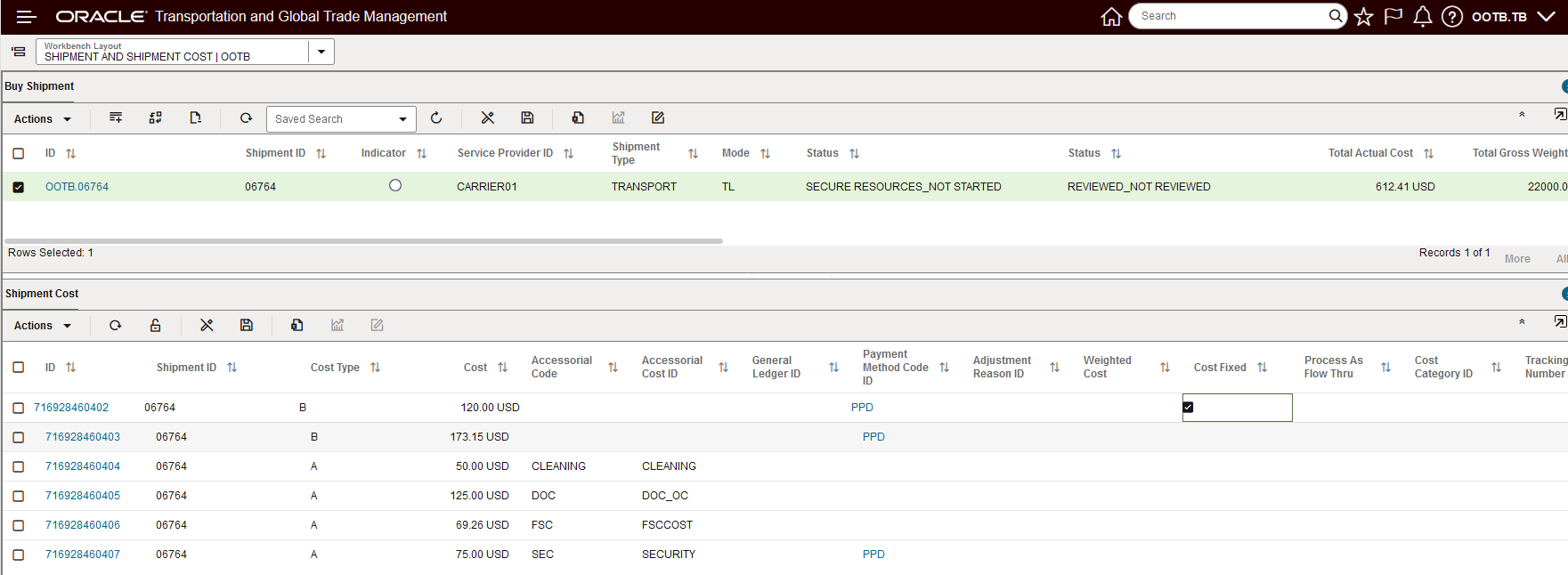
Inline edit
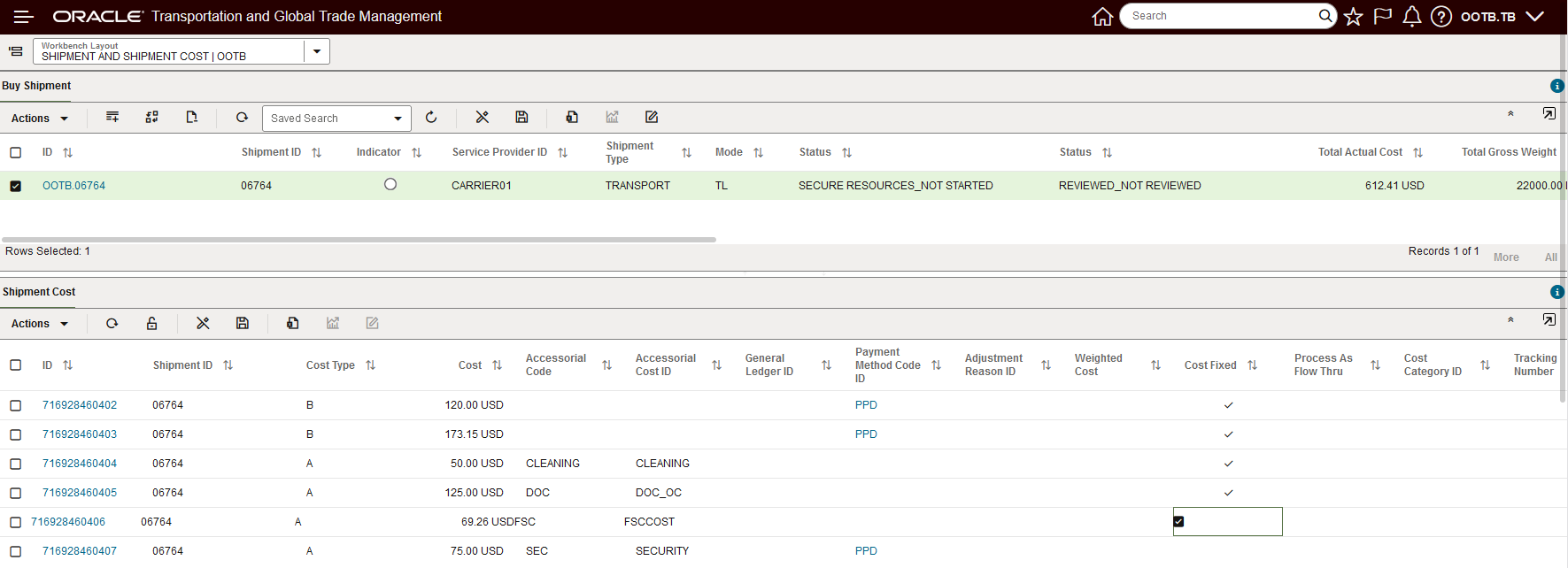
Inline edit change - Cost Fixed
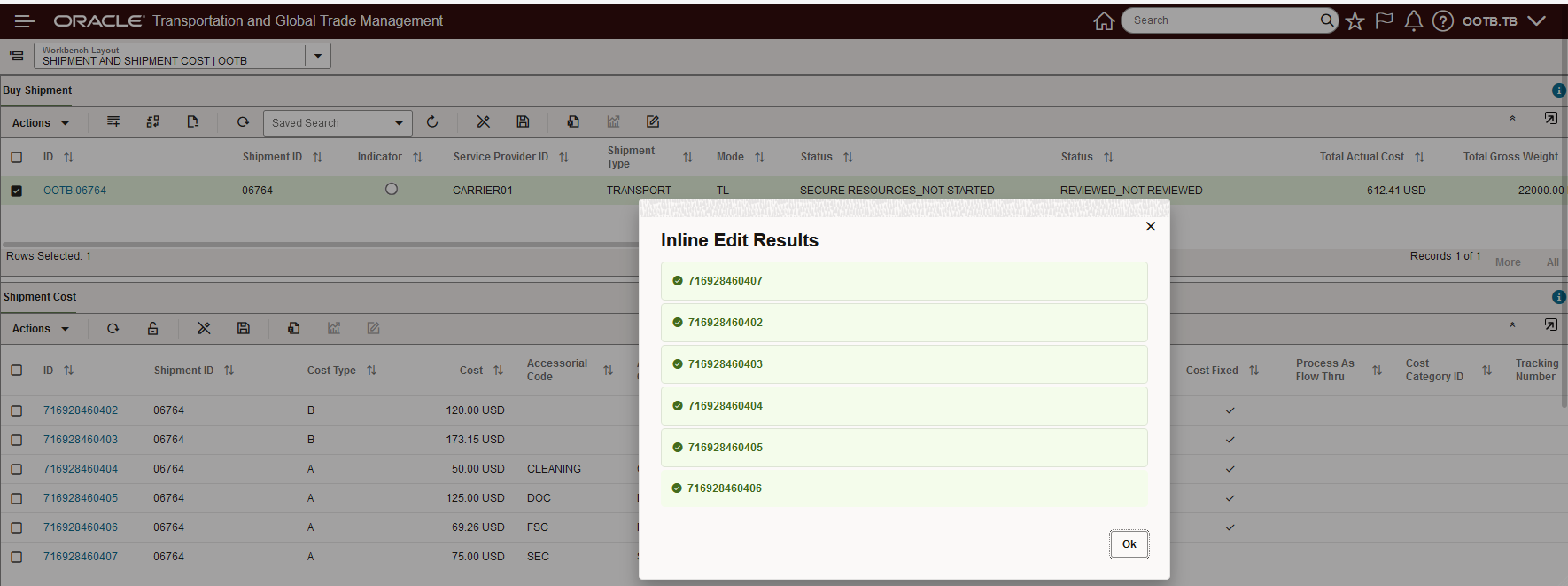
Inline Edit Save - All updated records changed
This feature provides you with more direct access and visibility to your shipment cost line information.
Steps to Enable
You don't need to do anything to enable this feature.
Tips And Considerations
The PUBLIC Screenset ID = SHIPMENT_COST
Allocate Vouchered Amount for Shipment Groups
This feature provides you, for your Shipment Group payment scenarios - the ability to allocate the vouchered amount for your shipment group vouchers to the related order releases and order release lines.
In the example below - the shipment group contains two shipments with one order release each.
The shipment group contains two shipment with a cost of 400 USD each for a shipment group total cost of 800 USD.
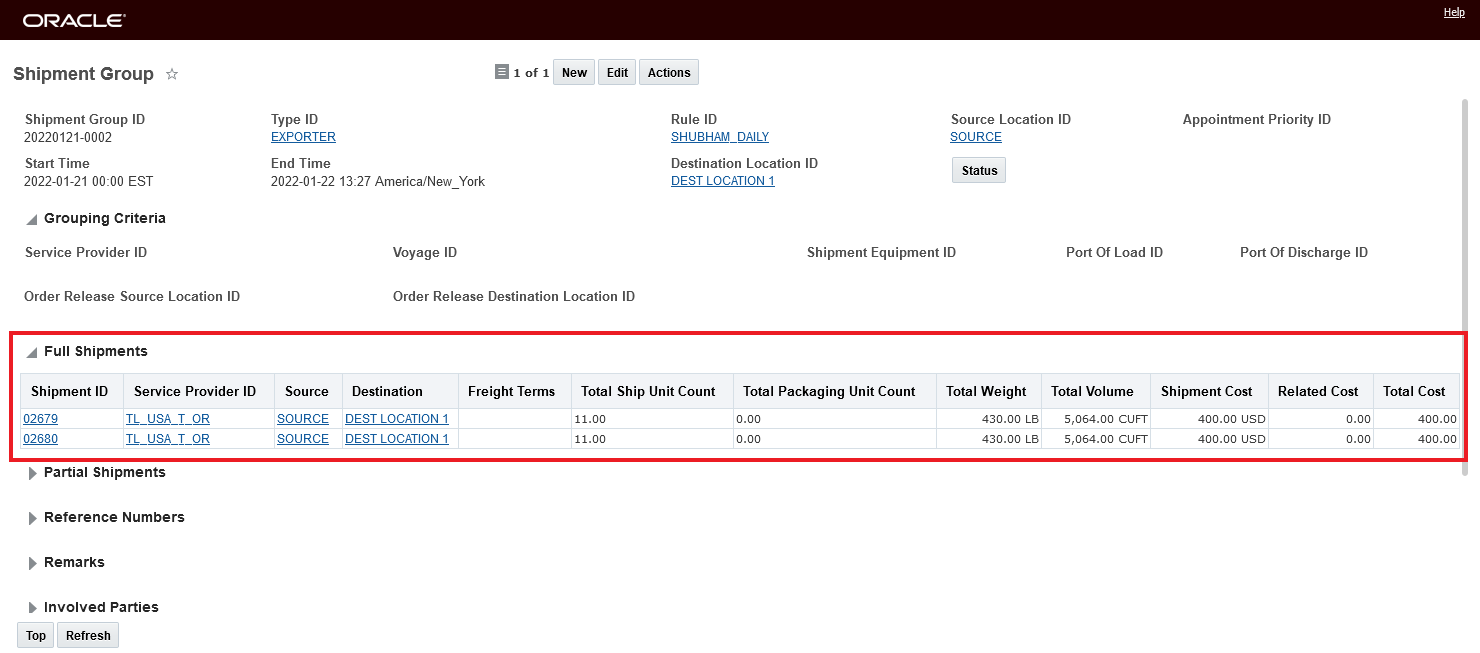
Shipment Group - Two Shipments
Below is the the invoice that was matched to the Shipment Group with the amount due of 800 USD.
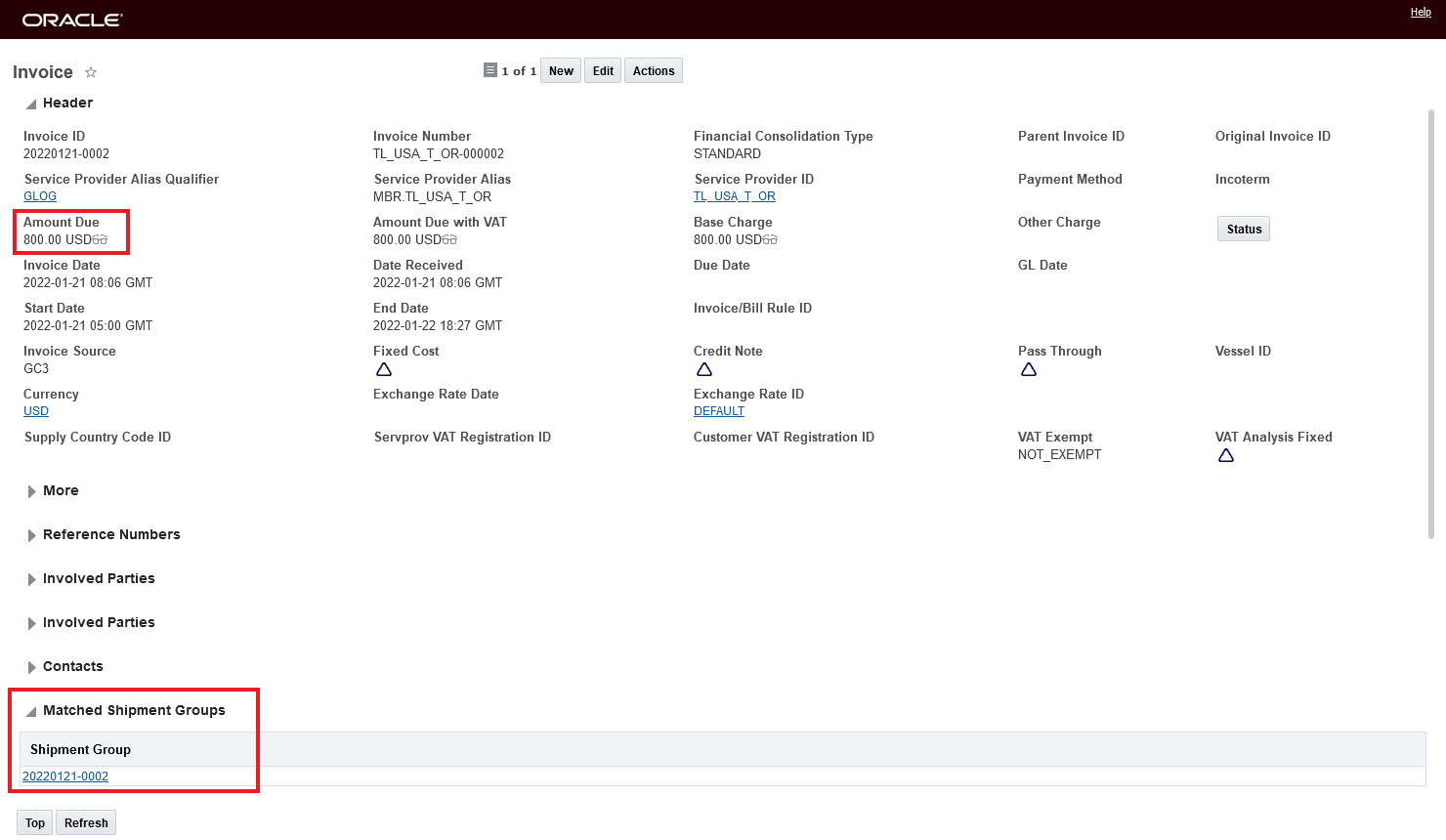
Shipment Group Invoice
The Voucher generated for payment for the Invoice is below.
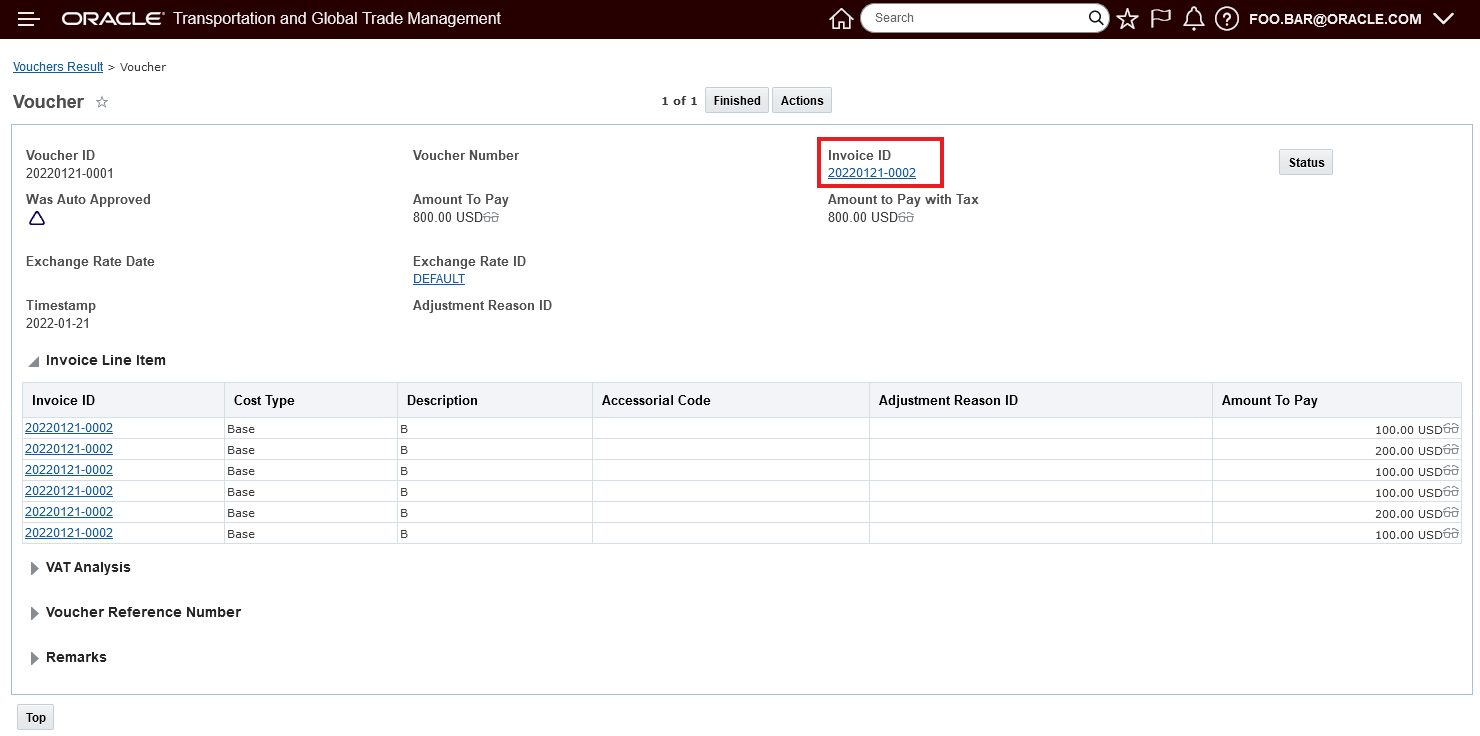
Voucher
Running the action Allocate Voucher against the Voucher will now allocate the vouchered amount to the order releases and order release lines.
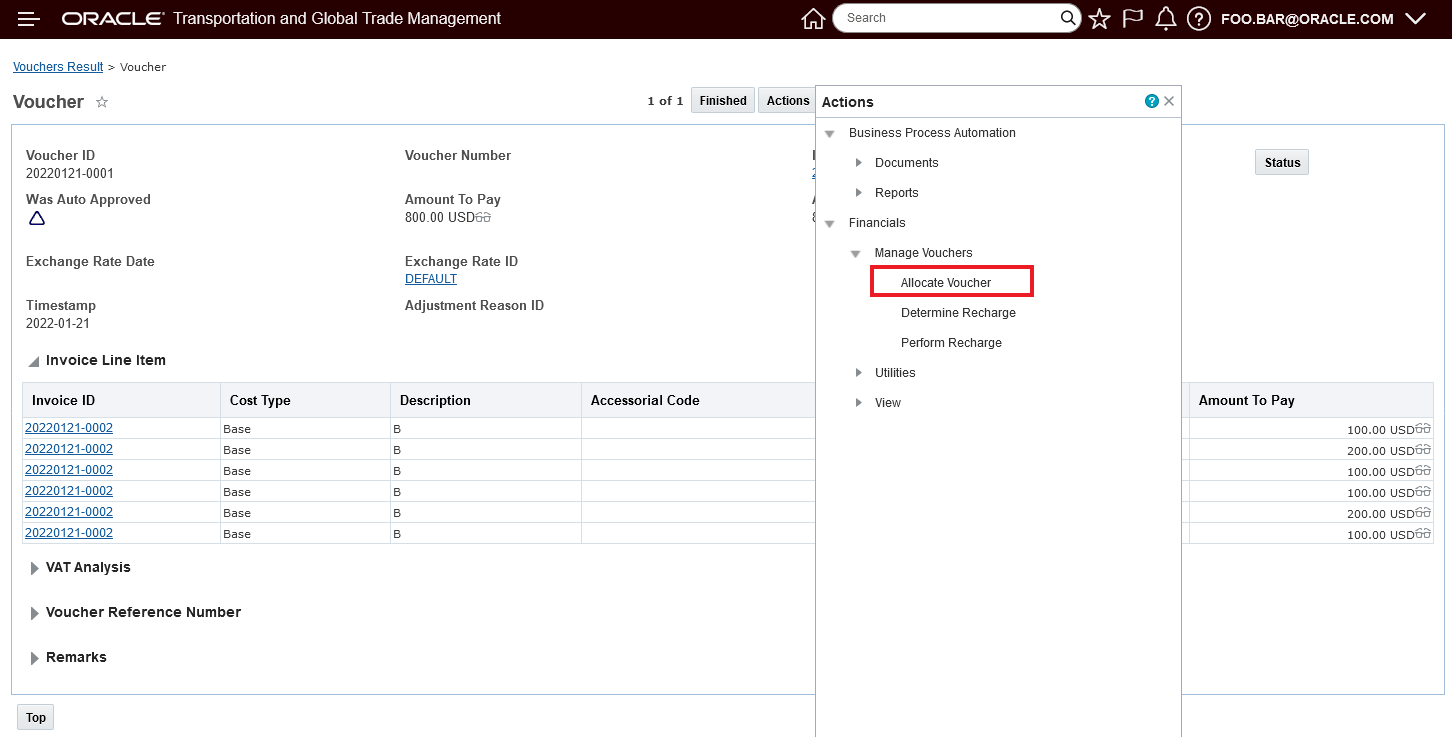
Allocate Voucher Amount
The amount from the Voucher is now correctly allocated to the Order Releases on the Shipments contained in the Shipment Group. In this example, the allocation was not done to the order release line level.
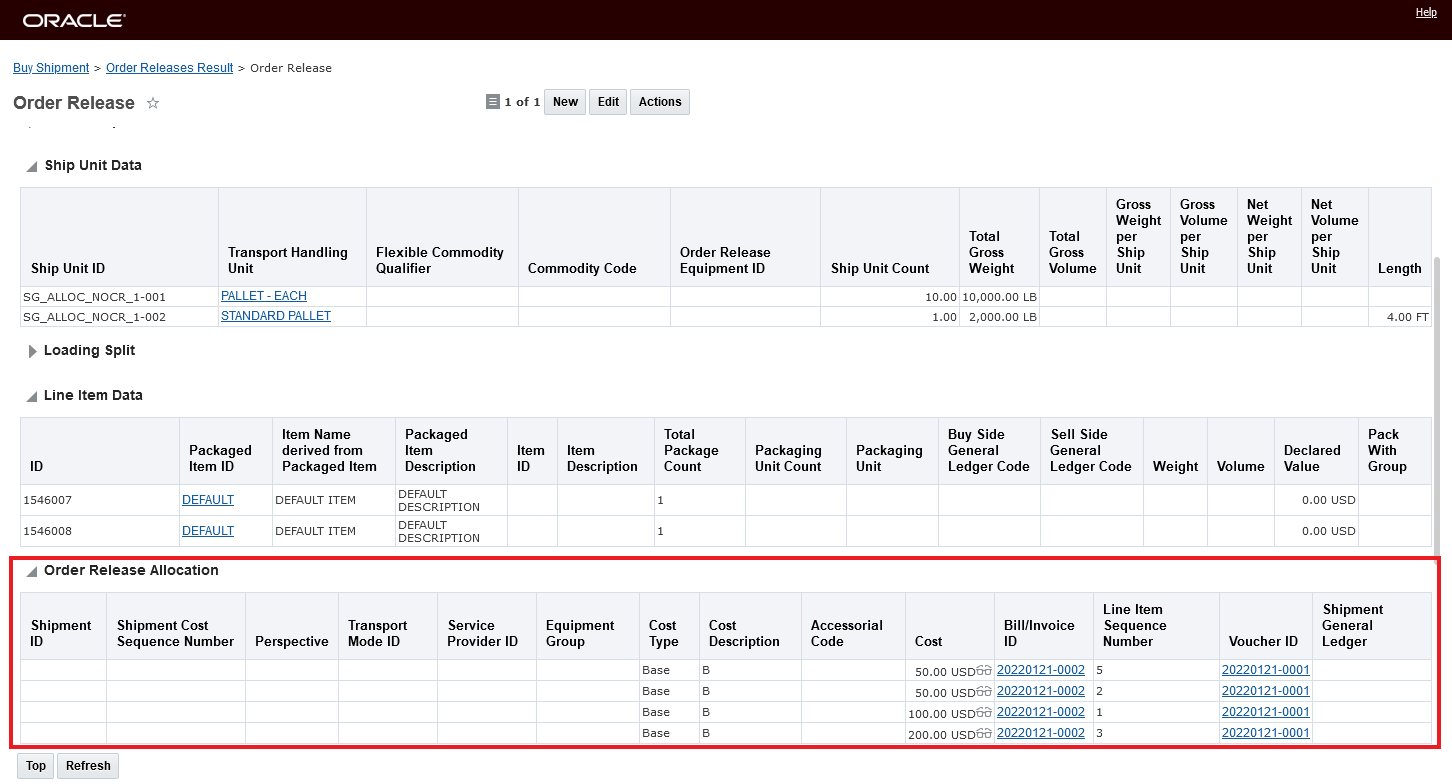
Voucher Allocated Amount for Order Release 1
Voucher allocated amount for the second order release.
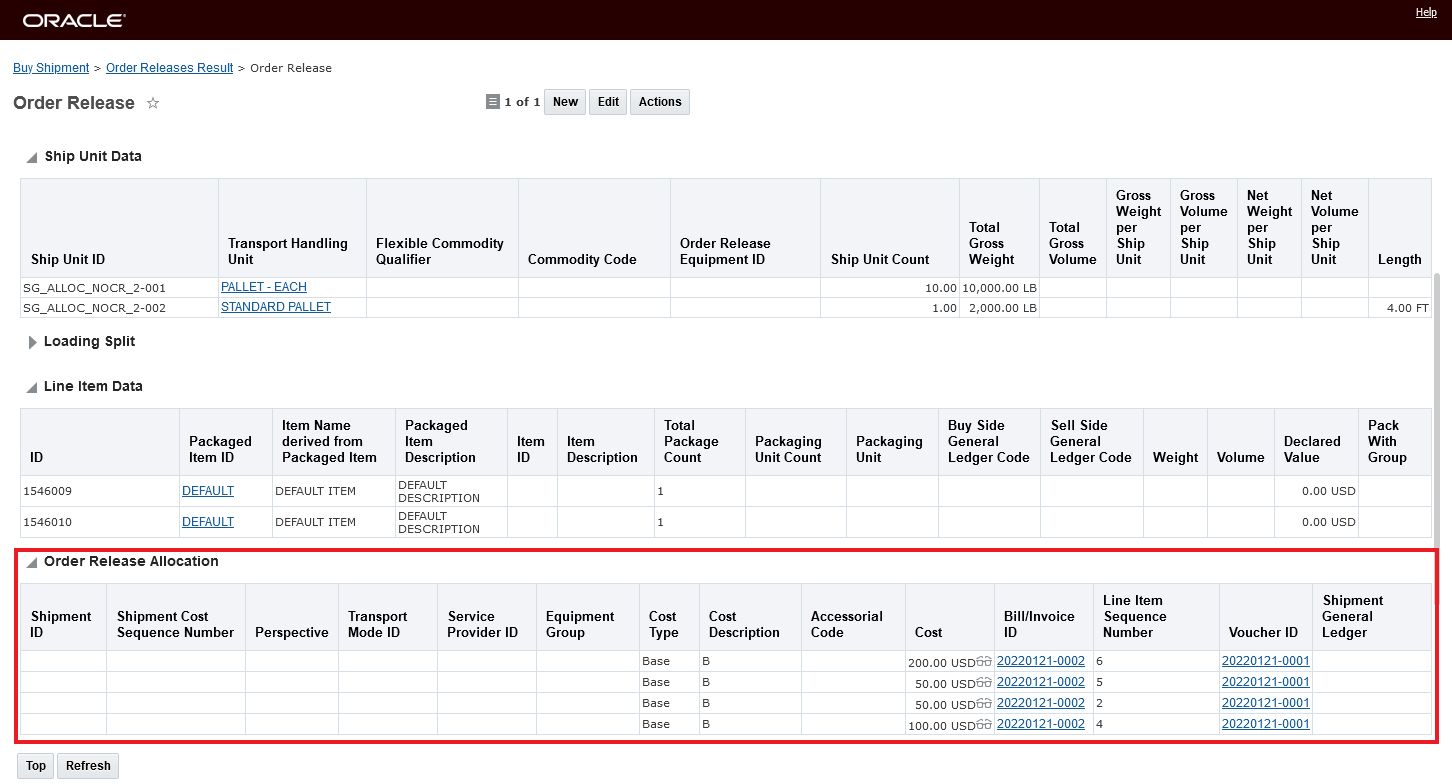
Voucher Allocated Amount for Order Release 2
Provides you with the option of performing allocation for your Shipment Group payment scenarios for the Vouchered amount.
Steps to Enable
You don't need to do anything to enable this feature.
Tips And Considerations
NOTE: Accruals are not supported.
Shipment Group Agent Action - Generate Invoice
This feature provides you with a Generate Invoice Agent Action for Shipment Groups that will allow you to automate the generation of invoices for your Shipment Groups.

Shipment Group Generate Invoice Agent Action
In the example below - an agent has been configured using the Shipment Group agent action Generate Invoice - the agent is configured to be triggered when the Shipment Group is modified. The configured Generate Invoice Agent Action is using an Invoice/Bill Rule that will generate an invoice for each of the Service Providers in the Shipment Group.
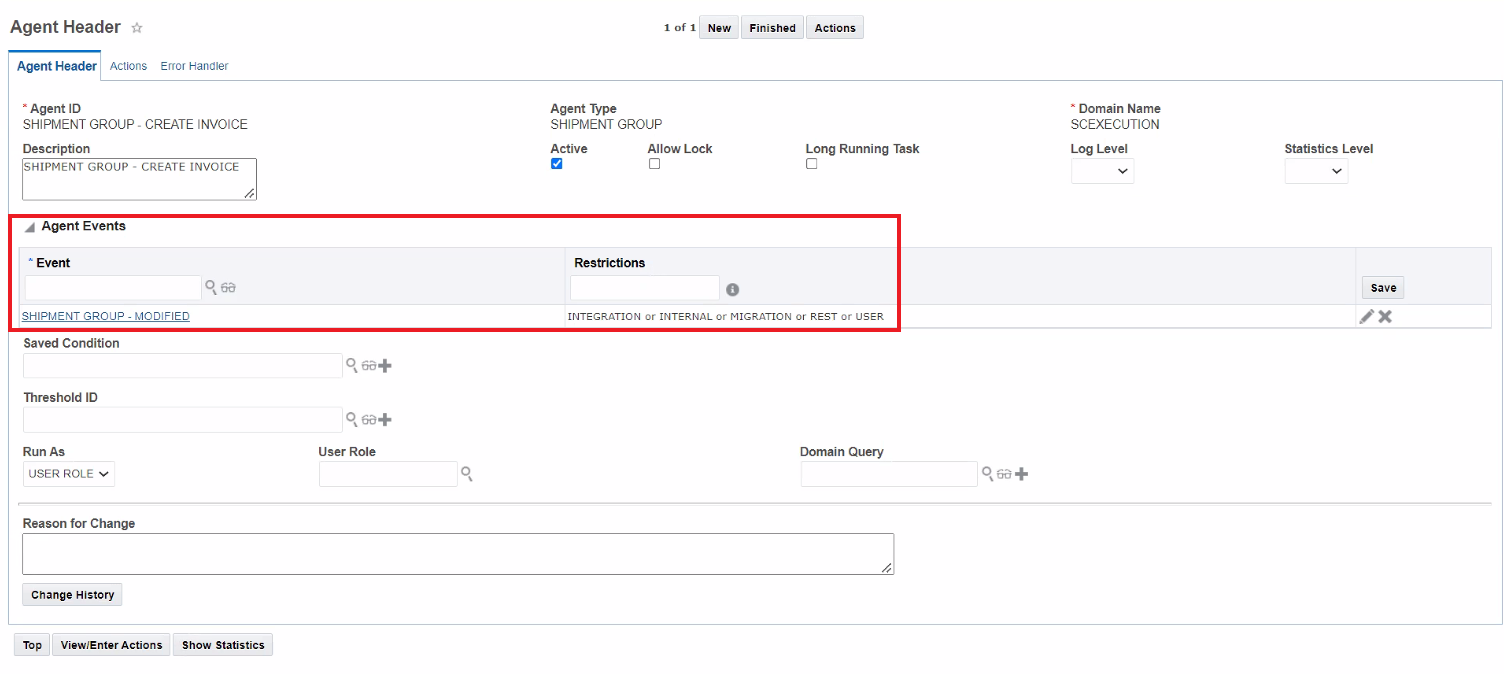
Agent Header - Triggered on Shipment Group Modify
The Generate Invoice Agent Action is configured to match to the Invoice/Bill Rule (INV-CREATION-BY-SP) that will generate an invoice by Service Provider.
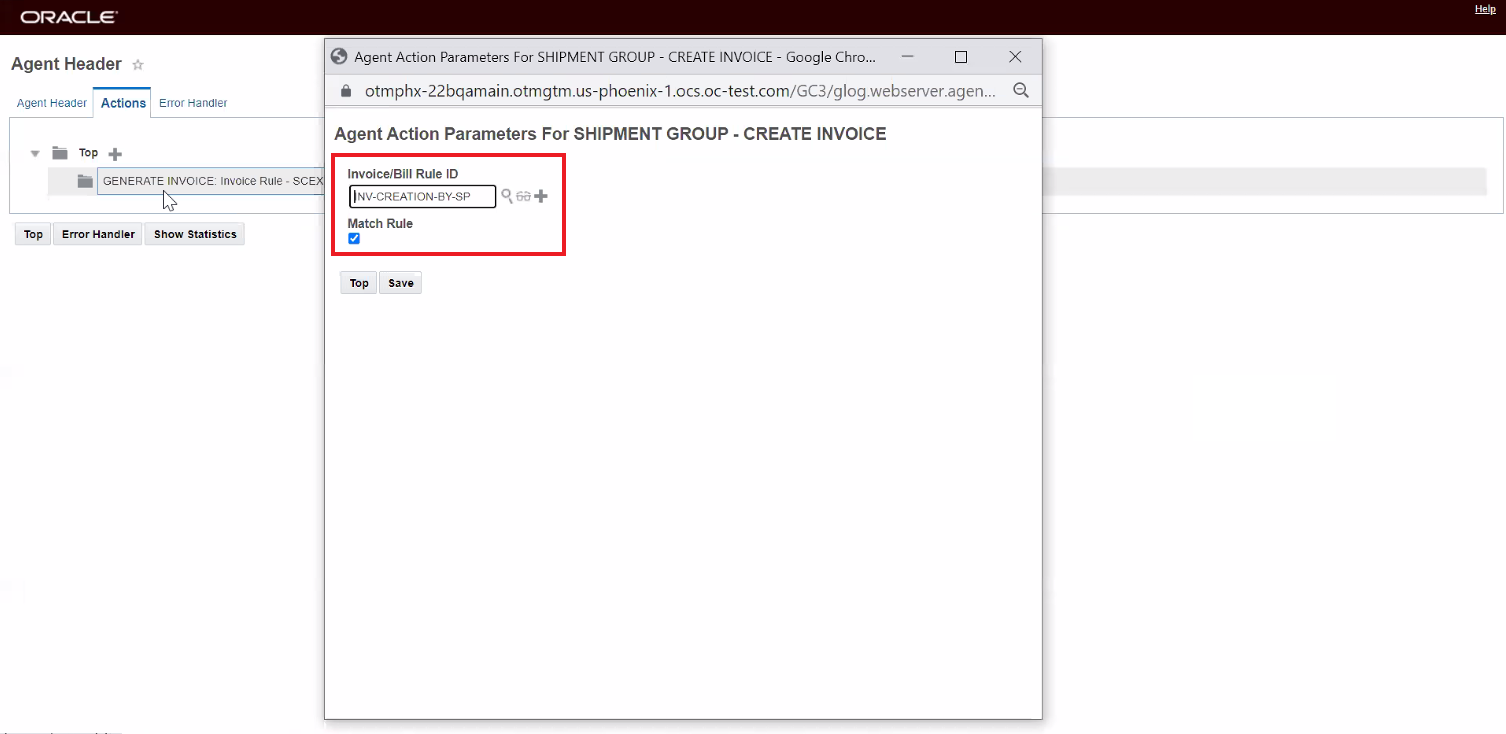
Shipment Group Agent Action Setup
Modifying the Shipment Group below - in this case adding a Reference Number - will trigger the agent configured above.
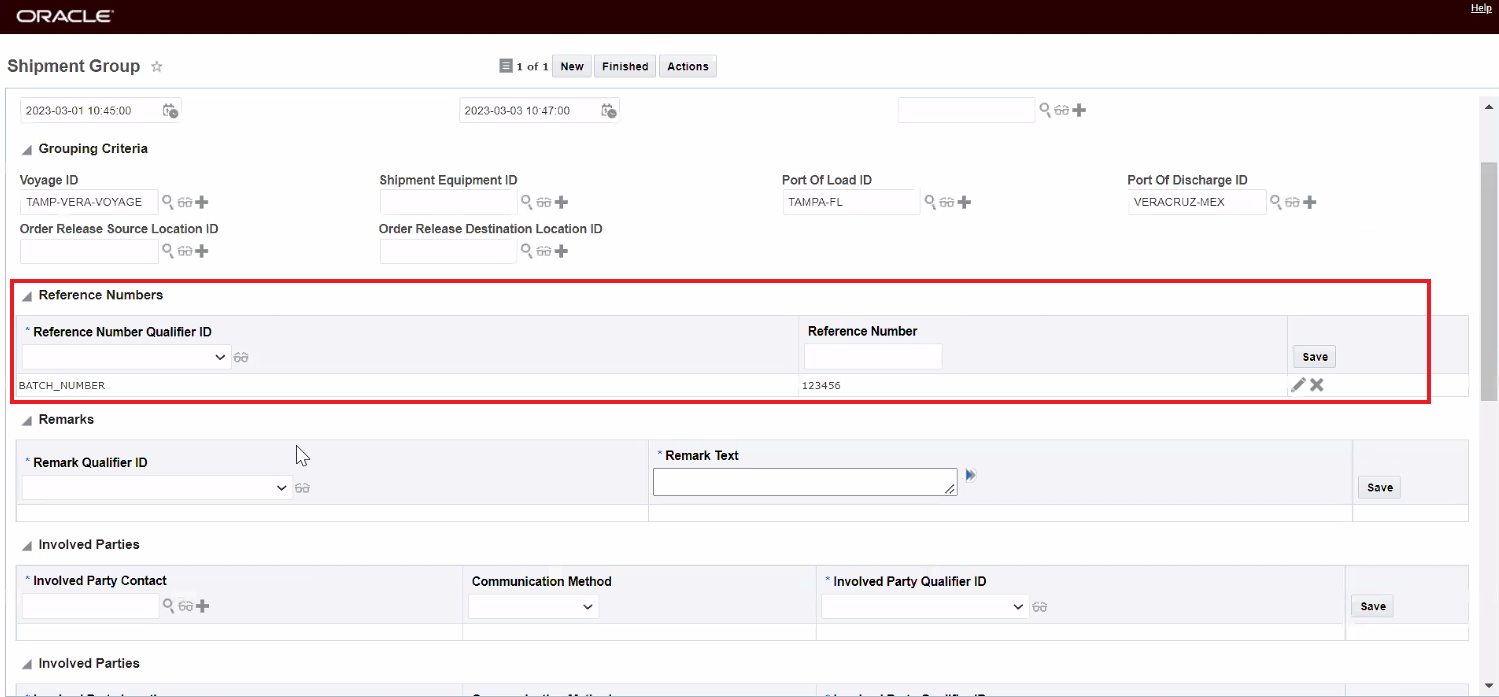
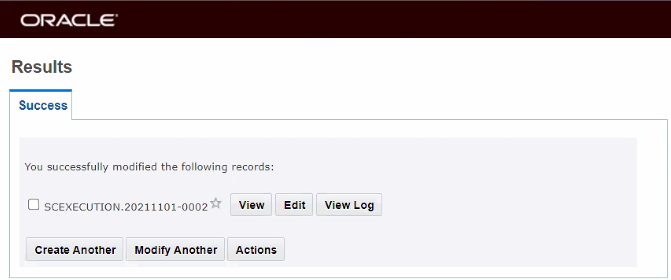
Modify Shipment Group
The configured agent, with the Shipment Group Agent Action Generate Invoice configured, generates the result below - two invoices for the Shipment Group - one for each Service Provider.
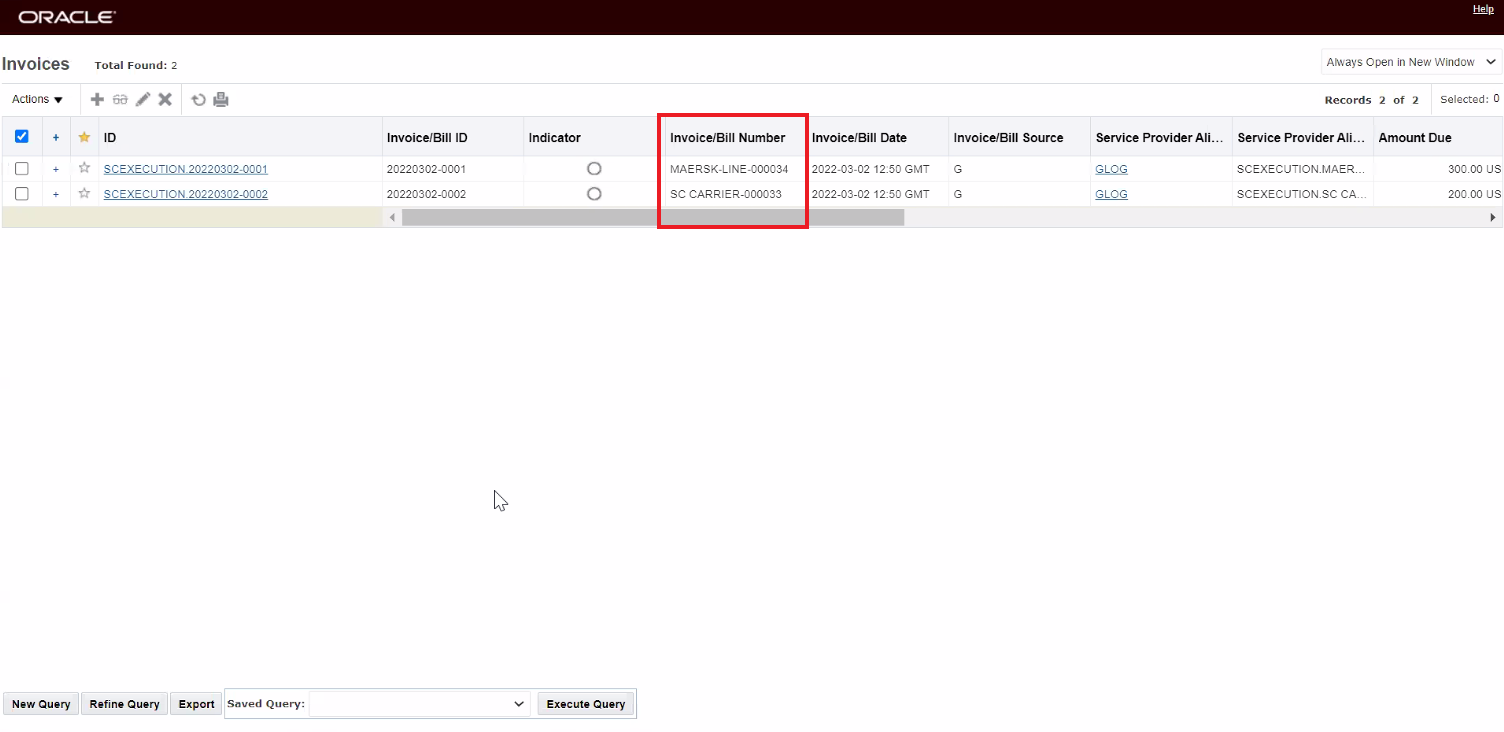
Generated Invoices
The Shipment Group Agent Action Generate Invoice provides you with the option of automating the generation of your Shipment Group related invoices.
Steps to Enable
To take advantage of this feature you will need to either create a new Automation Agent for your Shipment Groups (Agent Type = Shipment Group) with the Generate Invoice Agent Action configured or modify an existing agent and add the Generate Invoice Agent Action.
Invoice Payment - Save Shipment Cost as Reference
With the INVOICE PAYMENT - SAVE SHIPMENT COST AS REFERENCE optional feature enabled, your shipment cost reference will be set for your match and pay invoices during invoice approval, and for autopay invoices, the shipment cost reference will be set during invoice generation or invoice adjustment. The shipment cost reference is used in shipment group voucher allocations.
This feature improves usability by insuring that a cost reference is present during allocation.
Steps to Enable
You don't need to do anything to enable this feature.
Tips And Considerations
By default the same limit as been set for all Data Query Types - if necessary - the limit can be configured by Data Query Type in the situations where the default is too limiting.
While the manager for these features refers to them as "optional" - each of these features will become mandatory when the Optional Until update is released. The optional aspect of these features refers to the period of time where there is an opportunity to Opt In/Opt Out of enabling the feature. During this "optional" period - the time between when the feature is released and the release prior to the Optional Until release - the request/desire/intention is for you to enable the feature(s) for testing purposes so that the transition to mandatory, as of the Optional Until release, is uneventful.
This page is accessed via Configuration and Administration > Property Management > Optional Features.
NOTE: Only the DBA.ADMIN user can access and use the Optional Features page.
Public Enhanced Workbench - Location Based Dock Scheduling Workbench
This feature provides you with a Public Location Based Dock Scheduling Workbench that you can use to schedule appointments for your location stops. The Location Based Dock Scheduling Workbench has been developed using the Enhanced Workbench infrastructure - so this new public workbench benefits from all of the usability and performance improvements provided by the enhanced workbench infrastructure.
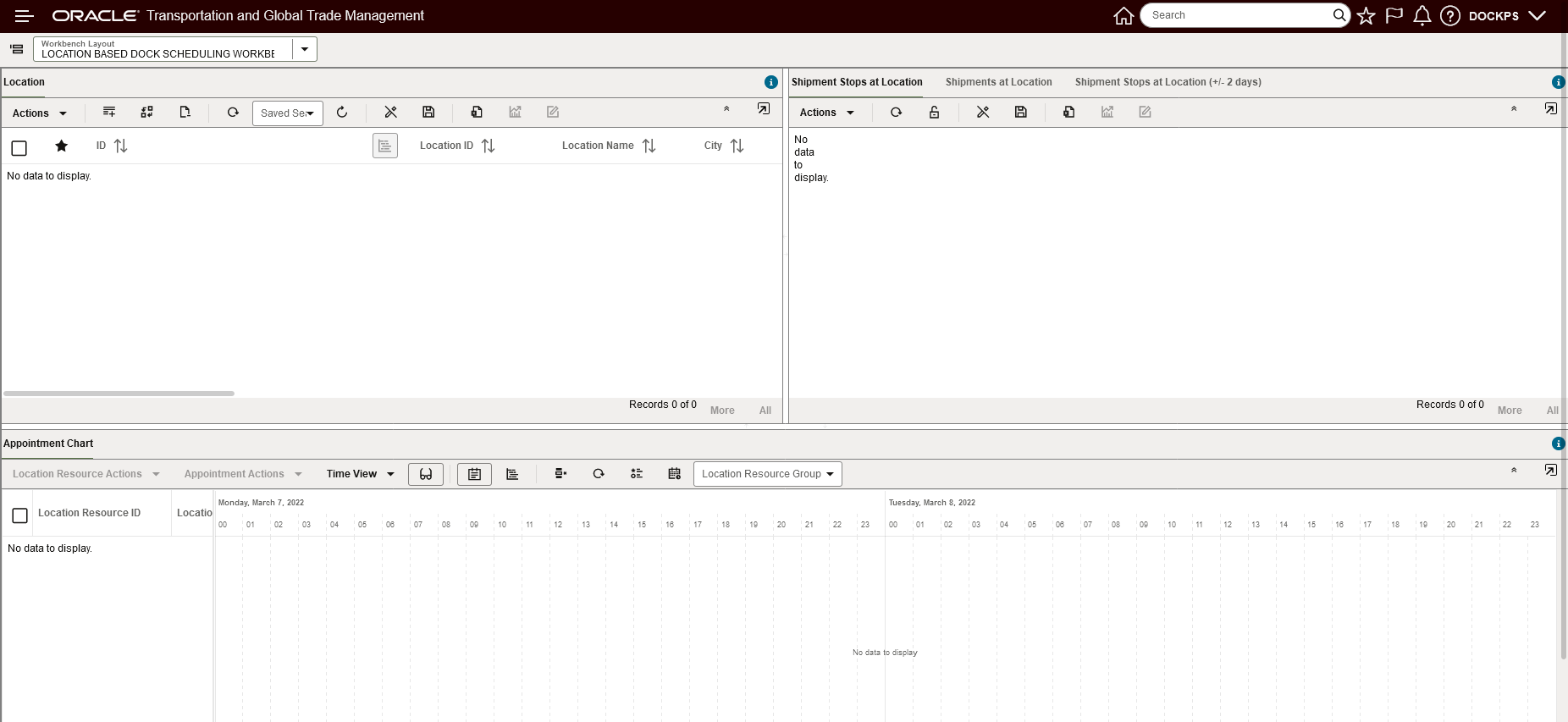
Public Location Based Dock Scheduling Workbench
The Location Based Dock Scheduling Workbench allows you to focus on the dock scheduling activities required for one or many locations. In the example below, the planner can manage scheduling activities for just one location or they can choose to review and schedule dock appointment across multiple locations.
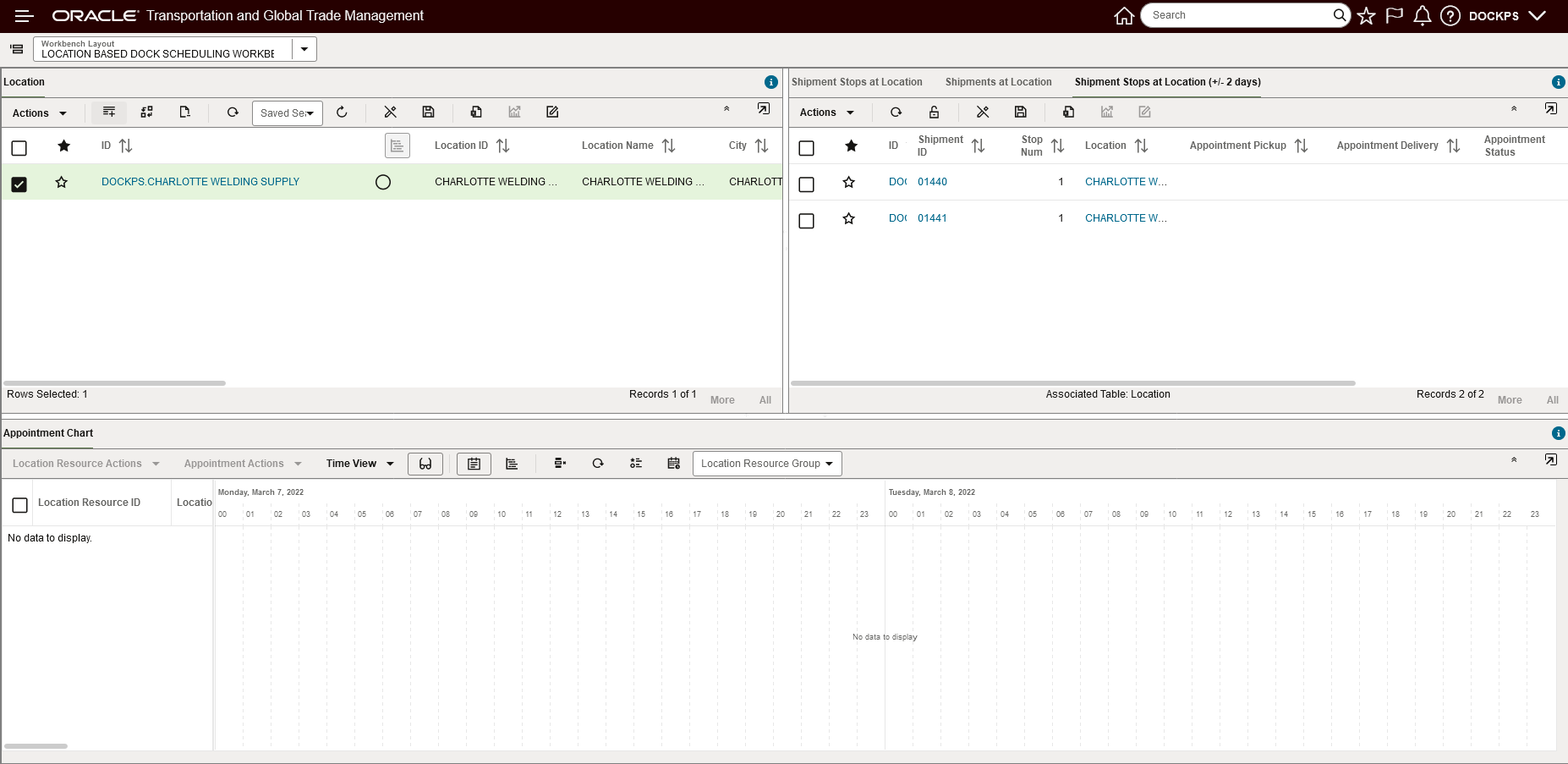
Single Location Two Stops To Schedule
To schedule the appointment for the shipment stops at the location, you simply select the stop to schedule, and run the action Schedule Appointment and select the desired appointment from the options available.
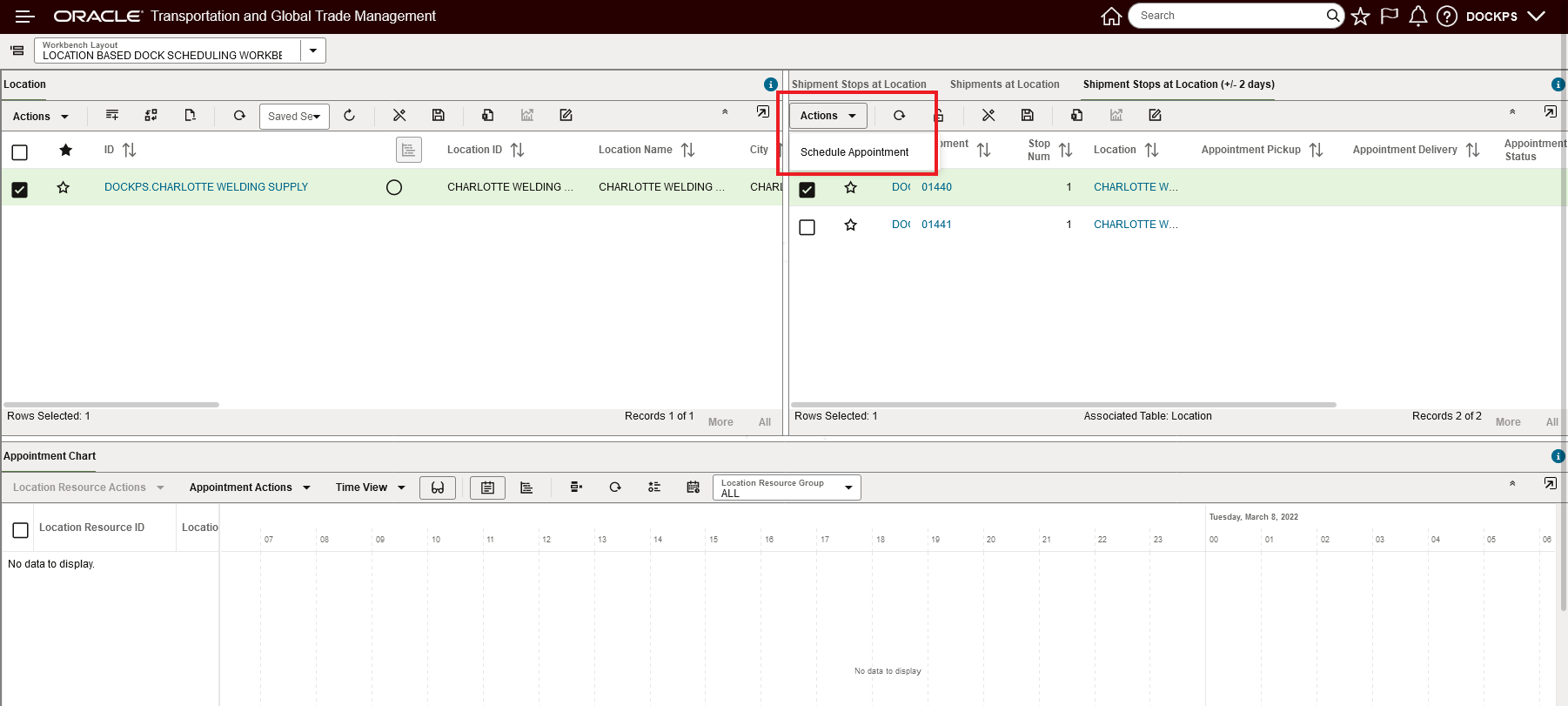
Select Stop and Run Action Schedule Appointment
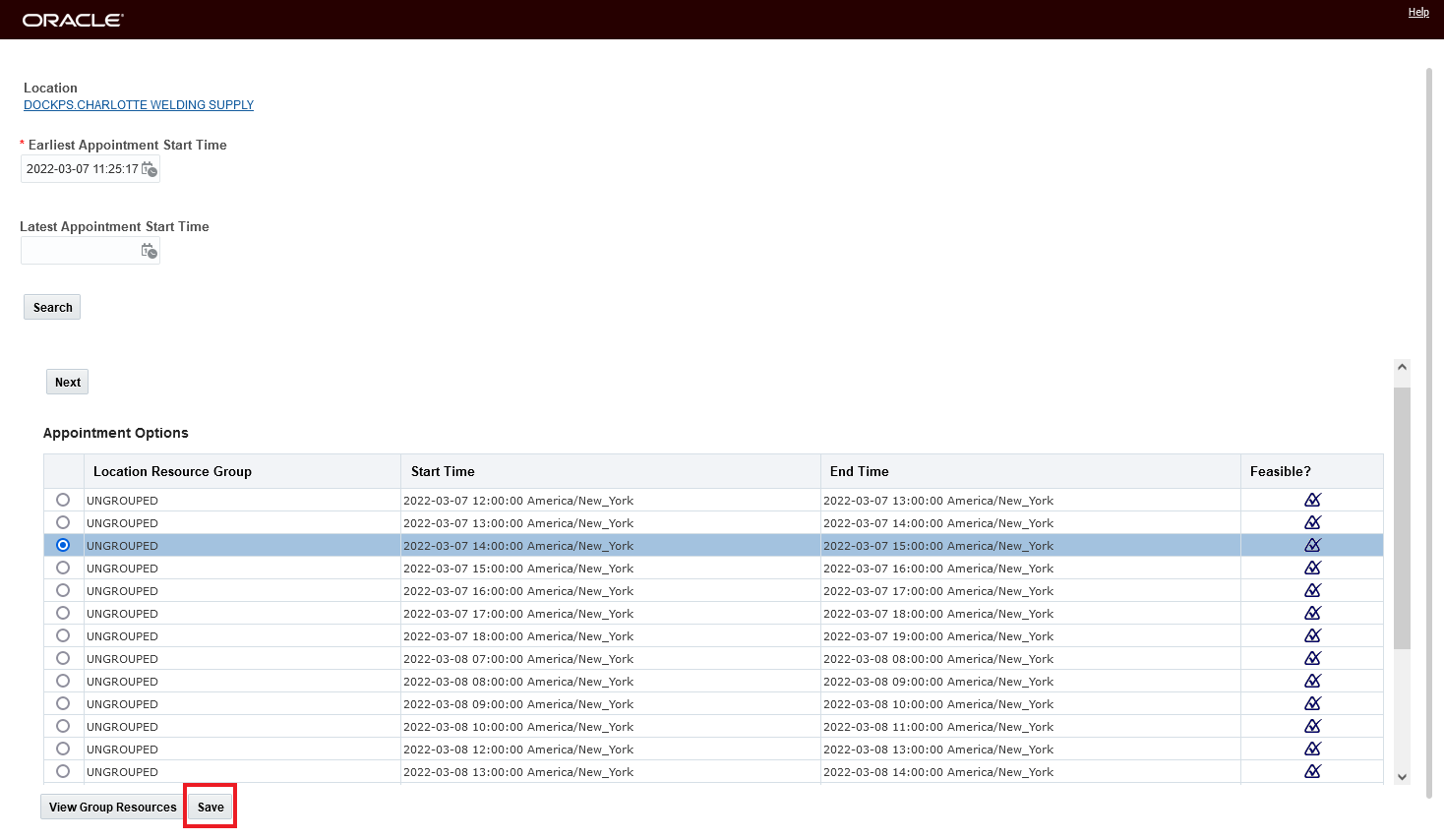
Select Desired Appointment and Save

Confirmation
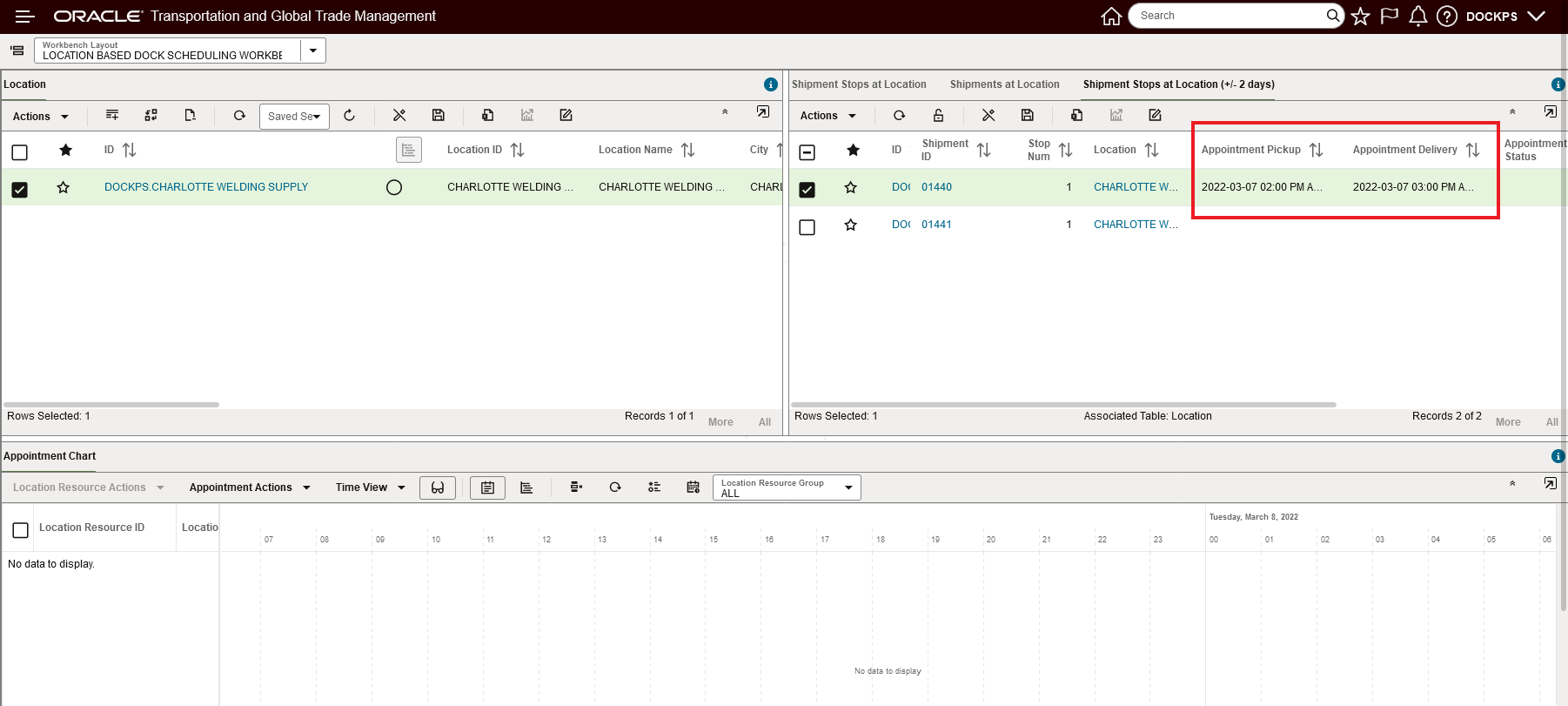
Result
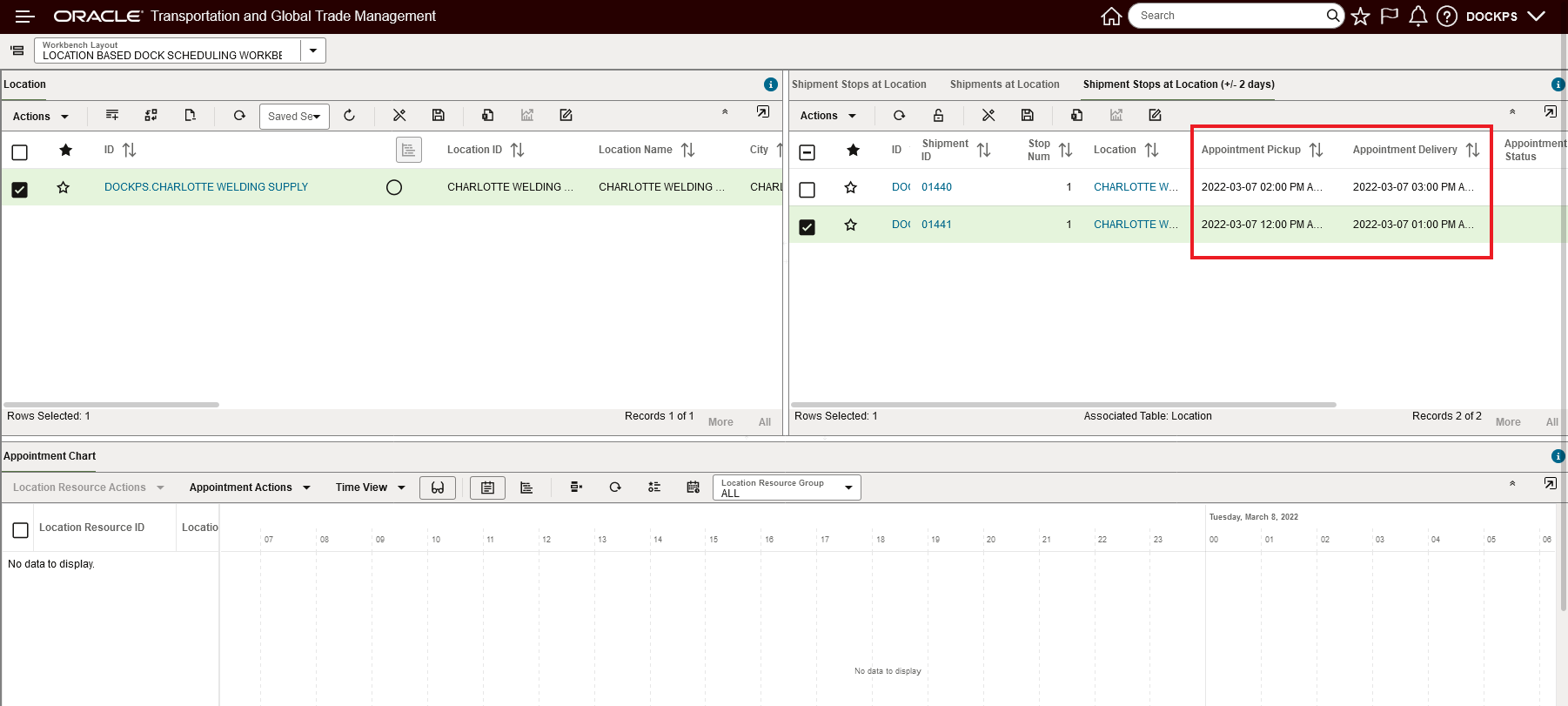
Schedule Both Stops
To further review and manipulate the solution you can move the stops to the Appointment Gantt. To move a Shipment Stop to the Gantt, right click on the stop/row and select Add To Gantt from the menu.
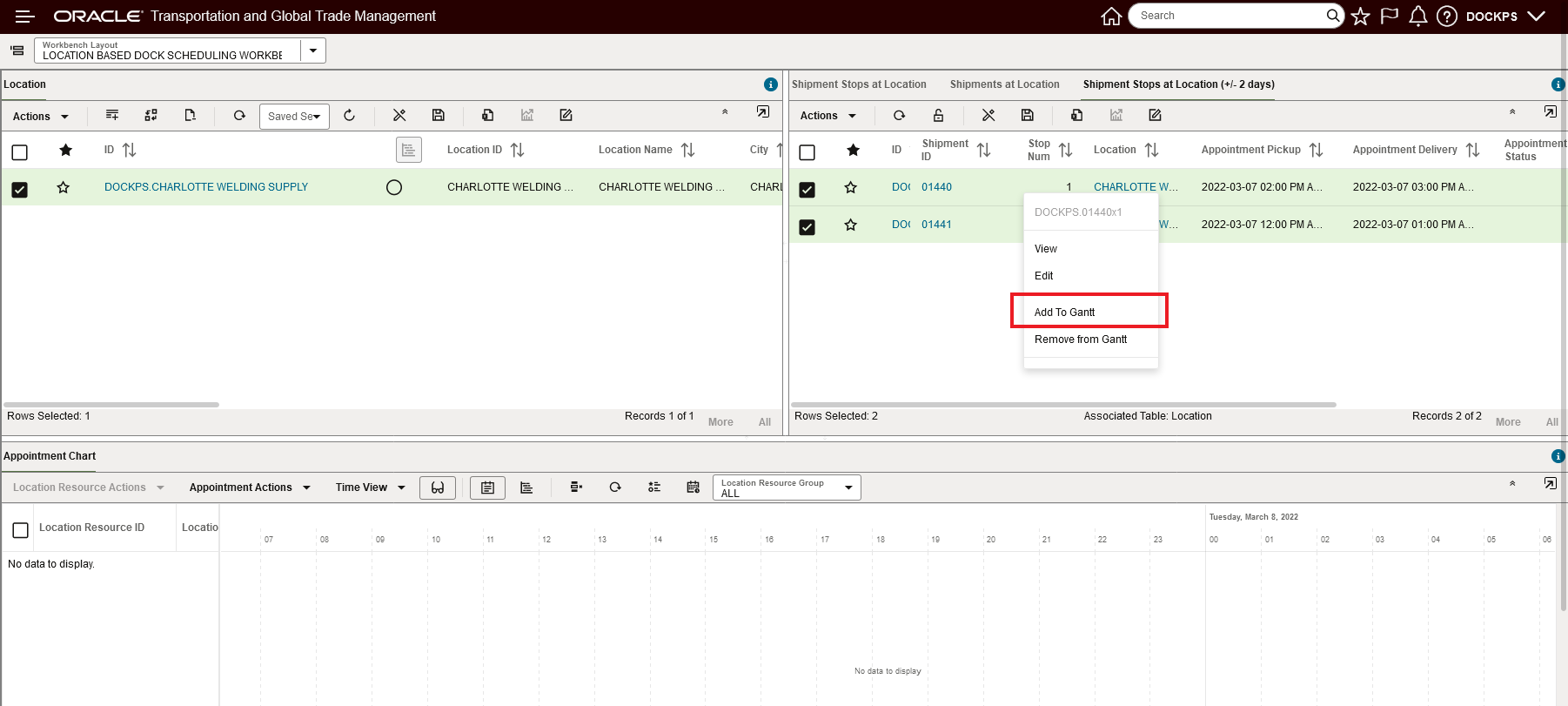
Right Click and Select Add To Gantt
After running the Add To Gantt action - the two selected stops are added to the Gantt.
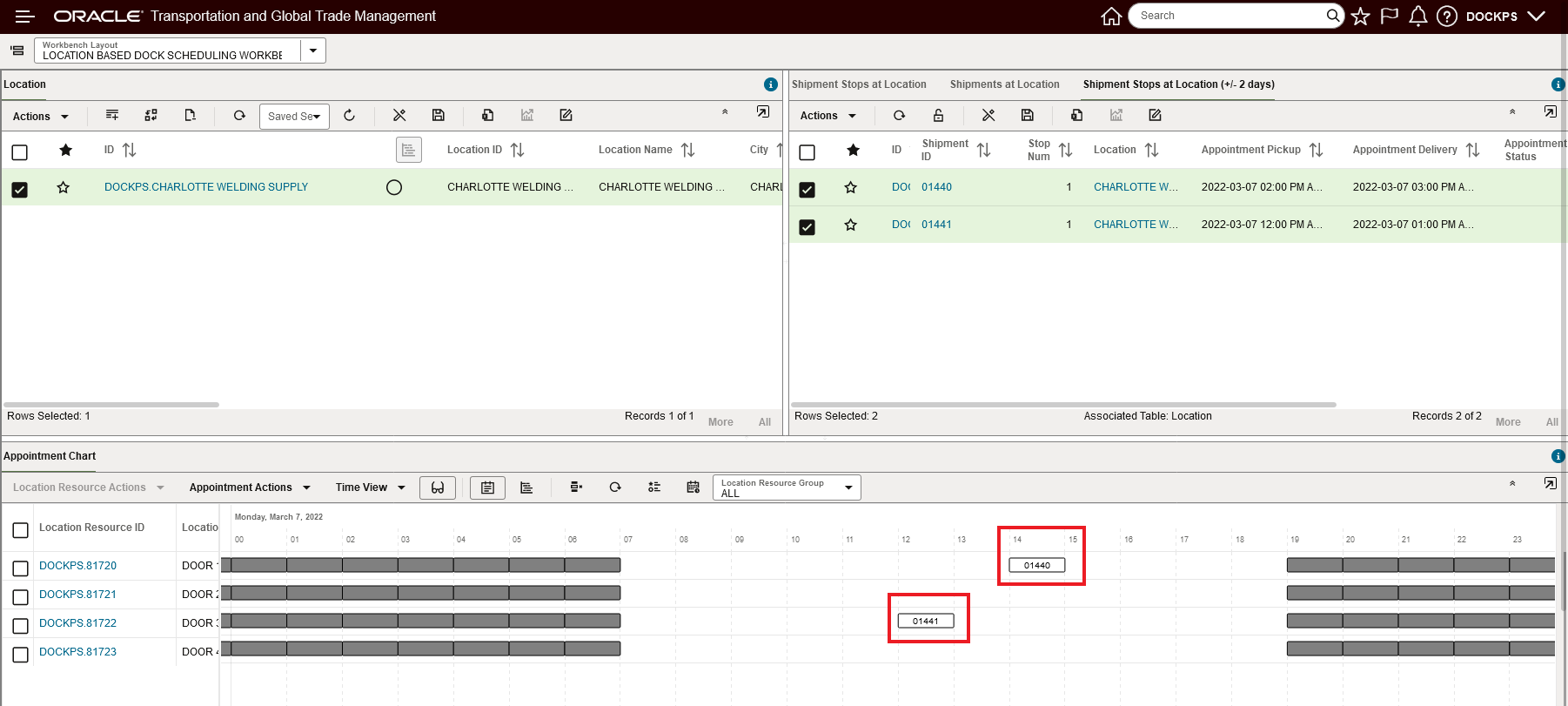
Appointment Gantt
You have the option to select and run actions against the appointments in the Gantt by right clicking on an appointment in a slot and bringing up the action menu - or - you have the option of dragging and dropping the appointments in the Gantt to change resources and/or appointment times.
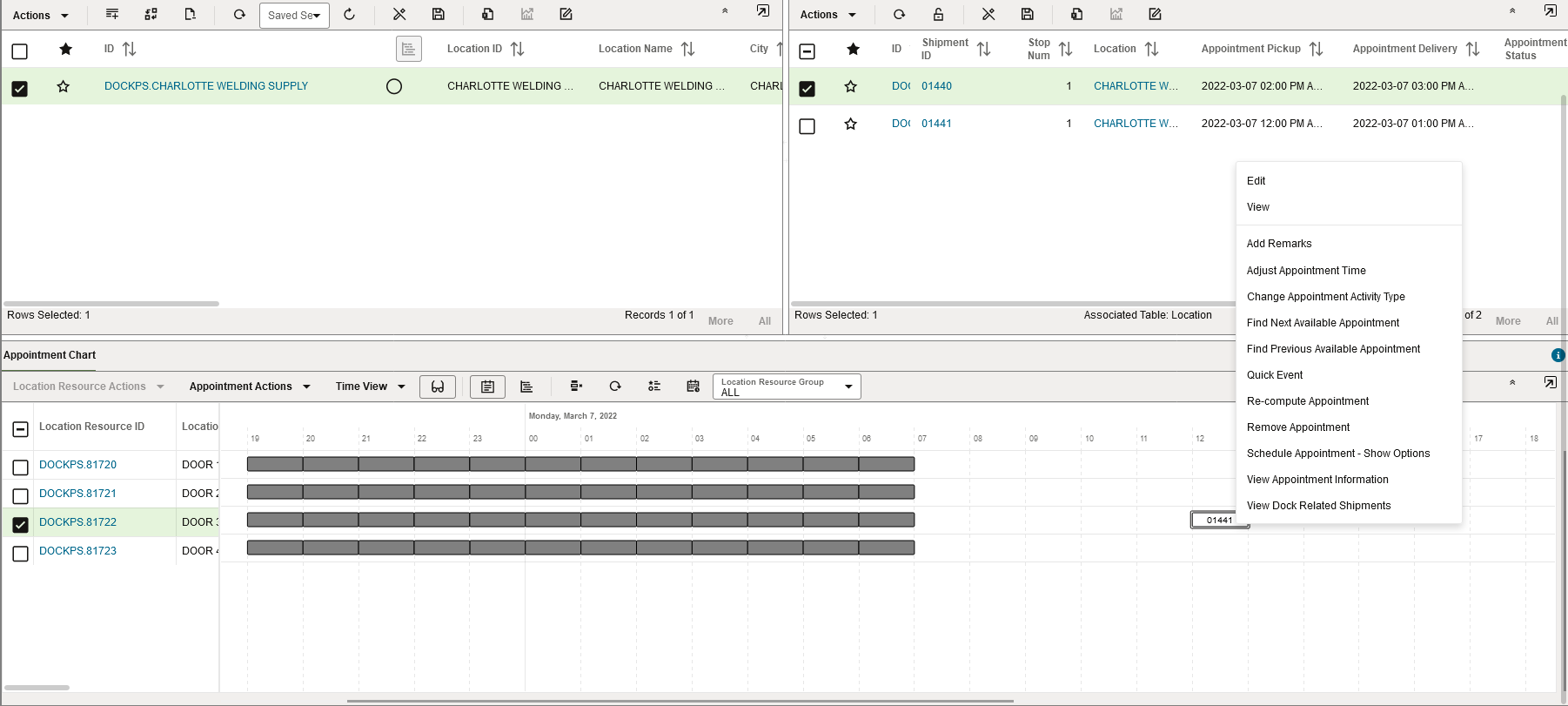
Appointment Action Menu
In the example below the first appointment is being changed from 1:00 PM to 3:00 PM by simply dragging the appointment from the current slot/time to the desired slot and time.
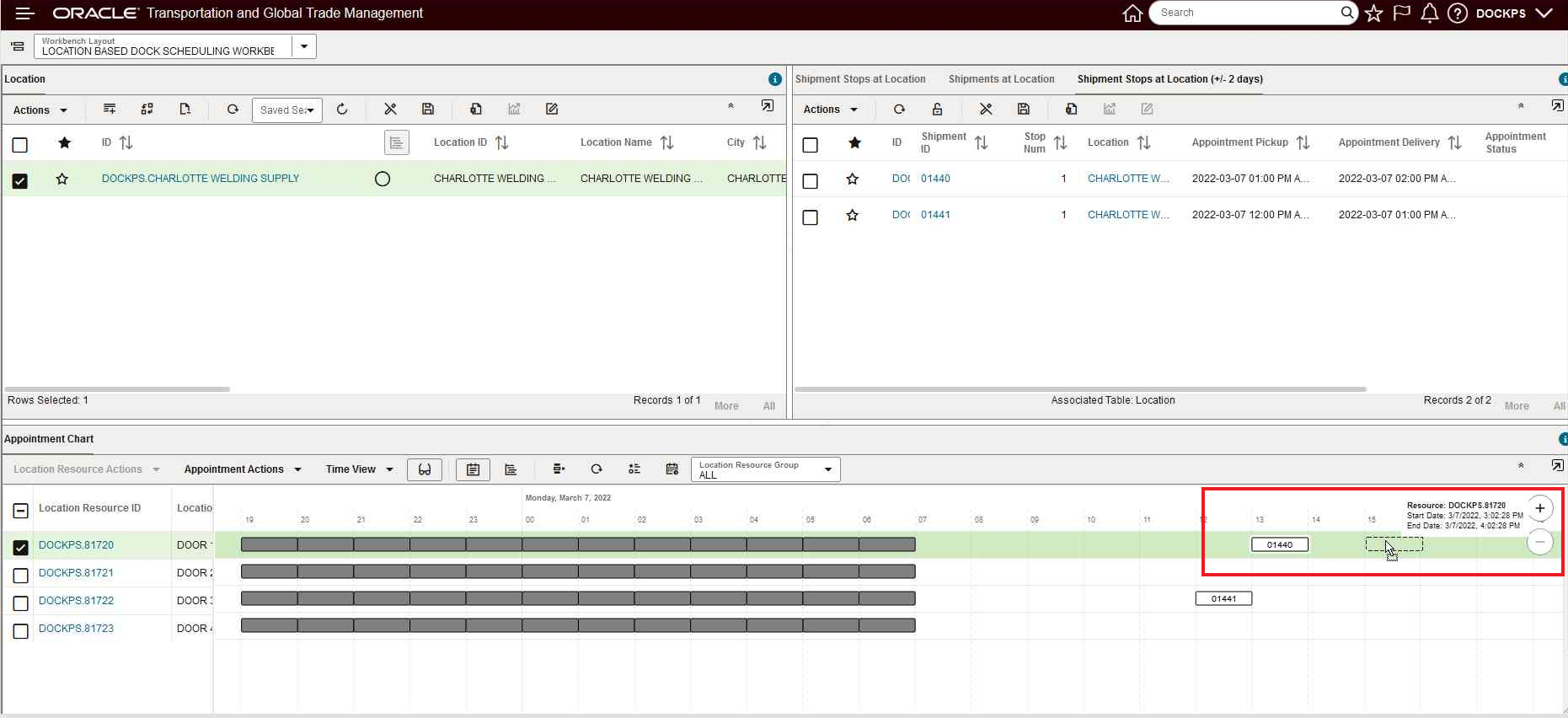
Drag and Drop Change Appointment
Below is the result from the drag and drop operation. The appointment that was originally scheduled for 1:00 PM has been changed to 3:00 PM.
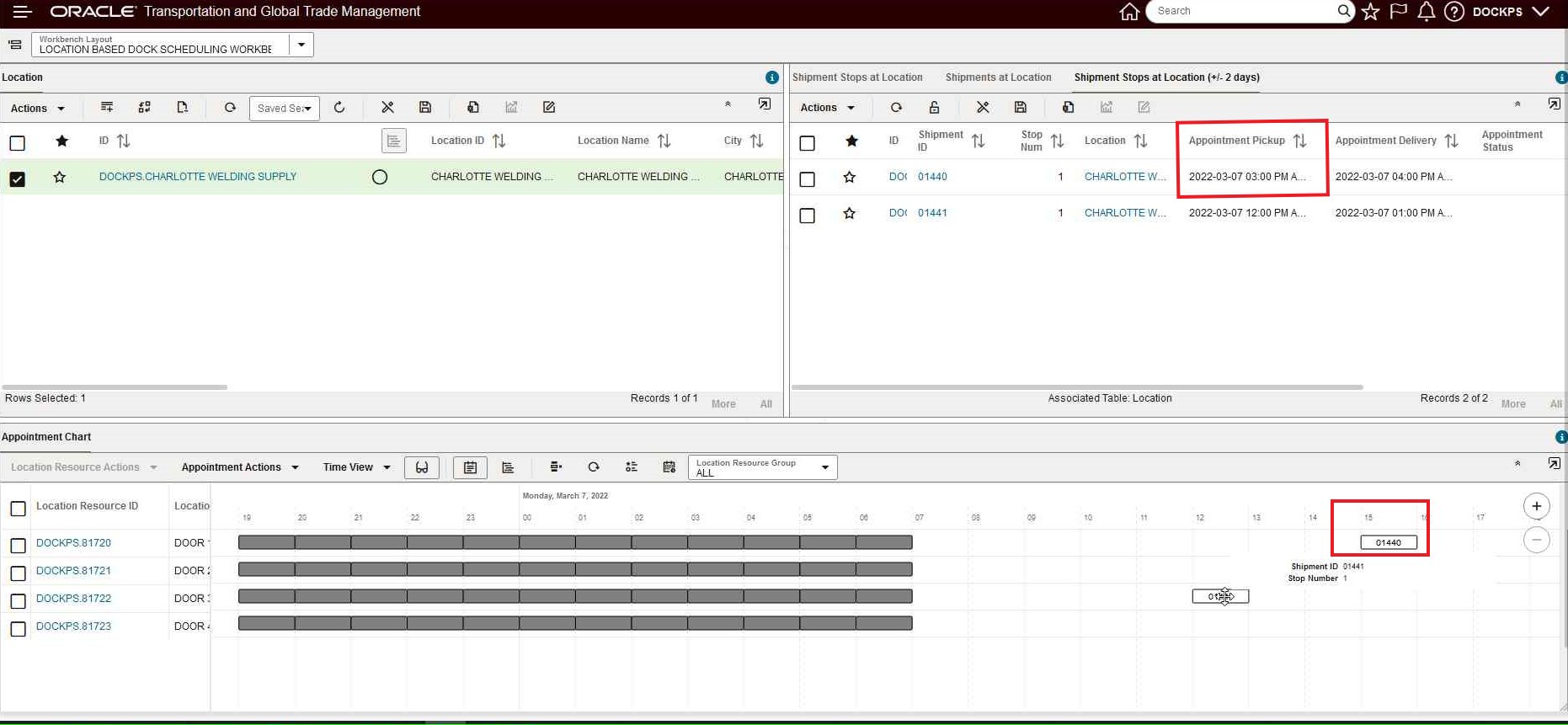
Drag and Drop Change Appointment Result
This feature provides you with a public workbench designed to specifically to support location focused dock scheduling activities.
Steps to Enable
You don't need to do anything to enable this feature.
Tips And Considerations
- The Enhanced Workbench does not yet support drag and drop operations going from a table to a Gantt component - this means that you are not able to drag the entries in the Shipment Stop at Location table directly onto the Appointment Gantt. You will need to run the Schedule Appointment action to move the Shipment Stop information into the Appointment Gantt.
- You can unblock a blocked slot by selecting a blocked slot and clicking the right mouse button and running the Unblock Resource action, however, you cannot block an unblocked slot using the right mouse button.
- The Location Based Dock Scheduling Workbench is only available as an Enhanced Workbench.
Move Order to Existing Shipment - Multi-Order Move Supported
This feature supports using the Move Order to Existing Shipment action to move multiple orders to the target shipment in a single running of the action. You will find this feature extremely useful in situations where you need to move more than one order to an existing shipment. Previously - If you wanted to move multiple orders to a shipment, the Move Order to Existing Shipment action would need to be run for each order that you wanted to move. Selecting multiple orders and attempting to run the action would have resulted in an error message.
In the scenario below - four additional orders will be moved to shipment 06744 - which has three orders and three delivery stops already assigned. Note the usage of the Enhanced Workbench.
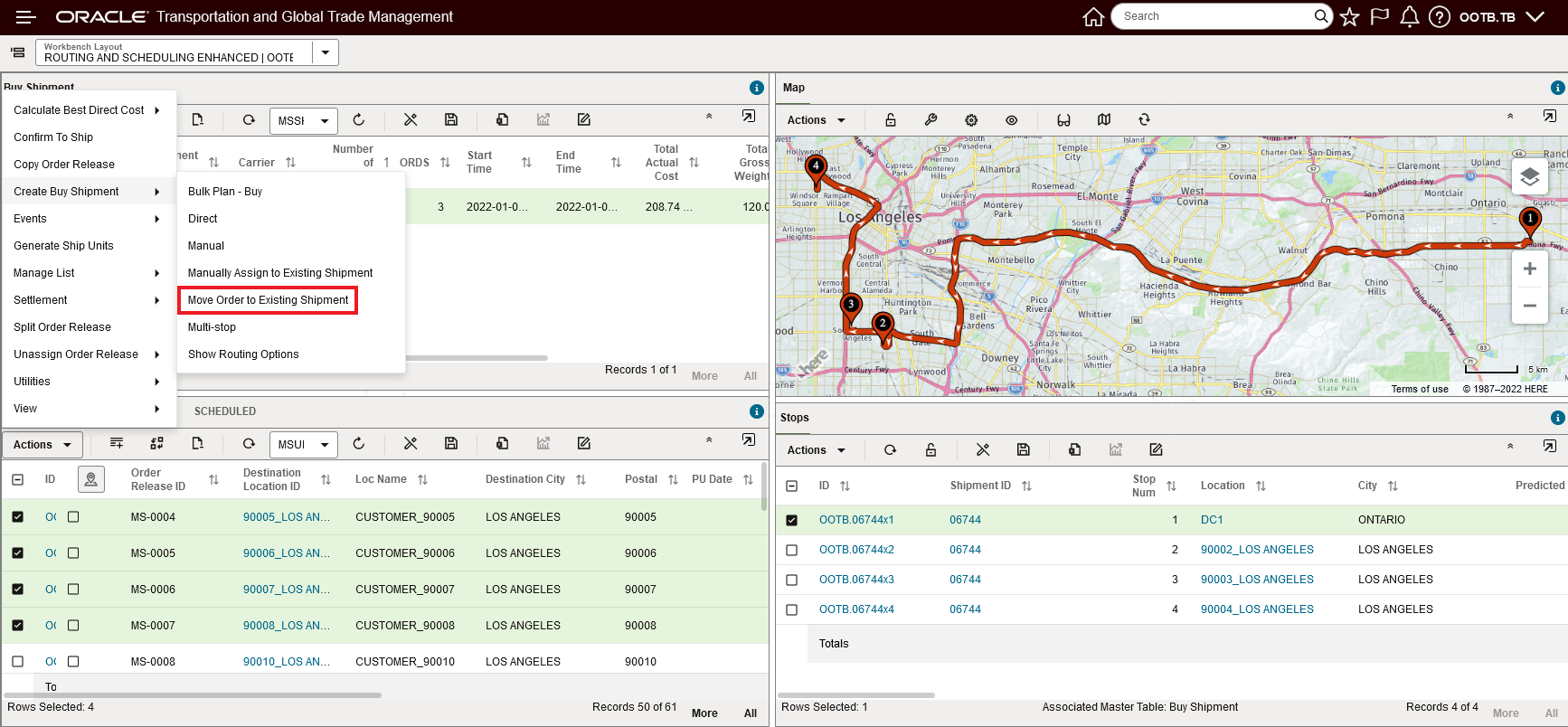
Original Shipment Select Multiple Orders and run Move Order to Existing Shipment
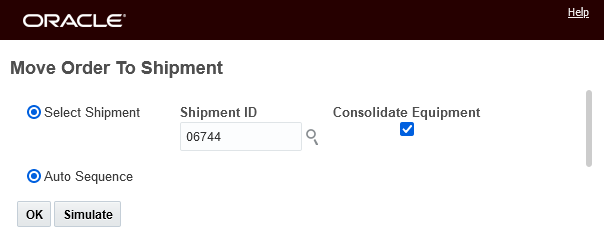
Move Order to Existing Shipment Input
The resulting shipment is below; the additional four orders (and stops) have been added to the shipment with just one run of the Move Order to Existing Shipment action.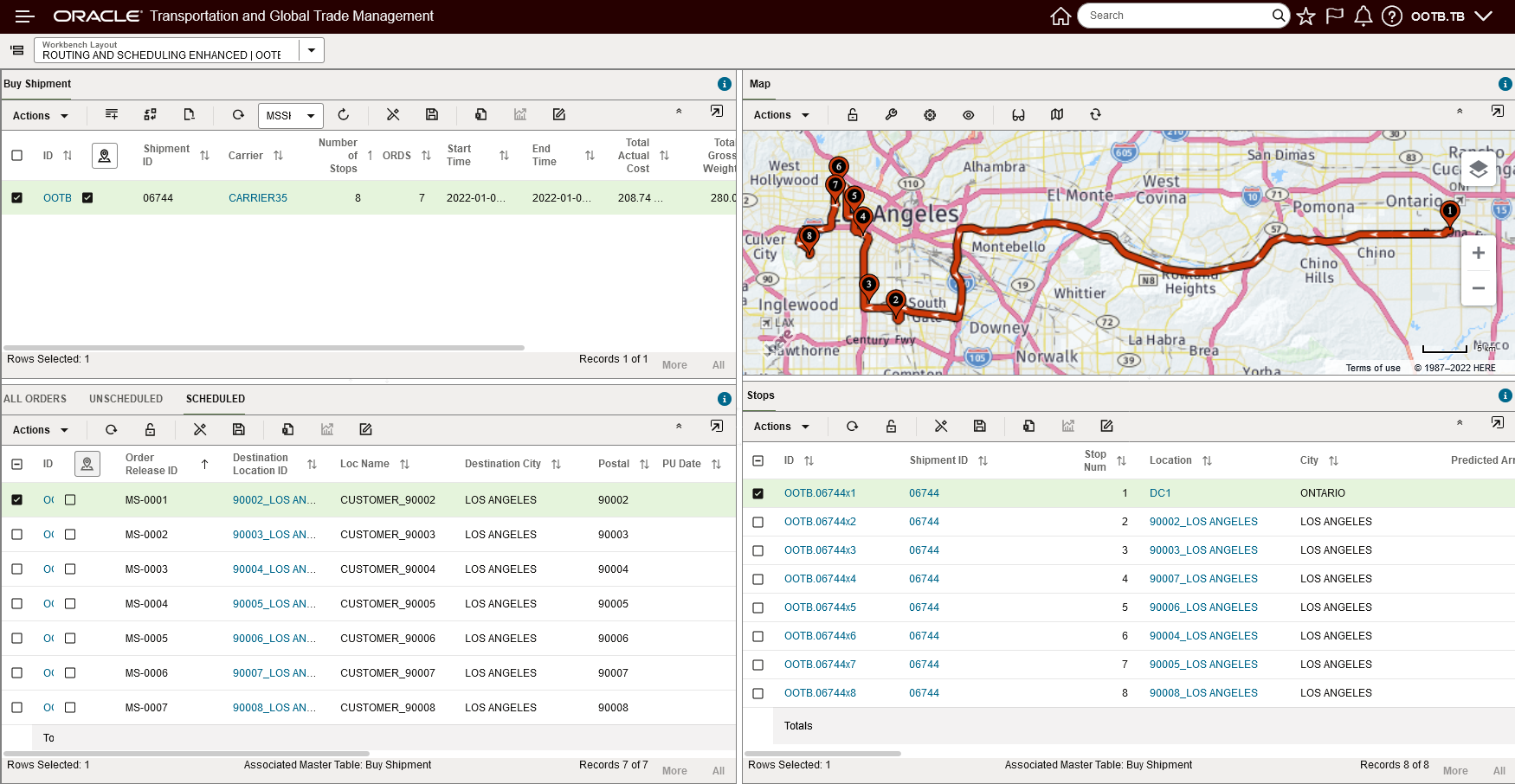
Move Order to Existing Shipment Result with Multiple Orders Selected
In previous versions, selecting multiple orders and running the action Move Order to Existing Shipment would have resulted in the error message below.
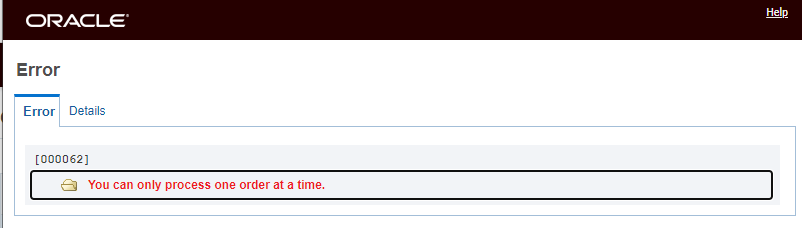
Previous Error Message
This feature significantly simplifies the time and effort required to move multiple orders to an existing shipment.
Steps to Enable
You don't need to do anything to enable this feature.
Tips And Considerations
The multi-select Move Order to Existing Shipment operates on an all or nothing basis - i.e., all the orders selected must successfully move to the target existing shipment or none of the orders will move. For example, if the target shipment has enough room to accommodate two of the three orders selected for the Move Order to Existing Shipment action (but can not accommodate all of the selected orders) then the Move Order to Existing Shipment action will fail for all three orders/none of the orders will move.
Manual Create Shipment Action Moved to Manager Layout
This feature adds manager layout capabilities to the Manual create shipment action. With this feature you now have the option to move fields, hide unnecessary fields, relabel fields, make non-mandatory fields mandatory set defaults etc.
Order Management > Order Release > Order Release > Actions > Operational Planning > Create Buy Shipment
In the example below - the Manual create shipment input will be configured so that the Rate Offering field is removed and the Equipment field is required. In the default action input screen below the Rate Offering is available and the Equipment Group ID is optional.
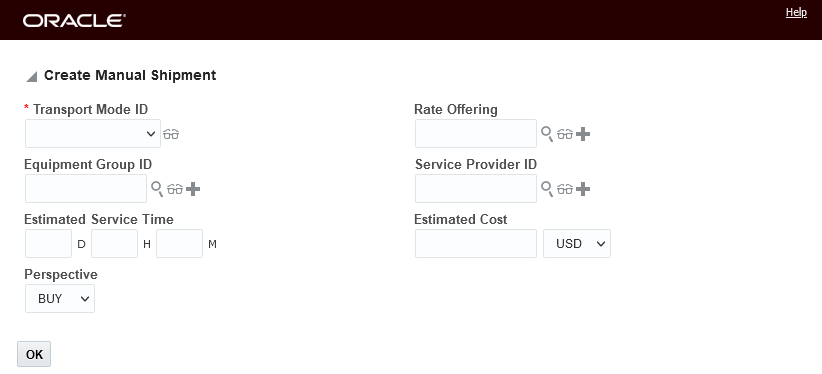
Default Manual Create Shipment Action Input Screen
In the manager layout configured version of the screen shown below, the Rate Offering field is no longer visible and the Equipment Group field is now required.
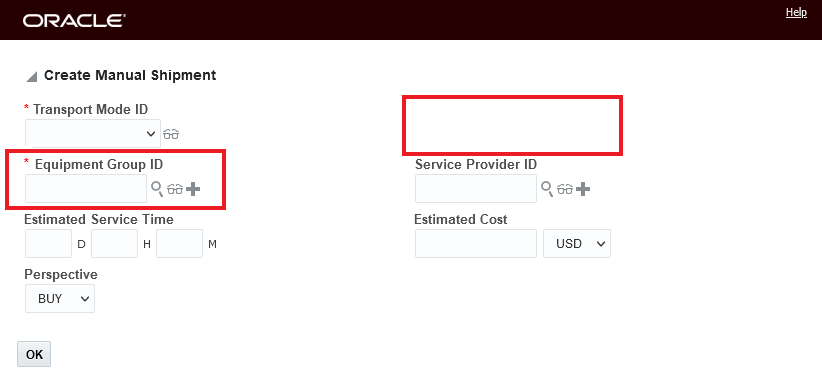
Configured Manual Create Shipment Action Input Screen
Allows you to configure the Manual create shipment action to meet the needs of your implementation, improving usability and adoption of the application. For example - if your users should not enter a Rate Offering but should enter an Equipment Group - you have the option of removing the Rate Offering field from the action input screen and making the Equipment Group a required field.
Steps to Enable
There are no steps require to enable this feature - however - to take advantage of the manager layout configuration capabilities provided for the Manual create shipment action - you will need to follow the steps below to configure the Manual create shipment action input UI to the user experience you desire.
At a high level the steps involved are:
- Copy the Public Action Manager Layout
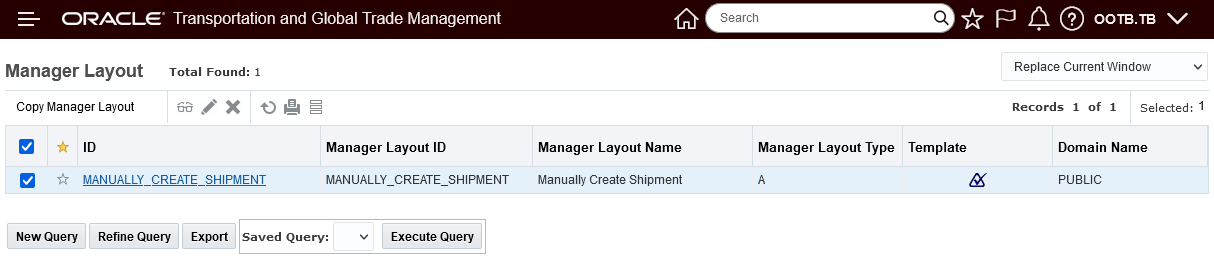
Copy Public Action Manager Layout
- Configure your copied version of the Action Manager layout as desired. Move fields, change labels, make fields mandatory, set default values etc.
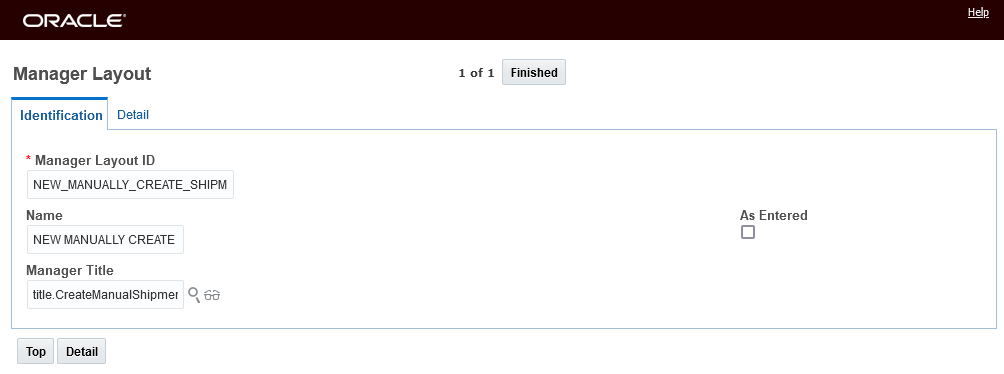
Configure New Action Manager Layout Identification
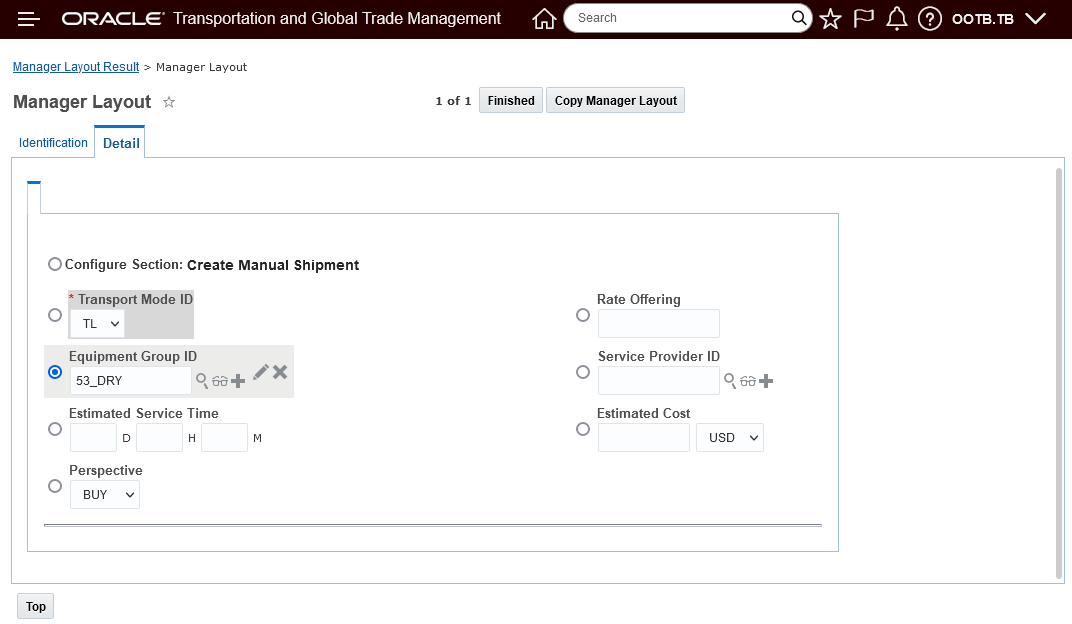
Configure New Action Manager Layout Details
- Create a New Action for your configured action and assign your configured action manager layout to the new action.
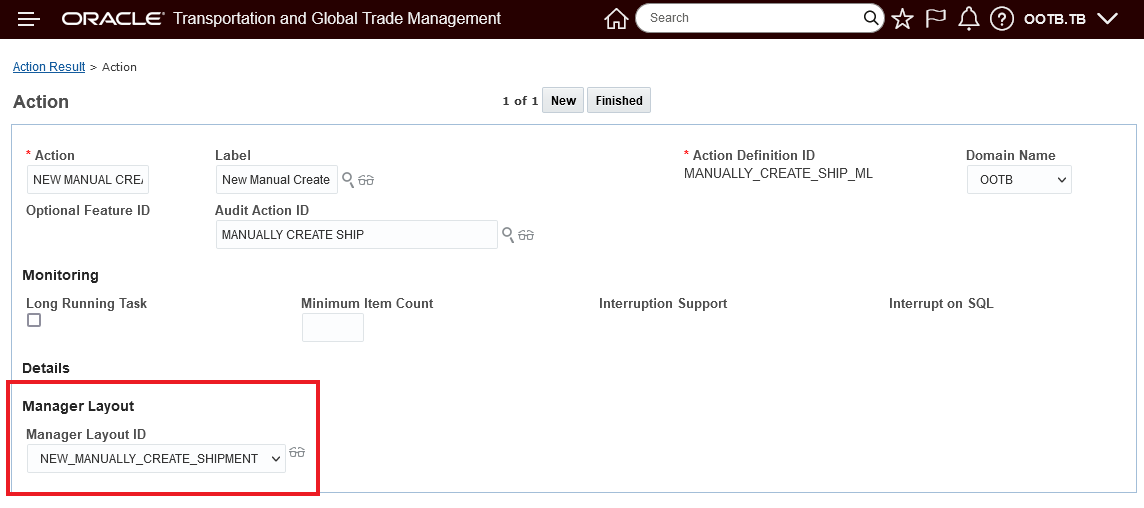
New Action Using New Manager Layout
- Log in as DBA.Admin and Run the Secure Action action against the newly-created action.

Secure Action
- Assign your configured action to the desired order release screen set.
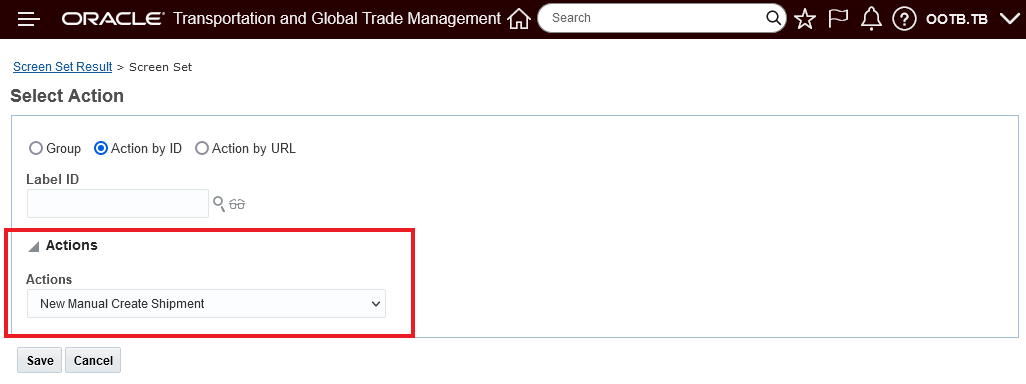
Assign Action to Action Menu In Screen Set
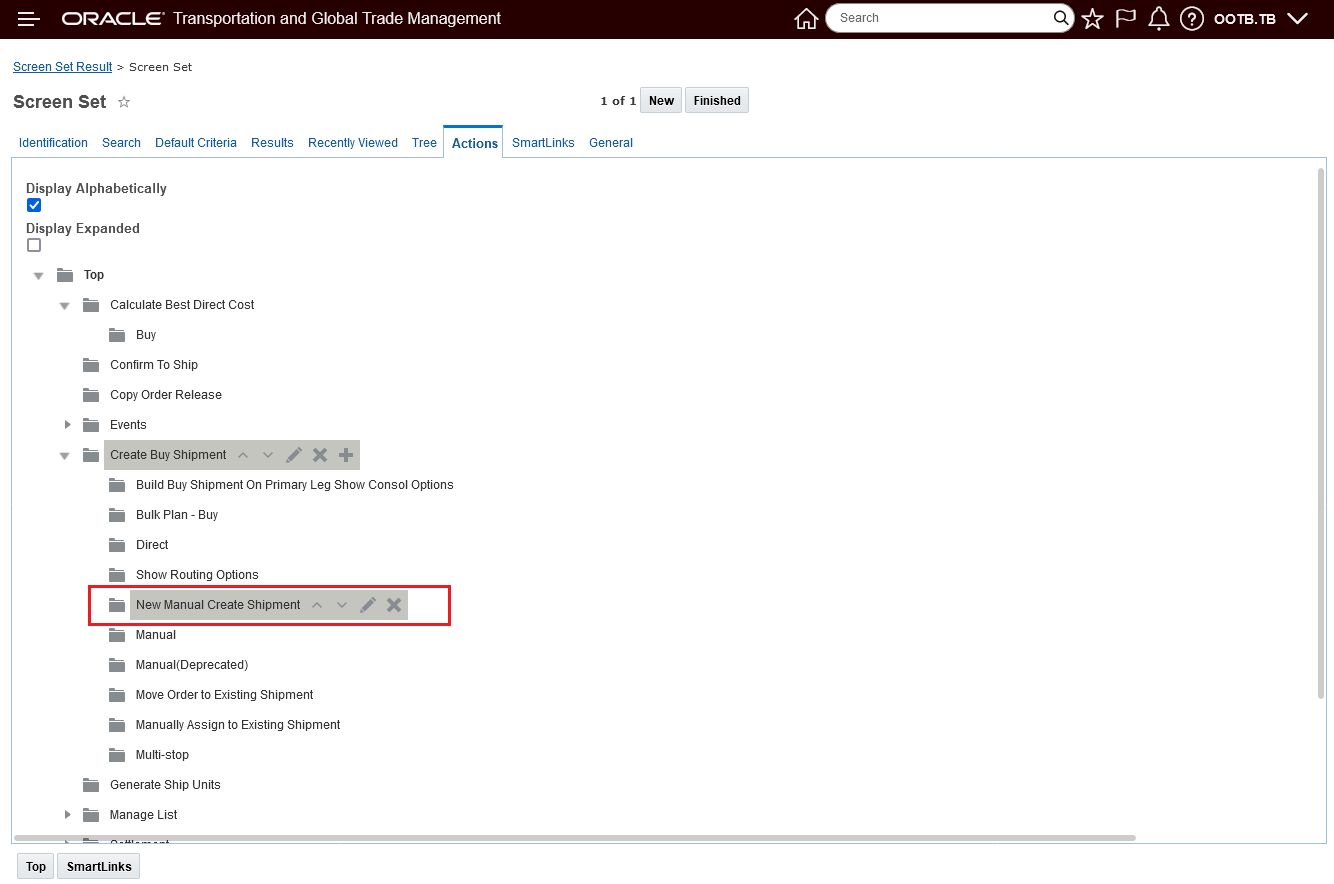
Assign Action to Action Menu In Screen Set
Tips And Considerations
NOTE: The new Manual create shipment action (the manager layout enabled version) - will be the default provided in the public order release action menu. If - for some reason - you wish to revert back to the older version of the Manual create shipment action - you can do so by replacing the Manual (updated manager layout version of the action) with the older version - identified as Manual(Deprecated) action in the Actions drop down on the Actions tab of the order release screen set.

Revert Back to Old Manual Action
.
Key Resources
- See the Creating New Actions topic in Online Help for more information.
Agent Action Unassign All - Fleet
This feature provides you the option of automating the un-assignment of all Fleet assigned resources using an Unassign All - Fleet agent action. The Unassign All - Fleet buy shipment agent action is equivalent to the UI action which un-assigns driver, power unit, and equipment type.
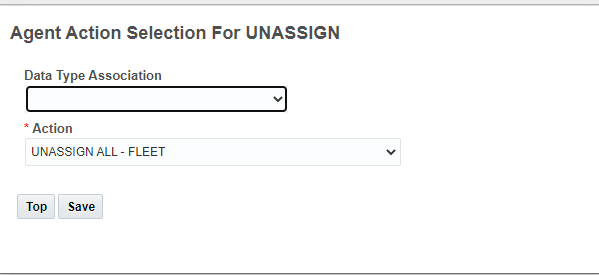
Agent Action - Unassign All Fleet
Allows you to automate the unassign activities for your fleet shipments.
Steps to Enable
You don't need to do anything to enable this feature.
Bulk Plan Order Releases Using Network Routing Into Consols
This feature continues the evolution of OTM's Consol capabilities to include the option of Bulk Planning (using Network Routing) your Order Releases into your available Consols – for all Consol types - charter voyage, air schedule or Ocean FCL
In the example below - the Consol shipment 04517 - generated from a Charter Voyage Stowage Consol type - will be used to demonstrate the feature. Two order releases CONSOL CAPACITY_CH VOYAGE OR1 and CONSOL CAPACITY_CH VOYAGE_OR2 will be planned in two separate bulk plan runs to demonstrate how OTM now includes Consols for consideration in planning and also allows for the accumulation of freight within an open Conols across multiple bulk plans.
The Consol used to generate the Consl Shipment used in the example is below - the Consol Type is CHARTER VOYAGE STOWAGE and the defined capacity is 48,170 LB.
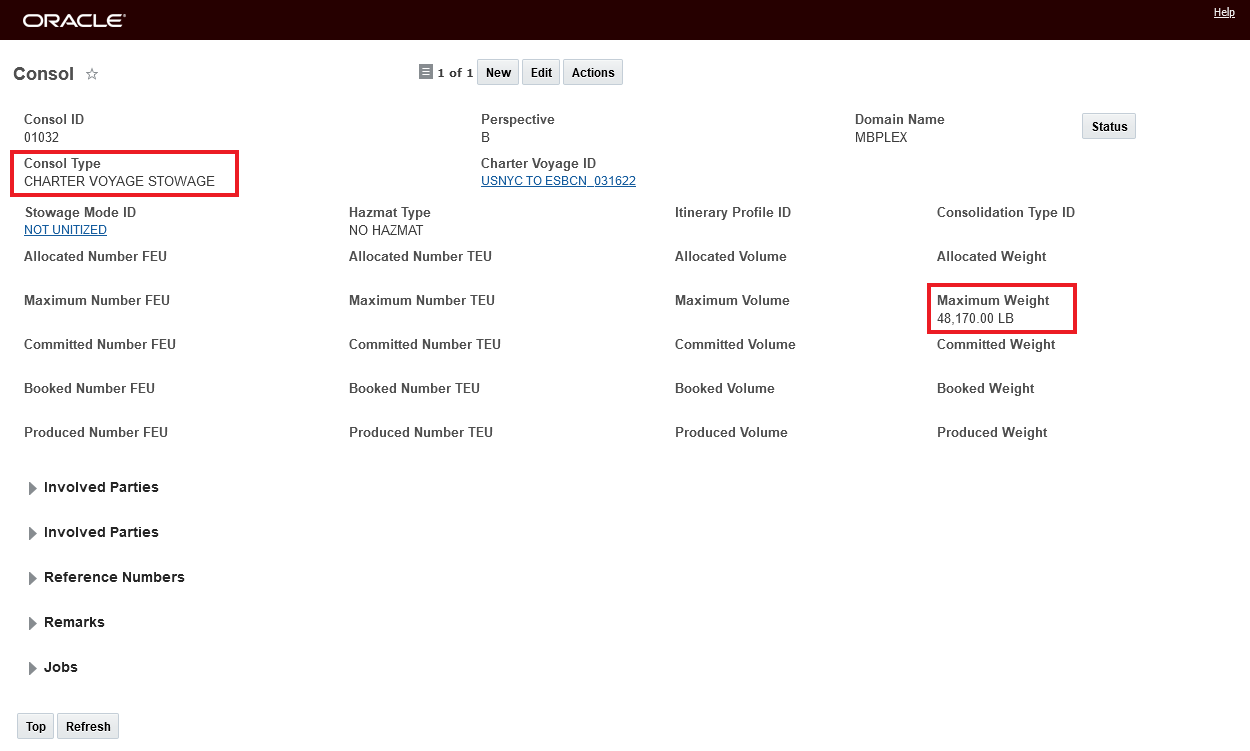
Consol Used To Generate Consol Shipment 04517
The order releases that will be planned on to the Consol shipment 04517 are below. The first order release to be planned is for 25,000 LB and 250 CU FT.
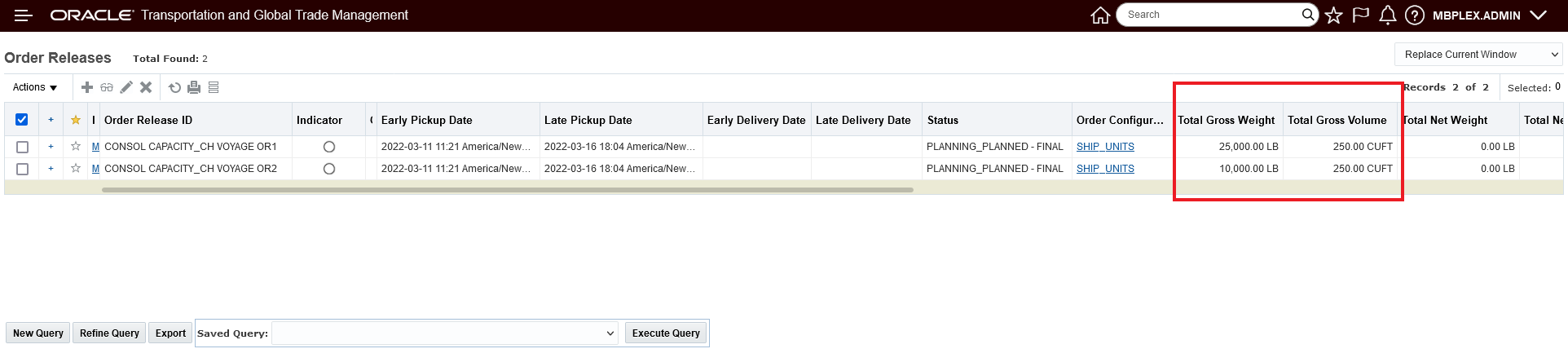
Order Releases
The result of bulk planning the first order release is below. The order release has been added to Consol shipment 04517 and the end-to-end multi-leg solution has been provided.
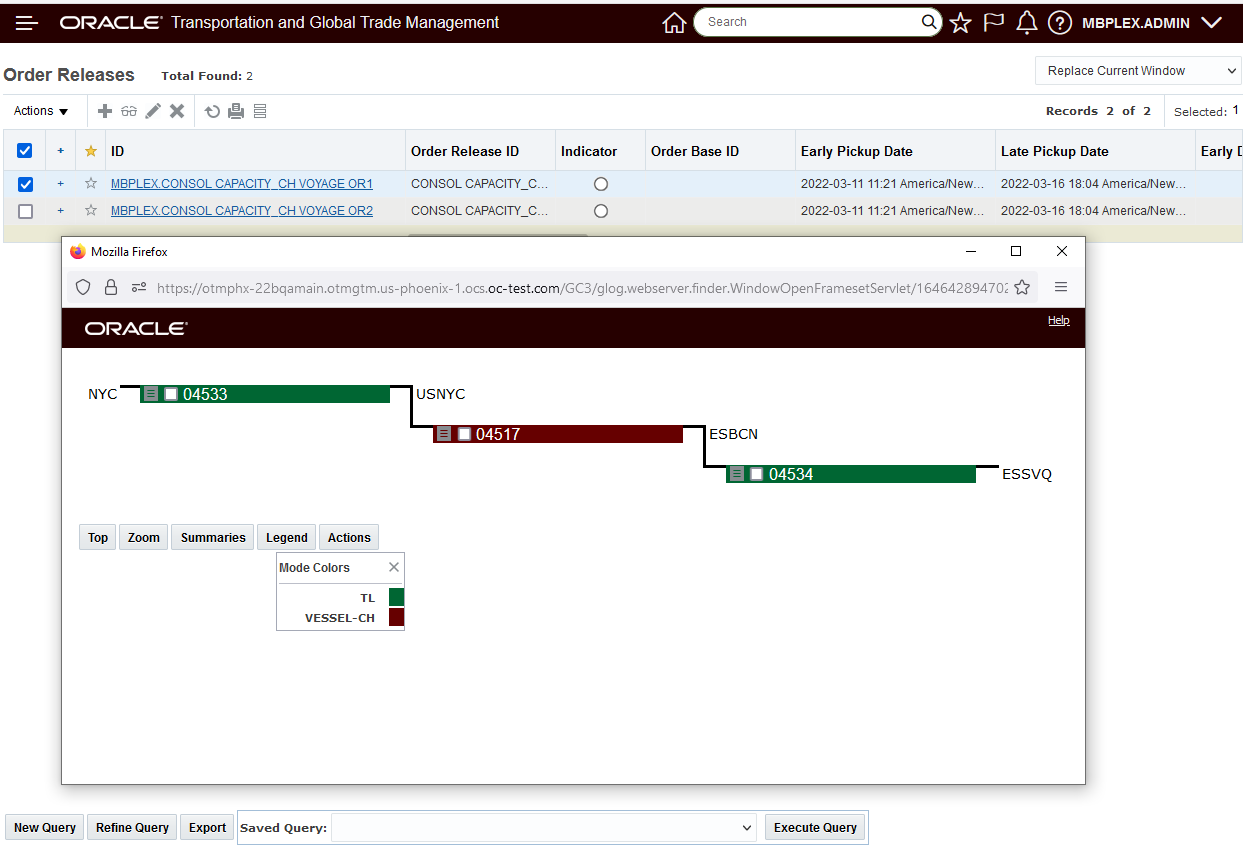
Order Release 1 Planned - Plot
The details of the Consol Shipment are below - note that the 25,000 LB and 250 CU FT of available capacity have been consumed by bulk planning the first order release.
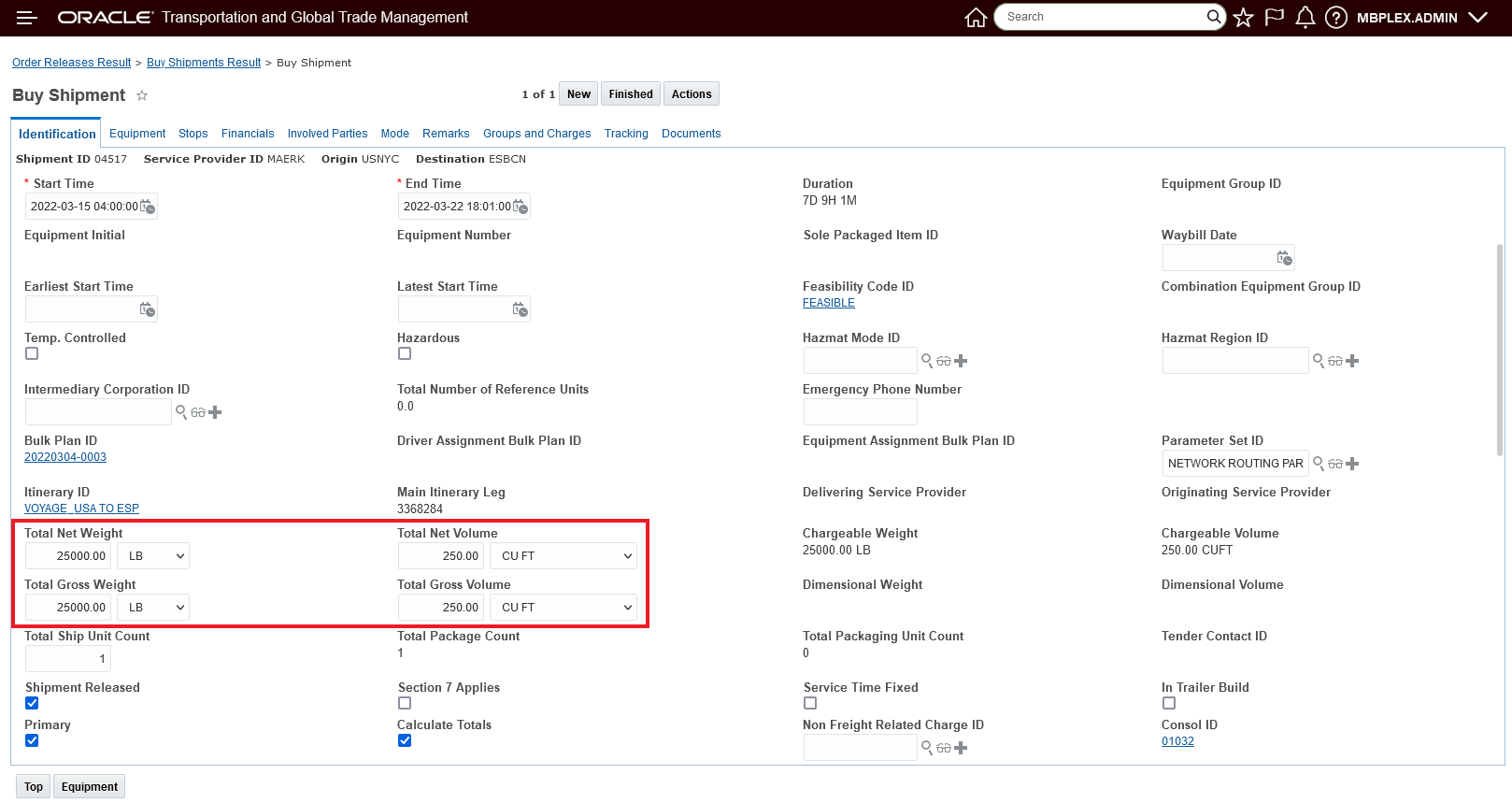
Consol Shipment After Bulk Planning Order 1
Below is the result after bulk planning the second order release. The second order release has been added to Consol shipment 04517 and the pre-carriage (shipment 04535) and on-carriage (shipment 04536) end-to-end multi-leg solution for has been planned.
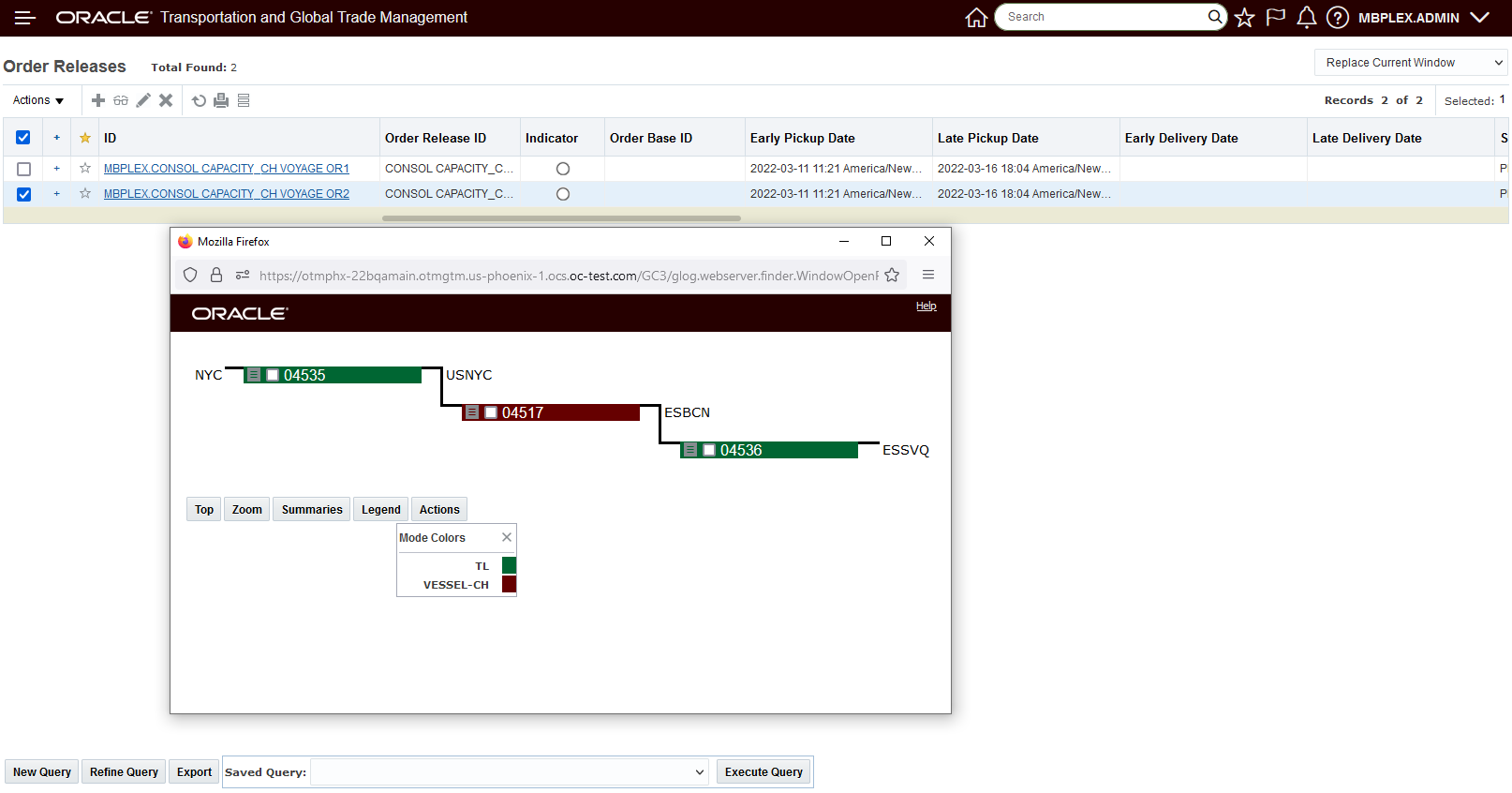
Order Release 2 Bulk Planned - Plot
The details of the Consol Shipment 04517 after both orders have been planned is below. In this case, 35,000 LB and 500 CU FT of available capacity have been consumed by the two order releases planned.
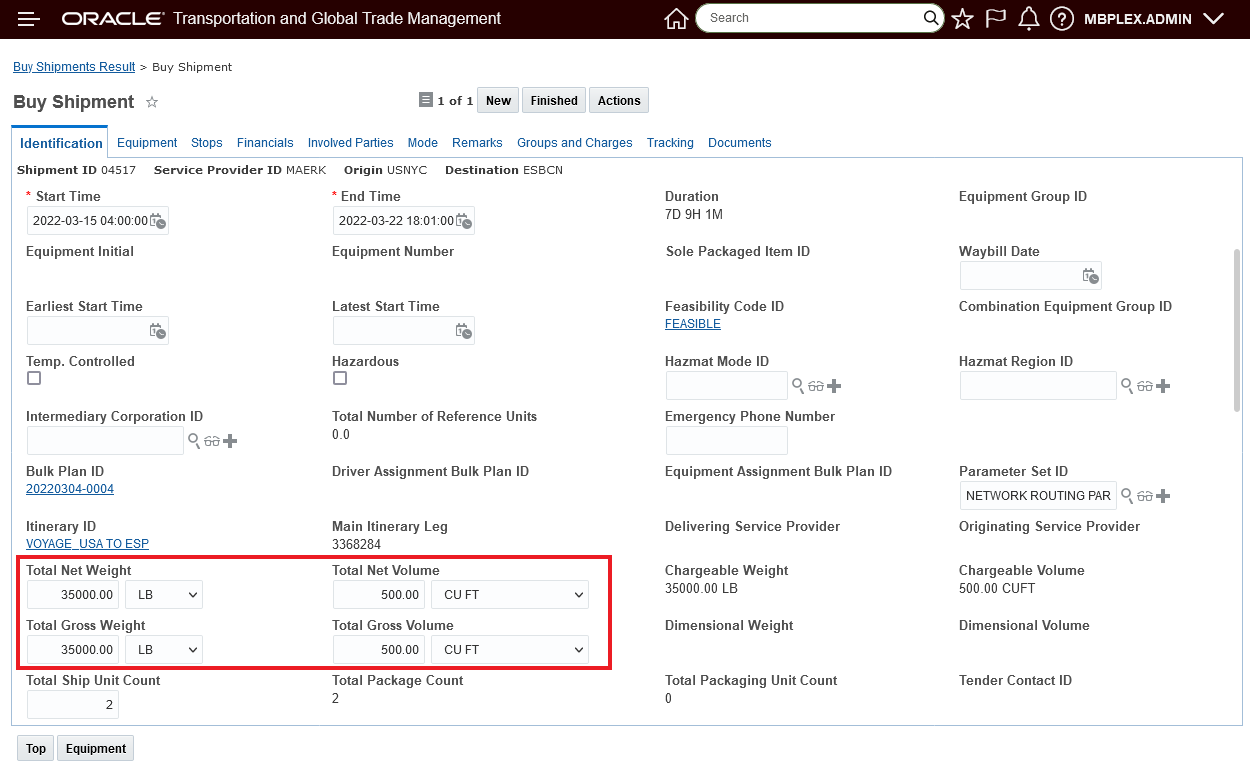
Consol Shipment After Bulk Planning Both Orders
You will find this feature extremely beneficial in any scenario where you reserve capacity using OTM's Consol functionality - and then - when your order release are available - you wish to have OTM automatically consume the reserved capacity as part of your order release bulk planning activities.
Steps to Enable
Bulk planning of your order releases into Consols requires the use of Network Routing - the ORDER ROUTING METHOD must be set to use Network Routing as shown below.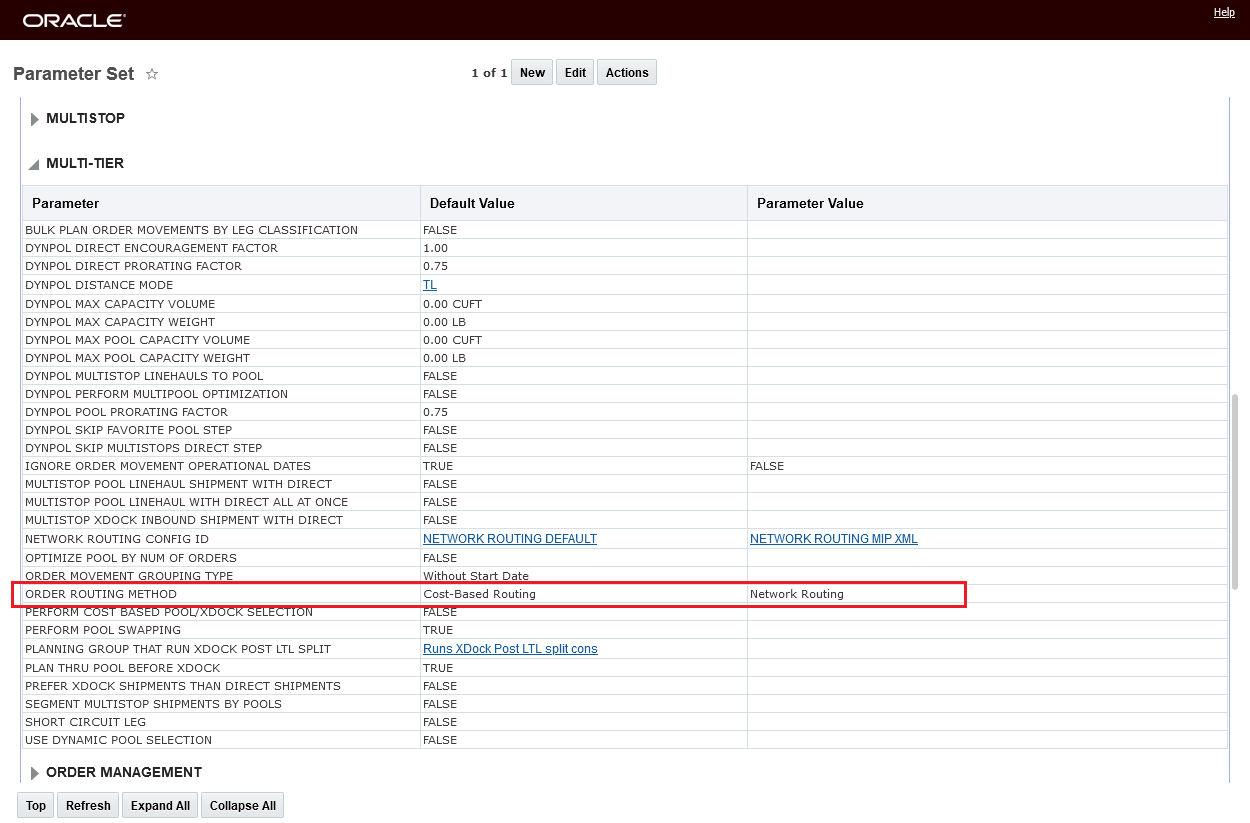
Order Routing Method set for Network Routing
Tips And Considerations
Bulk planning will use the first open consol with capacity to plan the order releases - the consol selection is not based on cost.
Bulk plan must plan the full order on the full path - planning cannot leave orders releases in an incomplete planning state.
If you have orders that will split across multiple equipments - the recommendation is to configure your consols so that you create one shipment with multiple equipment vs the shipment grouping option where you create multiple shipments (one per equipment) - the reason for this is that OTM will not will not split the order across multiple consol shipments.
Network Routing Bulk Plan Milestones Added
This feature adds two bulk plan milestones to the Bulk Plan Results – Performance tab to provide you with additional insight into the planning milestones related to the Network Routing planning option. The added milestones are Retrieve Ground Schedules and Consols and Perform Dynamic Clustering. The additional milestones will provide additional insight into the planning steps performed and will be useful in diagnosing performance related planning issues.
The Retrieve Ground Schedule and Consols tracks the time required for retrieving Ground Schedules and/or Consols.
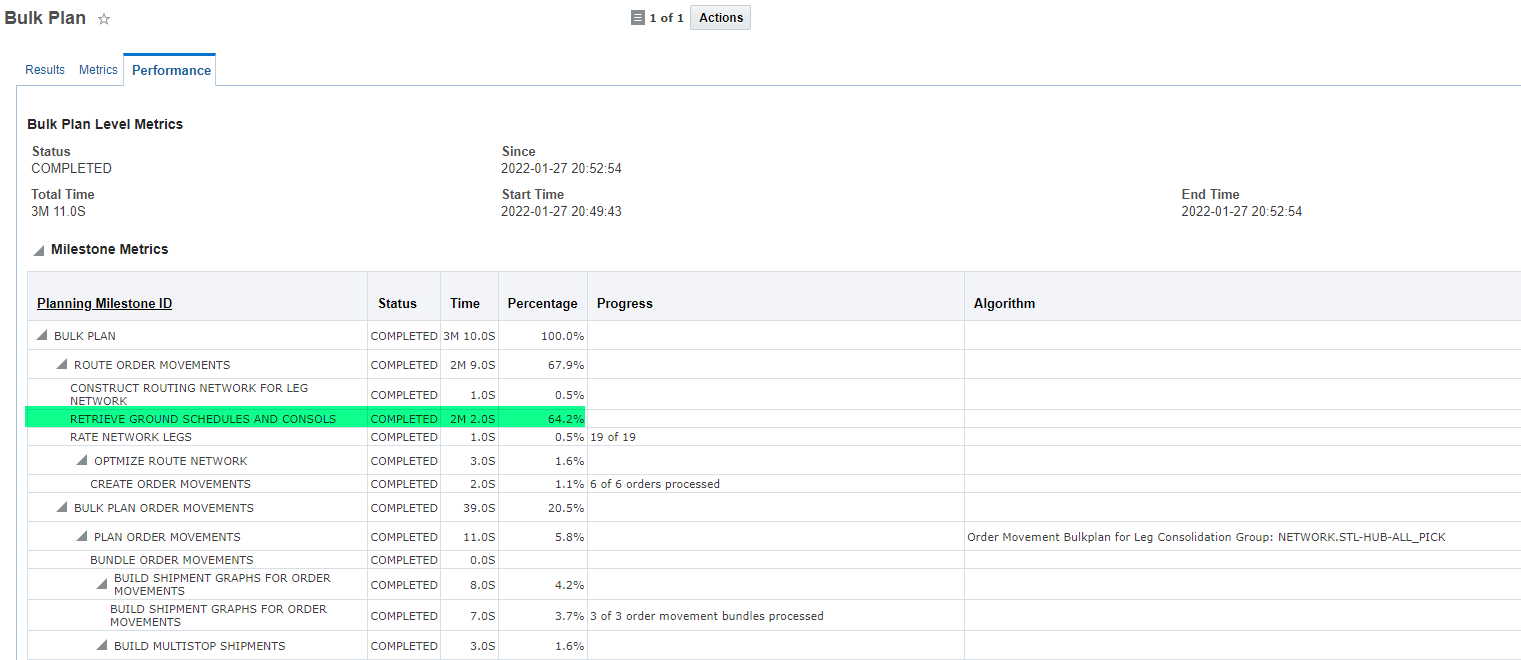
Retrieve Ground Schedules and Consols
The Perform Dynamic Clustering milestone tracks the process performed at the beginning of route selection for the orders and consolidations done on network legs.
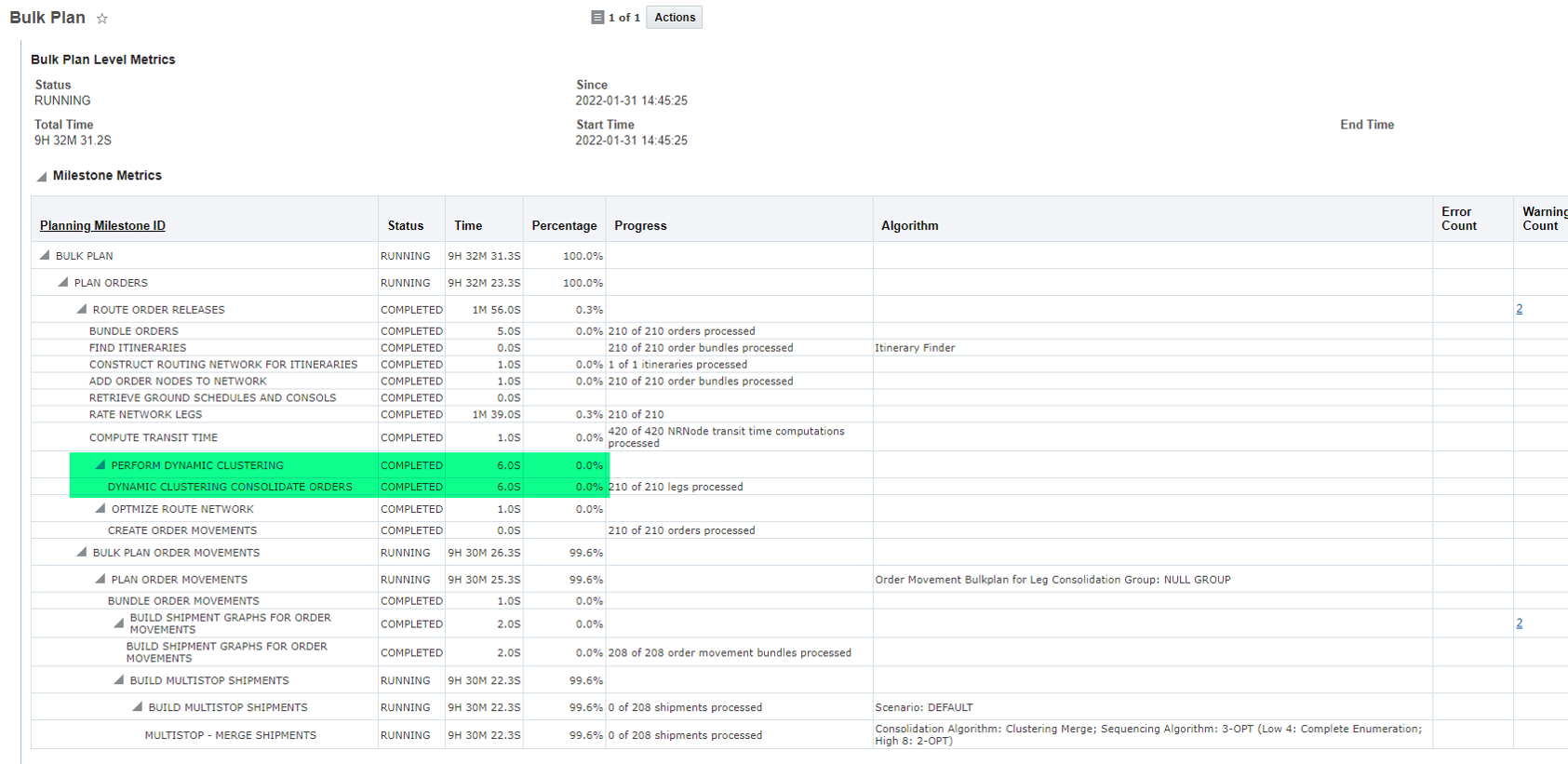
Dynamic Clustering
This feature provides more insight into the Network Planning process and the time being spent in the planning algorithm steps.
Steps to Enable
You don't need to do anything to enable this feature.
Enhanced Graphical Diagnostics
This optional feature, USE ENHANCED GRAPHICAL DIAGNOSTICS, provides you with access to an updated and improved version of the Graphical Diagnostic Views - Sunburst, Tree and Block. The all-new Graphical Diagnostics UI retains all the functionality available in the original Graphical Diagnostics UI while providing additional diagnostics information, and updating all the Graphical Diagnostic Views to a more modern, intuitive and appealing look and feel.
To switch to the Enhanced Graphical Diagnostics - you will need to Opt In to the USE ENHANCED GRAPHICAL DIAGNOSTICS optional feature. Once opted in, the Graphical Diagnostic Views provided for Sunburst, Tree and Block will be the Enhanced Graphical Diagnostics Views.
The slides below provide examples of the new look and feel for the Graphical Diagnostic Views - Sunburst, Tree and Block.
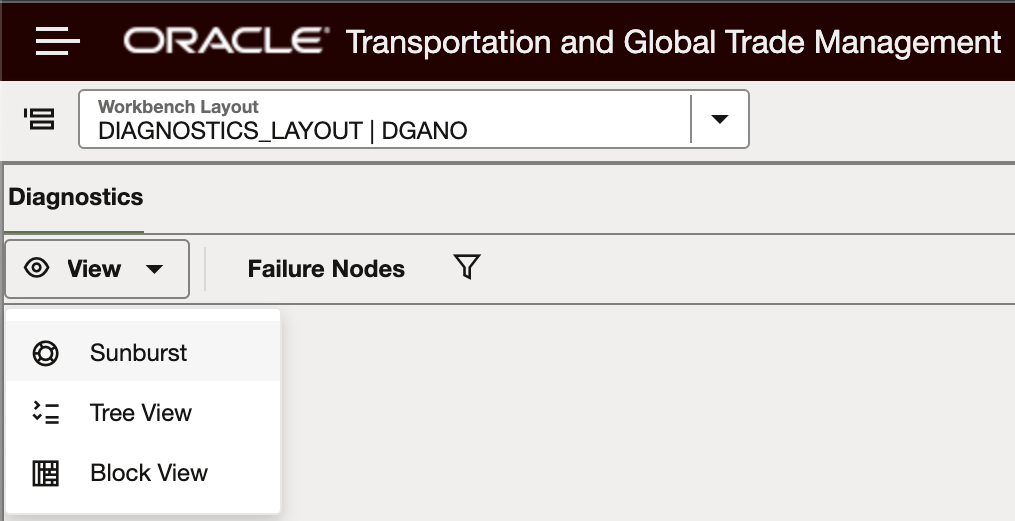
Diagnostic View Menu -Sunburst, Tree and Block
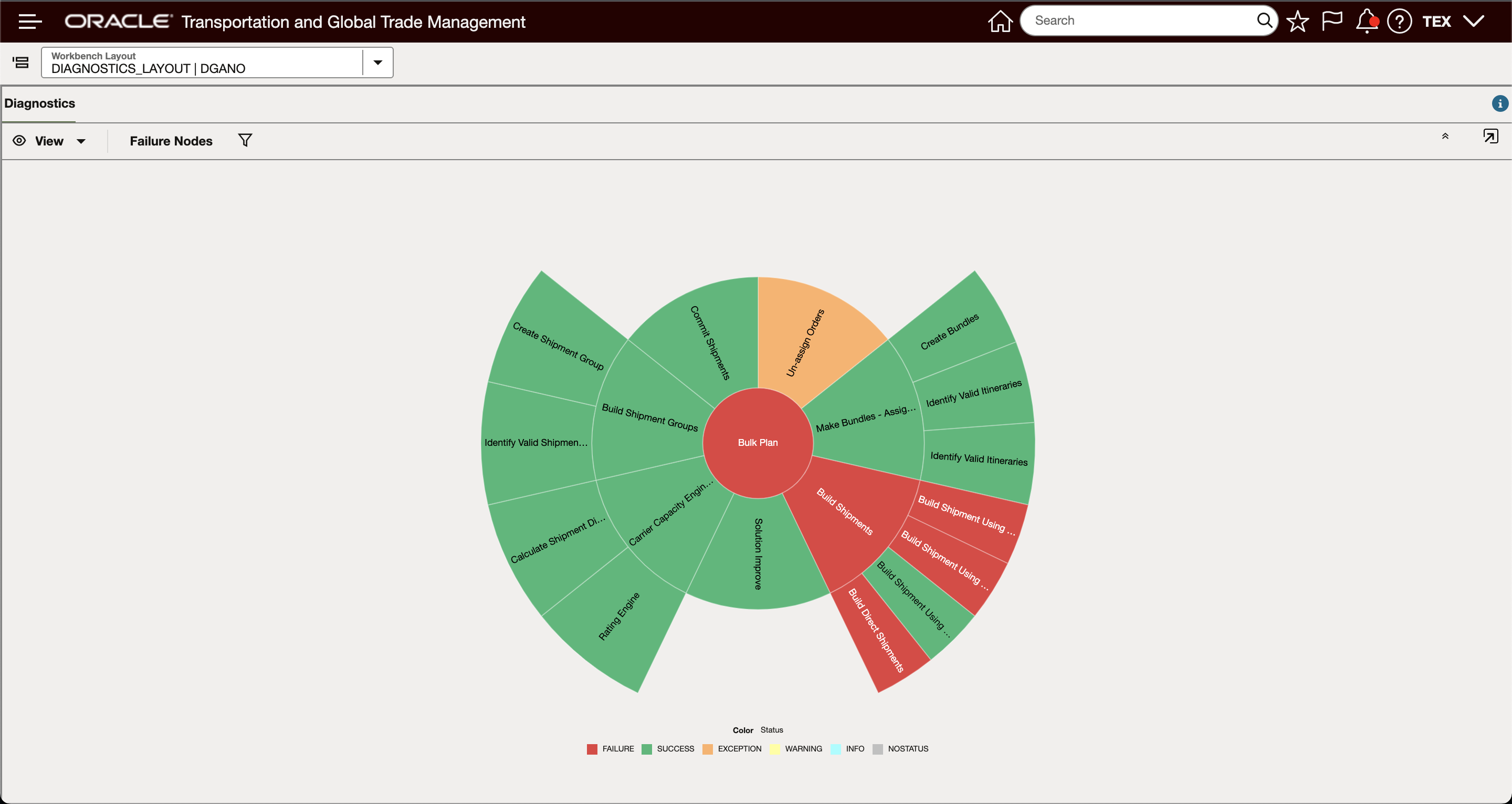
Sunburst View - Initial View
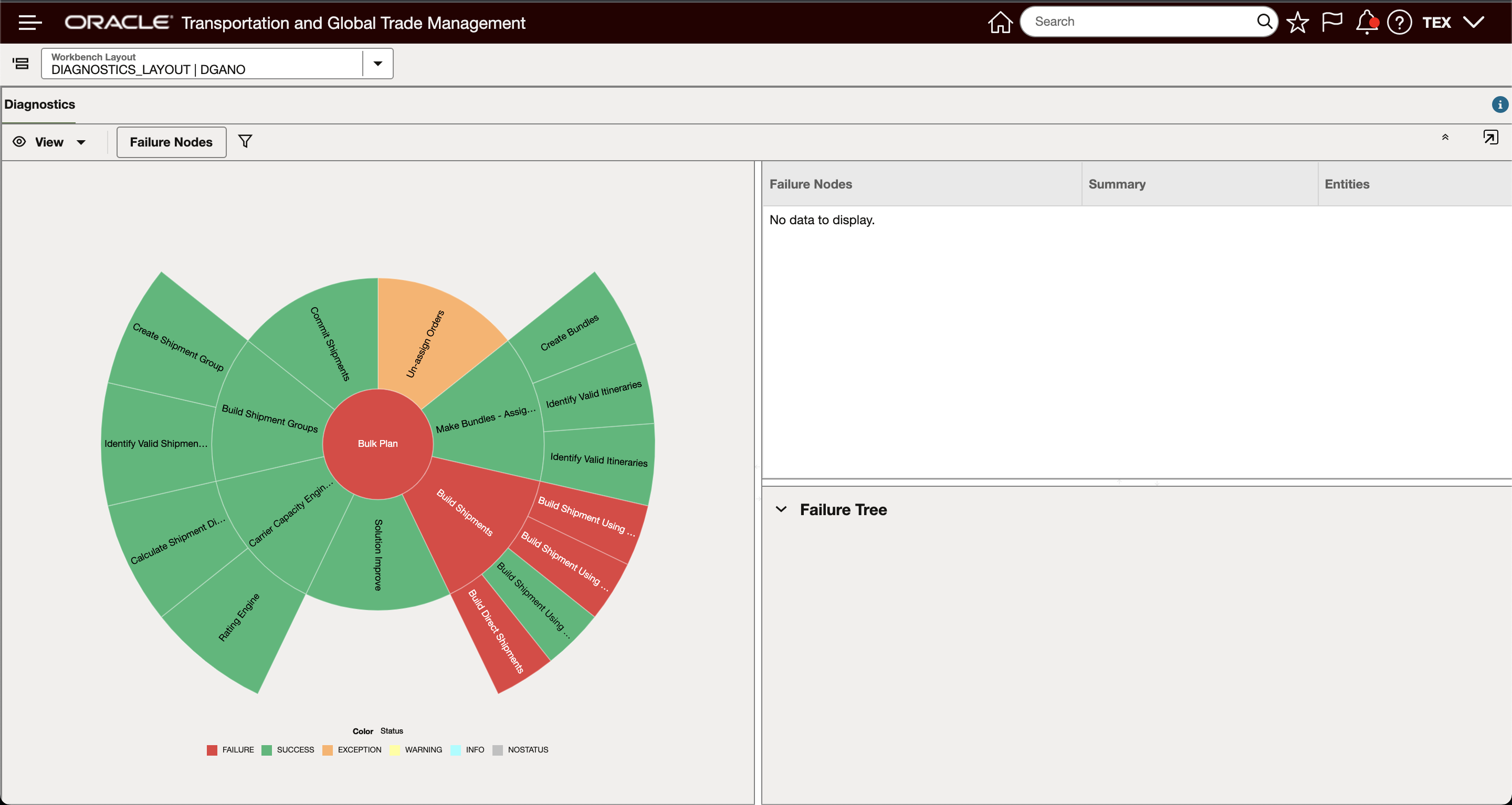
Sunburst View - Details View
Below is the Sunburst view Filter.
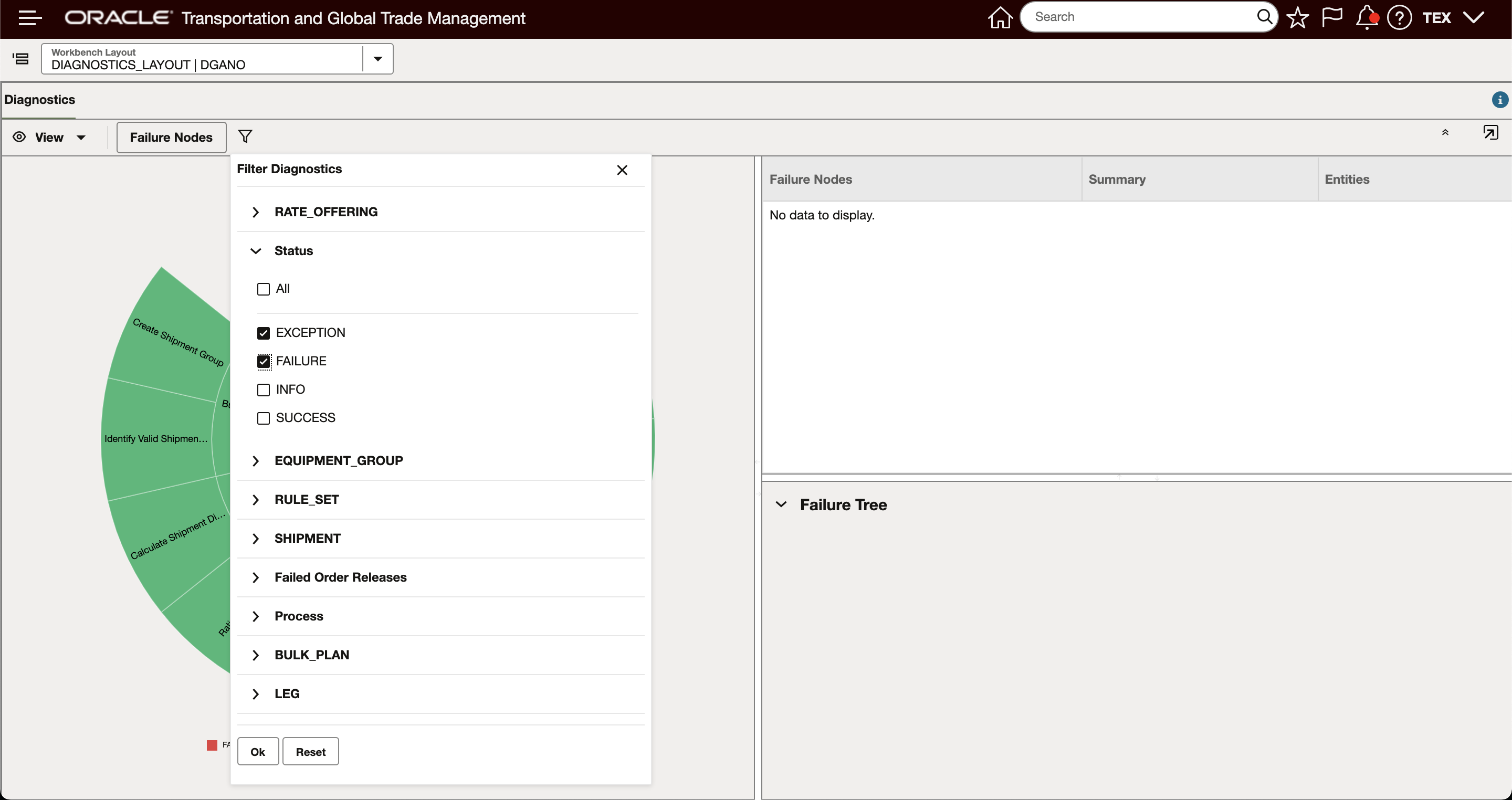
Sunburst Filters
Below is the Sunburst view with the selected Filters applied.
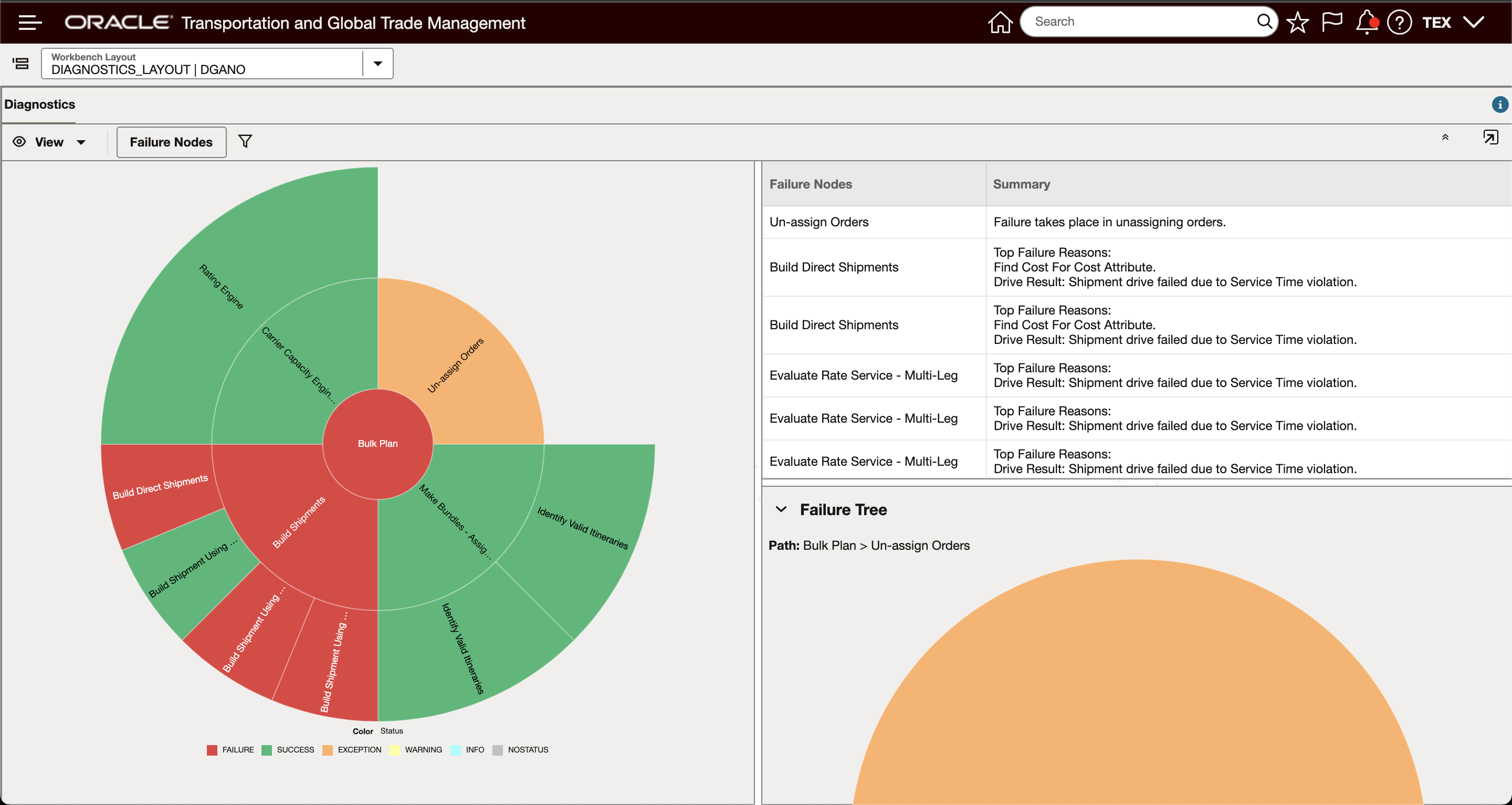
Sunburst Filtered View
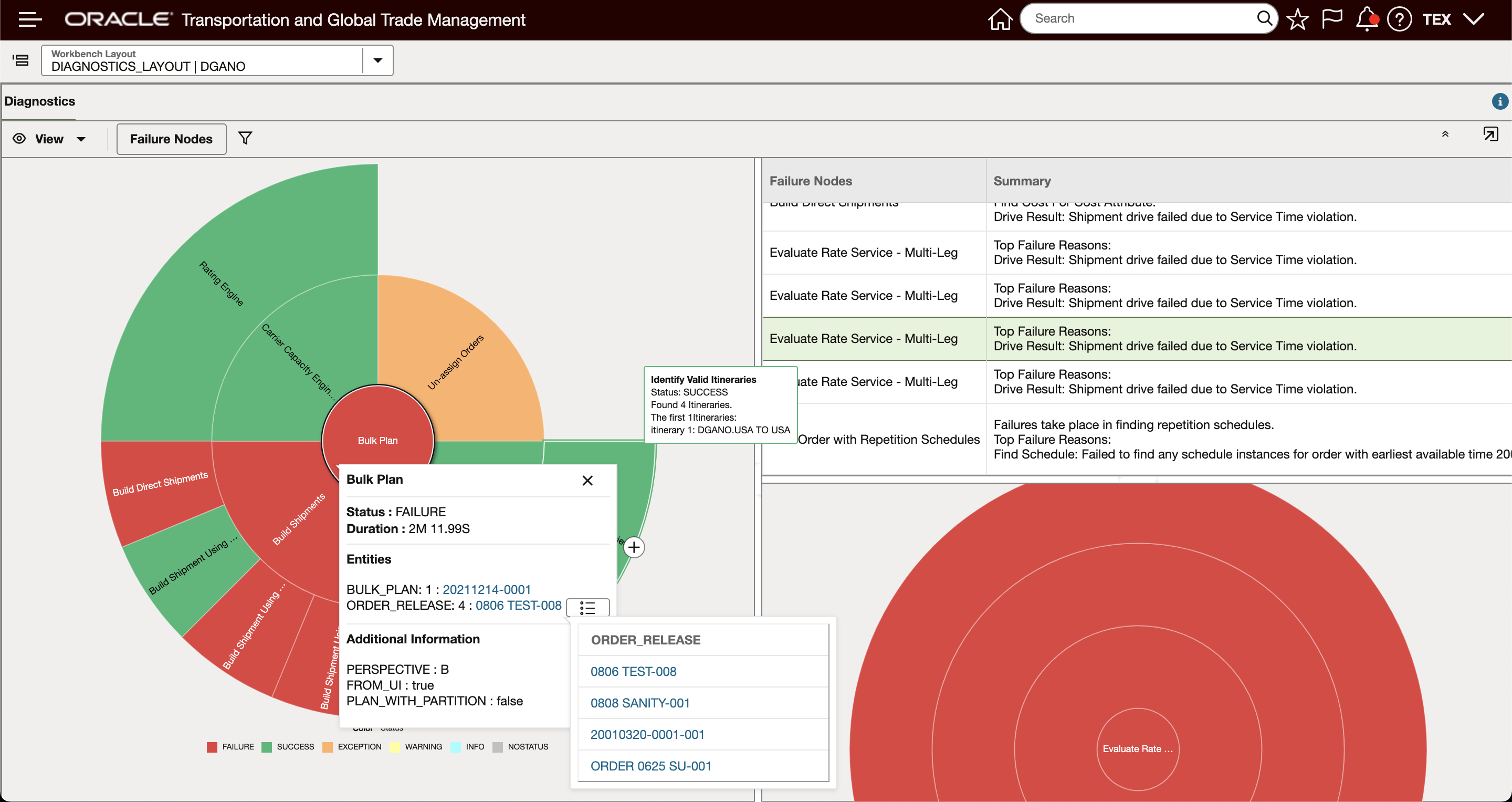
The image below demonstrates the improved popups and diagnostics information provided with the new Graphical Diagnostics.
Sunburst Popups
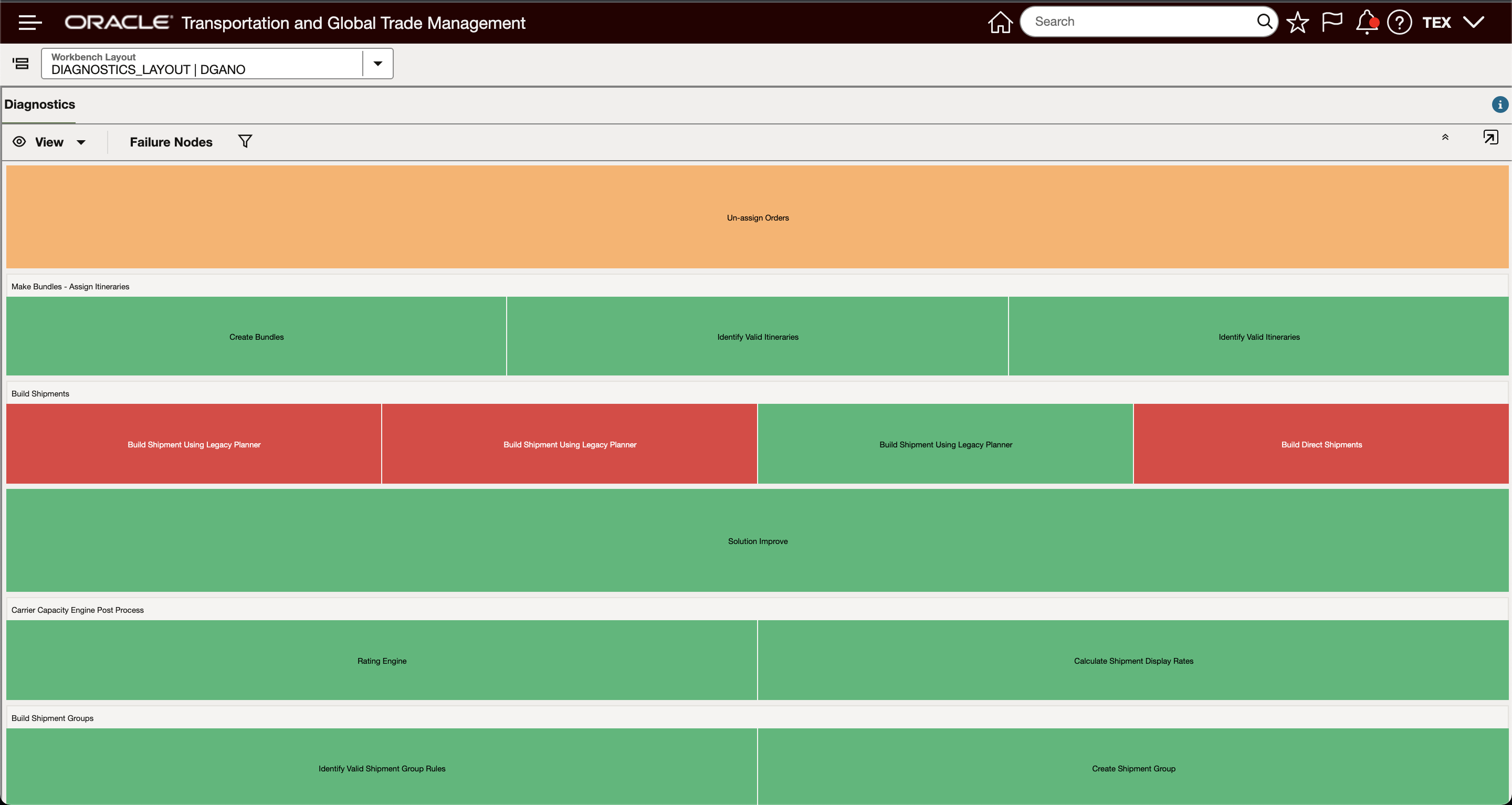
The view below demonstrates the new Block view.
Block View
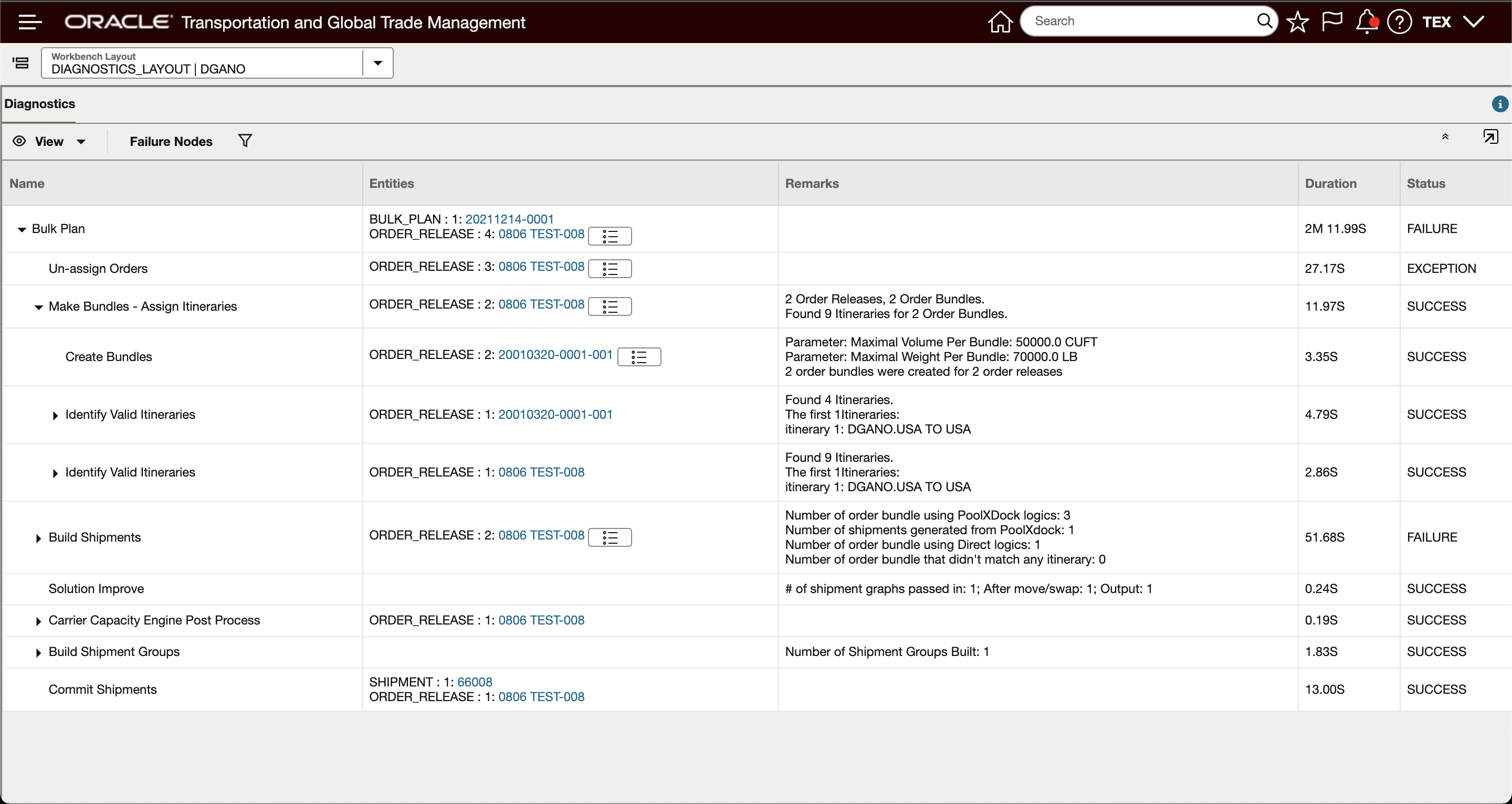
The new Tree view is shown below.
Tree View
This feature improves the navigation, usability and the diagnostic information available to you when investigating your bulk plan results.
Steps to Enable
You don't need to do anything to enable this feature.
Tips And Considerations
While the manager for these features refers to them as "optional" - each of these features will become mandatory when the Optional Until update is released. The optional aspect of these features refers to the period of time where there is an opportunity to Opt In/Opt Out of enabling the feature. During this "optional" period - the time between when the feature is released and the release prior to the Optional Until release - the request/desire/intention is for you to enable the feature(s) for testing purposes so that the transition to mandatory, as of the Optional Until release, is uneventful.
This page is accessed via Configuration and Administration > Property Management > Optional Features.
NOTE: Only the DBA.ADMIN user can access and use the Optional Features page.
For Diagnostics to be enabled two checks must be in place. The property glog.otmdiag.log must be On (it is On (true) by default). Also, either the Diagnostic user preference or the Tracking Diagnostic option on the Settings and Actions page must be On.
Independent Equipment Reference Unit
This feature adds a new 'Independent' checkbox and related logic to the Equipment Reference Unit functionality. The independent designation on an Equipment Reference Unit indicates whether the Equipment Reference Unit is independent of other Equipment Reference Units when determining utilization.
The Independent and non-Independent (Independent checkbox unchecked) Equipment Reference Units are evaluated as follows to determine a shipment's Equipment Reference Unit Utilization:
- If the Equipment Reference Unit is independent (Independent flag checked) the limit utilization value will be used to determine the Independent Reference Units utilization - if there are more than one Independent Equipment Reference Units then the largest limit utilization value will be used.
- If the Equipment Reference Unit is non-Independent (Independent flag not selected default/previous behavior) then the contribution value for the non-independent Equipment Reference Unit will be used - if there are more than one non-Independent Equipment Reference Units, then the contribution of each of the non-Independent Equipment Reference Units will added together.
- The Equipment Reference Unit Utilization will be the larger of either:
- the sum of the contribution values calculated for all the non-Independent Equipment Reference units
or
- the largest of the limit utilization values calculated for the Independent Equipment Reference Units.
In the example below, there are two non-Independent Equipment Reference Units - a Small Box and a Big Box. In both cases, the Independent check box is unchecked.
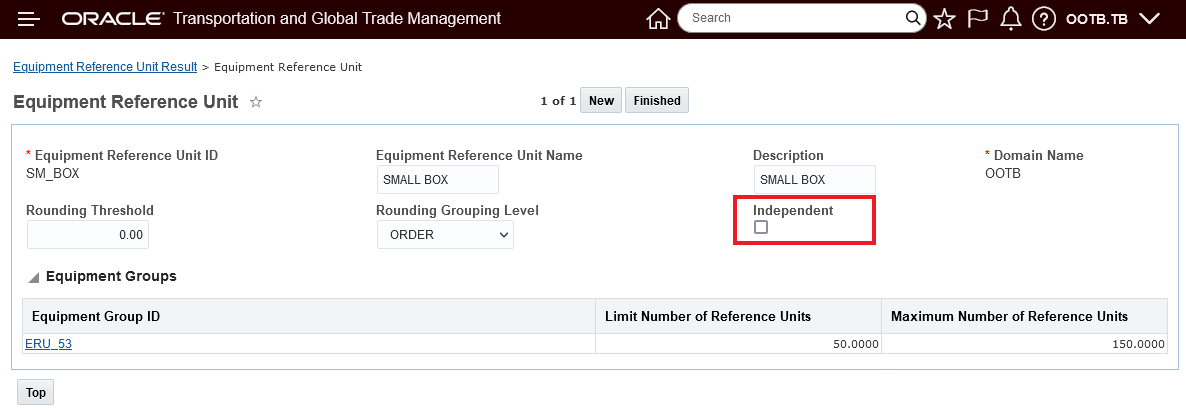
Small Box Equipment Reference Unit - non-Independent
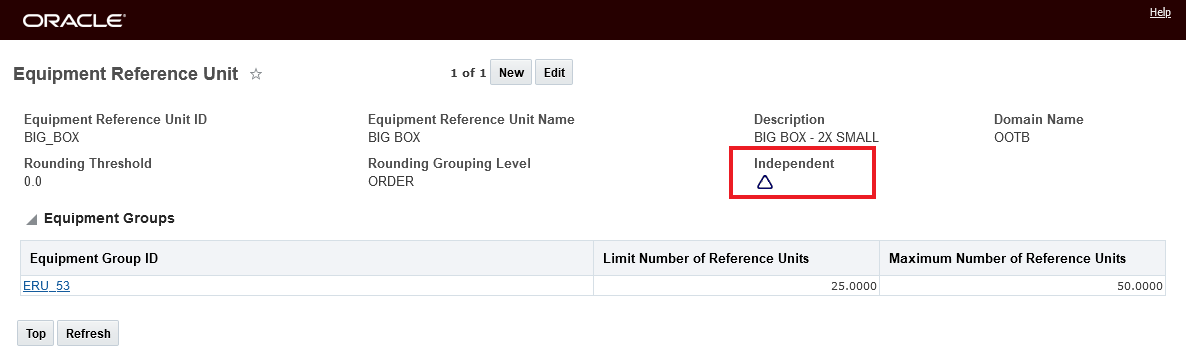
Big Box Reference Unit - non-Independent
Given an order with 50 Small Boxes and 25 Big Boxes the Equipment Reference Unit Utilization will be 83%. The 50 Small Boxes contribute a 33% utilization (50/150), while the Big Box contributes 50% (25/50).
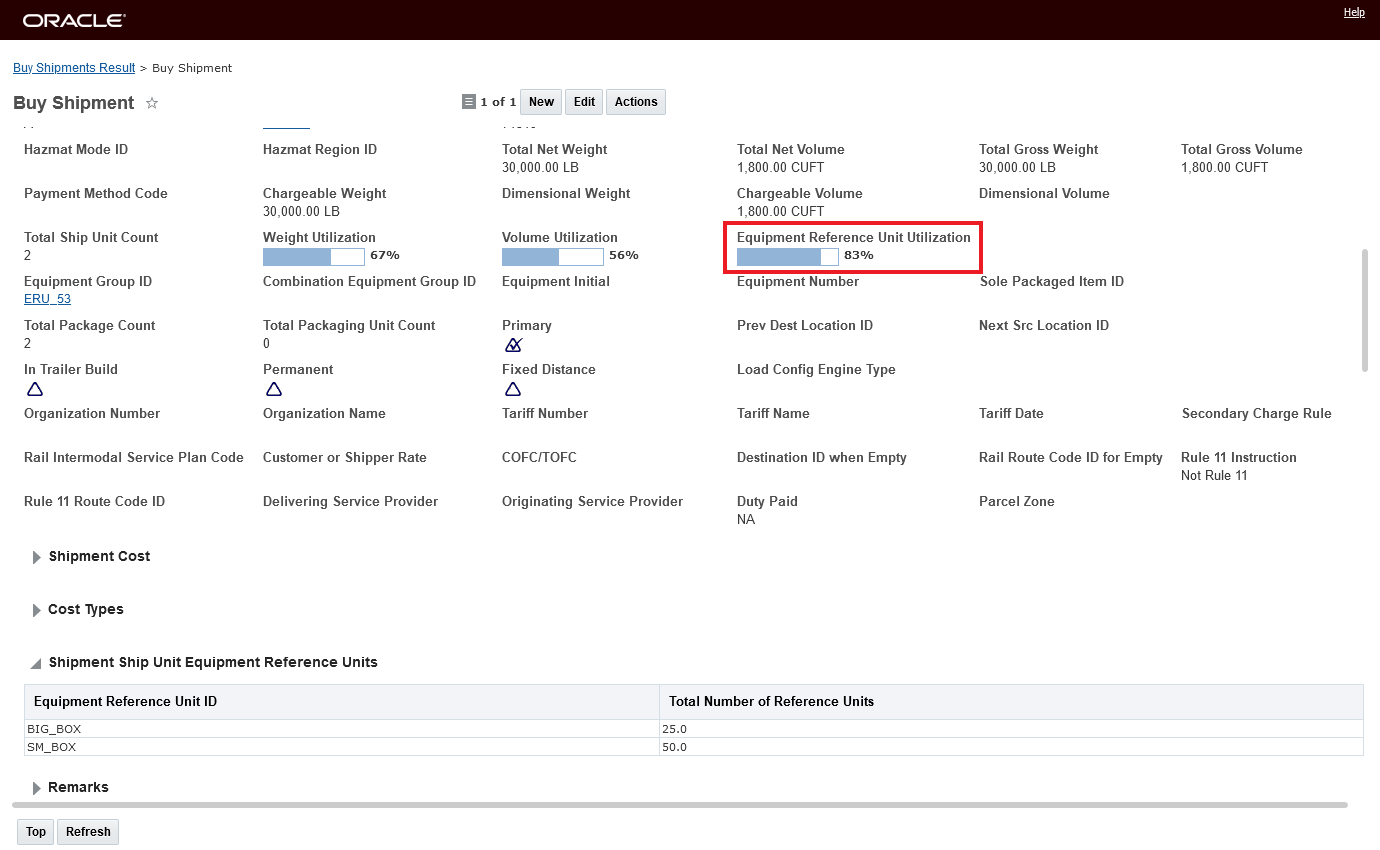
Non-Independent Equipment Reference Unit Utilization
Continuing with this example, assume that there is a restriction to limit shipments to having only 25,000 units of value. The value limit is independent from the calculation of utilization associated with loading the Small and Big boxes. The Value Equipment Reference Unit below defines the desired value requirement using an Independent Equipment Reference Unit.
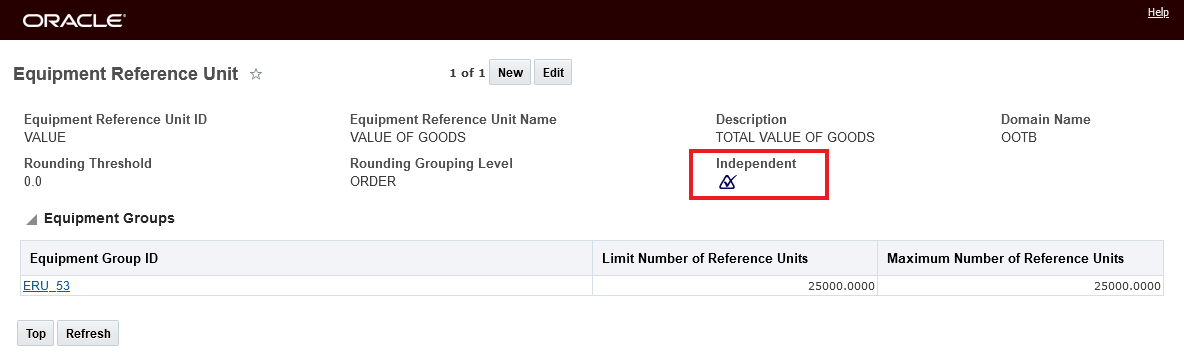
Independent Value Equipment Reference Unit
Note that when you define the Independent Equipment Reference Unit Capacity the Limit Number of Reference Units value and the Maximum Number of Reference Units value must be the same - this is required/by design since the Independent Equipment Reference are evaluated independently. If the Limit Number of References Units is not equal to the Maximum Number of Reference Units, you will receive the error below.
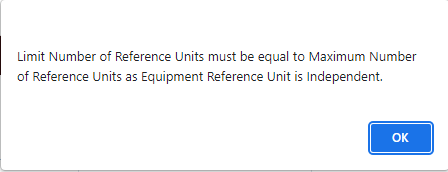
Error Message
Below is the Equipment Group setup with the one Independent Value Equipment Reference Unit and the two non-independent Equipment References Units - SM Box and Big Box.
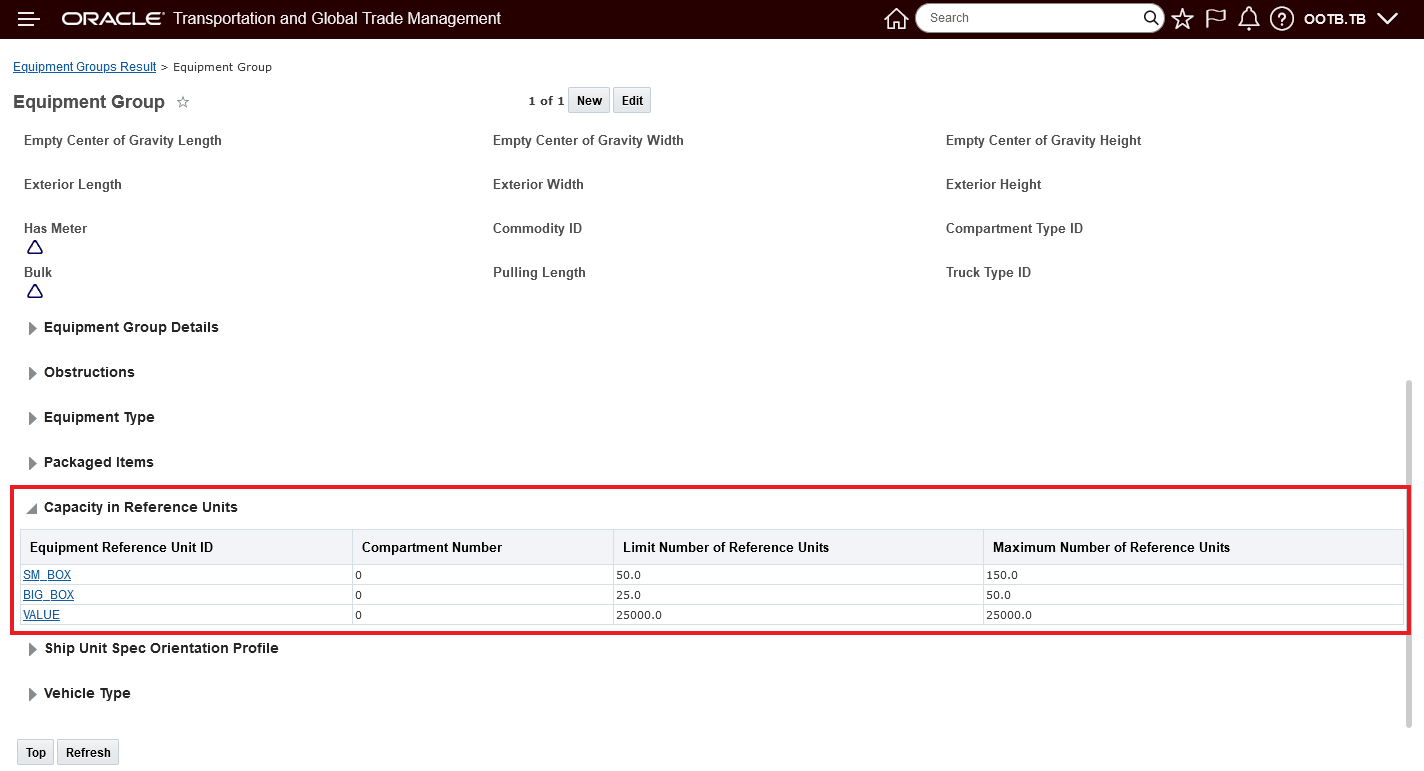
Equipment with ERU Setup
Using the same order as above - 50 Small Boxes, 25 Large Boxes and adding in a Value ERU amount of 12,500 units for each of the two Ship Units on the shipment - the shipment Equipment Utilization is now at 100%. The 100% utilization is based on the evaluation of the Independent Value Equipment Reference Unit – at 100% (25,000/25,000) and comparing that value to the total for all the non-Independent Equipment Reference Units of 83% and selecting the higher value of the two.
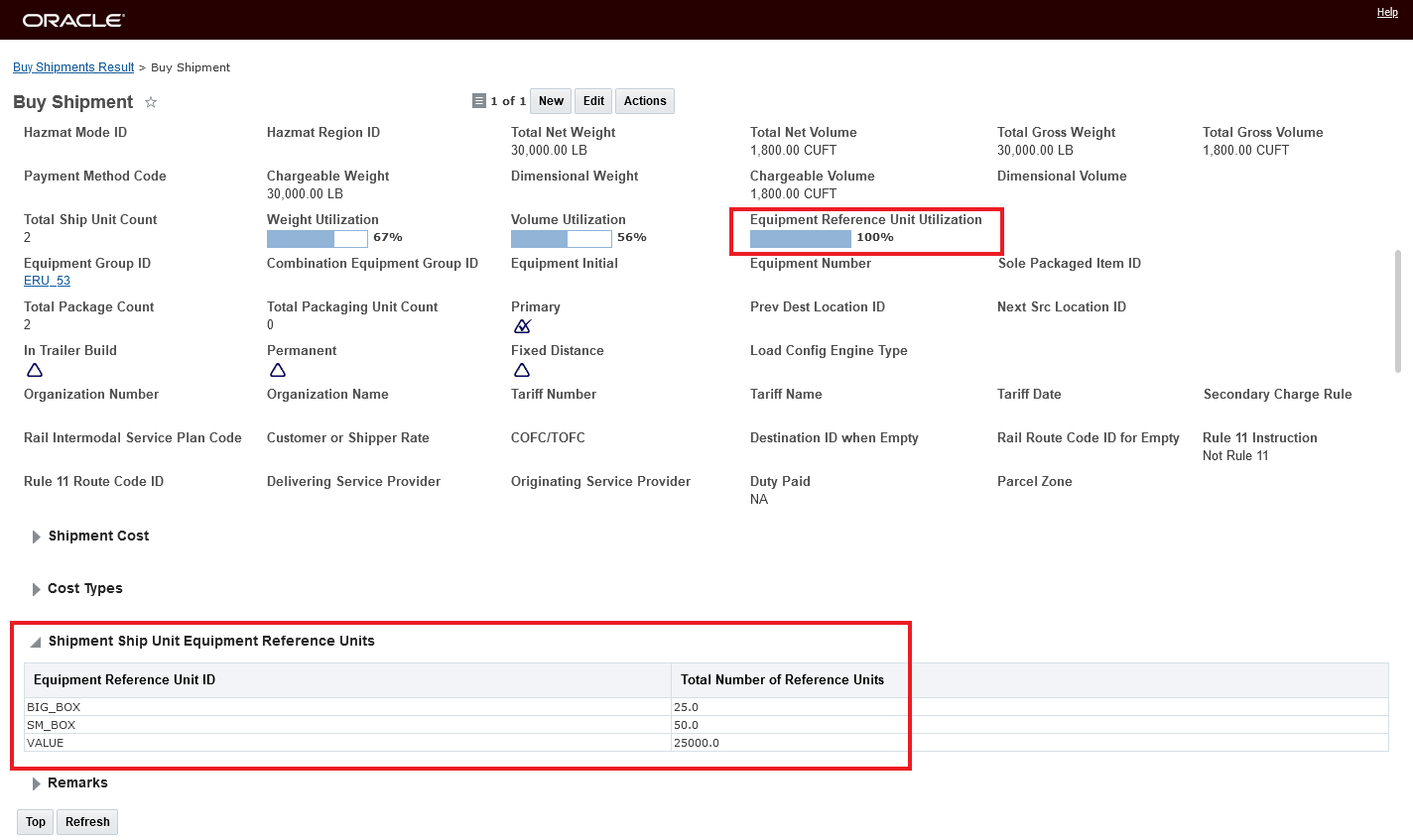
100% Equipment Utilization Independent and Non-Independent Equipment Reference Units Evaluated
Below is the order release ship units used in the example.
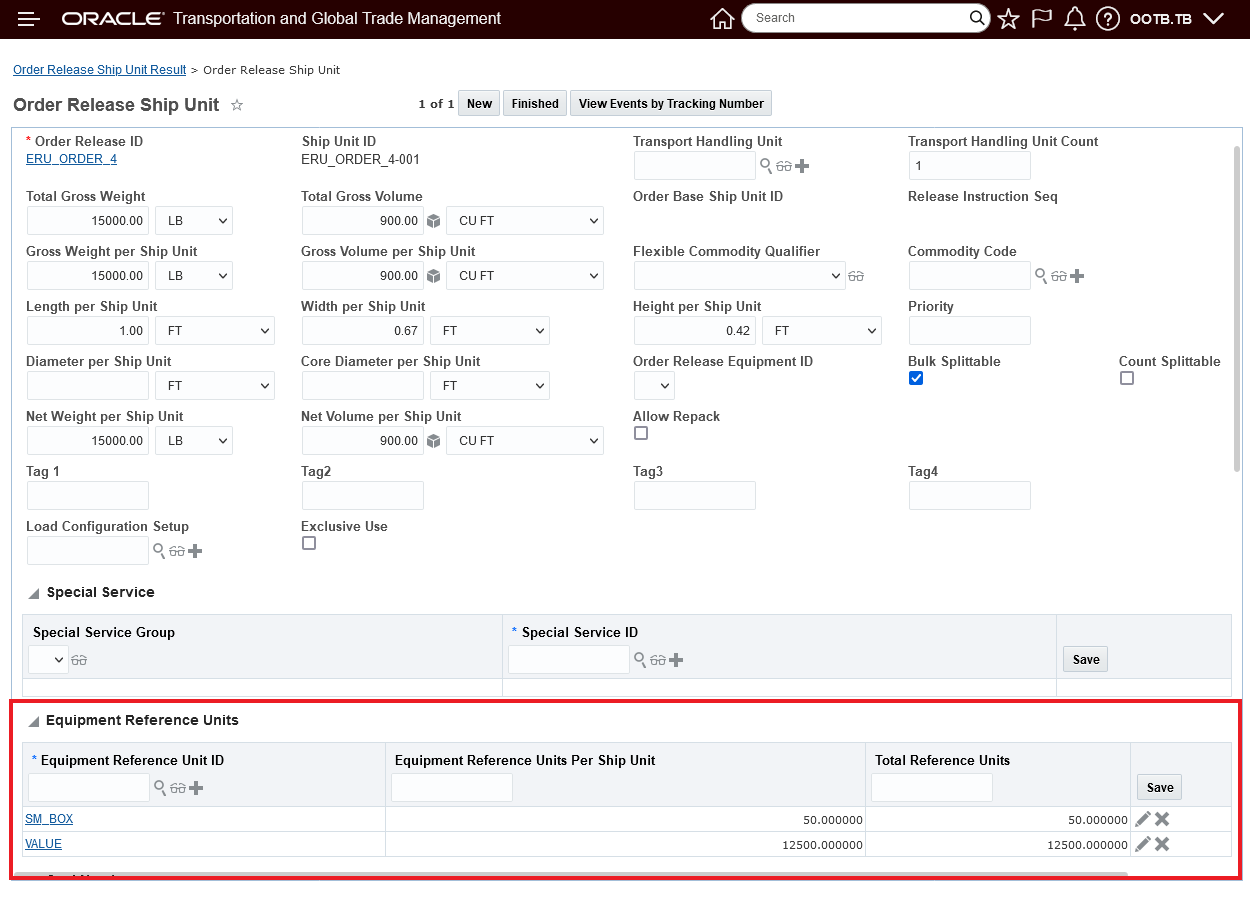
Order Ship Unit 1

Order Ship Unit 2
This feature simplifies the setup and usage of Equipment Reference Units in situations where you have Equipment Reference Units that contribute to utilization in an additive fashion along with Equipment Reference Units that need to be evaluated for utilization independently.
Steps to Enable
You don't need to do anything to enable this feature.
Logistics Machine Learning - Event-Based ETA Prediction Model
This feature extends the Logistics Machine Learning Project Objective Modeling Type options to include - in addition to the original Planned ETA Prediction option, a new Planned and Event based ETA Prediction option that extends the model development and predictions provided to include in-transit tracking event information.
With the inclusion of in-transit tracking events - the ETA predictions can now respond to event related input - providing you with a more complete start-to-finish ETA prediction for your shipments.
Some of the changes you will notice with the introduction of the Planned and Event based ETA Prediction model type are highlighted below.
The Machine Learning Project now supports the selection of two Objective Model types - the original Planned ETA Prediction type and the new Planned and Event based ETA Prediction model type. The Planned and Event based ETA Prediction model type includes the Planned ETA Prediction model - and then extends the model development process to include in-transit tracking event information.
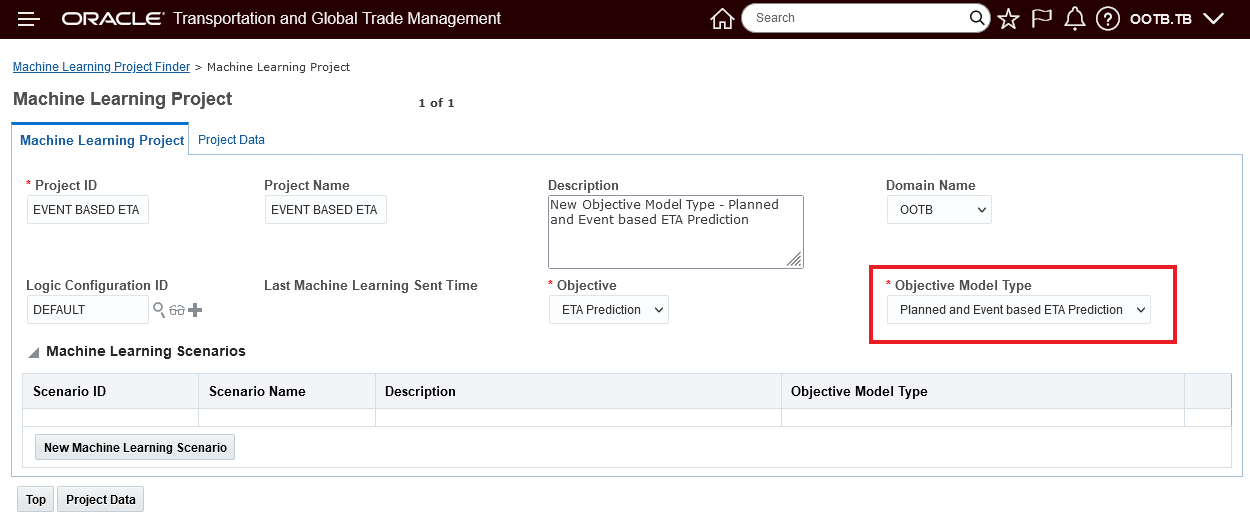
Machine Learning Project Event Based Model Type
For Event Based ETA Prediction Machine Leaning Scenarios - you will see both a Planned ETA Prediction Model section and an Event based ETA Prediction Model section - Shipment Columns and Event Columns.
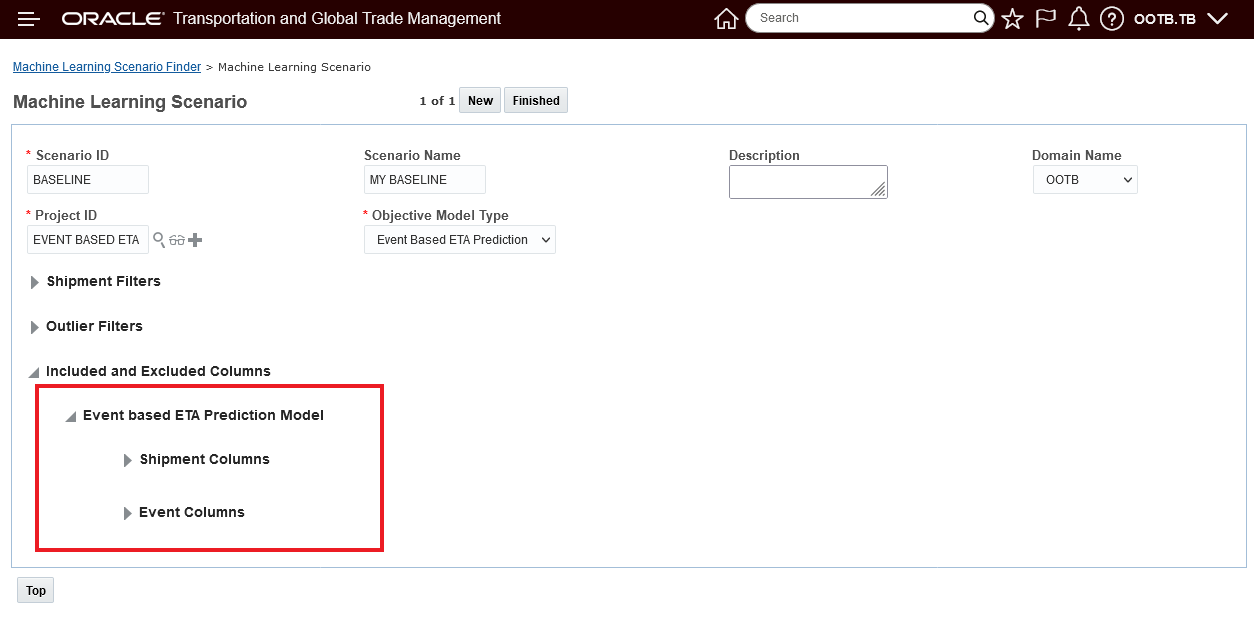
Event Based ETA Prediction Scenario
The ETA based Prediction Model provides many options for determining the Shipment Columns to include or exclude in your model development. By default (as shown below), there are a number of included and excluded columns.
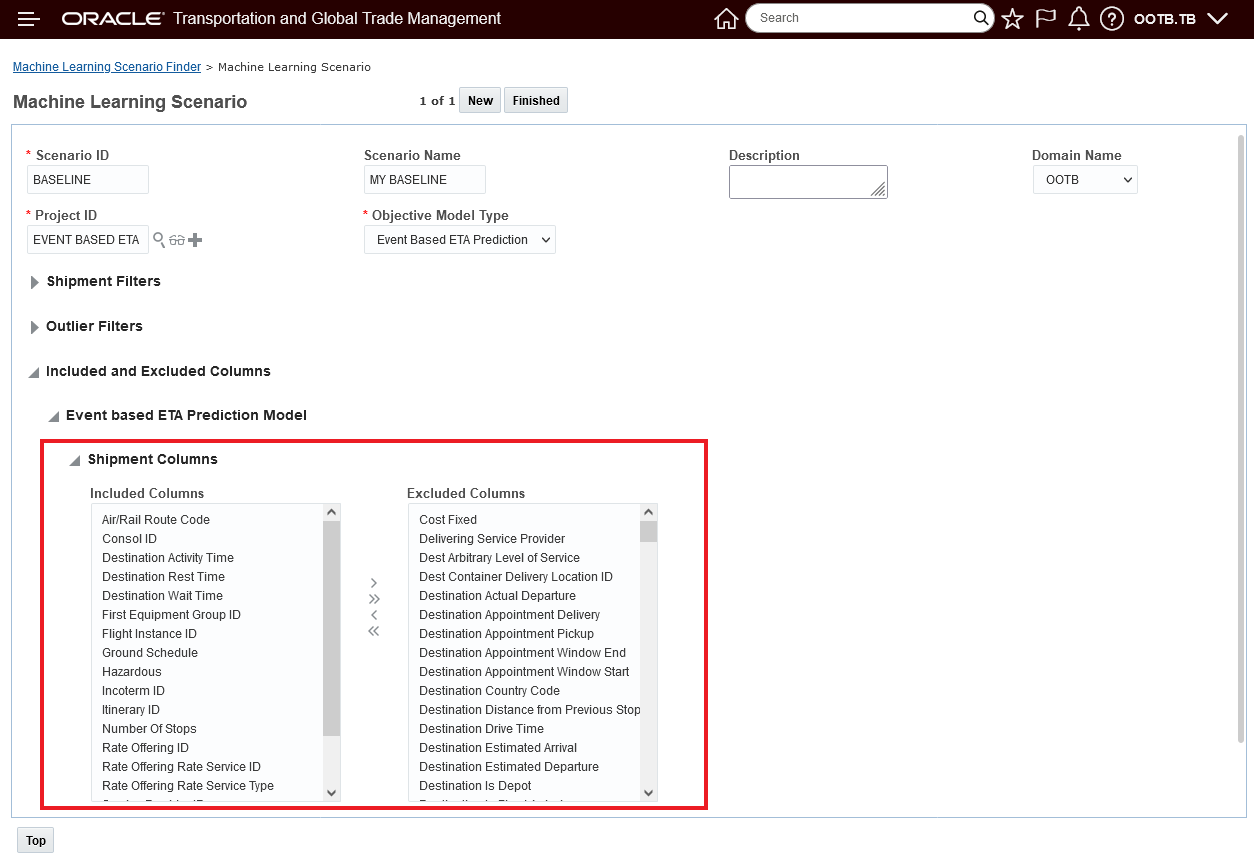
Event Based Prediction Model Shipment Include Exclude Columns
The ETA based Prediction Model also provides many options for determining the Event Columns to include or exclude in your model development. By default (as shown below), there are just a few columns included in the model.
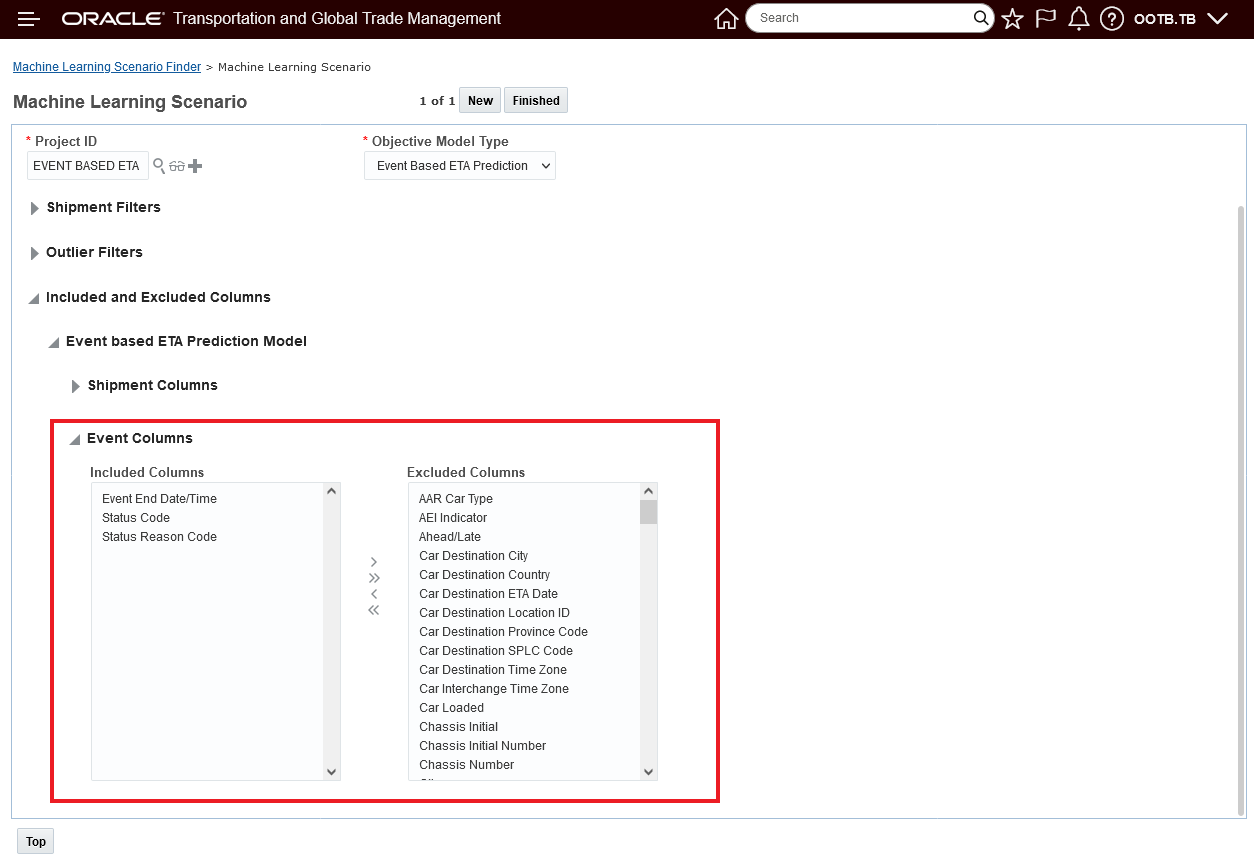
Event Based Prediction Model Tracking Event Include Exclude Columns
Once the Planned and Event based ETA Prediction model is developed you have the option, when running Perform Prediction against your shipments, to select the Scenario Objective Model Type to use - either the Planned Model, the Event Model or Both.
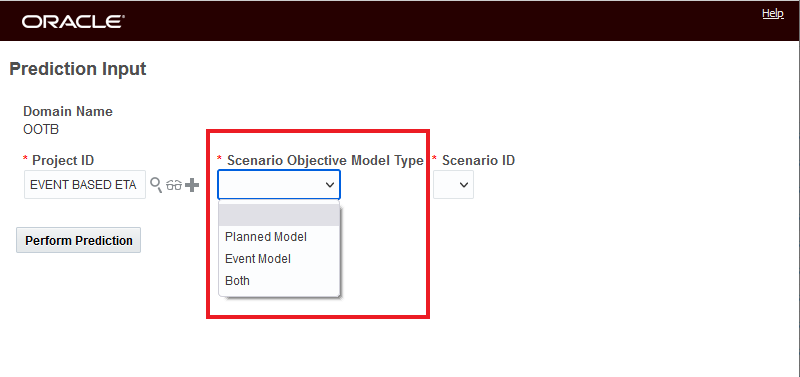
Model Type Options for Planned and Event based ETA Prediction
The process and results for the Perform Predication action are the same as the Planned ETA model type. The prediction results are provided once the prediction process is complete for the selected shipment or shipments.
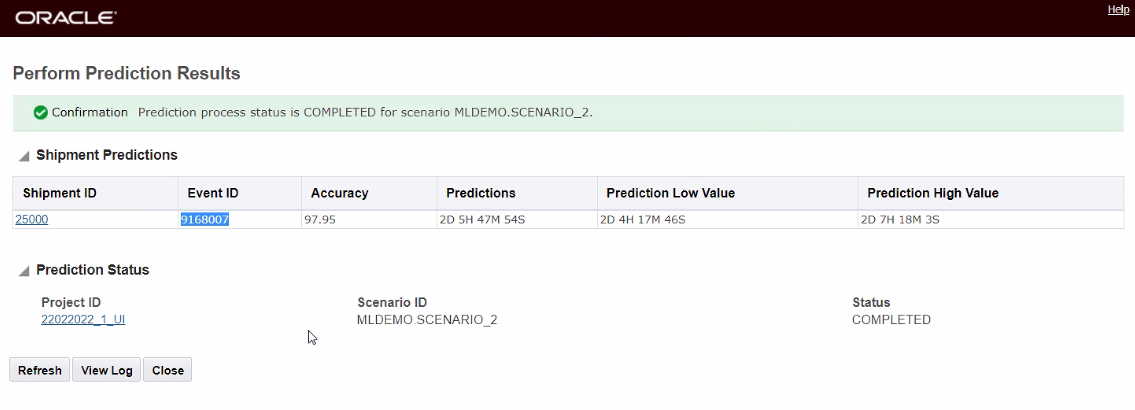
Perform Predication Completion
For the shipments where the Perform Prediction action has run, the ETA predictions will be provided at the stop level as shown below.
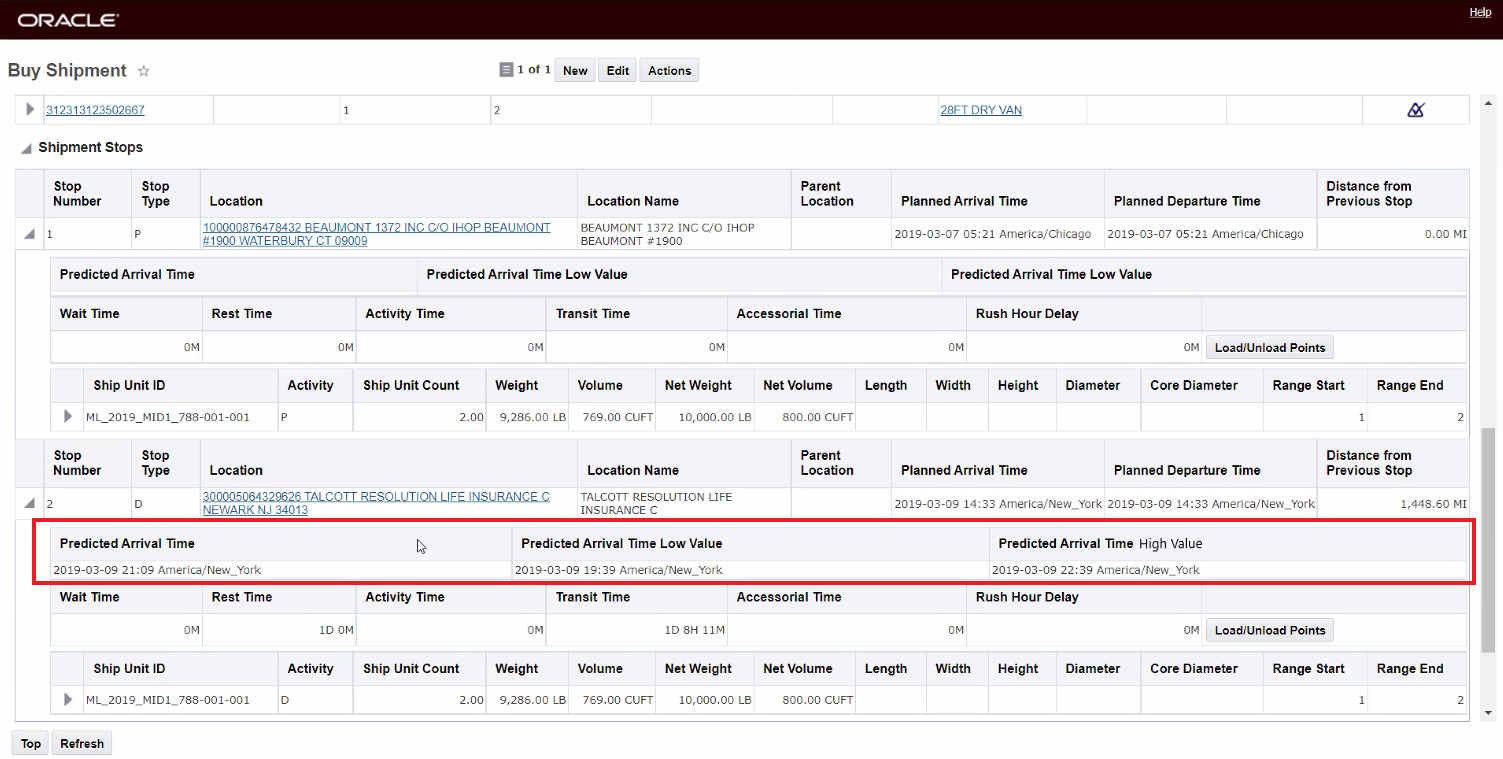
Results Provided on Shipment Stop
Planned and Event based ETA Prediction model Planned
Extends the ETA prediction model capabilities to include tracking event information - allowing for ETA predications to consider activities that occur after your shipment ships and is in-transit.
Steps to Enable
You don't need to do anything to enable this feature.
Key Resources
- The Logistics Machine Learning Overview in On-Line Help provides an excellent starting point for understanding the components and setup required to enable Machine Learning.
On-Line Help - Setup Guide for Logistics Machine Learning
This feature provides you with a start-to-finish On-Line Help setup guide for Logistics Machine Learning. The setup for Logistics Machine Learning involves multiple products including OTM, OTI, and IoT IA - you can use this single guide to complete all the setup steps required across the set of products involved. When you have completed the steps provided in this guide, you will be ready to start training your data and then seeing transit time predictions for your shipments.
Topics covered by the Setup Guide for Logistics Machine Learning include:
- Configure OTM, IoT, and Object Storage
- Create, Train and Predict with a Machine Learning Model
- Understand the Machine Learning Model
The Setup Guide for Logistics Machine Learning provides you with an easy to follow, single source guide that covers all the configuration steps required for setting and using Logistics Machine Learning.
Steps to Enable
You don't need to do anything to enable this feature.
Tips And Considerations
To find the guide in Help - simply search for 'Setup Guide for Logistics Machine Learning'.
Data Rule Support for Commitment Allocations
This feature provides you with Data Rule support (Data Rule, Data Rule Instance) for Commitment Allocations allowing you to simulate various commitment allocation levels in your Logistic Network Modeling simulations.
Extends the simulation capabilities available to you for comparative scenario modeling.
Steps to Enable
You don't need to do anything to enable this feature.
Shipment and Order Involved Parties
This feature extends the Transportation Intelligence solution to support the ability to slice your Shipment and Order facts by Involved Party. The solution supports all Involved Party qualifiers - whether Public or qualifiers that you have created for your implementation.
Order Release Involved Party Dimension
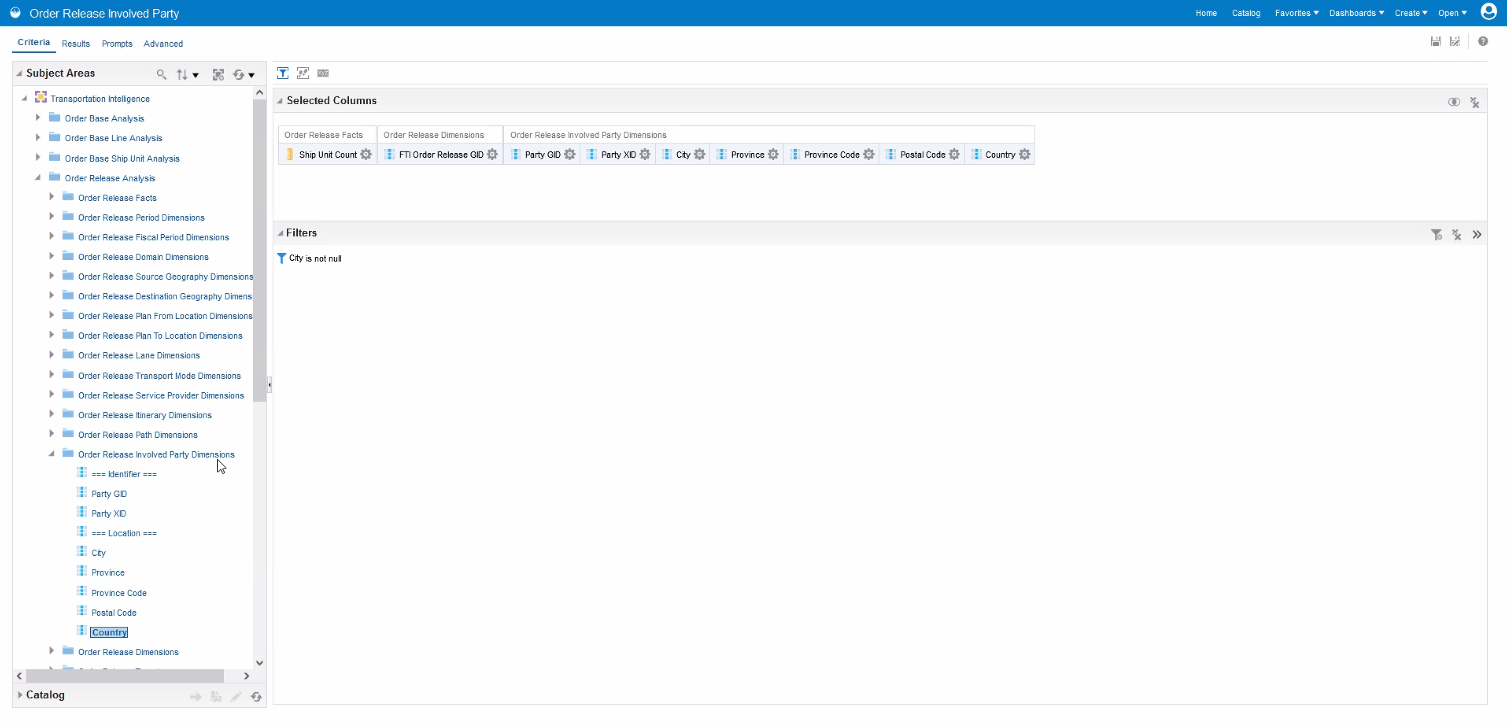
Order Release Involved Party Dimension
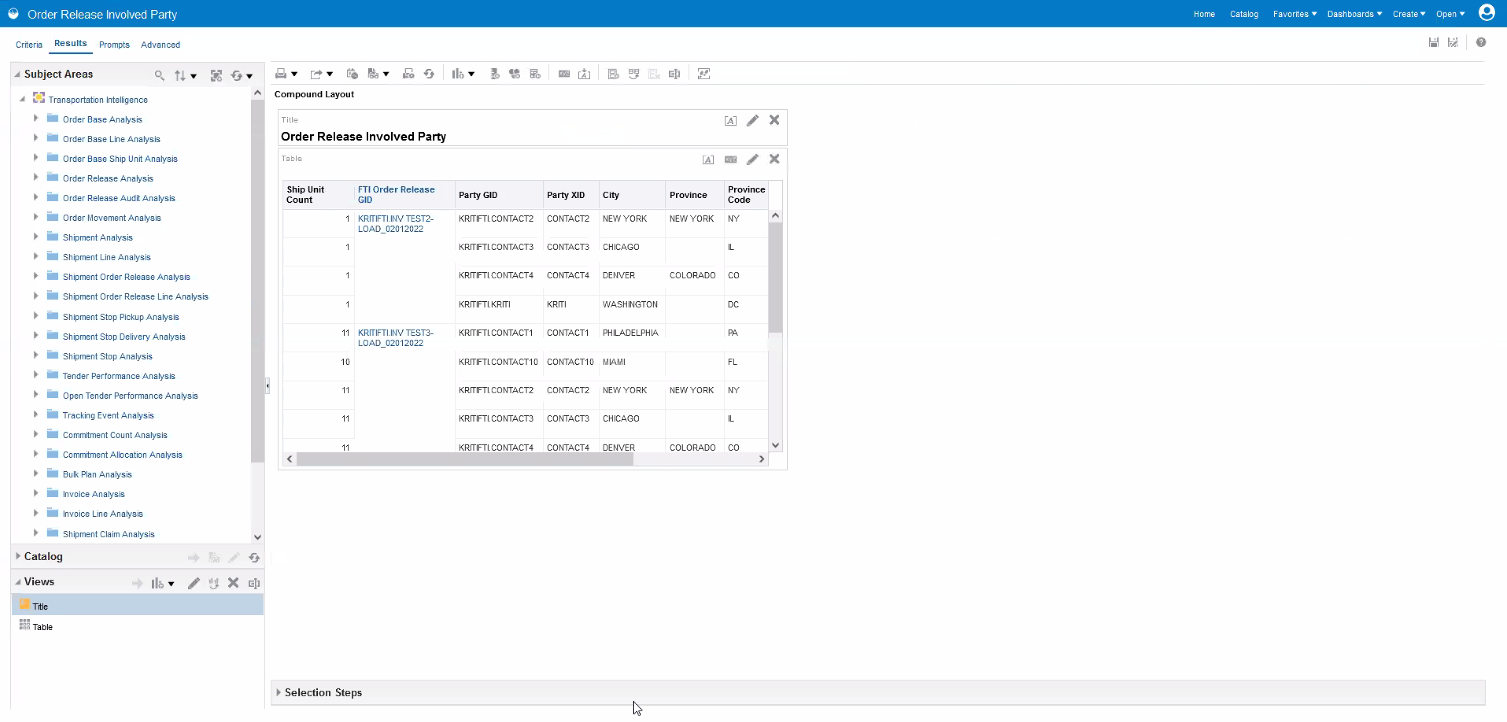
Order Release Involved Party Standard Report
Shipment Involved Party Dimension
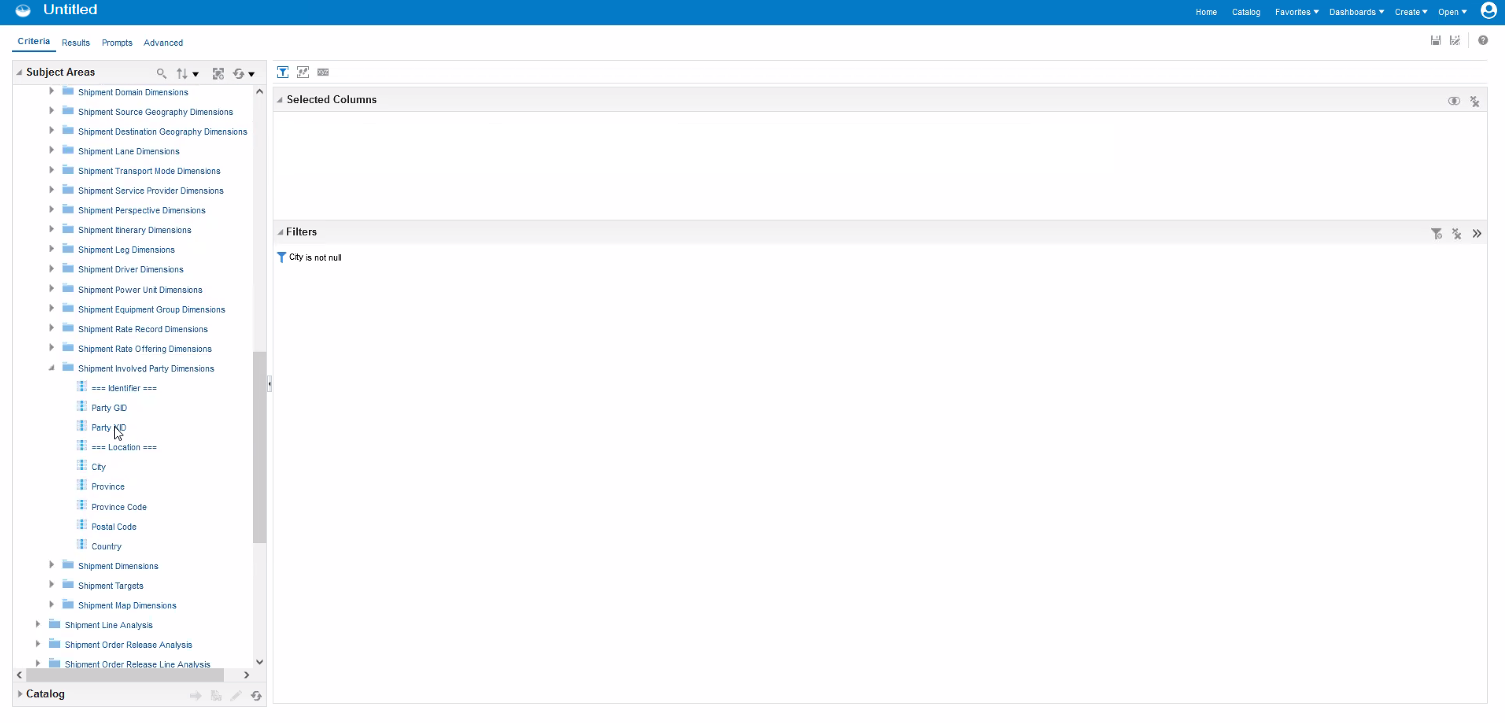
Shipment Involved Party Dimension
Shipment Involved Party standard Report

Shipment Involved Party Standard Report
Provides additional dimensions for analyzing your shipment and order releases.
Steps to Enable
You don't need to do anything to enable this feature.