| |
 |
JULY 2018
|
|
|
| |
| |
Your Monthly PaaS Updates |
|
| |
|
| |
Oracle Developer Partner Community Newsletter
July 2018
|
|
|
| |
Dear Developer Partner Community,
In case you missed our PaaS kickoff webcast on-demand recoding is available here. In this webcast Ed Zou and myself highlight the five journey’s to the cloud, the latest PaaS sales kits for Move & Improve Apps, Leverage SaaS, Build New Cloud-Native Apps, Build New Cloud-Native Apps, Optimize IT Security and Optimize Systems Management. In the second part of the webcast we focus how you as a partner can get support including sales kits, free cloud trial services, promote your services and applications and get trained and certified.
The first Autonomous Cloud Services launched. For details about Autonomous Cloud, Autonomous Integration Cloud, Autonomous Blockchain cloud and Autonomous Customer Conversation with Intelligent Chatbots attend the webcast series in July and August 2018.
Thanks to the community for all the excellent cloud native development and WebLogic articles Oracle Cloud Native – deploying scalable isolated functions in the cloud & Microservices Architecture pt.1: Definition & Microservice Approach for Web Development: Micro Frontends & Traffic routing between functions using Fn Project and Istio & Serverless Native Java Functions using GraalVM and Fn Project & Read all your WebLogic Data Sources in a Click!
Thanks to the community for all the excellent mobile & development tool articles:
Oracle Autonomous Mobile Cloud Enterprise & University of Adelaide employs chatbot to handle ATAR score queries & Bots: 22. Understanding QnA in Oracle Intelligent Bots & Building Complex Bot Responses with Ease & The Mutua Madrid Open Creates the MatchBot: Artificial Intelligence at the Service of Fans & TechExchange Quick-Tip: How-to add the user query string to the Q&A optionsLabel property on the System.Intent component & Creating Dependent/Cascading Select Lists with Visual Builder & Custom JavaScript Client Code in Oracle Visual Builder & Some Tips for Working with Visual Builder UI Components in Oracle Integration Cloud
Implementing Master/Detail in Oracle Visual Builder Cloud Service & Oracle JET has been key in our delivery to complete an enterprise application within a tight deadline & Oracle JET FaQ & CDN Support in Oracle JET & Call for Papers open Java Land 2019
For a short summery of our key monthly information watch the Fusion Middleware & PaaS Partner Updates on YouTube. The July edition highlights the PaaS sales resources and the Oracle Innovation Award, This month’s community webcast will introduce the Oracle Autonomous Mobile Cloud Service, please join our monthly Partner Community Webcast – July 24th 2018.
Want to publish your best practice article & news in the next community newsletter? Please feel free to send it via Twitter @wlsCommunity #DeveloperCommunity!
|
|
 |
|
| |
| |
 |
Table of Contents |
|
|
|
| |

| |
|
|
| |

Attend our July edition of the PaaS Partner Community Webcast live on July 24th 2018 at 16:30 CET.
Autonomous Mobile Cloud Enterprise Cloud Service
Build and deploy mobile apps and intelligent chatbots that connect to any backend system with Autonomous Mobile Cloud Enterprise. Hear about the introduction of Oracle Mobile Cloud Enterprise and how to transform your business with artificial intelligence.
Schedule:
Tuesday ednesday July 24th 16:30 - 17:30 CET
Visit the registration page here.
Missed our PaaS Partner Community Webcast? – watch the on-demand versions:
For the latest information please visit Community Updates Wiki page (SOA Community membership required).
Back to top |
|
|
|
| |
| |
|
|
| |
| |

Are you using Oracle’s Cloud Platform to deliver unique business value? If your organization is leveraging Oracle Cloud Platform solutions, and delivering business value that is innovative in its approach or implementation, then your business could be a 2018 Oracle Cloud Platform Innovation AWARD WINNER!
This year's Oracle Cloud Platform Innovation Excellence Awards will honor customers and partners who are leveraging the Oracle Cloud Platform in innovative and visionary ways. Winners are selected based on the uniqueness of their business case, business benefits, level of impact relative to the size of the organization, complexity and magnitude of implementation, and the originality of architecture.
Winners receive an Oracle Excellence Awards trophy, and a complimentary pass to Oracle OpenWorld 2018 in San Francisco!
Think you have done something unique and innovative in any the following areas?:
- Oracle Integration
- Oracle Application Development
- Transformational Technologies
- Data Integration & Governance
- Oracle Security and Identity
- Oracle System Management
- Oracle Business Analytics
- Oracle Content and Experience
- Oracle Cloud Infrastructure
- Oracle Data Management
We'd love to hear from you! Find more information and submit your nomination in the appropriate category.
The deadline to submit a nomination is July 20, 2018. Further questions, please send an email to: innovation-cloud-platform_ww_grp@oracle.com.
Back to top |
|
|
|
| |
| |
|
|
| |
| |
Want to learn more about developing Enterprise-grade Cloud Native applications on the Oracle Cloud Platform, covering topics like Microservices Architecture, developing in Node, Python and PHP, using Low Code development tools to build Mobile apps, and much more? Join the Oracle Developer Meetup groups if you want to follow Oracle’s solutions in this area, or participate in the events and hands-on labs we organize:

Please let us know in case you want to run an event at one of this location or you want to start your local meetup. We are looking forward to support you and sponsor the event with pizza and beer!
Back to top |
|
|
|
| |
| |
Application Development Section |
|
|
|
|
| |
| |
|
When moving to the cloud, and specifically when moving towards cloud-native applications, different design patterns apply when compared to the more traditional (on-premises) applications. All these cloud-native design patterns and principles have one common denominator – showing emphasis on scalability and function isolation.
Click here to read more. |
Back to top |
|
|
| |
| |
|
There is a lot of talk going on about Microservices architecture these days. Since I presented about the subject at the NLOUG Tech Experience this year, I've been getting a lot of questions and comments about it, so I've decided to make a more structured breakdown through a series of blogs. To kick things off, I will explain what Microservices architecture is, which in itself is not that simple.
Click here to read more. |
Back to top |
|
|
| |
|
You've heard of microservices, but what's a micro frontend? You'll learn this and how to get started with a micro frontend for web developers in this post.
This post is based on my Oracle Code 2018 Warsaw talk. View the presentation on SlideShare from andrejusb.
Click here to read more.
|
|
Back to top |
|
|
| |
| |
In this article, I’ll explain how I implemented version based traffic routing between Fn Functions using Istio service mesh.
I’ll start by explaining the basics of Istio routing and the way Fn gets deployed and runs on Kubernetes. In the end, I’ll explain how I was able to leverage Istio service mesh and its routing rules to route traffic between two different Fn functions.
Click here to read more.
|
Back to top |
|
|
|
| |
| |
GraalVM: a game changer for Java and Serverless?
TL;DR;
- Java Functions compiled into a native executable using GraalVM reduces cold start times and memory footprint by order of magnitude compared to running on JVM.
- Native Java Functions performs equal to or better than Go functions in terms of execution time and memory used.
- Native Java Functions executable runs from scratch base image, thus have a similar size compared to Go executable images.
Click here to read more.
|
Back to top |
|
|
|
|
| |
|
|
| |
|
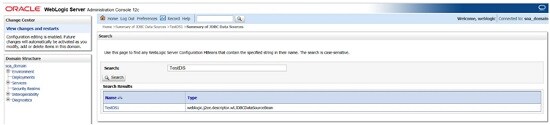
The FlexDeploy WebLogic plugin provides operations to automate the management of domain configurations. These operations are driven by using property files from Source Control System such as Git or SVN. This process makes it easy to manage WebLogic configurations. The WebLogic plugin has a new operation to read all Data Sources from WebLogic Domain and write them into property files. This helps to reduce the manual efforts required for extracting data sources from domain and generating property files as input for one of the existing automation operation. (See Save Time and Headaches – Automate Your WebLogic Data Source Configurations for more details on the WebLogic plugin.)
Let me show you how it works:
See a very simple Data Source configuration deployed in WebLogic Domain as below.
This Data Source will be retrieved and stored into a property file as below, which will be used later during the WebLogic domain initial setup across environments. Read the complete article here.
Back to top |
|
|
|
|
|
|
If you’ve been reading this blog lately, you know we are in the early innings of artificial intelligence (AI). It’s good to see Oracle at bat, and having an early lead leveraging AI and machine learning (ML) within an enterprise environment.
Following up on the ground breaking release of Oracle Autonomous Database in March and then the first set of Autonomous Cloud Platform Services that included Analytics Cloud, Integration Cloud and Visual Builder (May 7th), it’s exciting to be part of the next wave of services that includes the Mobile Cloud - which by the way, includes Intelligent Bots!
Click here to read more.
Back to top |
|
|
|
|
The University of Adelaide has piloted a chatbot to handle the tsunami of enquiries that come at the end of the academic year from prospective students regarding ATAR bonus points.
The Oracle, cloud-based bot – implemented by Rubicon Red – was trialled late last year and led to significant reduction in telephone calls to the university’s six-person admissions team.
Click here to read more.
Back to top |
|
|
|
|
Learn to love the common response component and render complex and composite responses.
The Oracle Intelligent Bots feature of Oracle Mobile Cloud Enterprise uses built-in components to render bot responses in a dialogue flow. Being component-based is an advantage Oracle Intelligent Bots has over its competitors, because it enables bot designers to easily build bot conversations with no code.
Click here to read more.
Back to top |
|
|
|
The Mutua Madrid Open, one of the main tournaments in the world held in Madrid in May of every year, has launched a chatbot equipped with Artificial Intelligence to speed up communication with tennis fans. The chatbot, a computer program that uses artificial intelligence to maintain natural conversations with users, offers information on the development of the event, players, schedules, and results, as well as details on guest services, event access and parking. It is also a channel for ticket sales and discounts on merchandise.
The MatchBot, as it has been baptized, is available on the tournament's iOS and Android mobile applications, as well as on the tournament website. It is also possible to exchange information with the chatbot through Facebook Messenger and Twitter if using direct messaging. Read the complete article here.
Back to top |
|
|
|
What this quick tip is about
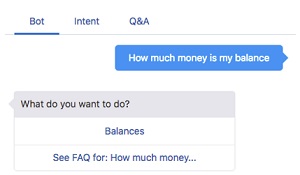
Finding a good title for this quick tip is probably harder than to explain the solution. So allow me to use what feels like a thousand words before showing you two images that support my point.
In Oracle Intelligent Bots you can configure the System.Intent component with Q&A so that the user query not only gets processed by the intent engine but also passed on to the Q&A feature.
In a perfect scenario the user query is clear and points to either an intent to be resolved and handled by the intent engine or a question handled by the Q&A feature. Often it may happen that both, hen intent engine and the Q&A feature, find a match for the user query. Then, depending on the System.Intent component configuration, Oracle Intelligent Bots shows a list for the user to either select and execute the intent, or display the Q&A feature to select an answer.
The following System.Intent configuration is what you get when you select the "Intent with Q&A" template from the "+ Component" button option in the dialog flow editor. Note that I removed properties that are not relevant for this quick tip. Read the complete article here.
Back to top |
|
|
|
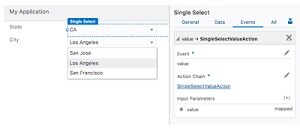
A common requirement in applications is to have dependent lists (also known as cascading lists) - meaning have the value selected in one place influence the values that could be select in another place. For example when you select a state, we'll only show you cities in that state in the city list.
In the short demo video below, I'm showing you how to implement this cascading lists solution with the new Visual Builder Cloud Service.
The solution is quite simple
You catch the event of a value change in the first list, and in the action chain that is invoked you set a filterCriterion on the second list. (See this entry for a quick introduction to filterCriterion).
Since the list is connected to a ServiceDataProvider, there is no further action you need to take - the change to the SDP will be reflected in the UI component automatically. Read the complete article here.
Back to top |
|
|
|
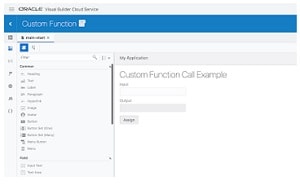
Hey, this is my first post about VBCS, you should expect more posts in the future about this topic. Red Samurai decided to choose VBCS as our primary JavaScript development IDE in the cloud. We are going to use it for declarative JS development, similar as we use JDeveloper for ADF.
I was going through the custom JS client code functionality in VBCS and thought it would be good idea to describe how it works. There is good material available for the same topic from Oracle, I recommend to go through it - Variables, Modules, and Functions, OH MY! Custom Client Code in Visual Builder.
I have created simple UI with one input and one output field. Button calls custom JS method, where value from input field will be processed and returned to be displayed in disabled field: Read the complete article here.
Back to top |
|
|
|
|
Introduction
Oracle Integration Cloud Service (OIC) has now bundled several formally independent PAAS services into a single cloud service. One of these bundled services is Visual Builder (formerly VBCS). The 18.2.5 release of Visual Builder in OIC is more user friendly than prior releases. For example, in 18.2.5, users are not forced to write Javascript code to create a custom data type, and data mapping can be done with drag and drop. This release of Visual Builder also includes enhancements for Process application integration. While creating some test cases to demonstrate Process integration in Visual Builder, I encountered a few issues in working with some UI components. I would like to use this post to share some tips and work-arounds for these issues that might be helpful to other OIC developers working with Visual Builder.
Click here to read more.
Back to top |
|
|
|
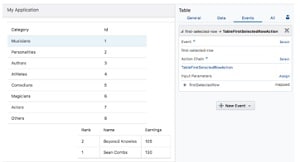
This is a quick demo that combines two techniques I showed in previous blogs - filtering lists, and accessing the value of a selected row in a table. Leveraging these two together it's quite easy to crate a page that has two tables on it - one is the parent and the other is the child, once you select a record in the parent the child table will update to see only the related child records.
The two steps we are doing are:
- Create an action flow on the change of first-selected-row attribute of the table
- In the flow use the assign variable function to set the filterCriterion of the child table to check for the value selected in the master. Read the complete article here.
Back to top |
|
|
|
|
About Capgemini
A global leader in consulting, technology services and digital transformation, Capgemini is at the forefront of innovation to address the entire breadth of client opportunities in the evolving world of cloud, digital, and platforms. Building on its strong 50-year heritage and deep industry-specific expertise, Capgemini enables organizations to realize their business ambitions through an array of services from strategy to operations. Capgemini is driven by the conviction that the business value of technology comes from and through people. It is a multicultural company of 200,000 team members in over 40 countries. The Group reported 2017 global revenues of EUR 12.8 billion.
Click here to read more.
Back to top |
|
|
|
Table of Contents
Why did you choose Knockout and other libraries over more popular ones?
One of the main objectives of Oracle JET was to be a modular toolkit that allows developers to use as little or as much as they need for their particular project. To accomplish this, we researched the best JavaScript libraries for specific tasks needed when developing a modern JavaScript client-side application. While there are plenty of more popular full frameworks available, we felt that with the rapidly changing JavaScript landscape, tying developers into one specific framework was not in the best interest of future growth and flexibility. Read the complete article here.
Back to top |
|
|
|
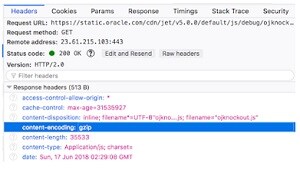
With the recent releases of Oracle JET - CDN support in your app can be enabled easily. By default JET app is set to download all JET toolkit related scripts and static files from the same host, where application is hosted. You can track it easily through network monitor, you should see such files as ojknockout.js, etc. fetched from same host: Read the complete article here.
Back to top |
|
|
|
|
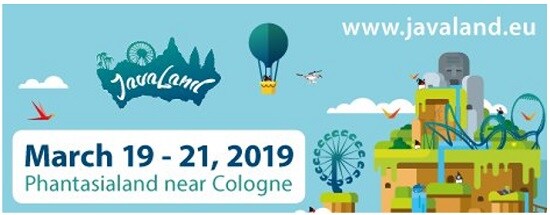
Take the unique opportunity to participate in the conference and become a speaker at JavaLand! Submit your presentation proposal between June 25 and August 13, 2018. For more info: http://ow.ly/bfU330kFjen
Back to top |
|
|
|
Additional new material WebLogic & Developer Community |
Beyond Chatbots: An AI Odyssey There is more to artificial intelligence than chatbots. In this program a panel of experts discusses the AI solutions they’re building, the challenges they’ve encountered, and the enormous potential of this disruptive technology.
Making Monoliths into Microservices “A non-trivial task with a lot of challenges." That’s how Vincenzo Chianese describes converting a monolithic application into microservices. In this interview he describes the challenges and the role RESTful architecture and an API gateway can play in overcoming them.
Polyglot Possibilities with GraalVM Eric Sedlar shares insight on GraalVM, the universal virtual machine for running applications written in JavaScript, Python 3, Ruby, R, JVM-based languages like Java, Scala, Kotlin, and LLVM-based languages such as C and C++.
Click here to read more.
Back to top |
|
|
|
|
|
Innovation award nomination is open here. In the past year’s local partners have won many times the award for the key PaaS categories. Thanks to our partner community we drive customer success and innovation. During Oracle OpenWorld the winner are announced. Looking forward to celebrate with you. We count on all EMEA partners to keep the award home!
Back to top |
|
|
|
|