Cloud Adoption Framework for Oracle Cloud Infrastructure (OCI)
The Cloud Adoption Framework (CAF) is your organization's key to unlocking the full potential of cloud computing. With a tailored set of guidelines and best practices, it helps ensure a smooth onboarding process and the optimal use of cloud resources. With the framework, Oracle helps you take your business to new heights of efficiency and innovation in the cloud.

Cloud adoption and seamless modernization in Oracle Cloud
Organizations today face the fundamental challenge of modernizing their technology stack while looking for ways to compete more effectively and develop innovative solutions for their customers. Modernizing applications, infrastructure, and platforms using cloud computing is best accomplished with Oracle, the only vendor with comprehensive capabilities for IaaS, PaaS, packaged applications, and SaaS. Explore the value you'll get from OCI.
Move for security 75%of enterprises attest to OCI’s superior security design
Move for performance 70%performance improvement for Mazda on OCI
Move for economics>3Xbetter compute price-performance vs. competitors
Accelerate your CAF understanding with our Oracle University course
Swiftly enhance your knowledge and understanding of the OCI CAF with this comprehensive, expert-led program.
Cloud Adoption Framework pillars
The Oracle Cloud Infrastructure (OCI) Cloud Adoption Framework provides best practices and prescriptive guidance for your organization to plan, adapt, and iterate while adopting the cloud. The framework divides the cloud adoption process into six conceptual pillars, each with key capabilities. The pillars help you connect your business strategy with technology solutions while aligning people, processes, and technology.
People strategy
- Cloud center of excellence (CoE)
- Change management
- Training and readiness
Process design
- Governance
- Risk and compliance
- Enterprise architecture
Technology implementation
- Landing zone
- Migration
- Modernization
Management and operations
- Monitoring
- Optimization
- Incident management
Enterprise scale baseline landing zone
Learn how the enterprise scale baseline landing zone helps you configure your Oracle Cloud Infrastructure cloud tenancy in preparation for moving your workloads to the cloud.
The Cloud Adoption Framework journey
Adopting the cloud is a multilayered process that extends beyond the implementation of new technology. It requires organizationwide change management, including executive support, clear business goals, a comprehensive workforce readiness plan, and the modernization of current business and information technology processes.
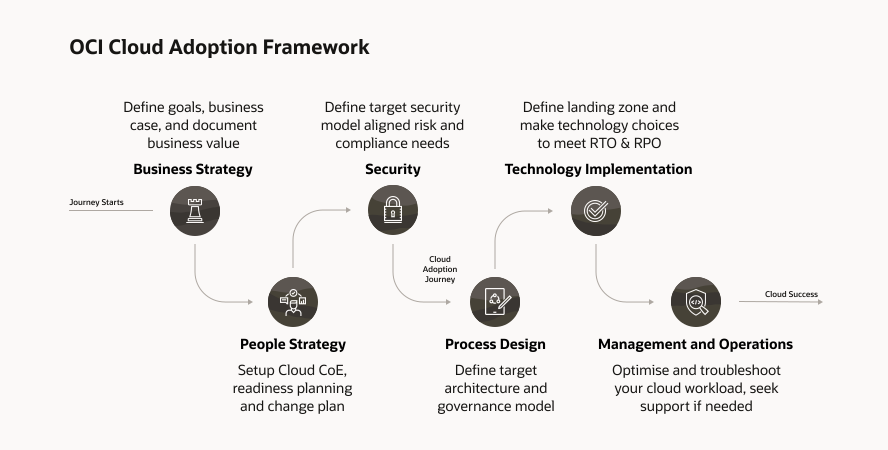 The OCI Cloud Adoption Framework journey starts with the business strategy and the people strategy. With those two strategies in place, the framework helps customers define their security and process design to transform their strategies and goals into reality with a technology and governance model and management and operation plans.
Cloud resources
Oracle Cloud Evolution digital guideConnect with Oracle Cloud Sales
Contact us about Oracle Cloud Adoption FrameworkTake the Wheel: Create Your Cloud Plan Now (Forrester Report)
Plan your approach to cloud platforms to improve business processes, customer experience, and developer productivity.
Cloud customer spotlight—The JD Edwards ERP on OCI for Adnams
Explore how Redfaire helped Adnams implement Oracle’s JD Edwards ERP on OCI to deliver excellence throughout the value chain.
Get started today
Ready to migrate your infrastructure to the cloud?
The Cloud Adoption Framework provides a step-by-step guide to ensure a secure, compliant, and cost-effective transition. Use it as your starting point to maximize the benefits of cloud computing for your organization.
-
Start your cloud journey with the Cloud Adoption Framework
Do more with OCI
Explore additional services and resources to combine with the Cloud Adoption Framework on OCI for a smoother transition to the cloud and increased satisfaction.
-
Get the most out of OCI
- Get started with Oracle Cloud Free Tier
- Reference the OCI Architecture Center
- Train and get certified with Oracle University.
- Choose workload migration and modernization options.
- Use OCI’s broad ecosystem of verified technology solution providers and Oracle partners to execute your cloud strategy.
- Leverage Oracle Cloud Lift Services for a hassle-free migration.
Learn with step-by-step guidance
Experience how the Cloud Adoption Framework supports your cloud transformation journey and helps mitigate roadblocks and challenges. Deploy a landing zone for workload deployment in the cloud.
-
Get started with the CAF on day one and beyond
Migrate to the cloud seamlessly with the Oracle Cloud Adoption Framework. It provides resources, best practices, tutorials, and tools for defining a robust cloud strategy, planning workload migration, and managing cloud environments effectively.
Day One and Beyond: Cloud Adoption Framework (55:28) -
Accelerate your cloud journey to OCI
One of the biggest challenges for customers looking to make the move to a public cloud is the time and resource investment needed to understand how to do so in a way that will ensure success.
Accelerate Your Journey to OCI Using OCI Landing Zones -
Deploy a landing zone to OCI
Deploy the Enterprise Scale Baseline Landing Zone v2.0, a typical architecture for enterprise customers, using a root template.
Get started with the Enterprise Scale Baseline Landing Zone v2.0
- Empowering your cloud journey with the latest OCI CAF
- Introducing Oracle Enterprise Landing Zone's Workload and Exadata expansion templates
- Introducing Oracle Enterprise Landing Zone v2
- Updates to the OCI CAF security pillar deliver enhanced documentation for multilayered cloud security
- Oracle updates the OCI Cloud Adoption Framework
- Oracle enhances the OCI Cloud Adoption Framework, releases the enterprise-scale baseline landing zone, and offers more options for multicloud strategies
Contact sales
Interested in learning more about the Oracle Cloud Adoption Framework? Our experts are ready to help.
Reach out to our sales team: +1.800.633.0738.
For specific cloud adoption queries, contact our cloud adoption team.
-
They can answer questions such as
- What is the Cloud Adoption Framework?
- How does the CAF help accelerate the cloud journey?
- How does the CAF help with planning, preparation, and execution?
- How is the CAF relevant to small businesses or to large enterprises?