What Is Distributed Energy Resource Management? A Guide
August 20, 2026
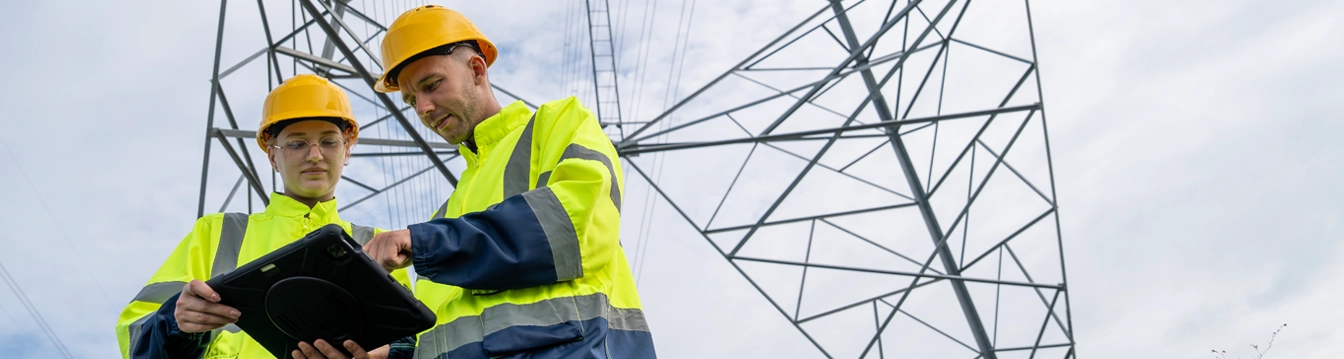
Distributed energy resource management is the utility practice of managing myriad energy-generating and related assets, including rooftop solar panels, wind turbines, batteries, smart thermostats, electric vehicles, backup generators, and other distributed assets that change how electricity flows across the grid. For large-scale utilities, the challenge is no longer simply connecting these resources. It’s orchestrating them in ways that support energy reliability and efficiency.
What Is Distributed Energy Resource Management?
Distributed energy resource management (DERM) is the process of monitoring, forecasting, controlling, and optimizing distributed energy resources across an electric distribution network. It helps utilities manage decentralized assets, including resources owned by the utility, customers, and third parties.
In the past, electricity flowed in one direction—from large power plants to homes and businesses. Distributed energy resource management gives grid operators a way to treat many small, variable resources as flexible capacity. Utilities can use this approach to help meet peak demand, improve grid reliability, and lower operating costs.
Key Takeaways:
- Distributed energy resource management creates flexible utility grid capacity by aggregating many small energy-generating and related assets into one large resource.
- DERM reduces congestion and addresses local capacity limitations, helping utilities delay or avoid conventional infrastructure upgrades.
- Benefits include improved grid reliability, lower costs, and improved customer satisfaction.
Distributed Energy Resource Management Explained
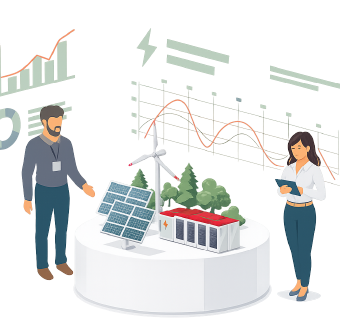
Distributed energy resource management uses software, grid models, forecasts, device data, and operating rules to understand how distributed energy resources are performing and where they can help the grid. A distributed energy resource management system, often called a DERMS, can model assets, forecast their likely output or load, schedule events, and dispatch capacity when conditions call for it. These systems typically work with and orchestrate behind-the-meter (BTM) assets, such as rooftop solar panels, controllable thermostats, electronic vehicles and their chargers, home battery systems, and building energy management systems. They also work with front-of-the-meter (FTM) assets, such as solar and wind farms and hydroelectric, natural gas, and nuclear power plants.
Why Is Distributed Energy Resource Management Important?
Distributed energy resource management is becoming important because the electric grid is evolving from a one-way power system to a dynamic, decentralized network that provides customers with additional clean, flexible capacity. But all those extra resources can also make grid operations more complex. Utilities need to understand where those resources are located, how they behave, and when they can be called on. Effective distributed energy resource management helps utilities turn a growing number of small assets into a coordinated operational power resource.
Benefits of Effective Distributed Energy Resource Management
Effective distributed energy resource management (DERM) gives utilities the visibility and control they need to integrate growing numbers of distributed energy resources while maintaining reliable grid operations. With better insight into these distributed assets, operators can monitor performance in real time, optimize the use of customer- and third-party–owned assets, and respond more effectively to changing grid conditions. The main DERM benefits include:
- Improved grid reliability by helping utilities balance grid supply and demand in real time, respond more quickly to grid disruptions, and support voltage and frequency regulation.
- Lower costs by helping utilities reduce their investment in new substations, power lines, and other infrastructure and by improving their utilization of existing assets.
- Improved customer satisfaction by improving service reliability, by helping consumers and businesses lower their utility bills through optimized energy usage, and by giving customers opportunities to earn revenue by exporting excess energy.
- Faster recovery from outages by tapping and pooling local energy resources.
- Support of decarbonization by reducing utilities’ dependency on fossil fuels and increasing their use of solar, wind, and other cleaner energy sources.
- Support of regulatory compliance by helping utilities meet reliability, grid interconnection, use of renewables, and other requirements.
How to Implement Distributed Energy Resource Management in Six Steps
Distributed energy resource management is about more than connecting devices to a software platform. Utilities need accurate network models, clear operating rules, and a practical plan for coordinating assets owned by customers, aggregators, and the utility itself. The following steps can help guide a DERMS program.
- Map DER locations and operating characteristics for modeling and awareness.
Document where distributed energy resources are connected, who owns them, and how they behave under normal and constrained grid conditions. - Prioritize grid use cases for device and program management.
Define whether the first goals are demand reduction, voltage support, constraint management, market participation, outage support, or another operational need. Define how to enroll devices into programs. - Build DER profiles for monitoring, impact analysis, and forecasting.
Create asset profiles that account for resource type, availability, output, customer participation, weather dependency, and dispatch limitations. - Connect DERMS with grid operations for control and optimization.
Align DERMS capabilities with systems such as distribution management, supervisory control and data acquisition, outage management, and customer programs for performance analysis, control, and optimization. - Set dispatch and control rules.
Establish when distributed resources can be called on, how events are scheduled, what limits apply, and how customer or aggregator commitments are honored. - Measure performance and refine programs.
Track whether DER events delivered the expected capacity, reduced constraints, supported reliability, and improved economics, then adjust participation rules and forecasts.
Download our Grid Operator's Guide to DERMS
Manage Distributed Energy Resources with Oracle Utilities
Oracle Utilities DERMS helps utilities model, monitor, optimize, dispatch, and manage distributed energy resources, including those owned by customers and third parties. The Oracle Utilities DERMS portfolio includes capabilities for DER modeling, scheduling and dispatch, network optimization, active network management, and DER market management. Oracle Utilities Grid DERMS helps utilities gain real-time visibility into and control of behind-the-meter (BTM) and front-of-the-meter (FTM) DERs. Oracle Utilities Edge DERMS focuses on BTM customer-owned assets, such as smart thermostats and solar PVs.
Distributed Energy Resource Management FAQs
What is the difference between DERMS and ADMS?
A DERMS focuses on coordinating distributed energy resources, such as solar, batteries, EVs, and controllable loads. An advanced distribution management system, or ADMS, manages broader distribution grid operations, such as monitoring and control of field devices, regulating voltage, and managing outages. The two systems can work together when DER behavior affects grid conditions.
How much does a distributed energy resource management implementation cost?
Costs vary based on DER penetration, system integrations, operating requirements, program scope, and whether the utility is starting with a pilot or an enterprise-wide deployment. Utilities should evaluate software, integration, data quality, change management, and ongoing program operations when building a business case.
What is an example of a distributed energy resource?
Rooftop solar panels are a common example of a distributed energy resource because they generates electricity close to where it’s consumed. Other examples include battery storage systems, electric vehicles, smart thermostats, and demand response assets such as smart thermostats and water heaters.
What risks make distributed energy resource management essential for utilities?
Utilities that don’t use distributed energy resource management can face grid instability and congestion, higher infrastructure costs, difficulty recovering from outages, and other risks.