Backlog Management Product Tour
Manage your sales order backlog in Oracle Supply Planning
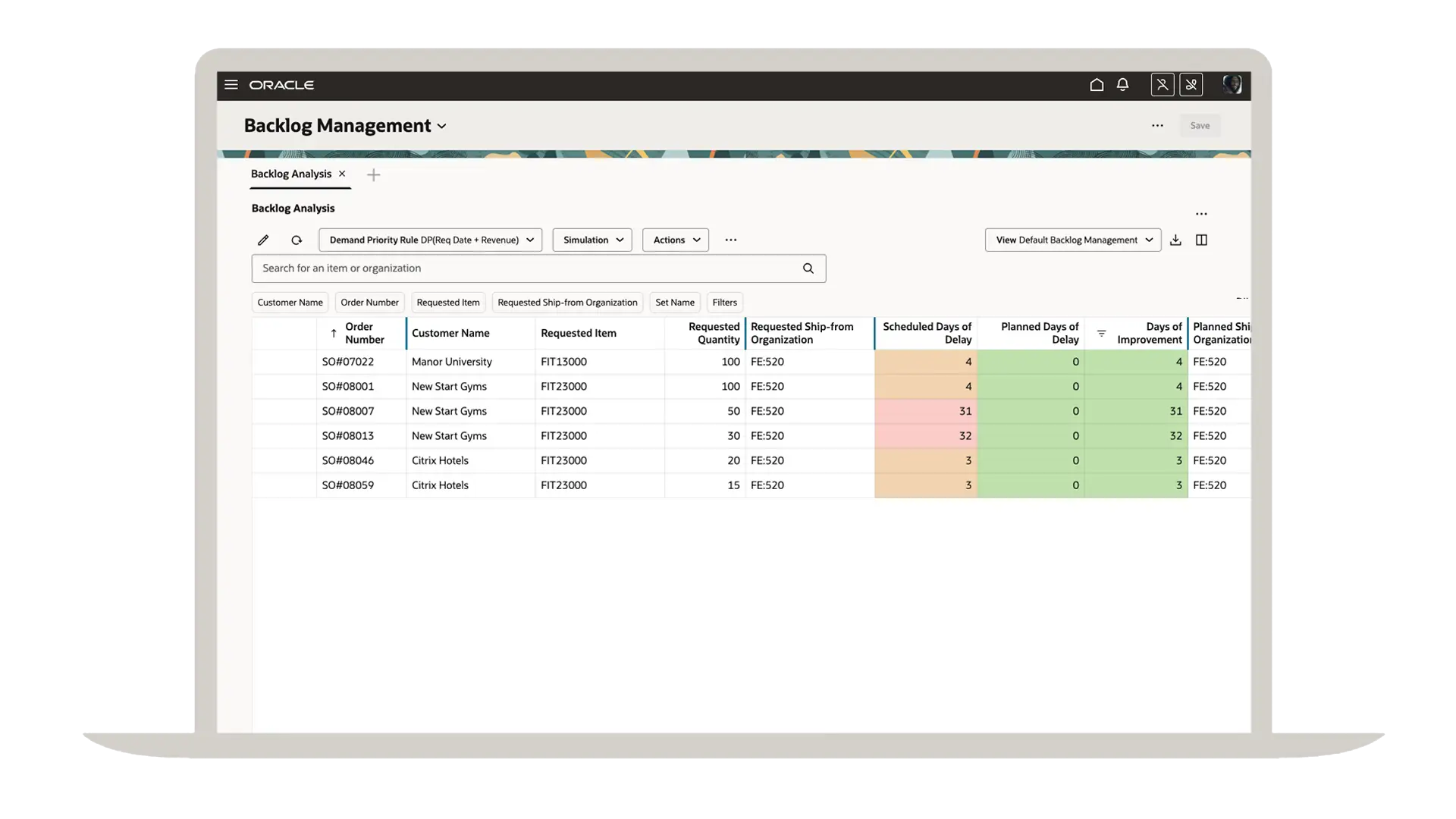
Replace ad hoc updates with strategic order fulfillment
When demand outstrips supply, first come, first served order fulfillment can reduce customer satisfaction and revenue. The order backlog management features of Oracle Fusion Cloud Supply Planning prioritize and reschedule your open orders based on your business objectives.
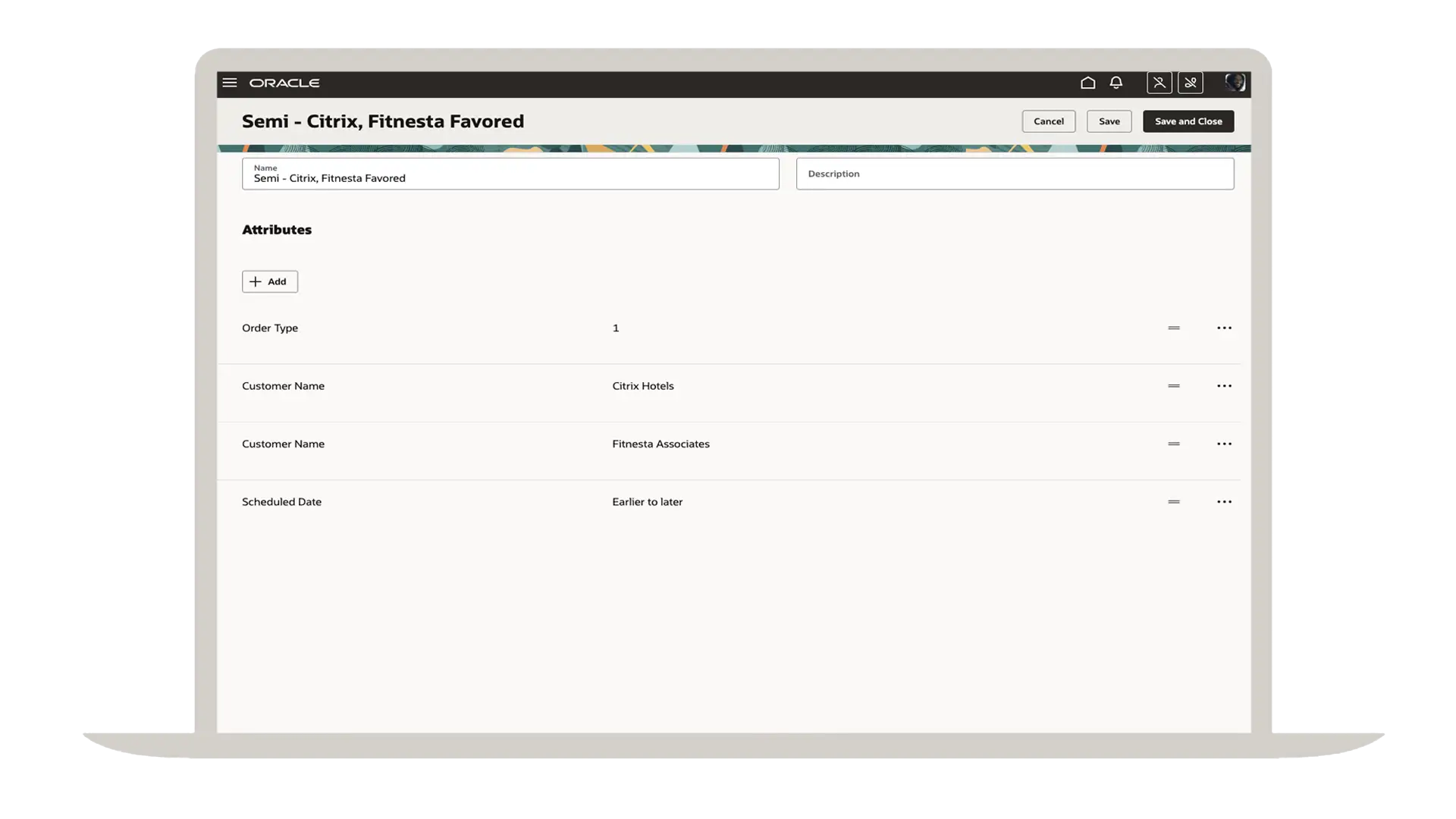
Prioritize demands based on customizable criteria
The most important orders should get priority when supplies are limited. Backlog management can rank competing demands by requested date, order creation date, item category, customer, and other criteria. You can add your own attributes to the standard ones.
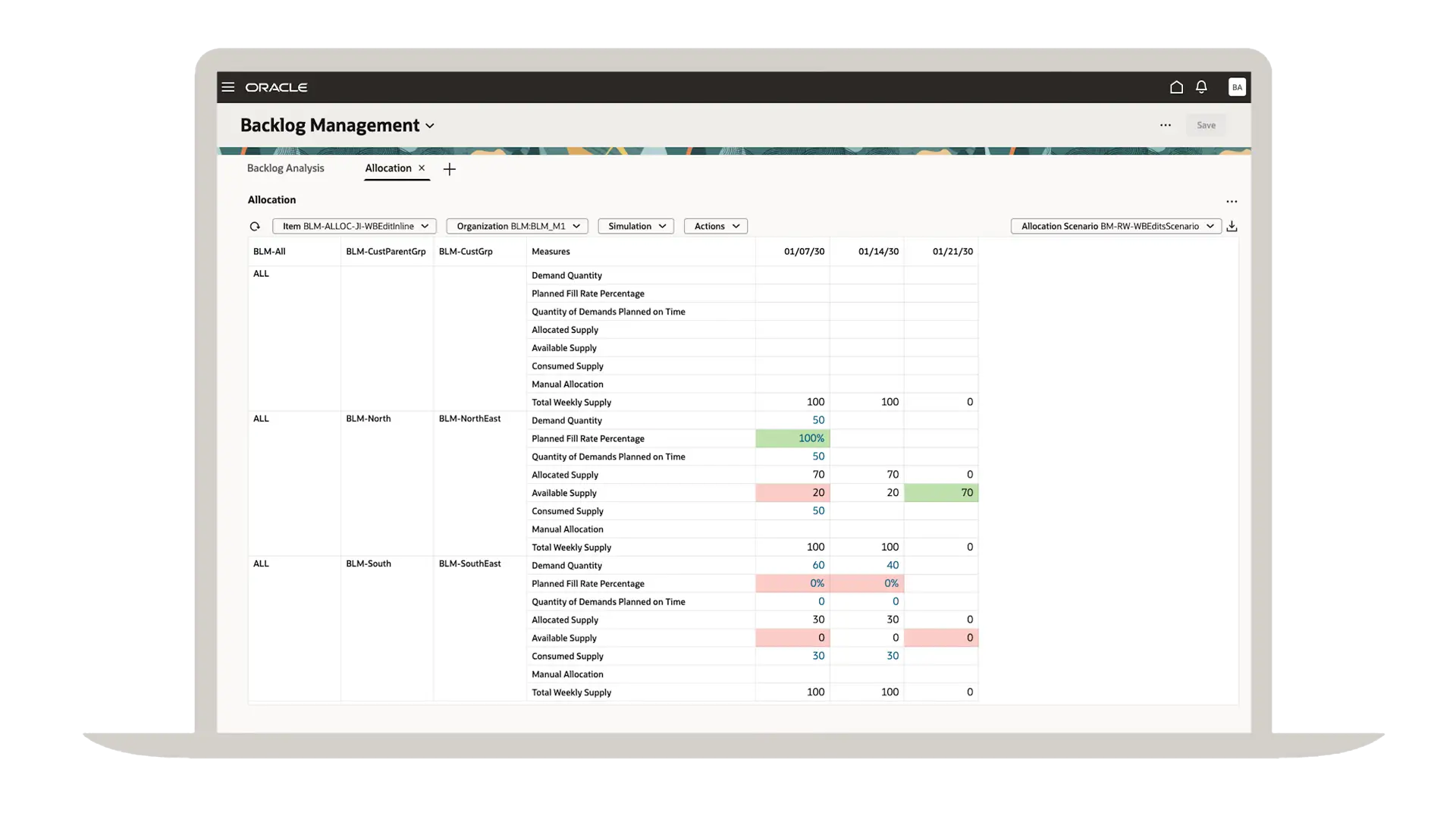
Allocate supply to the right customers, regions, or channels
Although some orders are higher priority than others, it’s important that key customers, regions, or channels can access supply. For example, you can set aside a quantity or percentage for individual customers, augmented by a shared pool for a region or channel. You control the allocation attributes and their relationships.
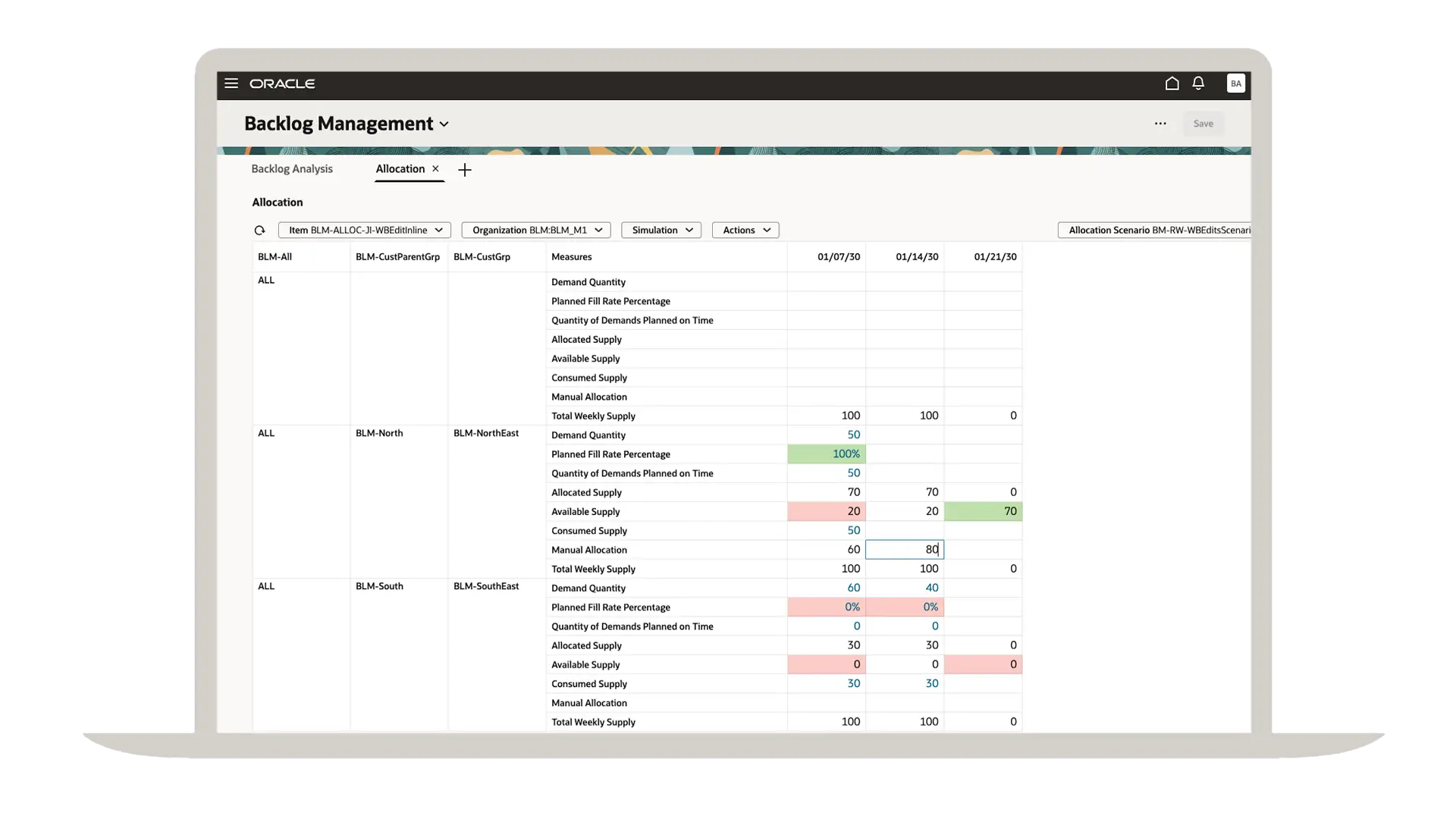
Fine-tune allocation quantities to changing conditions
You can review the consumption of allocated quantities and specify that higher-priority allocation nodes can use some or all lower-priority supply when needed. You can also override the rule-based allocation quantities to enhance results.
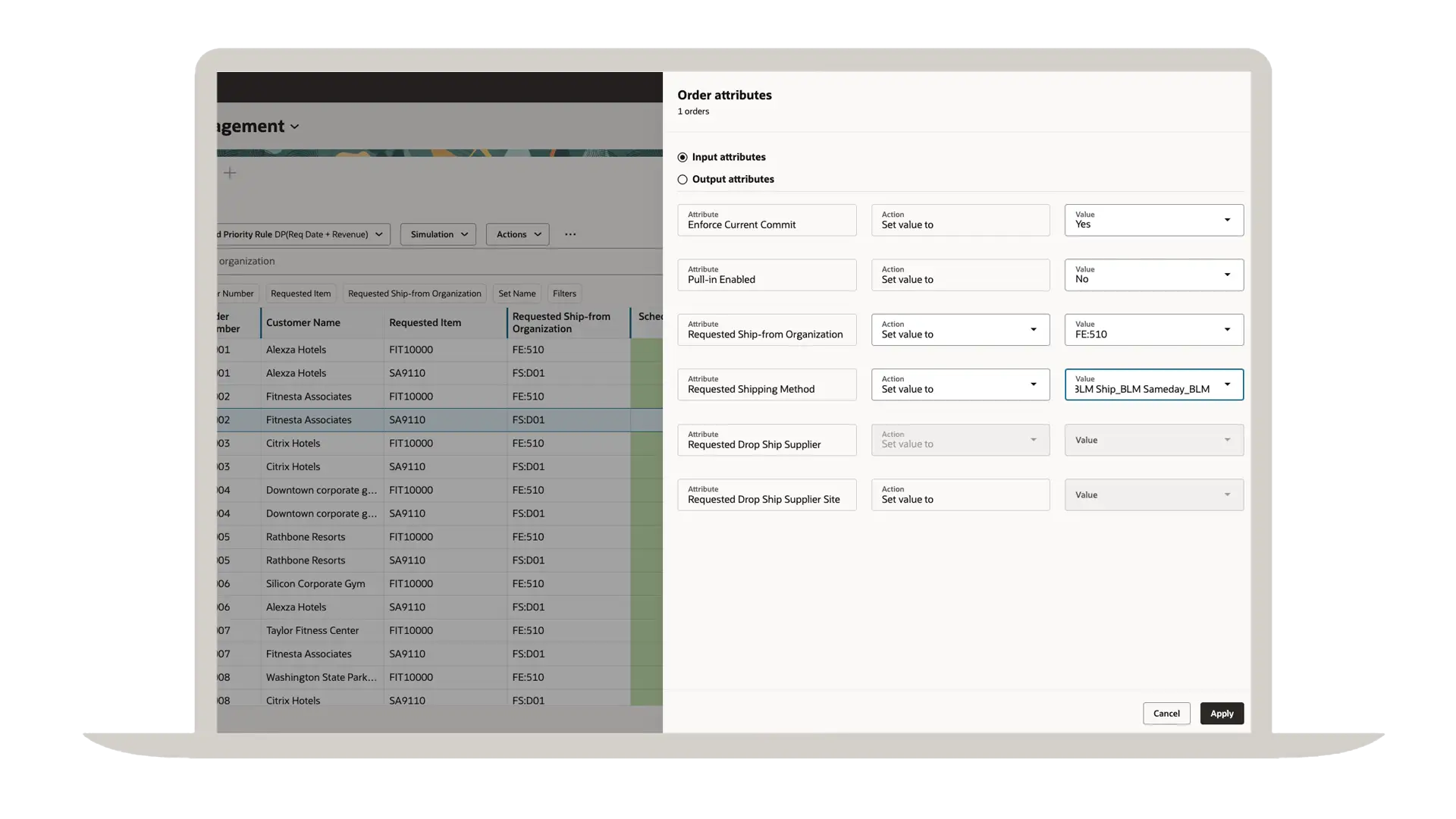
Adjust fulfillment strategies
To maximize availability, you may need to update sourcing, shipment method, demand class, or other fulfillment attributes for groups of order lines. You can edit these attributes in backlog management, rerun the plan, and review the results of your changes. You can save the outcome that best meets your objectives.
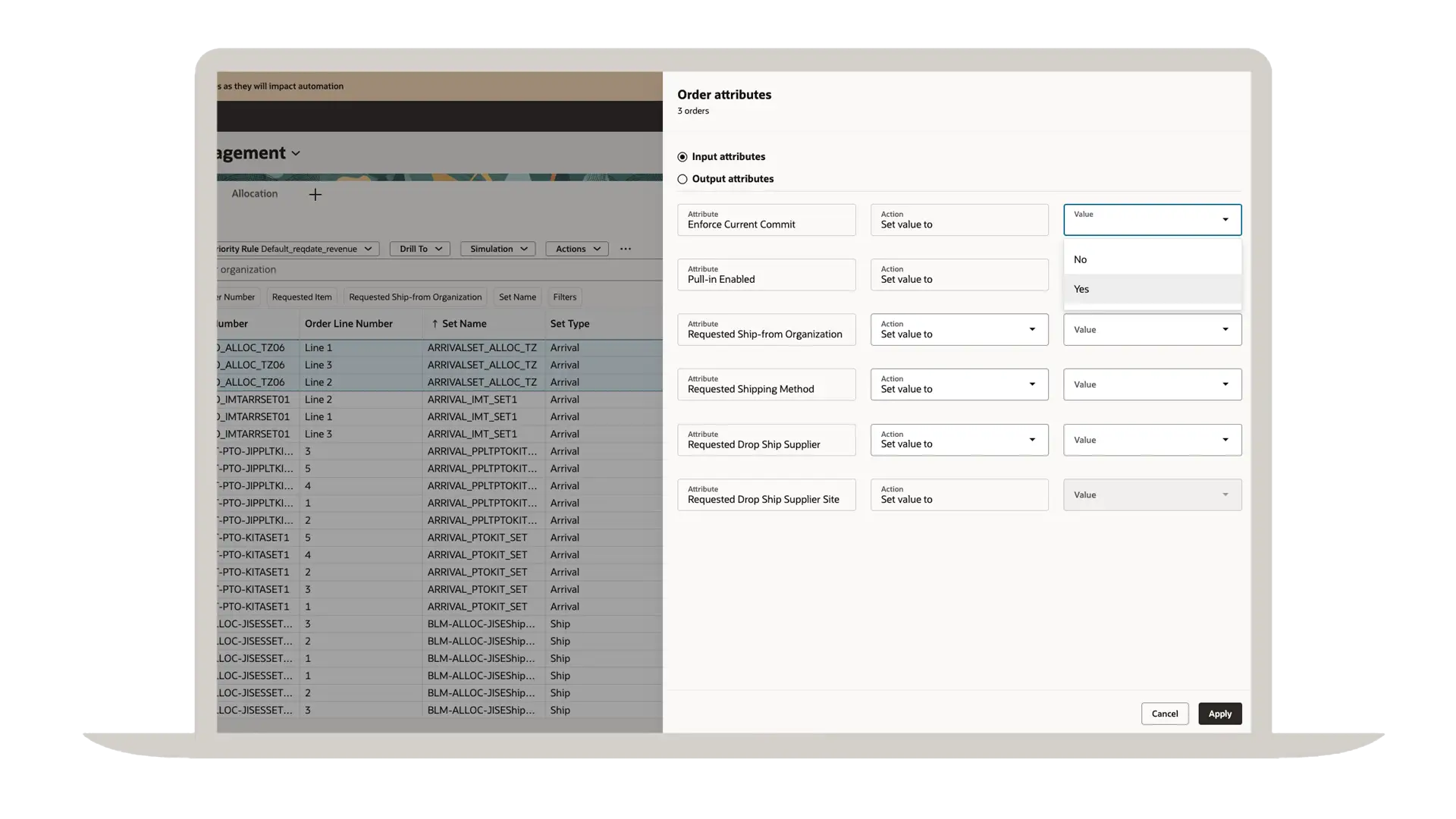
Honor previously promised dates during rescheduling
By default, backlog management preserves scheduled dates for orders as it identifies pull-in opportunities. This minimizes the need to communicate and negotiate changes to delivery dates. Alternatively, you can clear scheduling commitments to free up supply for higher-priority order lines.
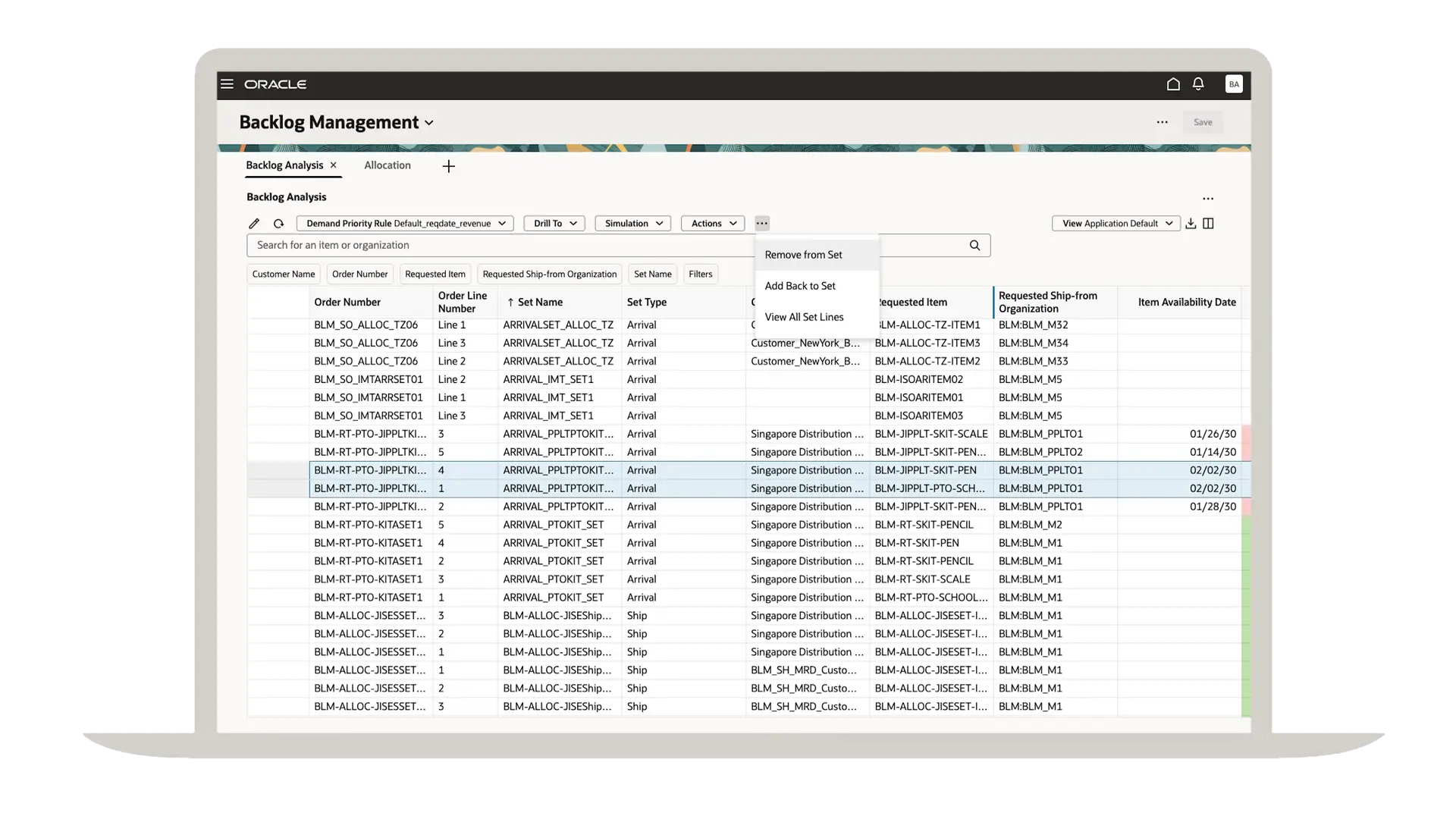
Resolve item constraints within a ship set or arrival set
When a group of items should ship or arrive together, limited availability of a single component can delay the entire order. Guided resolution pinpoints the components or items that are delaying scheduling of a set, so you can decide whether to remove them, find a different source, or expedite transportation to meet demand.
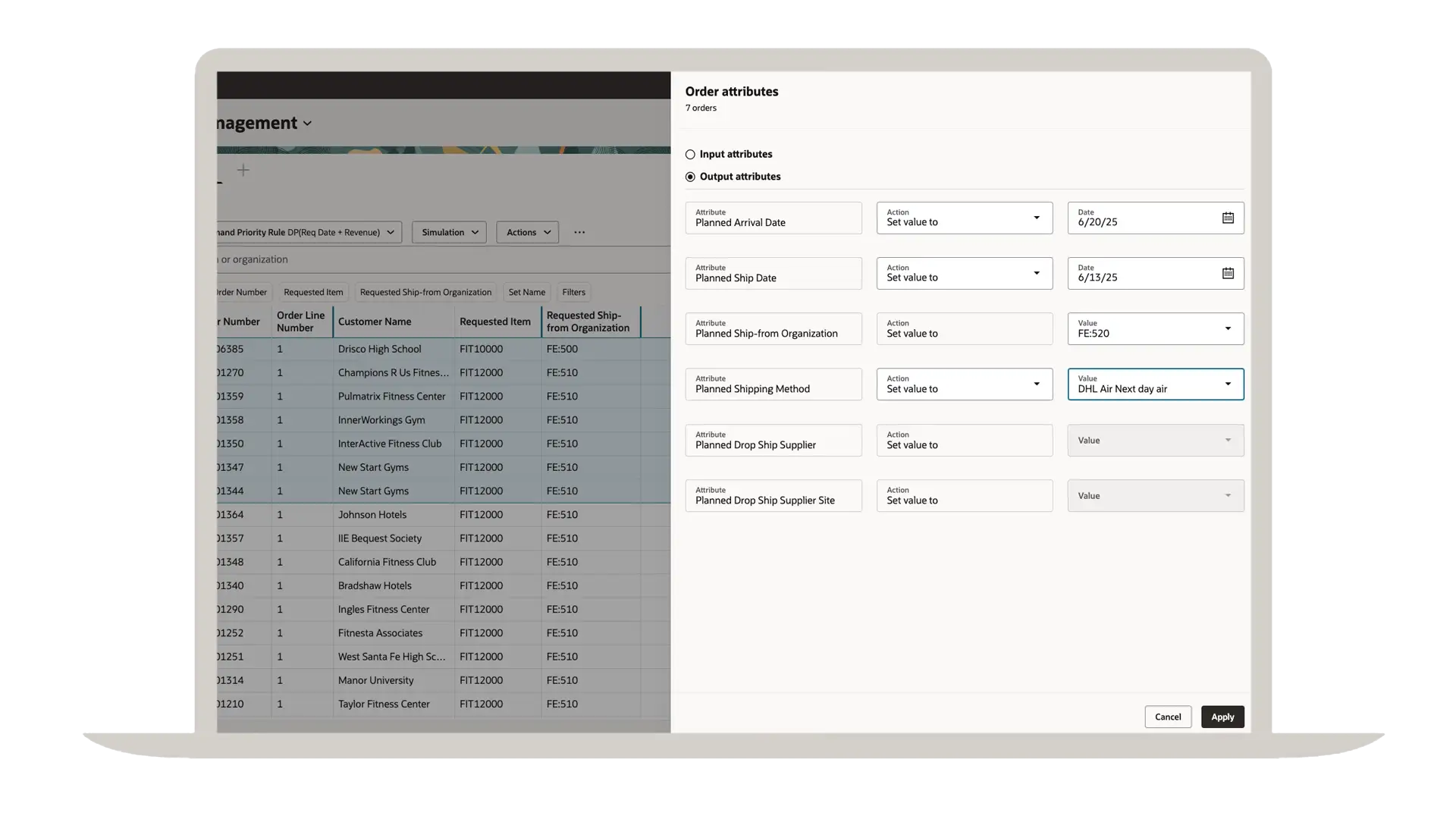
Edit output attributes when needed
In special circumstances, you may be able to deliver items faster than normal practices would allow or source from a location that isn’t normally authorized. You can override the simulation output in these cases to reflect these types of ad hoc adjustments to the plan.
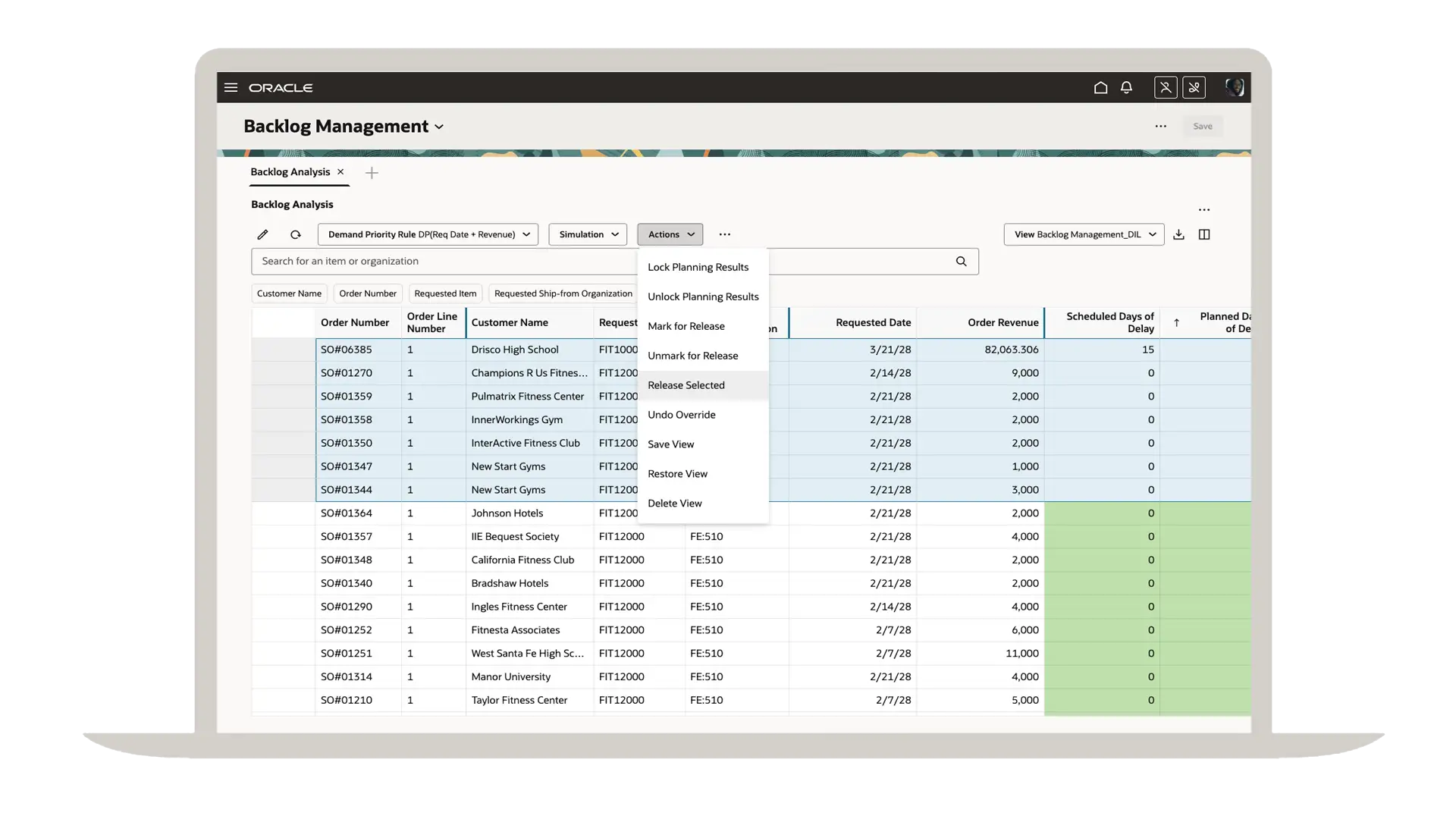
Release rescheduled lines to order management systems
Once you’ve addressed issues in your backlog, you can automatically or manually release new shipment and delivery dates, sources, and transmit modes for affected orders. You can search and filter by any attribute to control which lines to include.