Personal Health Records Explained
Jim Hearson | Senior Writer | May 19, 2025

Disclaimer: This page includes some content for illustrative purposes only, is not intended to form part of a contract and is subject to change. Some products, services and/or features shown are indicative of the products, services and/or features of a prospective future launch in the United States or elsewhere only. Not all products, services and/or features shown are currently offered for sale in the United States or elsewhere. Products, services and/or features of the actual offering may differ from those shown on this page, may be provided on an “as and when generally available" basis and may vary from country to country. Any timelines contained on this page are indicative only. Timelines and product features may depend on regulatory approvals or certification for individual products, services or features in the applicable country or region. The terms of your contract with Oracle shall, to the extent permitted by law, solely govern Oracle’s provision of products, services and/or features to you.
Staying healthy is a complex process. And like any such process, it produces a lot of data that requires tracking and managing.
Whether an individual is working with physicians to diagnose an illness, following a treatment plan to return to full health, or maintaining a healthy lifestyle through exercise and diet, it’s important for that individual to stay on top of all the related data. Personal health records can help them do just that.
What Are Personal Health Records (PHRs)?
A personal health record contains an individual’s entire health and treatment profile, including data on medications, illnesses, vaccinations, family medical history, ongoing conditions, surgeries, and procedures—even their living will. In contrast to electronic medical records (EMRs) and electronic health records (EHRs), PHRs allow patients—not just their clinicians—to access and control the data themselves, in part to keep it up to date.
Individuals can also submit their blood pressure readings and glucose levels, record their exercise and eating habits, and track their health goals, such as losing weight or quitting smoking.
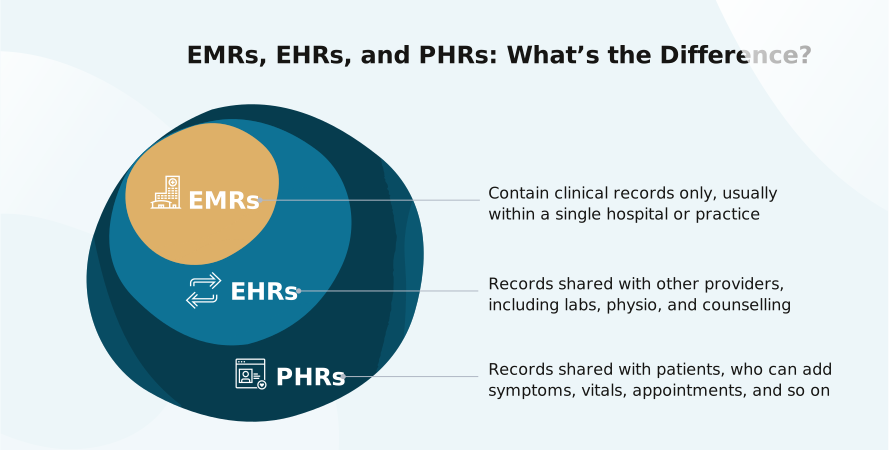
PHRs Explained
Personal health records draw together most of an individual’s health information while making it easy for them to do things such as check the dosage of medicine they’ve been prescribed or see when they last visited their primary care physician or a certain specialist. PHRs can also prove to be lifesaving if, say, an emergency room physician needs to review a patient’s health history but can’t access the EHR managed by another healthcare system.
PHRs aren’t a new concept. For example, for many years pregnant women kept paper records of all of their antenatal appointments and other health notes so clinicians would have all the facts on hand when it came time to give birth. Of course, paper notes can be only in one place at a time (unless they’re faxed), so electronic versions that are accessible on mobile devices are much more useful. They can hold a lot more information too, including blood type, allergies, health history, immunization records, health plans, and the like. In some cases, however, PHRs may not include all the information available in EHRs, where healthcare professionals can also include visit notes, lab reports, and other detailed patient data.
Depending on one’s definition of a PHR, patients can also use them to communicate with their care teams and schedule appointments, though such online platforms are generally referred to as patient portals. Individuals can also link PHRs to their smart devices to input blood pressure readings, blood glucose levels, and even how many steps they’ve recorded in a given period of time. And they can record personal notes on any illnesses and their symptoms.
Next-generation EHRs can transform healthcare via AI, automation, and data-driven insights.
PHR FAQs
What is the difference between a PHR and an EHR?
A PHR allows an individual to view and add personal health information themselves. With an EHR, only a clinician or other care professional can do that.
What is an example of a PHR?
One type of PHR is an online patient portal, which in some cases is linked to an individual’s EHR. A health system’s or practice’s patient portal lets people schedule appointments, check on medications, send secure messages to their healthcare team, and input health data that will be immediately available to their relevant healthcare professionals.
What does PHR mean in healthcare?
In healthcare, a PHR is a personal health record. These allow individuals to access information about their health and well-being, as well as do things such as schedule appointments and submit vital signs and blood pressure readings.