Asked what their businesses need most from their cloud implementation, our respondents are loud and clear. Above all, the cloud should deliver improved scalability, greater agility, lower-cost operations, and improved security (see Figure 4). It should also, say 32 percent, optimize their data management and analytics. According to respondents, this will not just deliver cost savings but will also reduce time to market, enhance innovation in products and applications, and allow experimentation with new workloads.
The cloud has proven its worth in the crisis conditions of 2020. Cloud infrastructure has enabled online meeting provider Zoom, for example, to quickly provision additional capacity to handle a massive increase in daily users that began in the early months of the year. Cloud infrastructure has done the same for rival conferencing provider 8x8, while at the same time significantly reducing its costs for compute and network services.
Figure 4. Firms’ main drivers for cloud implementation
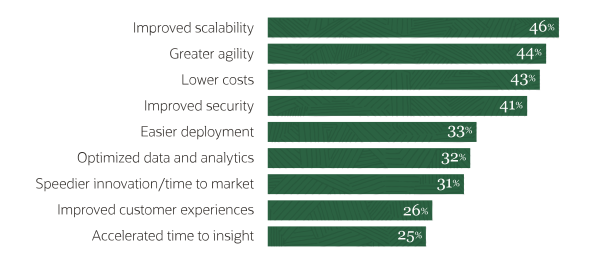
Note: Respondents were asked to select their top three choices.
The first-generation cloud has gone a long way to answering those cloud requirements listed above—including improved security. Second-generation cloud, with its promise of autonomous capabilities, will give businesses even more.
One company beginning to see the benefits of this more advanced cloud is Sky Brasil, a provider of satellite telecom services and 4G internet connection for rural regions of Brazil. Since moving its data management to an autonomous database—a core element of second-generation cloud—it has realized cost savings of over 60 percent on data infrastructure and reduced time to market by 90 percent.
“Moving to an autonomous database has streamlined processes and enabled us to reach our customers with the right offering at the right time,” says André Nazare, IT director at Sky Brasil. With the burden of infrastructure management a thing of the past, the IT team is able to focus part of its time now on advanced data modeling and analytics.
The capabilities of second-generation cloud come from AI and ML, which are fundamentally altering enterprise computing by changing the way organizations receive, manage, and secure data. In turn, autonomous capabilities will help businesses to fully exploit AI and ML technologies. Many firms have been held back by the enormous cost and complexity of their current technology environments. Second-generation cloud can remove those constraints.
Supported by ML, autonomous systems not only initiate automated sequences of tasks, such as configuration, tuning, scaling, and security of applications and systems, with less human error; they also self-monitor and self-correct.
“We’re seeing more and more organizations asking how they can use what the cloud has to offer in low-code/no-code implementations, serverless, and self-maintaining solutions,” says Accenture’s Chris Pasternak.
In practice, this frees up time and resource to focus on what matters most. This is certainly the case for Grupo DPSP’s Eliseu Rocha: “We use autonomous technologies to enable the automation of operational activities and allow people to focus on the company’s purpose, which is to serve the customer well and generate a positive impact while taking care of what is most important: people.”
Cloud leaders get this and are well ahead of the adoption curve. They are more than twice as likely as followers to be using autonomous technologies (31 percent compared with 12 percent). Leaders are also nearly four times more likely than followers to be using AI and ML (26 percent compared with 7 percent) (see Figure 5).
Of the industries covered in our survey, banking, financial services and insurance firms are investing most heavily in AI and ML (30 percent). The pace of disruption, regulation and competition currently facing this sector could go a long way toward explaining why it is leading on this, along with several other aspects of cloud adoption and enterprise autonomy, as you’ll see throughout this report.
Figure 5. The technologies used by firms
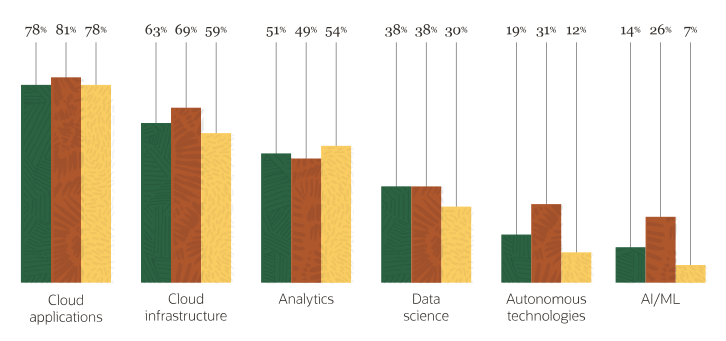
Overall
Leaders
Followers
How do the firms that are using autonomous technologies say they are benefiting? Prominent among their gains are cost savings and the ability to run demanding workloads with no performance concerns (see Figure 6).
Since it moved to autonomous data and cloud infrastructure, the IT organization of Kingold, a China-based property developer, manages 50 times more data, using less than half the human capital than was the case previously. Relieved of database administration, the IT organization is now able to provide more strategic value by building an advanced analytical platform that organizes both internet and company data.
Figure 6. Firms’ main motivations for using autonomous technologies
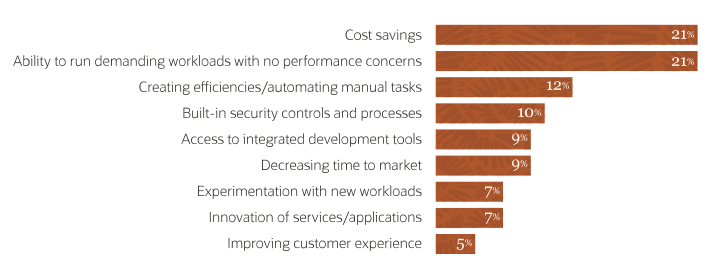
Note: Due to rounding, numbers do not add up to exactly 100%.
Another advantage of autonomous technologies is the built-in security controls and processes. According to Fred Kost, vice president of product marketing—security at Oracle, there’s an important lesson to learn from the first-generation of the cloud: security needs to be designed into systems from the start and not layered on later. “Architects of Gen 2 Clouds recognize that,” he says. “We realize that we’re building not just for agility but for security, and the latter must be more integrated and built in.”
Kost stresses the importance of intuitiveness and ease. “We need to build security with the intent of making it more automated,” he says. “That also means helping customers automate and take care of security issues. It’s been very complex, and it needs to be easier.” Data encryption is one example. “It should just happen as your data moves to cloud providers,” says Kost. “It should be one less thing you have to worry about.”
Fred Kost, Vice President of Product Marketing—Security, Oracle

Autonomous capabilities in data management can revolutionize efficiency and business agility. “Cloud has opened up a whole new world in data management,” says Pasternak. “For one thing, the stresses we used to have with capacity management are gone. For another, the intelligent tools in cloud have allowed us to get even better insight into our data.”
That means autonomous databases—cloud-based autonomous data management systems that deliver automated provisioning, patching, upgrades and tuning without human intervention. In one example, an autonomous database has given OUTFRONT Media, a US outdoor-advertising company, the ability to quickly feed terabytes of third-party data into interactive dashboards that its salesforce uses with customers for a more comprehensive view of advertising spend. Whereas two to three weeks were previously needed to merge and analyze such data from internal and external sources, this complex process now takes less than three hours and is more secure.
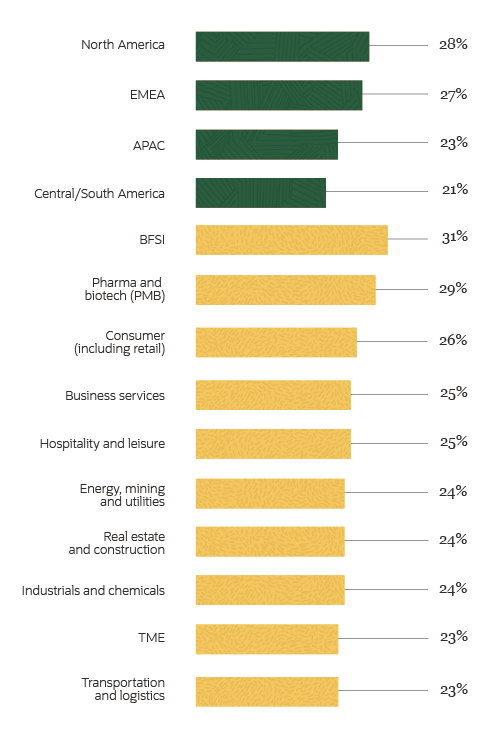
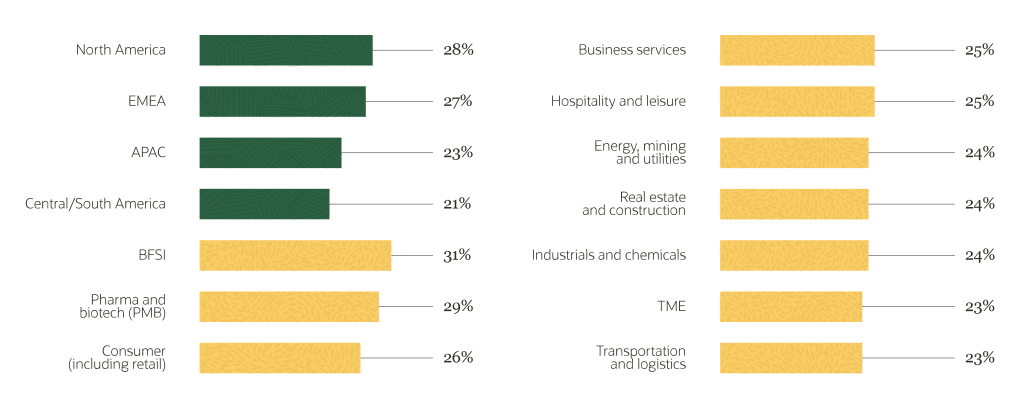
One-quarter of surveyed companies have deployed an autonomous database, and cloud leaders are ahead once again: 37 percent say an autonomous database is part of their data management approach, compared with just 20 percent of followers. Banking, financial services and insurance is the sector that takes the lead here again: Nearly one-third (31 percent) of firms have deployed an autonomous database, followed closely by pharma and biotech at 29 percent.
Forth Smart, a kiosk operator in Thailand whose 15 million users make over 2 million transactions daily, is an example of a financial services company using Oracle Autonomous Data Warehouse to gather insight and secure data without any database administrators. For instance, running advanced data queries on customer behavior to predict how an offer will fare takes minutes today compared with three or more hours previously. In addition, the capabilities of the analytics platform have helped the company to refine customer segmentation. “With machine learning, I’m able to do targeted ads without annoying customers, and I’ve doubled my conversion rate,” says Pawarit (Taa) Ruengsuksilp, business development analyst at Forth Smart.
Those respondents whose organizations have deployed an autonomous database say its chief benefits are the reduction of manual tasks, better data visualization, improved data accuracy, and more sophisticated analysis (see Figure 7). Three-quarters of companies in the survey haven’t yet implemented an autonomous database, but almost half (47 percent) of these firms see it as a strategic priority.
Figure 7. The main benefits of an autonomous database for those firms that have deployed it
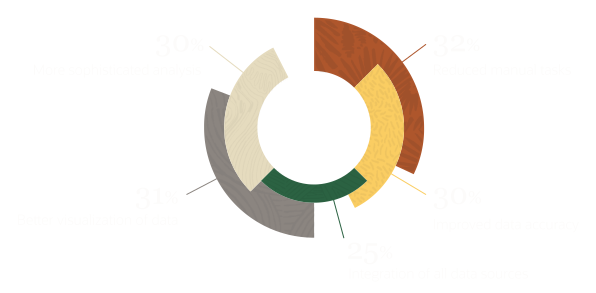
Note: Respondents were asked to select their top three choices.
Chris Pasternak, Managing Director, Accenture

Which sectors and regions are leading on cloud strategy, cloud native adoption, and autonomous technologies?
The pharma, medical and biotech, telecoms, media and entertainment, and banking, financial services and insurance sectors are most likely to say that cloud native is a core part of their cloud strategy. And those from telecoms, media and entertainment (TME), and banking, financial services and insurance (BFSI), along with consumer (including retail), are also more likely to say that their cloud strategy is either being fully executed or at least that implementation is well under way. In both areas of strategy, firms from Europe, Middle East and Africa outshine those from elsewhere.
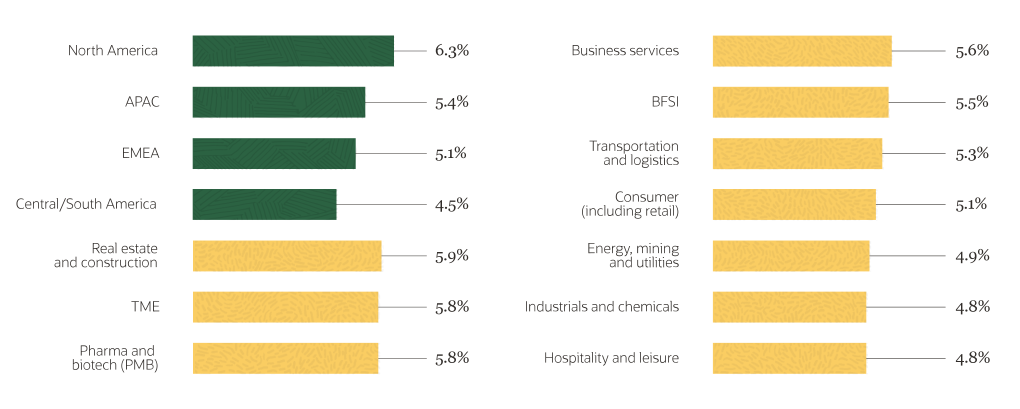
A look at cloud native adoption tells a slightly different story. It is real estate and construction firms that develop the greatest number of new applications in the cloud. In a geographical comparison, cloud native application development is most advanced in North America (see Figure 8).
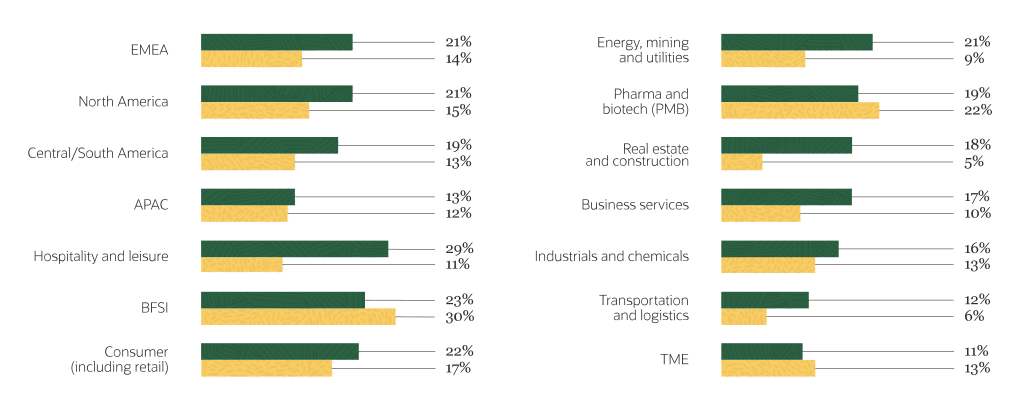
In terms of sector, hospitality and leisure use autonomous technologies the most (see Figure 9). But when it comes to AI and ML, firms in the banking, financial services and insurance sector are a long way ahead. That sector also leads the way in the adoption of autonomous databases, but is followed closely by pharma, medical, and biotech (see Figure 10).
Figure 8. Average share of applications currently developed in the cloud
from scratch, by region and industry among surveyed firms
Region
Industry
Figure 9. Number of surveyed firms that are currently using autonomous
technologies and AI/ML, by region and industry
Autonomous technologies
AI/ML
Figure 10. Number of surveyed firms that are currently using autonomous database, by region and industry
Region
Industry
Figure 8. Average share of applications currently developed in the cloud from scratch, by region and industry among surveyed firms
Region
Industry
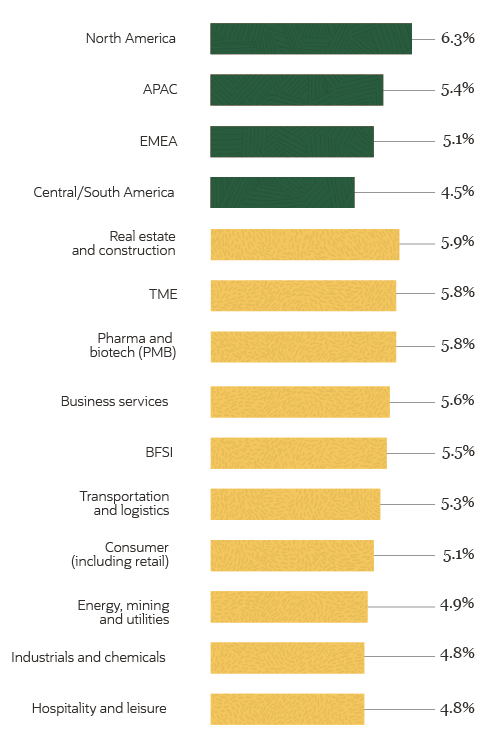
Figure 9. Number of surveyed firms that are currently using autonomous technologies and AI/ML, by region and industry
Autonomous technologies
AI/ML
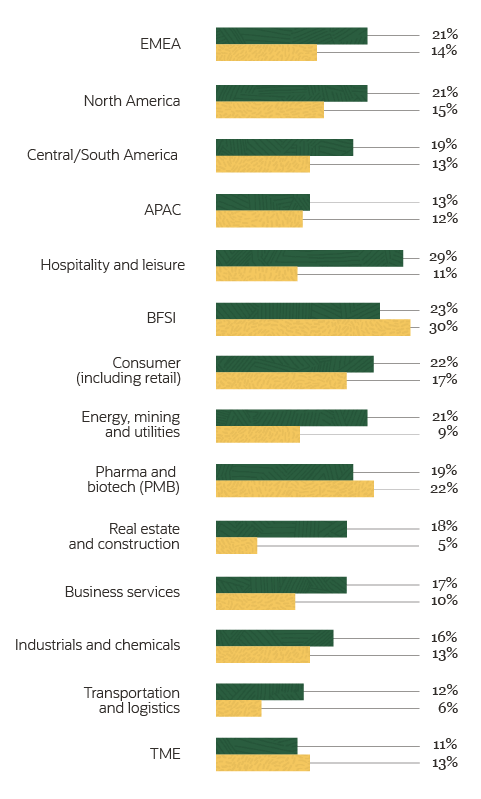
Figure 10. Number of surveyed firms that are currently using autonomous database, by region and industry
Region
Industry