How to Improve Healthcare in Rural Areas
Margaret Lindquist | Senior Writer | June 8, 2026

Residents of rural areas across the US have long struggled to get access to adequate healthcare amid a dearth of local care facilities and a shortage of clinicians, particularly specialists. Telemedicine systems, remote patient monitoring devices, mobile EHR connections, and other digital technologies can help expand access, enhance care quality, and support the financial sustainability of rural providers. Meantime, AI-powered staff recruitment tools can help speed hiring and onboarding, thus lowering turnover costs and supporting improved productivity. Read on to learn more about the challenges and opportunities.
What Are the Challenges of Rural Healthcare?
Rural communities face unique healthcare challenges shaped by geography, limited resources, and a population more prone to chronic diseases and subject to delays in routine care. Those challenges include the following:
- Limited access to healthcare facilities and specialists. Access barriers often reduce the availability of timely, appropriate care, especially for conditions that require advanced diagnostics or specialist expertise, and they can create significant cost and logistical burdens for both patients and providers. Rural patients can face delays in getting diagnosed and treated, and they frequently have fewer opportunities to access preventive and specialist care, with a disproportionate impact on older adults and people living with chronic diseases. Complex cases, such as heart disease, cancer, and mental health conditions, typically need to be comanaged with specialists. Referrals can take weeks or months, and patients may have to travel long distances to multiple locations for specialist visits, lab work, and procedures.
- Healthcare workforce shortages and high employee turnover. Staffing challenges across the industry hit rural providers and their patients especially hard. Rural systems typically have smaller teams, less backup coverage, and thinner operating margins than providers in metropolitan areas. As a result, patients in rural areas can face longer wait times, reduced access to care, and insufficient care continuity. For clinicians and other staff, unfilled vacancies translate into higher patient loads, more on-call time, and broader responsibilities, which can increase fatigue and burnout and further accelerate turnover. Financially, rural providers also bear the recurring costs of frequent rounds of recruiting and onboarding, along with the premium expense of temporary “traveler” clinicians.
- Long travel distances and transportation barriers for patients. In rural areas, patients are often more likely to put off treatment or miss appointments due to bad weather, long drives, few transportation options, or work and caregiving responsibilities, making it harder to start and sustain care. Longer travel times can be deadly for time-sensitive medical events, such as strokes, heart attacks, trauma, and obstetric emergencies, where minutes matter. These barriers can also drive up costs for health systems and payers by increasing emergency room utilization, hospitalizations, and readmissions.
- Inadequate broadband and other digital infrastructure. With limited and sometimes no access to dependable high-speed connectivity, telemedicine is unreliable, and patients often rely on in-person visits and phone calls. Healthcare workers can spend a lot of time waiting for systems to respond, reentering data after outages, and using manual workarounds such as faxing paper documents to other care facilities or scanning documents to retain them for digital records, which can cause billing errors and delays. The lack of modern infrastructure is also one reason rural healthcare jobs may be less attractive to new clinicians, who expect functioning telemedicine, modern EHR performance, and digital collaboration.
- Financial strain on rural hospitals and clinics. The financial model for rural healthcare providers is structurally more challenging than for large urban and suburban systems. Rural providers likely care for fewer (paying) patients but must absorb most of the fixed costs of metro area providers. For example, rural providers must staff emergency services, inpatient capacity, labs, imaging, and compliance functions, even with a lower patient load. They’re also subject to a payer mix that can result in lower reimbursements, with higher shares of Medicare, Medicaid, and uninsured patients than typical urban and suburban hospitals.
- High rates of chronic disease and aging populations. Rural healthcare providers manage patient populations with high rates of chronic diseases, which often require steady, long-term oversight. The aging populations typical of rural areas add complexity through increased comorbidities, functional limitations, and greater need for home health, rehab, and long-term care. These pressures are often intensified by clinician and specialist shortages, long travel distances, and a lack of consistent follow-up. As a result, preventable complications are more likely to arise, driving more emergency visits, hospitalizations, and care coordination.
- Limited access to mental health and behavioral health services. Not only are there fewer treatment options in small towns for mental and behavioral health conditions, but concerns about privacy and stigma can deter patients from seeking the care that’s available because they fear being recognized at local clinics or judged by community members. These access gaps can translate into high rates of avoidable resource consumption, poor patient outcomes, and an increased total cost of care.
- Fragmented care coordination and outdated health IT systems. Patients everywhere are likely receiving care from multiple locations, but this reality presents challenges, particularly in rural settings, where lack of access to specialists and long wait times for even primary care can force patients to use urgent care and emergency departments as their default healthcare providers. This can lead to fragmented care coordination, especially when different providers use unconnected EHR systems and administrators frequently must fax and email information. Although most rural providers use EHRs, many of them are outdated—installed in the wake of the HITECH Act of 2009—and don’t support modern capabilities such as AI-assisted documentation and payment management. The result is fragmented data, time-consuming manual workarounds, and delays in sharing information across care settings and during staff and patient transitions. Over time, these gaps can lead to avoidable duplicate testing, missed follow-ups, and revenue-cycle inefficiencies that rural organizations can least afford.
- Low health literacy and use of preventive care. In rural areas, these challenges can increase clinical complexity, worsen health outcomes, and further strain already-limited resources. Patients may ignore early symptoms, fail to seek proper care in a timely manner, or struggle to navigate the healthcare system. They may be more susceptible to medication errors, more likely to miss appointments, and have difficulty following care plans, which can increase complication rates and avoidable hospital readmissions. In rural communities, these challenges often intersect with limited transportation options, inadequate broadband connectivity, scarce local health services, and high rates of poverty and food insecurity.
- Social and economic factors. Social and economic factors—often referred to as social determinants of health—directly influence patients’ access to care, their ability to follow treatment plans, and their baseline health risks. Residents of rural areas are more likely to be uninsured or underinsured than those in metro areas and thus are more likely to postpone or skip appointments, procedures, and prescriptions due to the cost. Even when coverage is available, low-premium plans carry high deductibles and out-of-pocket expenses, forcing low-income households to make difficult trade-offs between healthcare and other essentials. Fewer supermarkets per capita and higher food prices in rural areas also make it harder to follow recommended diets, contributing to high rates of obesity, hypertension, and cardiovascular disease.
Key Takeaways:
- Urban-centric healthcare delivery models don’t always meet the needs of rural communities, making it necessary to shift toward new approaches rather than scale down existing models.
- AI automation can support workforce recruitment and retention in rural areas and help alleviate clinician burnout by speeding up recruiting and onboarding processes and easing the documentation burden.
- Investments in reliable broadband connectivity are needed to support high-quality video visits, remote patient monitoring, image transfers, and continuing education and certification for staff.
How to Improve Rural Healthcare in 10 Ways
Improving rural healthcare requires a coordinated set of community-centered actions that expand access, strengthen local capacity, and modernize care delivery. Consider the following measures:
- Expand telehealth and virtual care access. Such access can give patients in remote areas consistent touchpoints with clinicians and connect patients with specialty expertise often not available locally. Telehealth is one type of virtual care, enabling patients to interact with clinicians via video, phone, or chat. The term telehealth is often used interchangeably with telemedicine, which refers specifically to clinical services such as diagnosis and treatment. Telehealth can also refer to nonclinical services such as patient education and administrative tasks. Although telehealth can be valuable for patients in any location, rural residents in particular stand to benefit by avoiding long drives or time away from work and other responsibilities. Virtual care platforms should support a range of models, including primary care and specialist visits, hospital-at-home care, remote patient monitoring, and chronic disease management. It’s important to ensure that patients have access to reliable connectivity, receive clear, simple instructions on how to log on, and understand how labs, imaging, and vaccines will be handled locally and how urgent issues are escalated.
- Strengthen rural broadband and digital infrastructure. Reliable broadband connectivity serves several purposes. It enables high-quality video visits with care providers. It enables rural hospitals and practices to rapidly transmit images and clinical data such as CT scans and EKGs to larger facilities for consultations. And it supports virtual education and mentoring programs that help clinical staff in rural areas build and sustain their expertise. Rural healthcare providers don’t always have access to fiber links, but other broadband options include fixed wireless and satellite.
- Incentivize recruitment and retention of rural healthcare workers. AI-powered recruitment, applicant tracking, and onboarding applications can speed up the hiring process, which is crucial when applicants are weighing multiple offers. AI tools can also support retention by alleviating friction in clinical and administrative areas. For example, capabilities such as automated visit documentation and workflow automation can ease administrative burdens, enhance productivity, and support work-life balance. Over time, addressing burnout can support retention rates, enable consistent staffing models, and help maintain continuity of care.
- Invest in mobile clinics and community-based care delivery. Mobile health units—vans or trailers equipped with medical equipment and supplies, staffed by clinicians, and able to use telehealth technology to connect with specialists—can expand healthcare access in rural communities. This type of service may be part of an overall community-based care delivery strategy that’s designed to bring services closer to patients, limit travel and access barriers, and enhance prevention and chronic disease management. Mobile health units enable patients to take part in virtual specialist consultations, with hands-on support from local staff who can assist with examinations, capture vitals, and coordinate follow-up care. Complementary care models such as hospital-at-home programs and remote patient monitoring allow patients to recover and receive care at home, improving comfort for patients and easing the burden on family members who otherwise might face long daily drives or expensive overnight stays. For rural health systems, these approaches can also expand capacity, limit avoidable utilization, and enhance the patient experience. Other types of care providers include school-based clinics, pharmacies, community centers, health fairs, and even libraries and worksites.
- Enhance access to preventive and primary care services. One of the biggest problems for patients in rural areas is insufficient access to preventive and primary care services, since health conditions often worsen when they’re diagnosed late. Patients need care that meets them where they are. Mobile health units can bring care to a central location, and when furnished with telehealth services, they can connect patients to distant specialists. Patient monitoring devices can help limit the frequency of doctor visits, which is especially helpful if patients must drive great distances merely to get their vitals recorded. Even small towns can take part in community initiatives on healthy eating habits, the dangers of substance use, home safety assessments, and prenatal care. Rural providers might also want to consider partnering with other rural providers to share resources.
- Integrate behavioral and mental health services locally. Rural providers can support patients in getting the behavioral and mental healthcare they need by making those services part of primary care. For example, a care manager might incorporate psychiatric consults or brief in-clinic behavioral assessments into a patient’s care plan. Standardized screening for depression, anxiety, and substance use, paired with measurement-based follow-ups, help teams track progress and adjust treatment over time. Telepsychiatry and e-consults can extend scarce psychiatric capacity while enabling patients to get help from the privacy of their homes. Community health workers, peer coaches, and school nurses can also provide types of counseling.
- Support value-based and alternative care models. The value-based care model incentivizes providers to enhance care quality and manage the total cost of care, rather than paying based on the volume of services delivered. To provide value-based care, hospitals, clinics, and practices must closely track the cost and utilization of their services, gather quality metrics, coordinate care transitions with other providers, and minimize (to the extent possible) avoidable emergency department use, readmissions, and duplicative services. Strengthening primary care is essential, using team-based, top-of-license staffing, evidence-based treatment pathways, and structured patient self-management support. Alternative care models include virtual and hospital-at-home care, which use telehealth and targeted remote patient monitoring technologies as part of home-based care initiatives. These models can help extend providers’ clinical reach and enable earlier intervention between patient visits.
- Enhance care coordination. Rural healthcare often involves multiple transitions of care. For example, a patient might start at a local urgent care facility, move to a community hospital, then transfer to a facility with specialist care, sometimes across state lines. In this environment, providers need interoperable EHRs and other care and operational platforms to give clinicians timely access to complete, longitudinal patient information and automate routine administrative workflows. Secure sharing of up-to-date records, medications, labs, imaging, and care plans across systems can enhance information sharing within care teams, support consistent handoffs and informed clinical decision-making, and help alleviate manual workloads. Rural providers can also participate in regional or statewide health information exchanges, which support secure electronic sharing of critical patient data among hospitals, physicians, pharmacists, and other care team members.
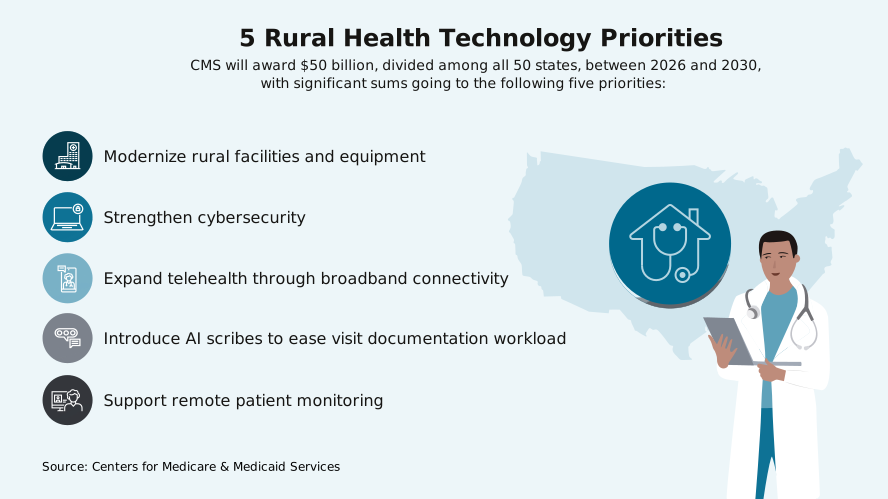
- Support funding for rural hospitals and critical access facilities. Budget constraints often force rural providers to take a piecemeal approach to expanding their services and underlying technology, often leaving gaps that targeted funding can help close. Such government and private funding can help providers modernize their facilities and systems, increase clinician pay to stabilize the workforce, introduce new services, and ultimately help enhance care quality. Aligning these investments with measurable patient access, care quality, and financial improvements helps providers translate dollars invested into sustainable progress.
- Collaborate with local organizations to address social determinants of health. By partnering with trusted local organizations such as county health and housing departments, schools, faith-based groups, food banks, community action groups, and transportation providers, rural healthcare providers can help limit the barriers to clinical care. These collaborations help local residents get access to healthy food, make and keep medical appointments, secure adequate housing, and get treatment for substance abuse—assistance that’s especially important in communities where resources and access are limited. For example, public clinics may offer prenatal or behavioral health services in locations that are more convenient and familiar for community members.
The Future of Healthcare in Rural Areas
Healthcare in rural areas is in critical condition. Nearly 190 rural hospitals in the US have closed since 2010, according to the National Rural Health Association, and many remaining facilities are financially at risk. Persistent clinician and support staff shortages continue to put a strain on services. Conventional, urban-centric delivery models don’t address the economic and geographic realities of rural communities.
The future of healthcare in rural areas consists of a connected, technology-enabled care system, powered by secure cloud infrastructure, interoperable records, AI decision support, and digital tools that bring specialists and home-based care to patients wherever they live. Alternatives to fiber optic connectivity, including low earth orbit satellites and fixed wireless, can help make telemedicine, remote patient monitoring, and other care delivery models feasible. With AI-enabled EHRs and clinical agents helping alleviate the documentation burden and streamlining tasks such as coding and prior authorizations, rural care teams can see more patients and spend more time with them, supporting care quality and patient safety while easing clinician burnout.

Find out about the technologies and process changes that are powering the future of healthcare.
Power Rural Health Transformation with Oracle
Oracle Health has made rural health a priority for nearly 20 years. It currently serves hundreds of rural hospitals nationwide with a wide variety of systems and applications, at the center of which is the cloud-based, AI-powered Oracle Health EHR. Oracle Health systems support the clinical, financial, and operational needs of small hospitals in both acute and ambulatory settings.
How to Improve Rural Healthcare FAQs
How can we solve the lack of care in rural underserved areas?
Expand the impact of local care teams with telehealth and mobile clinics, support them with AI-driven decision support systems, and provide incentives to attract clinicians and other staffers.
What are the 5 major strategies to promote health?
The World Health Organization’s Ottawa Charter for Health Promotion defines the following five strategies: build “healthy” public policy, create supportive environments for safe housing and clean air and water, strengthen local community actions, develop self-care skills through health education, and reorient health services toward prevention and primary care.
This article includes examples of products and software for illustrative purposes only. Oracle makes no representation regarding whether any third-party product or software discussed or referenced complies with applicable laws or regulations.