
Japan wind energy projects advance with Oracle Construction and Engineering
Power generated by offshore wind farms is expected to play a growing role in helping the country reach its goal of carbon neutrality by 2050.
Rick Bell | November 12, 2025
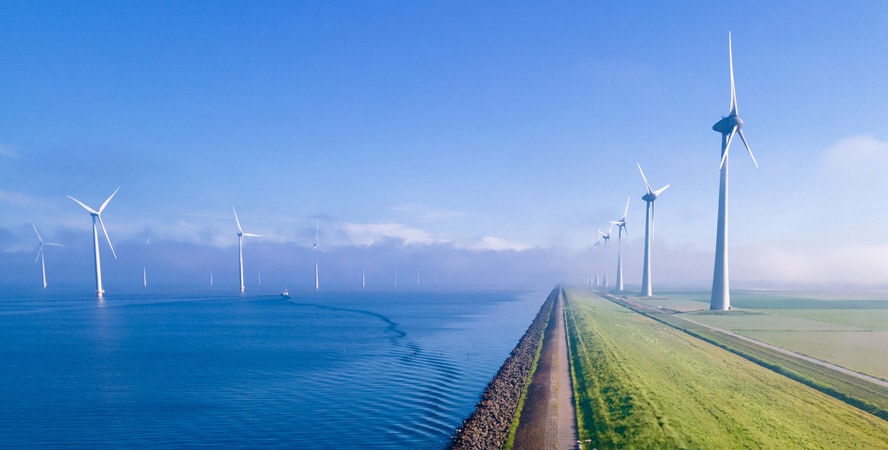
Given its meager oil, natural gas, and coal resources, Japan depends heavily on imported fossil fuels. Nuclear power is gaining traction again as an alternative, but its future in the country remains unclear in the aftermath of the 2011 Fukushima Daiichi nuclear power station accident. A scarcity of available land for solar and onshore wind farms compounds Japan’s clean energy challenges.
The world’s fifth-largest energy consumer, Japan nevertheless maintains ambitious goals to reach energy autonomy and reduce greenhouse gas emissions. Earlier this year, the Japanese government approved the 7th Strategic Energy Plan, which sets the goal of generating 40% to 50% of the country’s electricity using renewable sources by 2040, compared with about 23% in 2023, on the way to reaching carbon neutrality by 2050.
Another important reason Oracle applications were selected, beyond their capabilities, is because they’re “independent, neutral solutions that aren't owned, managed, or controlled by any of the stakeholders.”
Harnessing wind energy is an important part of that plan. Currently, it accounts for only about 1% of Japan’s renewable energy usage, but the plan is for it to account for 8% by 2040. Ramping up offshore wind projects has the greatest potential to help Japan meet those goals. Japan has 5,840.4 megawatts (MW) of wind energy capacity, of which only 253.4 MW is generated offshore as mentioned in preliminary figures for 2024 from the Japan Wind Power Association.
Floating new ideas in offshore wind energy
While Japan doesn’t have enough flat terrain left to build wind farms at enormous scale on land, with four major islands and thousands of miles of windy coastline, the potential offshore is far greater, notes Nobuhiko Sawano, an Oracle master principal sales consultant who works closely with the offshore wind energy industry in the country.
In fact, Japan’s strategic plan calls for generating 30 to 45 GWs of offshore wind capacity by 2040, in part generated by wind turbines on barge-like floating foundations at sea. To offer some idea of that scale, 1 GW of wind power provides enough electricity for 750,000 to 1 million homes annually.
Managing these complex projects
As part of Japanese government auctions held between December 2021 and December 2024, several consortiums of international and domestic developers, investors, and other stakeholders were granted rights to develop wind energy farms in nine offshore locations. Also known as special-purpose companies (SPCs), the joint ventures are legally incorporated entities established solely to develop, finance, build, and operate the farms. They’re scheduled to begin operation in 2028, adhering to a schedule that aligns with Japan’s decarbonization roadmap.
Three of the projects are expected to undergo a re-bidding process by the Japanese government. In turn, SPCs for remaining locations maintain contracts with Oracle Construction and Engineering for the project management and other applications they’ll need to keep the projects on track.
With the growing complexity of offshore wind energy projects, volatile supply chain issues, and an industrywide talent shortage, it’s no surprise that maintaining high performance on the jobsite and in the office presents immense challenges. SPCs chose Oracle Aconex as the platform for project communications, document control, and decision-making. With Aconex, SPCs will be able to rely on one central system to manage processes across the entire construction project lifecycle.
When project teams own and control their data, it facilitates team collaboration and data sharing, while capturing a complete project record. An unalterable audit trail produced by Aconex will minimize disputes, helping the partners complete the projects on time and according to spec.
SPCs also chose Oracle Primavera Cloud to enhance schedule visibility, coordinate resources, and help mitigate project risks. With Oracle Primavera Cloud, the latest schedule information is now publicly available to all SPC stakeholders, making it easier for schedulers and project managers to track the status of schedules and take corrective actions when necessary.
Another important reason SPCs chose the Oracle applications, beyond their capabilities, is because they’re “independent, neutral solutions that aren't owned, managed, or controlled by any of the stakeholders,” says Toshitaka Okamoto, Oracle Japan country manager.
Deep-water projects coming soon
Besides the current sites up for re-bidding, another auction round will encompass five locations in Japan’s Exclusive Economic Zone beyond the 12-nautical-mile line of Japan’s territorial waters. While much of the current technology is in the form of fixed offshore wind turbines in relatively shallow waters, the next round will emphasize the floating barge-type offshore wind systems that can operate in deeper waters. The Oracle applications are candidates to assist the work in the new tracts as well.
“A lot of work we did to convince the consortiums in the initial stages has paid dividends,” Okamoto says, “because we've now got that trust.”
-
Why DCOH chose Oracle Aconex to help build public projects
Australian builder standardizes BIM for better project coordination.
-
Connect teams and processes across the entire project lifecycle
Manage end-to-end processes and eliminate barriers to collaboration with Oracle Aconex.